Negative people

So you didn’t get the promotion. Or someone broke your heart. Wait, let me guess, you didn’t pass the exam. Sh*t, no way…the holiday was cancelled because the government shut down the island! What? You totally smashed dad’s car?!?

They’re but a few conversations we have with people and friends. How we react to the situation is a reflection of the kind of people or friend we are. Which means, you’d rather be talking to someone who’d share positive vibes rather than someone who looks at the glass of water half empty.

So here’s my ten cents worth of thoughts on people and friends;

1. Stay away from negative people. They have a problem for every solution.

You know the saying that “misery loves company”? Well, that in a nutshell are what negative people are. They’re miserable blokes. Their mission in life is to destroy other people’s happiness. Their mantra is “if I can’t be happy, so can’t you”! During a situation, instead of offering a solution, they present more problems. Stay clear from them, because you’ll end up feeling anxious and depressed after a conversation with them.

The key to identifying this kind of scum is that they are backstabbers. Like vultures that just circle around a dying carcass, once you have your back turned, they’re ready to pounce on your meat.

2. The best revenge is just moving on and getting over it.

I get it. No one deserves to be treated unjustly. And standing (or sitting) there and watching your world fall apart because the evil king has destroyed your goals and dreams with lies and false accusations isn’t going to change your life. Let me say it and say it candidly. Don’t give someone the satisfaction of watching you suffer ! Ever! It’s the worst kind of humiliation.

Karma will find their way with injustice. Remember that. And even if in your lifetime it doesn’t, don’t worry…it will.

3. Get busy loving your life

Okay. So, life’s not fair. You get thrown a watermelon your way. In the back of your mind, you want to throw a hundred durians at your opponent. But is retaliation the solution at rudeness? If you love your life, learn to walk away at the battles that don’t need to get fought. Be busy loving your life that you have no time for hate, regret or fear.

4. Declutter your “friends” list on social media. It will be the best thing you can do to yourself today.

So you have 5,000+ followers on Facebook. Who gives a f*ck?! The people in your life and your social media platforms should be a source of reducing stress, and not causing more of it. It doesn’t matter if you have one or two “likes”. Social media has become a great source of negativity. “Unfriend” if you must, to stay happy. Remember, some people can’t function without negativity because bringing down others makes them feel better.

5. Rude is the rule with negative people.

When people are rude to you, they reveal who they are, not who you are. Obviously, it’s painful because you end up asking yourself WHY. Learn not to take everything personally. Walk away.

If you surround yourself with people who don’t suck the positivity out of you, you’d have a better life! Remember, you’re only going to be as good as the people you surround yourself with. Be brave enough to let go of those who keep weighing you down. They’re not worth the keep.

True or false?

I couldn’t imagine the day when we’d be living in times when truth and lies would be challenging to discern. More confusing is how people today use/abuse social media in order to sow more incertitude.

The recent Cambridge Analytica scandal that’s dragging Facebook CEO Mark Zuckerberg and the rest of the Facebook Team for using data analytics to promote a political thrust is an example of a social platform gone awry.

Cambridge Analytica is a British political consulting firm which combines data mining, data brokerage and data analysis to change audience behaviour. Established in 2013 as an offshoot of the SCL (Strategic Communications Laboratory) group, the core business of CA is to influence the outcome of politics.

Recently, CA has been at the center of criminal investigation when the New York Times and The Observer reported the data breach of Facebook and CA, wherein the company (CA) used for political purposes personal information acquired by FB users, by an external researcher who claimed to be collecting it for academic research.

The breach in privacy of FB users has questioned the role of social media platforms at a time where digital technology plays a significant role in the lives of everyone in this planet.

Once upon a space, I thought that my FB wall was a safe space. You wouldn’t think that posting a rant or a celebration or a loss, would even be a public concern or outcry (however you would like to put the scenario), just for having your own opinion. It is, after all, your wall and your opinion.

But come to think about it, why would anyone give you free space to share if there wasn’t anything they’d want in return? That’s right. There are no freebies in this world. And what better source of tapping at the core of privacy than allowing social media access to it. After all, when the platform goes “viral”, the data that is mined would be priceless. Data is power!

What began as a tech tool for a couple of thousand Harvard students in 2004 evolved as rapidly as digital technology boomed. As of this writing, there are more than 2.2 Billion users monthly for Facebook.

And while social media has enraptured its subscribers as a means for reaching out and sharing opinions, pages, rants, raves, and commerce, it has also reared an ugly head. Fake news, hate speeches, rudeness, inappropriate sex and violence have enticed the gullible buffoons to “like” and “share” ideologies and ludicrous behaviour.

Social media has, unfortunately, lately been a forbearer of malice and disarray.

Here are a few tips on “posting” on social media platforms:

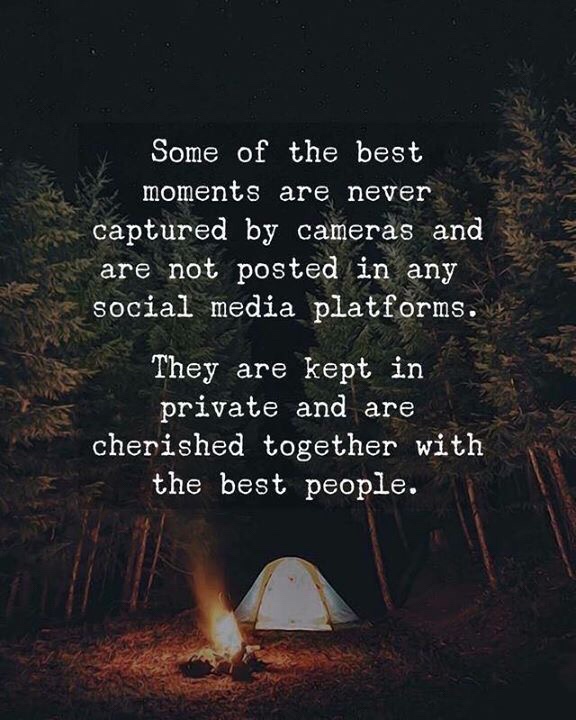
1. The less you reveal, the more people wonder.

While shoutouts may vary from a cause for celebration to letting people know of a loss, managing the kind of “shouts” are important. There are shoutouts that should actually be “shut ups”.

2. It’s not the number of “followers” that make you better than anyone else.

Yep. That’s right. You can have an army of idiots or trolls who follow you, but it gives no special meaning in life if the numbers don’t reflect the kind of person that can be trusted as a purveyor of truth rather than lies. Remember, Hitler had millions of followers, Jesus had only 12.

3. Content is fire. Social media is gasoline.

Social media platforms are meant to ignite the flames. Make sure that the content you provide speak of your level of maturity. You don’t have to broadcast your emotions in order to gain sympathy. Don’t be a “meme”. Unless you have no better thing to do in life.

4. Be cautious of people whose actions don’t match their words.

And yes, just because you asked me to be your friend, I truly apologize if I don’t accept it. After all, if I don’t know you that well or I don’t know you at all, I don’t want you prying into my wall or space. Be careful with people who ask to follow you just because you share common “friends”. Not all are who they say they are.

This online NETIQUETTE is a gentle reminder on what we write, post, and share.

The sand

The sand teaches one thing. . .

You can’t hold too many things in life no matter what you do.

Even if you decide who you want to stay with, the wind will always blow them away.

So learn to let go and cherish those who stay because like the sand, only those at the center of your palm and those who are true to you will remain as your treasures.

Someone at work asked me why I always have a “happy disposition” despite everything.

My reply, “it is up to you to see the beauty of everyday things”.

Hopeful

Hope is not pretending that problems don’t exist. It is the hope that they won’t last forever. That hurts will be healed. And difficulties overcome. That we will be led out of the darkness. And into the sunshine.

Hope is the only thing stronger than fear.

In a world where despair proliferates and various health, emotional and financial conditions bring us to the brink of depression, being hopeful is the only thing we can lean on.

I understand when people tell me that they’re “hopeless”. My mom was in tears the other night, depressed with her condition of being unable to suddenly be independent as she used to be. I guess it’s natural that as we age, there are certain things we’re unable to do any longer. The once independent woman who was the pillar of strength in the family is now dependent on us for almost everything. I told her that she has her family who loves and cares for her. And that’s a good thing. Because she must have done something good in her younger years for everyone to pour out that love she so unselfishly gave.

Hope comes from an inner place. A place where we draw new strength because people care. Because we are loved, we have second chances even at our worst days.

At times, we refuse to be too emotional or attached because any loss would be devastating. Yet our journeys are not about life not well spent. It’s about a life well lived. About how well we have treated the people on our way up and the same people we meet on our way down.

There is strength and resilience in hope. And happiness at the end of the tunnel.

Unpacking

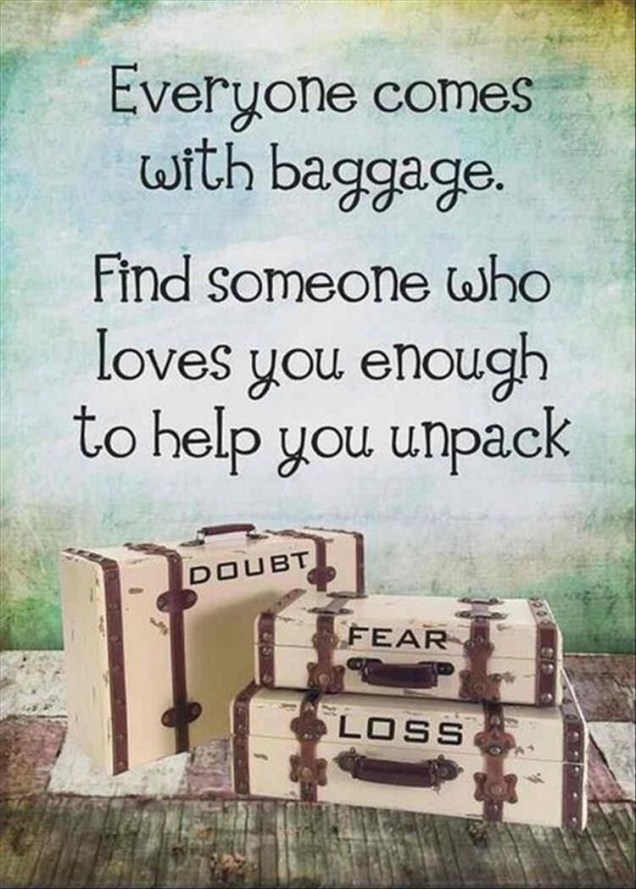
Doubt. Fear. Loss.

They’re part of the baggages we carry in life. Oftentimes we pack too much in one suitcase that they become heavy burdens in our journey.

That’s why we need to depend on people who can make the travel much lighter. Friends and family who are true to you and who will help you – they matter.

Some of us go through situations so traumatic that the human mind is so scarred from recovering from it. We’re left incapacitated mentally, physically, and emotionally. While the human mind isn’t built to handle all these, we fight and persevere every single day. We literally survive life’s challenges.
But the greatest gift is having people who truly care for you, not because when you’re up there and they’re taking advantage of you, but because when you’re down for the count, they’re willing to help unpack your burden with you because of love.

Basil Valdez’s song entitled “Lift Up Your Hands”, has a chorus that resonates these “unpacking” moments.

Cast your burden upon me those who are heavily laden

Come to me all of you who are tired of carrying heavy loads

For the yoke I will give you easy and my burden is light

Come to me, and I will give you rest.

The last day

If you want a happy ending, that depends, of course, on where you stop your story.

– Orson Welles

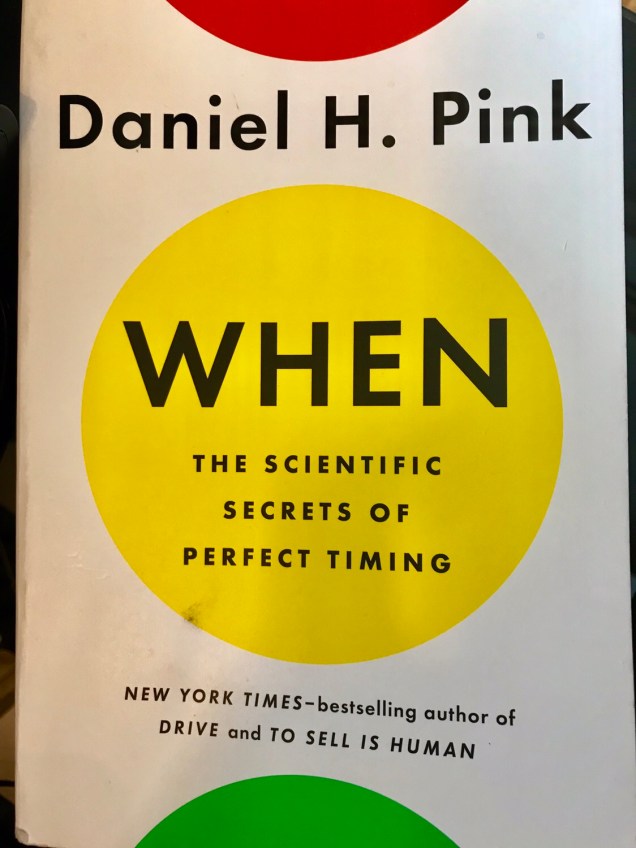
In the book by Daniel Pink entitled “When: The Scientific Secrets of Perfect Timing”, chapter 5 talks about ENDINGS.

It’s one of the most interesting discussions of the book particularly when it talks about the core of meaningful endings, poignancy. Poignancy is a mix of happiness and sadness. For many, “the most powerful endings deliver poignancy because poignancy delivers significance…adding a small component of sadness to an otherwise happy moment elevates that moment rather than diminishes it.”

I’m not very good at goodbyes. Or endings, for that matter. After all, the best endings don’t leave us happy. “Instead, they produce something richer – a rush of unexpected insight. A fleeting moment of transcendence, the possibility that by discarding what we wanted we’ve gotten what we need.”

I’d like to believe that decisions have both good and bad news. The bad news is that the I feel sad leaving a new found “family” behind. But closings, conclusions, and culminations reveal something essential about the human condition: in the end, we seek meaning.

When I was writing this blog entry, I did not know how to end the story. Pink points out the “when’s” of our lives in such scientific relevance that I understood better why I decided what I decided.

(The following is lifted from his book entitled “When”, and is available currently at Fully Booked).

Many “when” decisions involve endings. There are five questions to help us decide. If your answer to two or more of these is no, it might be time to craft an end.

1. Do you want to be in this job on your next work anniversary?

People are most likely to leave a job on their one-year work anniversary. The second most likely time? Their two-year anniversary. The third? Their three-year anniversary. You get the idea. If you dream the thought of being at your job on your next work anniversary; start looking now. You’ll be better prepared when the time comes.

2. Is your current job both demanding and in your control?

The most fulfilling jobs share a common trait: They prod us to work at our highest level but in a way that we, not someone else, control. Jobs that are demanding but don’t offer autonomy burn us out. Jobs that offer autonomy but little challenge bore us. (And jobs that are neither demanding nor in our control are the worst of all.) If your job doesn’t provide both challenge and autonomy, and there’s nothing you can do to make things better, consider a move.

3. Does your boss allow you to do your best work?

In his excellent book Good Boss, Bad Boss: How to be the best…and learn from the worst, Stanford Graduate School of Business professor Robert Sutton explains the qualities that make someone worth working for. If your boss has your back, takes responsibility instead of blaming others, encourages your efforts but also gets out of your way, and displays a sense of humor rather than a raging temper, you’re probably in a good place. If your boss is the opposite, watch out – and maybe get out.

4. Are you outside the three- to five-year salary bump window?

One of the best ways to boost your pay is to switch organizations. And the best time to do that is often three to five years after you’ve started. This period represents the sweet spot for pay increases. Less than three years might be too little time to develop the most marketable skills. More than five years is when employees start becoming tied to their company and moving up its leadership ranks, which makes it more difficult to start somewhere else.

(While this was lifted straight from Pink’s book, my work experience has proven that this is the average time frame for “making it” or not, at the work force. If, after three years you’re not in a better place at work, it’s time to either re-examine yourself or leave the company.)

5. Does your daily work align with your long-term goals?

Ample research from many countries shows that when your individual goals align with those of your organization, you’re happier and more productive. So take a moment and list your top two goals for the next five years and ten years. If your current employer can help you reach them, great! If not, think about an ending.

The Phoenix Zones

Suffering is real. Recovery is hard.

There’s no such thing as a free meal in life.

But resilience is real as well.

In Greek mythology, the Phoenix is a long-lived bird that cyclically regenerates and lives again.

Dr. Hope Ferdowsian writes about the Phoenix Effect and building Phoenix Zones to overcome the challenges of our time. By combining studies on survival and resilience, Ferdowsian takes us to the places where the “injured can heal and thrive if we attend to key principles:

– respect for liberty and sovereignty

– commitment to love and tolerance

– promotion of justice

– fundamental belief that each individual possesses dignity”

Associated with the sun, a Phoenix obtains new life by rising from the ashes of its predecessors.

Like resilience, we rise from our ashes. We die with the decisions we make in our lives based on these key principles pointed out by Ferdowsian. We die a little each time we fight for our rights and other people’s justice that is rightfully theirs.

Remember: the ones who said you couldn’t do it are watching.

We either fail miserably, or rise like the Phoenix.

The story of the blind boy

On a busy street, a blind boy was waiting for someone to drop a coin in his can. He had a board beside him with a note written: “I am blind, please feel pity on me.”

A man came and dropped a coin and erased what was on the board. Soon, the boy heard a lot of coins being dropped in his can. The boy wondered and asked someone to read what was on the board.

“Today is a beautiful day, too bad I can’t see it”.

I shared this story 5 years ago and up to today, I find it most relevant for stories on relative joy.

The story here reminds us on various ways to see life’s challenges – wallowing in self-pity or celebrating our Calvary.

We always have choices. But the decision is always left to us to make. Comfort zones are so easy to settle in. And like the blind boy in the story, it’s what we’re used to – self-pity. Like many of us, we feel it’s a safe place to be, afraid of change, waiting for the miracles that would change the situation – instead of taking on how happiness can be achieved if we only changed our paradigm.

Metamorphosis

When one goes through any form of experience, it changes the person. Their perspectives in life, their views on morals and values, their opinion of people and friends, their political color, and most importantly, their principles.
Judas is a well known character in the Bible. And whether you are Catholic in faith or not, the character of Judas is found in every culture of humanity. Judas is the symbol of betrayal. Of being a traitor. Of doing something abominable in exchange for money, power, fame or fortune.

They say that opportunities either make or break us. I’d like to think that it transforms us.

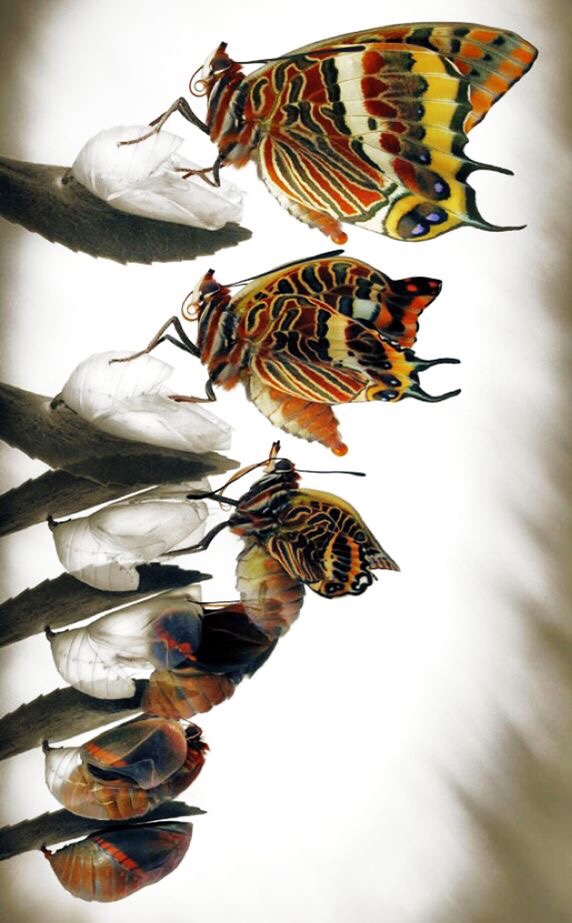
Transformation is usually painful. But it doesn’t mean that you’re falling apart. A butterfly has 4 cycles before it transforms to a beautiful adult – egg, larva, pupa and adult. And each cycle has its own goal. Where caterpillars need to eat a lot, the adults need to reproduce. Similar to our lives, we go through various cycles with individual growth goals that allow us to metamorphose into something different so that we have the capacity to be beautiful.

The butterfly is the star of this blog because it serves as a reminder that we have the ability at anytime in our lives, in spite of any traumatic event or life experience, we can transform ourselves into something beautiful.

Stories on Resilience and Strength

Falling and failing will always be life’s greatest teacher. It is from these failures we learn to rise up to the challenges. It makes us stronger and hopefully, better in a good way.

The older we get, the more challenges come our way. Even when you’ve supposedly “retired” from the humdrum of life, life has a way of finding a lemon to throw your way. In reality, life doesn’t get easier. We just get stronger.

This month, I write a few more stories on resilience and strength and the relative joy of people who have gone through hell and found heaven at the end of their journey.

To my followers, thank for for having over 5,500 views and almost 3,500 visitors since I started this blog 3 months ago in a little room in Tokyo while finding my relative joy with my family. I am grateful for the “likes” and the “shares”.

Some people asked if I could venture into a more political slant and rant. I told them that this blogsite is not themed for that purpose and because there’s really so much negativity already out there, I’d like to share a more positive mindset. Besides, politics is not my cup of tea. Staying focused on the central theme of this blog site would also help me achieve inner peace and settle my mind into achieving life’s relative joy.

I draw my strength from the lessons and decisions on the road less traveled. And I am always excited at starting all over again.