In and out #PetPeeveStories

A common scenario in any place is the flow through the door. Yes, the door will have a say in today’s blog. Even for just a segment, appropriate behaviour should be exercised when going “in and out” of the door.

1. Out before in.

Always let the people going out of the door first before entering. And I mean any door! Elevator door, automatic revolving doors or sliding doors, doors with handles – as long as it’s a door – let those coming out move first before moving in.

Let’s put a better example. I’m sure we all have a closet! When the closet is so full, every time we open the door to place something IN, everything comes OUT first before things can fit inside. Same logic stupid!

It peeves me when I see people rushing into an elevator when the door opens! Its like you want to scream, let the people out first!

2. Disabled and the elderly

Allow the disabled and the elderly access out and in through the door. In like manner, the disabled and senior citizens should nevertheless follow rule #1 above. Out before in. The rule of allowing the elderly and those with infirmity access ahead is ALWAYS superseded by the first rule of thumb through any portal – let people out first before you move in.

3. Being a child is no excuse

You know how it is when kids rush through the door when it opens? Let me remind the parents and guardians that the child is YOUR responsibility. You cannot just shrug your shoulder and say, “well he’s a kid”! No! You teach that kid good manners and appropriate conduct. Hold the child, and tell him/her, to allow people out before going in with the child. And that rushing into an opening IS NOT right. When your child bumps into other people on their way out, always remember to profusely apologize for the misbehaviour. It was wrong. You’re sorry. And teach the child to say sorry too. At any age and circumstance, rule #1 always supersedes all rules.

No approved therapeutic claim #PetPeeveStories

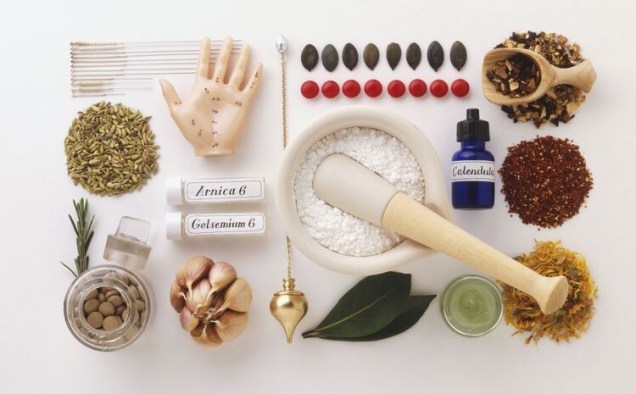
I have nothing against complementary alternative medicine. Let that be my disclaimer before you go on to reading this post. After all, there is a scientific basis for herbal products. I understand the general public that wants to use “herbal supplements” and other forms of complementary alternative treatment modalities (acupuncture, Ayurvedic Medicine, massage, etc) for either prevention or treatment of an underlying disease.

For the understanding of the reader, CAM or complementary and alternative medicine is the general term for health and wellness therapies not part of conventional Western Medicine. Complementary refers to treatment used alongside conventional medicine. Alternative refers to treatment in place of conventional therapy.

The focus of CAM is the person as a whole – emotional, physical, spiritual, and mental health. Natural products, also known as naturopathy, include herbs and dietary supplements.

With increasing use of CAM worldwide, the term Integrative Medicine has been preferred to describe the best of conventional care with the best of alternative medicines.

Sadly, while not a lot of patients understand what CAM is, the lack of knowledge and information by many doctors limits the integration into best clinical practice of CAM with conventional medicine. It is important in this equation that BOTH parties understand each other when using CAM as part of, or as a substitute for, conventional medicine.

The peeve in this issue is the misunderstanding of either parties about CAM.

Complementary therapies used alongside may help in the management of certain diseases. For example, marijuana in patients undergoing chemotherapy has beneficial properties on the nausea and vomiting side effects of chemotherapeutic agents. Instead of having to administer an anti-emetic agent, minimising more drugs which can result in drug to drug interaction may benefit select patients.

Like many other things in life, what may be good for the goose may not necessarily be applicable for the gander. Which means, that just because it works for someone, it is applicable to all.

Many alternative therapies lack controlled clinical trials. Clinical trials is the road taken by conventional medicines in order to support the claim of efficacy over placebo or other standard therapy. It is thereby encouraged that when looking for the evidence of efficacy and safety, clinical trials over testimonials are the rule rather than the exception.

Physicians are encouraged to learn about the benefits and risks of CAM, the science behind their development, and their uses and contraindications as well as potential drug interactions with conventional medicine so that when discussing it with patients who inquire about this issue, they can discuss on a cerebral level, its potential use and misuse with the patient.

Two important points should be cited here:

1. Physicians should not base their recommendation of CAM on financial gains by selling a product in their clinics, without appropriate information on the supplement.

2. Some doctors refuse to use it because they say the patient will not benefit from its complementary, alternative or integrative use not because there is truly no “approved therapeutic claim”, but because the doctor does not know what the product and the question is.

As physicians, the prime objective is to do no harm to patients. This includes assisting them in the various levels of care of their illness. Patients rely highly on recommendations of doctors. When the doctor shuns away information (valid or not) brought to his/her attention by patients who pick up a variety of information on the Internet, it is their responsibility to keep updated and assist the patient in arriving at a consensus in the management of the patient’s illness.

No one deserves anything less.

A friendly advice to patients, don’t believe everything on the Internet. It takes very little effort to sell something that can bring you harm. Discuss CAM with your physician or someone knowledgable in this first.

In your face! #PetPeeveStories

It’s hurtful when wrong or harm is done in front of our eyes and no one does something about it. I’m sure many of us have been in that position before.

Ever since I was a human being, I’ve always wondered why jeepneys, taxis, buses and tricycles load and unload passengers anywhere they want. There’s a large sign that says NO LOADING AND UNLOADING or another sign that says LOADING AND UNLOADING ZONE, but none these public transport vehicles seem to pay attention to the rule. And you see there’s a traffic aide right beside the sign. It’s like – what are these signs? Are they mere suggestions?

Many decades later, this pet peeve has remained the same, if not worse. I’ve asked myself over and over again. Why can’t Filipinos fall in line? Why can’t they cross at pedestrian lanes? Why do they insist on being first when they are last to come? What is it with them that simple discipline and simple instructions cannot be followed?

But that’s not the only “in your face” situation that is irritating. When there is blatant disregard of authority (the traffic aide looks the other way and you see that he’s taking a bribe or simply anyone in cahoots with something illegal), our reaction of staying in the shadows is disappointing.

When you see a friend or colleague or child being bullied, and refuse to help or do anything, we are accomplices to the act. We can not deny that fact that the result of the bullying was part of our inaction.

It’s terrifying that as human beings in a supposedly decent society, there are those who have no regard for decency, integrity, discipline and honor.

When we let evil prevail, we do harm indirectly. During those in your face moments, who do you fight for?

The soap story #PetPeeveStories

“There is no greater fool than the fool that was fooled by a fool.”

And nothing sets that example better than those very bad, false advertisements you see on media.

Let me tell you about a true story. It’s the story of a soap.

Atul Gawande, one of my favorite authors, wrote in his book entitled “The Checklist Manifesto: How to get things right” as reference for this story.

One of the most revealing public health studies published was a joint public health program conducted by the US CDC (Center for Disease Control) and HOPE, a charitable organization in Pakistan, “to address the perilous rise of premature deaths among children in the slums of Karachi. The squatter settlements surrounding the megacity contained more than four million people living under some of the most crowded and squalid conditions in the world. Sewage ran in the streets. Chronic poverty and food shortages left 30-40% of the children malnourished. Virtually all drinking water sources were contaminated. One child in ten died before age five – usually from diarrhea or acute respiratory infections.

The roots of these problems were deep and multifactorial. Besides inadequate water and sewage system, illiteracy played a part, hampering the spread of basic health knowledge. Corruption, political instability, and bureaucracy discouraged investment in local industry that might provide jobs and money for families to improve their conditions. Low global agriculture prices made rural farming impossible, causing hundreds of thousands to flock to the cities in search of work, which only increased the crowding. Under these circumstances, it seemed unlikely that any meaningful improvement in the health of children could be made without a top-to-bottom reinvention of government and society.

But a young public health worker had an idea. Stephen Luby had grown up in Omaha, Nebraska, where his father chaired the obstetrics and gynaecology faculty at Creighton University. He attended medical school at the University of Texas Southwestern. But for some reason he was always drawn up to public health work. He took a CDC job investigating infectious outbreaks in South Carolina, but when a position came open in the CDC’s Pakistan Office he jumped to take it. He arrived in Karachi with his schoolteacher wife and began publishing his first investigations of conditions there in the late nineties.

When Gawande had spoken to him about how he thought through the difficulties, Luby looked for low-tech solutions. In this case, the solution he came up with was so humble it seemed laughable. It was soap.

Luby learned that Procter & Gamble, the consumer product conglomerate, was eager to prove the value of its new antibacterial Safeguard soap. So despite his colleagues’ skepticism, he persuaded the company to provide a grant for a proper study and to supply cases of Safeguard both with and without triclocarban, an antibacterial agent. Once a week, field workers from HOPE fanned out through 25 randomly chosen neighborhoods in the Karachi slums distributing soap, some with the antibacterial agent and some without. They encouraged people to use it in six situations: to wash their bodies once daily and to wash their hand every time they defecated, wiped an infant, or were about to eat, prepare food, or feed it to others. The field-workers then collected information on illness rates among children in the test neighbourhoods, as well as on 11 control neighborhoods, where no soap was distributed.

Luby and his team reported their results in a landmark paper published in Lancet in 2005.

What did the interventional study reveal?

1. Families in the test neighborhoods received an average of 3-4 bars of soap per week for one year. The incidence of diarrhea among children in these neighborhoods dropped 52% versus the control group, no matter which soap was used.

2. The incidence of pneumonia fell 48%.

3. The incidence of bacterial skin infection (impetigo) fell 35%.

These astounding results were achieved despite the illiteracy, the poverty, the crowding, and even the fact that, however, much soap they used, people were still drinking and washing with contaminated water!

According to Luby, Procter & Gamble were disappointed with the outcome of the study because the research concluded what infectious diseases specialists knew all along – there was no added benefit with the antibacterial agent because plain soap was just as effective.

Soap and proper hand washing was enough leverage to change the landscape of infectious diseases in the community.

And several studies before and after this landmark study had shown that proper hygiene was all that mattered.

No advertisement. No fooling the public on what soap to buy. None of that bullsh*t endorsement at all.

I tell this story to my friends and patients so that it serves as a firm reminder that NOT all marketing strategies are truthful. I’ve always told my students that a good product or commodity or drug will sell on its own. The rest need the power of push – exaggerated advertising claims!

In this dog eat dog world, let’s put a little sense into common sense and not depend on the crap that endorsers day. After all, they get paid millions of pesos to make a fool believe the fool.

You don’t say! #PetPeeveStories

Writing and communication is a passion many of us take to task. I for one, enjoy writing. Of course, there are those who write only to rant. Why we write, is beyond this blog. How we write, however, is a pet peeve of any reader.

Spelling, grammar and syntax is unquestionably important in the composition of a sentence. And while writing requires a flow and through process (why would you want to read something that is scattered brain), it becomes disruptive when there’s so much grammatical error and misspelling.

These are my peeves, as I’m sure you have yours as well.

1. The repetition

It is wrong to use both the words “repeat” and “again” in one sentence. Whether it is written or said, they are both wrong.

Example: “Let me repeat what I told you today again.” Being repetitious is grammatically wrong.

2. Apostrophes

The apostrophe sign is NOT meant to make a word plural. And there are words that are already plural WITHOUT the letter “S”.

Examples:

– Did you see that there are many troll’s in the post? (Correct: trolls)

– How much salts do we add with the sugars? (Correct: salt and sugar are both singular and plural)

3. “Literally”

When I use the term “literally”, it means it actually happened. Which is not imaginative and therefore different when I say, “figuratively” speaking.

4. Loose vs lose

You’re such a loser if you can’t figure this one out. The mere fact that they are spelled differently implies they have different meanings.

Lose is a verb. An action. To fail to win. To misplace. To free oneself.

Loose is an adjective meaning “not tight”.

Example: The country loses when we forged a bond with a company because someone with a loose cannon said it was okay.

5. Their, they’re, there

These three words are not the same.

Like loose and lose and a lot more words that “sound alike” but don’t mean the same or spelled the same, let’s just be clear on these three words.

There is the opposite of here. It means “in that place” not here. Example: Where did you park the car? I parked the car there.

Or it can mean that something exists. Example: There is a place in Berlin that we should checkout.

Their is a possessive adjective used before a noun. Emphasizing it belongs to them.

Example: Their car is a Porsche. And their kids go to an international school.

They’re is a word made up of two words – ‘they’ and ‘are’. It’s usually used before an adjective ending in ING.

Examples: They’re bringing some wine and cheese to the picnic. Personally, I think they’re a nice family.

6. Your and you’re

Are not the same. While they sound the same, they have different meanings.

Your is a possessive adjective. It shows possession and belongingness.

Example: Whatever lies and shit you did, you need to clean up your own mess.

You’re is made up of two words – ‘you’ and ‘are’. Example: If you think that the judge is sane, you’re crazier than I thought you were.

7. Affect vs. effect

Affect is a verb while effect is a noun. Affect is an action word, meaning “to act upon or produce a change or effect in, to impress or move feelings”. Example: The very hot temperature in the metro affected the delivery of the vaccines to the clinic.

Affect can be a noun when describing emotion. Example: His daughter had a sad affect after her boyfriend revealed that he was gay.

Effect is usually used as a noun. It means result or consequence of. Example: The bad breath was an effect of his vegetarian diet.

8. Its and it’s

We usually use “it’s”. Like the examples above, it’s composed of two word – ‘it’ and ‘is’.

Two words into one is called contraction. The rule of thumb here is simple – when you mean it is or it has, use an apostrophe; and when it’s a possessive, no apostrophe should be there.

Example: It’s highly unlikely that change is coming to them because the advisers have their own agenda. The people in the cabinet have demonstrated its tenacity at arriving a consensus.

9. Then and than

Then is an adverb used to situate actions in time. Or it can be a noun meaning “that time”, or an adjective meaning “at that time”.

Examples: If you don’t wake up early, then you’ll be late for class because the traffic would be bad when you leave before 6am.

I couldn’t wake up early, but then who cares?

My then life before I joined the army was a much better one.

Than is a conjunction used to make comparisons.

Example: The SALN of the congressman showed that he had made more money in 2017 than all the years from 2010-2016 combined.

10. Fish and fishes

The plural of fish is usually fish. Fishes is used only to refer to multiple species of fish. When you want to say that you saw a lot of a particular species of fish when you went snorkelling, you say you saw a school of fish.

Examples:

The danggit fish at the Cebu wet market was so good.

These fish emit distress signals when a storm approaches the island.

Those most in jeopardy were the smaller fishes with eating and sheltering habits.

During the interview, the reporter usually fishes for anything unusual in the conversation between the lawmakers.

They say that the pen is mightier than the sword. I say, only when the grammar and spelling are correct. Otherwise, it becomes a painful exercise in futility.

Manners and right conduct for kids – Part 3 #PetPeeveStories

Table manners tell us a lot about how kids are raised. Nothing speaks more of an individual than proper table manners. Cultural differences may serve as minor excuses for a little variation or two, nevertheless, there are general rules for table manners in children that we need to teach and remind them of (and I guess that’s true for adults as well):

Washing hands before and after eating. Proper hygiene is important in children because most of them come from playing and touching dirty objects. It reminds them that cleanliness is next to Godliness.

Chewing, talking and swallowing are three movements that cannot be done simultaneously. Even when it CAN, this is not a “Got Talent” show! Spit flies, words are not understandable and the child can choke on his food.

Table manners include manners on how to use those utensils and other paraphernalia properly. Use the right utensils when eating. If there are chopsticks in a restaurant and the child does not know how to use one, ask the server for spoon and fork. The restaurant IS NOT the appropriate place to teach and learn how to use chopsticks. It just makes a mess all over the table and believe me when I say that the sushi flies!

Sound effects are not part of eating. No slurping of food please. Use the napkin (which you must always ask for) and wipe your mouth for any dribble of food.

And finally, don’t forget to say thank you and please. Please pass the salt. Please reach me the fork. Thank you for a lovely meal. Thank you for cooking for us. Please, may I have seconds? Please and thank you are words that make mealtime an appreciative one.

Manners and right conduct for kids – Part 2 #PetPeeveStories

To continue from yesterday’s blog post on manners and right conduct for children, we will tackle appropriate etiquette on how kids should deal with adults and other children (and friends).

Part 2 – With adults and other children

Dealing with adults involves a learning curve. As Filipinos, we teach the kids to say “po” as a sign of courtesy and respect to our elderly.

When talking to adults (or other kids), remind them to look at people in the eyes. It’s a sign of proper communication and respect. And being able to tell the truth.

Don’t interrupt when people are talking. I remember my teacher in college algebra telling us that “when you are talking and I am talking at the same time, one of us is bastos (rude). I’d rather you be rude than me.”

Don’t use foul language. It’s important that those swear words are used sparingly. They’re signs of being raised by barbarians.

When you’re with other children, it’s important to remember that patience is a virtue. Wait for your turn. Falling in line is a sign of discipline. There’s an experiment that was done in children that showed kids who were more patient were highly correlated with discipline.

Never make fun of anyone. Bullies are made, not born. When your friends abuse other people, it’s not okay. And it doesn’t matter that it’s not okay to be cool. Being cool by hurting others is never okay.

Using kind words and giving compliments among other children are reflective of the kind of family they come from. And these compliments must be truthful and come from the heart.

They say that what a child says is more often than not the truth. They blurt out what they mean. And mean what they say. We just need to teach them what is appropriate and what is not.

Rowdiness is a reflection of the kind of breeding we have. And it’s not okay.

Manners and right conduct for kids – Part 1 #PetPeeveStories

Children are usually a bundle of joy and laughter. Some are also the devil’s advocate. And I’m sure you’ll agree with me that kids today (and the youth in particular) lack a lot of basic public etiquette.

Good manners and right conduct seem to have been thrown out of the window because guardians and parents spend less time with their children. They’re usually left to an electronic baby sitter or a nanny who wouldn’t care less (or is totally clueless) when it comes to child rearing.

Whatever the reason, a rude child is the making of a rude adult. An ill-mannered individual is not born. They are made. So before we all go ranting with anger on why so on and so forth are uncivilised people, they have a past. And it begins during their childhood years.

I will divide the blog into three parts (otherwise it gets to be too long):

1. Manners in general

2. With adults and other children

3. And at the dinner table

And you may have other thoughts you wish to share (so feel free to leave a comment). This is being written, as a gentle reminder on how to raise our children properly. Remember- we reap what we sow!

Part 1 – The General Rules

1. Always say thank you and please. Gratitude expressed is always appreciated. Most especially from someone you expect to hear the “thank you” from. Brighten up someone’s day – don’t forget to say please and thank you. Always.

2. Say hello and goodbye. At the clinic, I greet each of my little (and older) patients with Hello and close the consultation with a Goodbye. It’s always good manners to teach children proper greeting manners as well. Just to make sure that they’re not a robot.

3. Holding the door open for people is a nice gesture. When kids see adults running towards the open door and slamming it against other people, they think that it’s an appropriate behavior. Exiting and entering are manners should be taught. Reminder – allow people to exit first before entering. Rule of thumb is OUT before IN!

4. Kids intelligence should not be underestimated. Remember, they hear, see, feel, taste and smell what we do. Those sneaky things that we do under their very nose which they see and hear. Or those bad habits we have like being late or screaming at one another at the dinner table or whispering about bad secrets which they overhear.

5. Manners are important. Sitting properly. Cleaning up after making a mess. Covering your mouth when you sneeze. Saying “excuse me” when you need to interrupt a conversation. Saying sorry when you bump into someone accidentally. Learning how to answer the phone properly. Manners matter.

Raising a child should be based on our standards. Not theirs. And the kind of child you raise is a reflection of our child rearing.

Mobile phone etiquette #PetPeeveStories

We all have one (or two or more) mobile phones. Most have the latest models. And in spite of the billions of mobile phones in the world, mobile phone etiquette is understated. It’s irritating to see how people (including me) have pet peeves on others who don’t seem to observe respectful behavior when using a mobile phone. In an age where smartphones are the rule than the exception, here are a few reminders on cellphone etiquette.

1. Texting and sharing

Avoid sending too many messages without getting a reply from the initial message you sent. And try to make sure that you read back what you text and check who you’re sending your message to before pressing send. Texting several messages in a row makes you seem needy.

K, LOL, GTG…and other acronyms should be avoided. There’s auto correct. Avoid using acronyms especially if only you can understand. Besides, it’s not cool. It makes you look ignorant at spelling.

When you’re in a group thread, be mindful of the sentiments of the group. You cannot just point what you wish. Jokes, prayers, daily rants, food posts, personal events – should be in a separate thread. There are group threads that are “official” and serve for announcement of work, information or group related activities. Being sensitive to other people is basic etiquette.

When texting, don’t text or email with ALL CAPS ON. Nobody likes being shouted at.

Don’t send “round robin” chain messages. It’s irritating and seriously, if chain messages were true, the devil would have died long time ago.

2. Look at the face not the phone

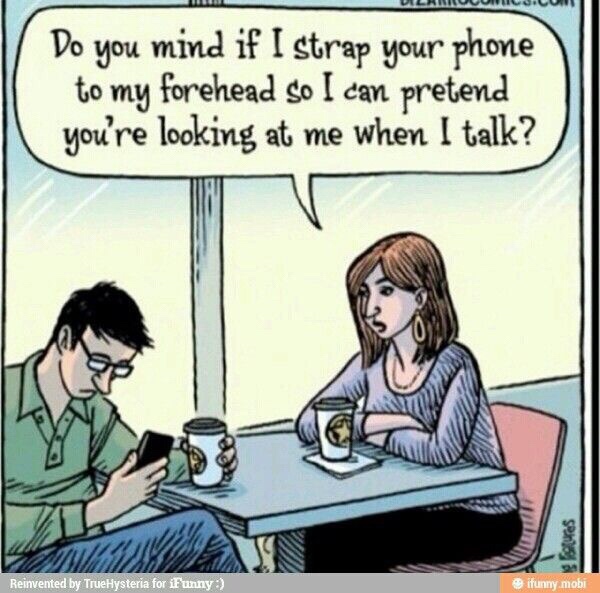
When we are with people, it’s important that we look at their face when talking to them and NOT the phone. It’s highly inappropriate that you’re staring at the phone during a conversation, a conference or meeting.

3. Silence should be observed

Keep your phone in silent mode during times that will require silence – at church, in meetings, during a conference, in the movie house, concerts, libraries, funerals. For your information, they’re universal quiet zones. It’s irritating to hear blaring Voltes V or Mission Impossible ring tones at these places.

4. Inappropriate

Don’t leave phones on dinner or dining tables. It’s a sign of expecting a call and hurrying up the party you’re dining with. It’s rude.

Don’t make a waiting or service staff wait for you to finish your conversation. When you’re in a group meeting or party and receive a call, be excused, step out of the meeting, and take the call outside. Not everyone has to hear how you closed a billion pero deal.

Watch the volume of your speaking voice. You don’t have to scream when talking. If you can’t hear the other party, it must be the connection is choppy, the volume of your phone is low, or you’re tone deaf. If you’re fighting with the other party, go out of the room and scream at the top of your voice in private. We don’t have to listen to your sh*t.

And if your kids are playing games, turn the volume down. Everyone doesn’t have to hear those irritating repetitive sounds. When you’re in a restaurant, it’s irritating to have a child watching in full volume, her fave movie. Get her a headset.

Remember, being considerate of others particularly in public mandates us to learn phone etiquette.

@the restaurant #PetPeeveStories

If there’s anything any of us love to do, it’s to eat. While you can eat in your underwear or slippers or with your feet up on the chair at your home, you can’t do the same in a restaurant. Whether it is a fast food joint, casual or formal dining, there are rules on proper behaviour in a restaurant.

1. Psssttt…waiter

Nowadays, most restaurants have nameplates for their crew. That’s so that you can call them by their nicknames. It makes it less degrading than hollering waiter or waitress. That’s what the nameplate is there for!

And I cannot stand this Filipino habit of grabbing someone’s attention by pouting his lips and making the sound “psssttt” to call a waiter (or anyone for that matter). It is humiliating and rude.

Wait for the server to approach you. They usually introduce themselves and REMEMBER their name!! It is good practice to make sure that when you need anything again, you don’t just drag any other waiter or say “psssttt”. That’s the reason why in the restaurant they start off with: “Hi! I’m (name of server) and how are you guys doing today? I’ll be your server. Here’s the menu. Can I start you off with some drinks? If there’s anything you’ll need, just let me know. Again, my name is (—) and I’ll be your server today”.

2. Who pays the tab?

When friends decide to go out for a meal and some drinks, it’s usually “dutch”. Which means, you pay what your order.

When someone INVITES you to a meal, the HOST always pays the bill (regardless of gender). Don’t invite people to a meal and expect them to pay for it. After all, it is good etiquette that whoever invites you, foots the tab. Hence, if you say, “you guys want to go grab a bite to eat?”, then expect to pay for that meal! If you want to make it clear that each one pays his own meal, say it so from the get go. If you don’t say anything, remember the rule – HE WHO INVITES, PAYS FOR THE MEAL!

3. BMW rule

When you’re at a formal dining event and you encounter all those cutleries and glassware on the table, a lot of us are flabbergasted because we don’t know how to go about this setting.

Rule of thumb is BMW – Bread, Meal and Water.

The left side of the table is the bread and butter plate. In the middle is the meal. At the right side is the water glass.

When there are multiple cutleries, use the utensils on the farthest end and work going towards the middle plate as the meals are served.

4. Bags and groceries off the table

Even if your bag is a Hérmes or Prada, no bags on the table please. Social climbers with no etiquette do this to show off. It’s a distraction and you shouldn’t actually be mixing books, cellphones, keys, gadgets and groceries on the dining table. If food or water gets spilled on it, your throwing a fit won’t help because in reality, only food and drinks served should be on the table.

In finer restaurants, they offer seats for your delicate LVs or other branded handbags and smaller items. Others have hooks under the table for your carry on bags.

5. Pass the salt PLEASE

When you need something that’s not within your reach, ask your companion to kindly pass the food or utensil or container or whatever! Don’t reach out for it by stretching out your arm in front of other people especially when they’re all trying to stuff food into their mouth already.

6. Chew with your mouth closed

Proper decorum dictates that we don’t make a lot of noise when we eat. Unless of course the restaurant is themed for that purpose. Many Chinese, Japanese and Korean restaurants have food (usually broth) that’s best eaten with a slurping and chomping sound so that it’s authentically “appreciated”.

As a general rule, however, don’t chew with your mouth open. You are not a monkey.

7. Food from plate to face NOT face to plate

Bring your food to your mouth. That’s correct. When eating, the direction should be from plate to face. Lean back and enjoy the meal by picking up the food with the utensils (or hands) and bringing it to your mouth. Never put your face into the plate. Only four-legged animals do that.

8. When to bring the kids

Unless your children have mastered good manners and proper conduct and can behave in a restaurant, you may want to keep them in a leash at a fast food joint or a family-themed casual restaurant. Fine dining is not appropriate for children who cannot observe the rules. Why people go to a more upscale restaurants is not only the ambience and the food, but the privacy and quietness of the environment. It doesn’t matter if you can buy the restaurant. If your children are uncouth, have no table manners and misbehave – you’re not welcome in these establishments. And when people being to stare at you and your children while they’re horsing around, you deserve the dressing down with the gazes from the crowd.

9. The napkin is not a tissue paper

Table napkins serve the purpose of cleaning your mouth when food comes in contact with the surrounding area. When you have snot, or a bad cold or allergy, and need to blow out all that mucus, for God’s sake, excuse yourself from the table, stand up, and go to the bathroom and use the tissue paper there. And don’t forget to wash your hands before returning to the table.

10. Breaking bread

Use your hands when breaking any form of bread. Even if you have to knead it slowly, use your hands. Don’t pick up the butter knife and attempt to slice open the bread using the butter knife or any other knives on the table.

I’ve left a nice poster reminder here for additional etiquette and manners when you’re dining alone or with your friends. Remember, while you pay to enjoy the meal, so do others. If you want to eat like a slob, do it within the confines of your home. Order a take out.