The battle and debacle on social media is on number of likes and shares. Without a doubt, influence peddlers, content providers, and other disruptors of the norms of information are on a “platform” to gain mileage, and obviously, financial compensation or remuneration for clout chasing.
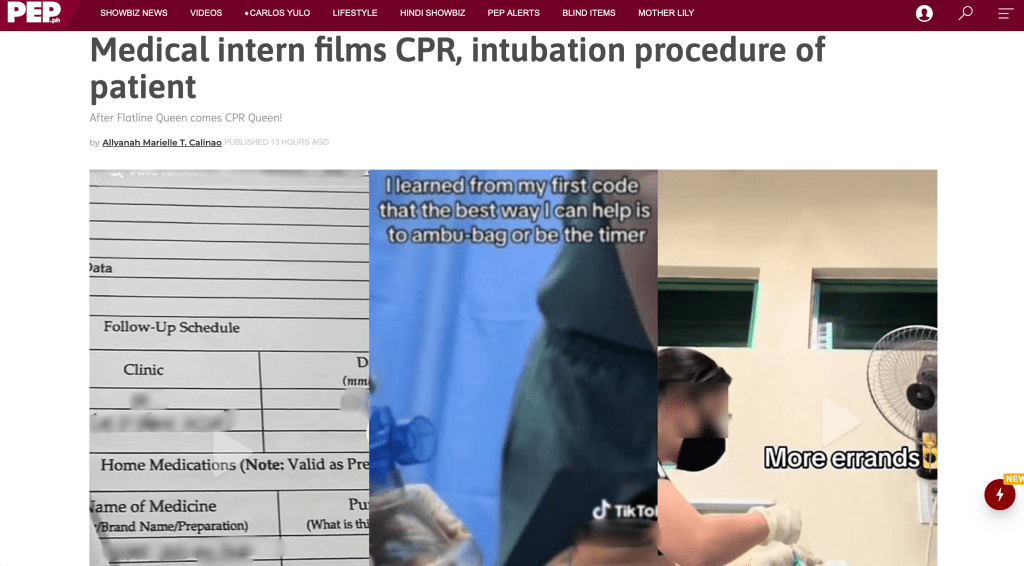
The latest in the unprofessional clout chasing was a medical intern from FEU who uploaded on TikTok sensitive issues about a patient in her string of tour of duty during a life and death situation of a patient. This comes after netizens bashed the “flatline nurse” from the University of Perpetual Help – Calamba in her TikTok video on her “day in the life of a nursing student”. https://www.pep.ph/news/local/182230/nursing-student-flatline-video-a6904-20240809-lfrm?ref=home_feed_1
There is a thin line between decency, empathy and respect among clout chasers. Using the medical field and the patients who they care for as “content” to gain “influence” is wrong in so many aspects and should not only be discouraged but sanctioned.
If this is the kind of thinking of these would-be health professionals today, imagine the kind of healthcare they would provide to patients when they are already licensed professionals.
They must not get away with their actions. Deleting the video is not enough. They should be taught a lesson that should not use their generational trend as an excuse for chasing clout.
Singapore Airlines ranked number 2 among the World’s Best Business Class Airlines 2024 by Skytrax. It ranked number 4 in Best Business Class Airline Seats, number 2 in Best Business Class Airline Lounges, number 3 in Best Business Class Onboard Catering, number 3 in Best Business Class Airline Lounge Catering, number 5 in Best Business Class Amenities and overall number 1 Best Business Class in Asia.
My recent business trip allowed me to relook at what I felt about the Business Class route from Manila to Singapore (and back) in this review.
Lounge in Manila
I’d give it a decent rating of good. It wasn’t crowded because it was exclusive for Singapore Air passengers and the food was fairly alright for a lounge in Manila. The WiFi was horrible when the lounge was at 75% capacity.
On time?
Not a chance. Our flight from Manila to Singapore on SQ 917 was delayed due to the late arrival of the aircraft. The original 210pm flight departed past 3pm. They rushed us to the plane and in the mad rush, the service on Business Class was compromised. Not even a towel or water was offered as I tried to get settled in.
Seats, amenities and more
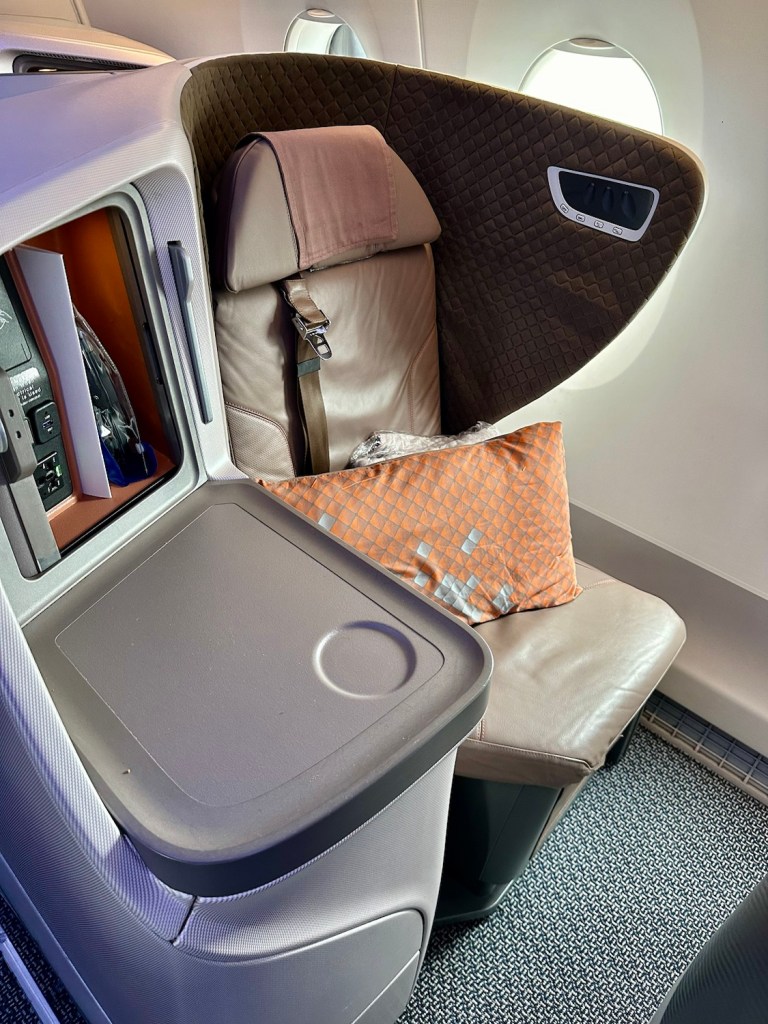
The seats are nice. Lie flat and just light up the panel for the controls. That winged portion the left side of the chair was useless and had a difficult time drawing down the shade.
The entertainment was good as you had solid choices. No amenity kits but you could ask for a sock or slippers (I asked for slippers) and the toilet was stocked (although not too well). There are two toilets at the mid back and one in front. But that’s not good considering business class had 42 seats with two business class sections divided by the toilets in the middle. So yes, the toilets were busy all the time.
I loved the fact that WiFi was free on BizClass at 30,000 feet! It was great for texting and doing some email work.
Food from Manila to Singapore
There wasn’t much choice as half were Filipino dishes. Seriously!
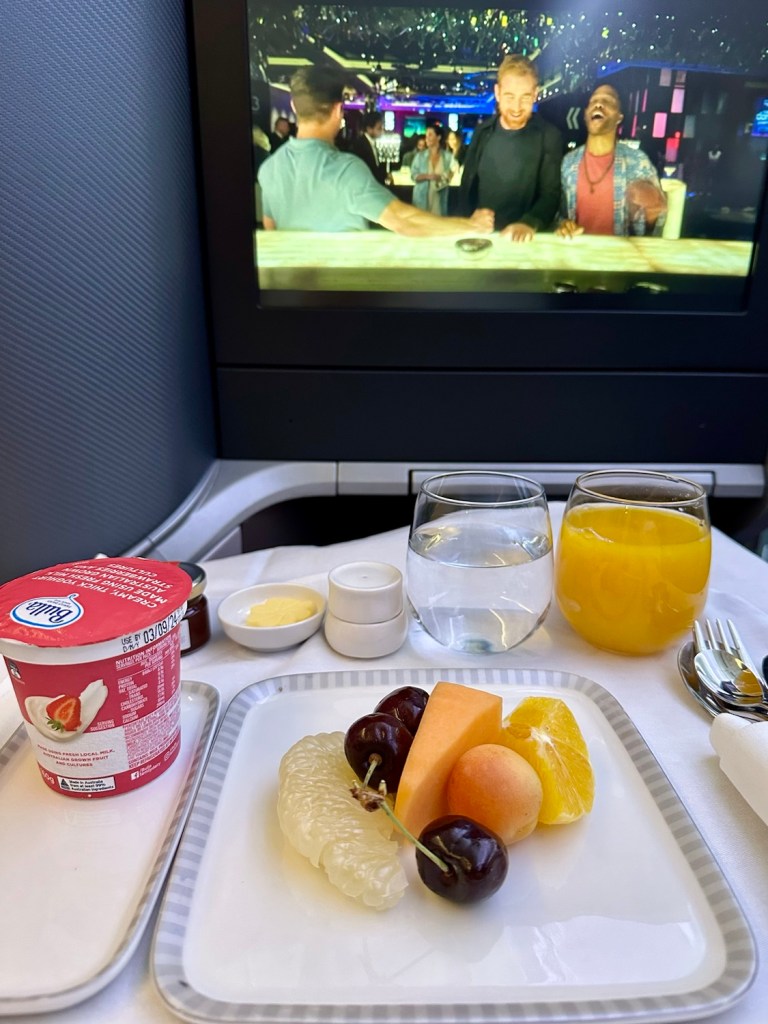
The appetizer was better than the main course. I couldn’t understand the flavor of the pork and noodles (which was way too salty).
After getting into Changi Airport, one needed to take the train from Terminal 3 to the arrival area. And wow, their hassle free immigration point was superb.
You just needed to fill out myICA form 3 days before your trip and all you needed to do was scan your passport, have a photo taken and your thumbprint at the automatic “immigration” gates! In less than 60secs, you’re out!
It’s the same process on the return trip.
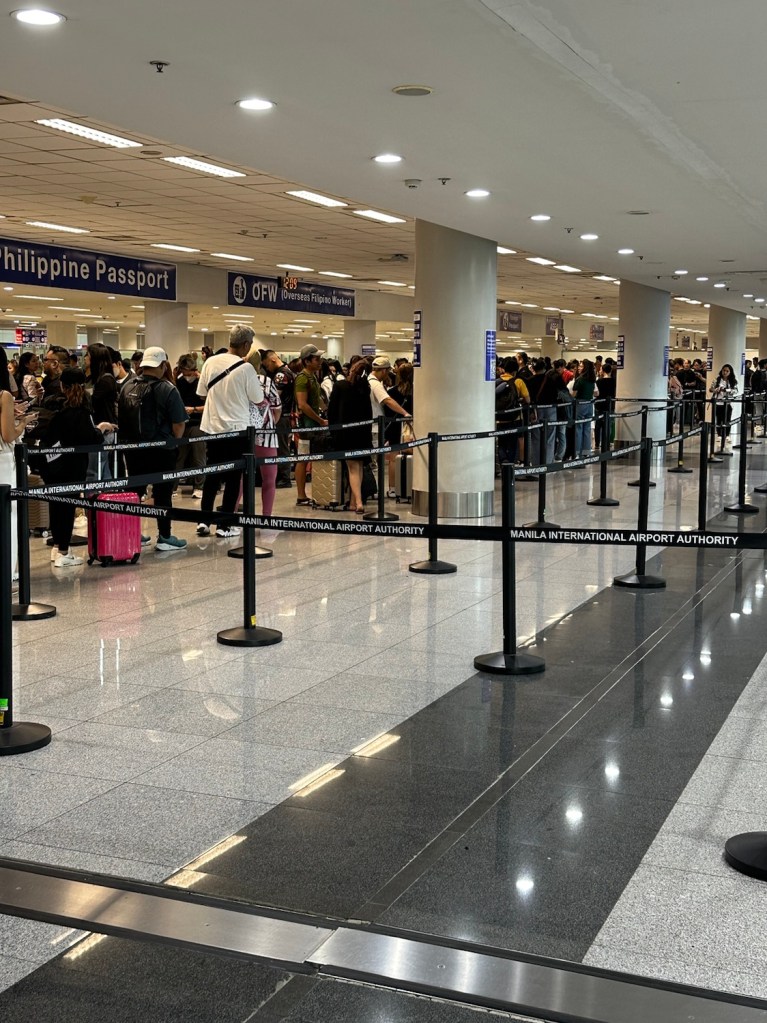
Compare our immigration lines in Manila with that of Singapore in the photos below.
Yes, I’m envious. Embrace technology and make it a tool to enable the bureaucratic process of the ailing Philippines. This process alone will improve our tourism industry.
The lounge of SQ in Singapore had food galore. It offered a good mix of choices and the food was better tasting than the bland choices in Manila.
The return flight
Never fly during a storm. So I couldn’t fault the airline for such a delayed and turbulent return flight. While we pushed back at exactly 930am, we were super delayed returning because of typhoon Carina. Circling the air for more than an hour and being number 10 on queue to land was awful. Not the airline’s fault as Mother Nature had her way.
Book the cook
Because I didn’t want to get disappointed with my food choice (again), I booked the cook. And they offer this only on flights out of Singapore or long hauls.
And yes, who says you can’t have lobster thermidor for breakfast? The food was okay, and not great but better than the food out of Manila.
The verdict
So what’s my rating on a scale of 1-5 (5 being the best)?
For a regional flight on Singapore Airline, I would give SQ a 4 for seat comfort, 5 for entertainment choice, 2 for amenities, 4 for overall service, 3 for food and 4 for lounge.
This short review is on the Jen Hotel (a Shangrila Hotel) on Orchard Gateway.
Got a club room for this two night stay for a meeting in this beautiful country Singapore. The club room provides access to the lounge and gym.
When you get to Orchard Gateway, you need to take the lift to the 10th floor to check in. Oh, the lift is horribly slow.
The mobile check is on the extreme right. Unfortunately, the girl didn’t know what to do when I showed her my mobile phone and the app that showed that I have checked in. It took quite a bit of time to get my room key because she had to ask the other attendant on what to do.
Finally, when I got my room key, I was off to my room. And the next set of lift was another wait as the lifts in this hotel are awfully slowwwww.
It’s a small room. No frills and the shower had no hot water. I didn’t bother to inform them anymore as I was tired and wouldn’t want to be changing rooms at this point.
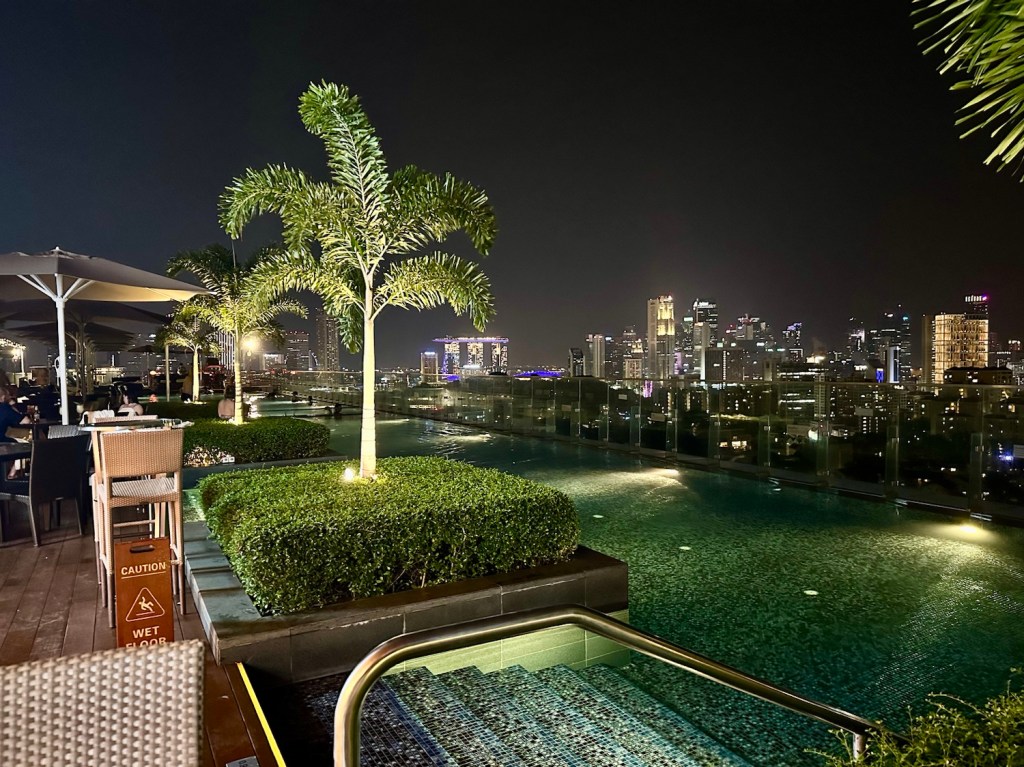
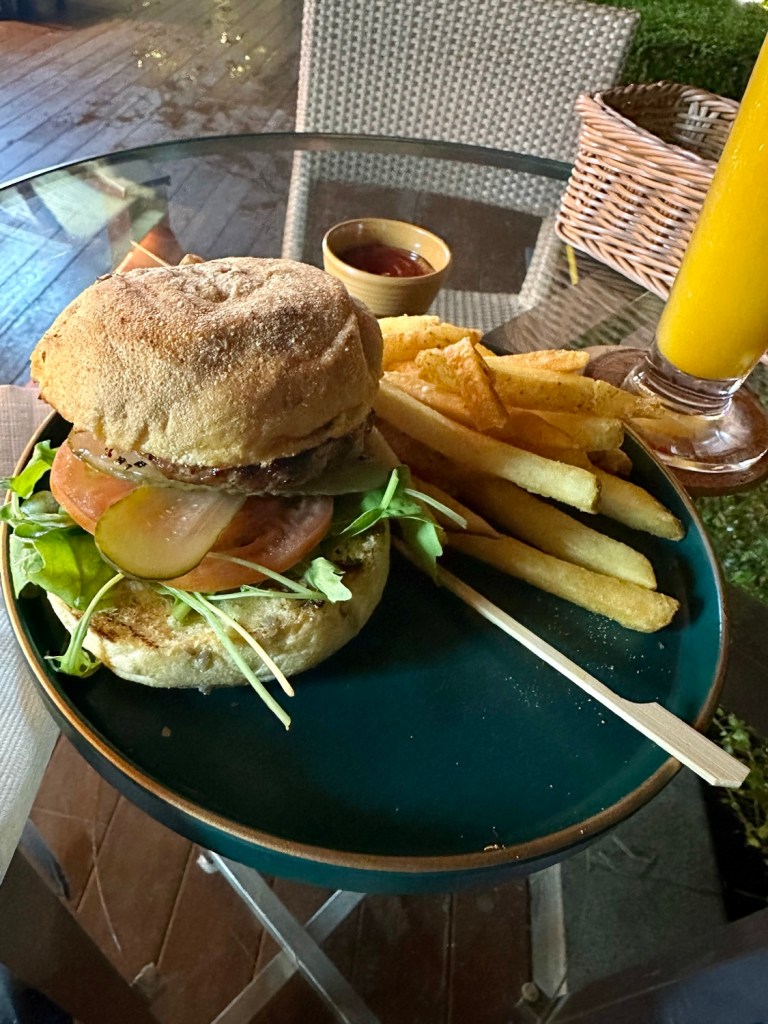
Dinner was a quick one at the rooftop restaurant Trippi. The hamburger and mocktail was a decent one. The breeze was fine. The pool looked inviting. The view was stunning.
Breakfast starts at 7am. And the choices in the lounge area aren’t much but decent enough. It’s self service but even service wasn’t up to expectation for a Shangrila brand.
You’d expect that at the club floor or room, you’d get a bit of perks for the room. But that doesn’t apply here. All rooms have nothing in the room ref. If you wanted something to munch on or something to drink, they had a vending machine near the elevator for you. Talk about scrimping.
My final verdict? I’m wondering how it even got tagged as a 4 star hotel. Plain and simple – it’s 3 stars.
The relationship between the physician and the pharmaceutical industry is once again put in the spotlight due to an alleged “pyramid scheme” from doctors who engage in getting credits in exchange for prescriptions AND enticing colleagues to prescribe the products of the pharmaceutical company in order to earn additional credits and benefits.
The MCP was adopted in 2011 during the US APEC host year and was recognized by APEC leaders and ministers.
Six principles form the pillars of the MCP:
1. Healthcare and patient focus means everything we do is intended to benefit patients.
2. Integrity means dealing ethically, honestly and respectfully in everything we do.
3. Independence means to respect the autonomous decision-making of all parties, free from improper influence.
4. Legitimate intent means that everything we do is for the right reasons, is lawful, and aligns with the spirit and values of these principles.
5. Transparency means a general willingness to be open about our actions while respecting the legitimate commercial sensitivities and intellectual property rights.
6. Accountability means a willingness to be responsible for our actions and interactions.
During my term as director for the CDRR at the FDA, we constantly monitored and reminded the industry to manage their entanglements with physicians. While it is not wrong to promote any biopharmaceutical product, promotions should be within the scientific merits of the product, sans pomp and enticement.
Some physicians may not be able to discern entanglements with the industry as some believe that “gifts” are entitlements to them. There is no such thing as a free lunch.
The greater the value the gift, the greater the responsibility. Gifts do not need to be ostentatious to be a bribe. A bribe is a bribe, regardless of value. It is the intent that is crucial.
A lawyer commented that this practice is not illegal, but it is unethical.
Undue influence is legally defined as “influence by which a person is induced to act otherwise than by their own free will or without adequate attention to the consequences”. Undue influence clouds clinical judgement in the healthcare system.
The practice of medicine is not a business. Our relationship with patients rely on trust, compassion and respect. There should be no lines that blur the relationship between doctors and patients at all touch points.
And the guiding principles of ethics – TO FIRST DO NO HARM – is the overarching dictum that should be followed.
In January of 2019, my mom who was then 82 was diagnosed with colon cancer (Stage IIIA).
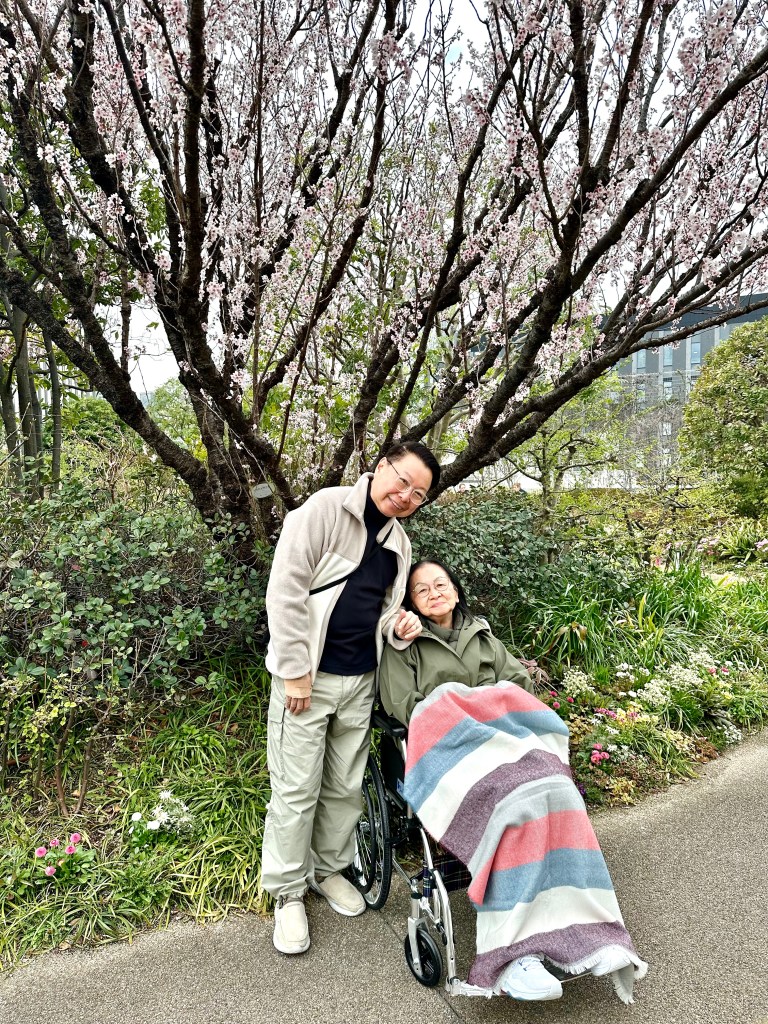
She underwent surgery on February of the same year, but refused to undergo chemotherapy. She said that she was old already and did not want to have to struggle with ‘quality of life’ issues. We actually had bookings for our trip to Tokyo in March of the same year. A month after her surgery, she struggled to make it with us to the trip.
It’s been five years (and more) since her surgery, and it’s been a roller coaster ride of having to deal with health issues. With the love and care of her family – my niece, nephew, sister and my partner – we were able to manage through several speed bumps on health.
I’ve always believed in the power of prayers. Sometimes, when we ask for those small miracles, someone up there listens to us. As a man of science, I believe that we are only instruments of God.
On a balmy Maundy Thursday in Tokyo, my mom wanted to visit a church. Unfortunately, we could not use the PWD lift because there was no one around but the Tsukiji Catholic Church (https://tsukijicatholic.org) was open. We spent 30 minutes there in meditation, thanking God for the extended journey in her life.
Unlike our trip last year where we stayed in the hustle and bustle of Ginza, this time around was a more reflective one. (Did I not blog about how reflections killed my Apple Watch?)
We spent more time bonding and enjoying each other’s company. At my age, I began contemplating more on what my mom’s journey was and how my journey of accepting struggles and resilience brought me to where I am today. No complaints. No regrets. Just pure acceptance.
Because love, is what pulled us through those difficult times.
The first Apple Watch Series 1 came out in 2016, I was one of those who flew to Tokyo to grab one.
There was that fascination over, yes, owning a watch that synced with your phone, apps and all!
Over the years, the Apple Watch evolved as technology advanced as quickly as the iPhone.
As quickly as the phones changed, so did the watches. And the other digital devices.
A few years after the launch of the Apples Watch, many other brands came out with their own versions of the “smart watch”. And smart phones.
I have nothing against technology. In reality, I am one of those who embraced the craze.
On our recent trip to Tokyo, one realization struck me when my Apple Watch died on me. Yes. It literally lost power several times. And I knew this 5 year old watch (yes it was a series 4), was ready to retire.
And while I was looking at my “dead” watch at Shinjuku, the realities that struck me were:
1. The watches had no resale value. These smart watches had a life span. They don’t last like the phones and no matter how expensive
Aside from the name of a hotel chain, when people talk about Shangri-La, it is meant as “an imaginary, beautiful place, often far away, where everything is pleasant and you can get everything you want.”
The word emanates from novelist James Hilton’s fictional account of the Tibetan paradise Shambala. In the 1933 novel “Lost Horizon”, Hilton changes the name of the paradise to Shangri-La. It was made into a movie and re-released in 1942 with the title “Lost Horizon at Shangri-La”.
This blog is a review of our recent stay at Shangri-La at the Fort (Bonifacio Global City).
THE GOOD
Ease in reservation through either its website or the Shangri-La Circle App
Nicely decorated rooms especially the Horizon Floors, with amenities from L’Occitane.
Loved the fact that this hotel has PWD accessibility in mind at almost every turn
Excellent food
Location to Bonifacio High Street shopping can be accessed through the hotel
THE BAD
So yes, it was a holiday and they expected a deluge of guests. The cost of the Horizon Floors was nevertheless more expensive than the regular floors. The guests on the Horizon Floors should be given the exclusivity offered for paying to be on those floors. Those rules changed on check-in. Because of the New Year revelry, those occupying the Horizon Floors from Dec 30-Jan 1 will have breakfast in the Grand Ballroom, together with all the other guests of the hotel.
While the hotel had collected the full payment for our stay, it took almost an hour to check-in on a slow day. While check-in was already available on the APP, the APP did not sync with the fact that the hotel had already collected full payment. When I inquired from the hotel why the APP was still charging me for rooms that I already paid in full, I was informed not to mind the APP and just check in at the hotel premises on the day itself. I would be double charged if I check-in through the APP. So much for technology with this hotel.
Breakfast was in one whole Grand Ballroom. Which left you with no sense of privacy. Which was like one large school cafeteria where there was a melee in the battle for what food and what drink the hungry hippos were gunning for. And while we did get seats (we ate early), coffee was served cold and after breakfast was done. You couldn’t enjoy the breakfast as you would want to because the queue to the “Grand Buffet Breakfast” was so long, that I pitied those who were in queue. Yes, it extended from the ballroom all the way to the elevators.
Even check out was a pain. Where was all the technology hype when the hotel isn’t even interconnected with their digital platforms?
Over-all, I’d give this staycation a 2.5 star rating.
It is, after all, touted to be a 5-star hotel.
It is, after all, a very expensive hotel.
It did not live up to its name and reputation.
Yes, this branch of the hotel chain called Shangri-La did not live up to its name. It’s like when you say you’re the best and yet you can’t claim it on all counts. You cannot be the best when under duress, you’re one of the worst.
Revelry or none, high occupancy or not, customers should be treated with the expectations the hotel touted it to be.
After all, the anatomy of disappointments are expectations.
For the past 3 years, we’ve seen a volley of surges that occur during or after a holiday season. The last surge happened at the beginning of 2022 – the beginning of the Omicron variant. After the onslaught of this variant, the December numbers for the year dipped to less than 7% and continued to decline to 5.5% at the beginning of 2023. Omicron had continued to shift to different sub variants and while no new variant of concern had emanated after Omicron, people continued to get COVID with milder symptoms to being asymptomatic, in the majority. The most recent wave for 2023 occurred in May 14, 2023 where the PH peaked at 24% (7-day average, with more than 53,000 tests done). As Omicron continued to evolve, the JN.1 sub variant is likely responsible for the holiday wave today. As of this writing, the national 7-day positive rate is up at 21.2% (with only a little more than 10,000 tests).
Of course, the holiday spirit is at full throttle with vengeance – revenge travel, revenge shopping and dining, revenge parties, revenge concerts, and revenge reunions. Of course, this is what normal living is. And for our mental health, we cannot keep hiding under a rock because of COVID. And so what came naturally in this holiday wave is human nature.
It’s still bad news considering that the PH had one of the longest lockdowns in the world. Bad news in the sense that many people never learned about masking etiquette. I mean, seriously, we were the only country that implemented those useless face shields for years! The government even mandated that useless tool and there were scoundrels that profited from that idiotic idea. So you’d think that the simple mask was not a large ask for the general public to remember and practice self-care and personal responsibility when one has respiratory symptoms.
Rapid antigen tests are most accurate when they are used in people who have signs or symptoms of COVID-19, especially during the first week of illness. People who test negative may still be infected.
Rapid antigen tests are considerably less accurate when they are used in people with no signs or symptoms of infection, but do perform better in people who have been in contact with someone who has confirmed COVID-19.
The accuracy of rapid antigen tests varies between tests that are produced by different manufacturers and there is a lack of evidence for many commercially available tests.
Over-all, the rapid antigen tests (RAT) approved for commercial use in the PH, are stringently assessed by the local Food and Drug Administration.
The Cochrane review showed that “In people with confirmed COVID-19, antigen tests correctly identified COVID-19 infection in an average of 73% of people with symptoms, compared to 55% of people without symptoms. Tests were most accurate when used in the first week after symptoms began (an average of 82% of confirmed cases had positive antigen tests). This is likely to be because people have the most virus in their system in the first days after they are infected. For people with no symptoms, tests were most accurate in people likely to have been in contact with a case of COVID-19 infection (an average of 64% of confirmed cases had positive antigen tests).
In people who did not have COVID-19, antigen tests correctly ruled out infection in 99.6% of people with symptoms and 99.7% of people without symptoms.”
The RAT is a very useful, cost-effective point of care test to use. And I strongly urge everyone to make use of this tool, especially in the light of rising cases (or waves and surges). It is a personal responsibility which we owe to the community, particularly those in the vulnerable sector.
Finally, is the availability of an updated vaccine or a good vaccine for that matter. This topic will be a separate blog, but for now, let’s call a spade a spade. We will have to find a good vaccine that will block transmission of the virus. NONE (and I emphasize that) of the vaccines out there will do that. Getting shots against SARS-CoV2, no matter how updated they are, will not prevent an infection after exposure. However, the vaccines are helpful at decreasing the severity of infection, if one does catch COVID-19.
In summary, the bad news isn’t really Omicron. It’s a multitude of factors – human at that – that continues to challenge the evolution of respiratory pathogens based on the behavior of people globally.
Let’s face it, if we don’t observe better respiratory hygiene, we will continue to be overwhelmed with waves. Based on hybrid immunity, this will be most likely an annual affair.
I know that many followed this blog for the COVID-19 updates during the difficult times of the pandemic. As we saw better outcomes with vaccination and treatment, you will agree with me that it is time to move on, albeit still cautious of how SARS-CoV-2 can possibly evolve in the future.
With that said, I chose the Greek word Ataraxia as the title for this blog.
It means, “a serene state of calmness, freedom from worry.”
The past three years have truly been difficult. Not only in terms of healthcare and economy, but the overall anxiety driven by the pandemic.
There are many who still live in perpetual fear of catching COVID-19 and still many who are confused with the isolation and quarantine rules when one tests positive for the virus.
Without a doubt, majority of the infections we are seeing now are mild.
I tested positive for COVID on May 1, 2023.
Because it was a holiday, I had a 3 km run in the morning of this very warm day. After a good shower, I asked my family to have lunch in the mall. We always pick sitting outside (where there is good ventilation) in spite of the heat. After lunch, we went around the mall (with masks on). I told my mom that I felt a bit exhausted (and attributed it most likely to both the heat and the run). We went home early and I took a nap and woke up feeling better.
But better wasn’t good for me. That’s because this was unusual. I do some runs but don’t feel winded down. And because there were so many sick kids in the clinic lately, I decided to swab myself. And I was positive.
I didn’t have any other symptoms. No fever, cough, cold or loss of taste and smell or pain. Nothing at all. But I isolated for 5 days and continued to wear a mask up to day 10. I was already negative on the 7th day (with day 0 being the first day I tested positive) and a repeat test on the 9th day continued to be negative. I short, I was fattening myself for a week and binging on Netflix and Disney Plus and working online.
It dawned on me – how many people had symptoms similar to mine and did not bother to test? As I’ve always told my patients, you don’t need to have fever to be positive for COVID-19.
None of my family who were exposed to me had COVID. Maybe because they all had COVID infection already 6 months ago and I was the only one left in the household that has not had natural COVID infection. Could it also be due to the fact that I received my bivalent in the US in October 2022 that I was ‘protected’ for a couple of months? But the circulating strains currently are not covered anymore by the bivalent vaccines that are being provided.
That week of catching COVID gave me time to mull and think about life after COVID infection. This will most likely be a viral infection we all will catch (just like influenza) and there will be a variety of circulating strains from a dominant variant and sub variants. Those that have had the natural infection will have more robust protection and those that have had vaccination will be protected against more severe clinical illness.
Catching COVID taught me a valuable lesson in medicine post-COVID.
Ataraxia should be how we look at the current COVID situation.
Work. Eat. Drink. Travel. Relax. Have fun. Repeat…
Not even the experts at disaster preparedness. It took the World Health Organization to even decide calling the SARS-CoV-2 outbreak in China, a pandemic.
Like a thief in the night, COVID-19 stealthily took over our lives and changed the way we lived in the last three years. Even as the WHO declared that COVID-19 is not a public health emergency any longer, those three years were undoubtedly painful ones.
People needed to change behavior. With high mortality at the beginning of the pandemic in the 21st century, science needed to step up quickly in order to find treatment and vaccines against the virus.
Unfortunately, as science raced to address the gaps of healthcare, the virus mutated to more evasive variants and sub variants. They too, needed to survive.
The casualty of the COVID-19 pandemic was not only health-related. Deaths, post-COVID sequelae, and other unaddressed health issues which were not attended to during the pandemic because of fear of going to hospitals and contracting the virus was something we needed to address. Immunization against common preventable diseases were placed on hold. Necessary work-ups for other ailments were on pause mode, worsening the saddled healthcare systems globally.
But health wasn’t the only major casualty of the pandemic.
The economy of various countries, particularly those that remained in lockdown for the longest period of time suffered the most. People lost their jobs because businesses had to close. Those that survived would need time to recover the 2019 numbers. And it’s not going to happen overnight. It will take more resources and deeper pockets to continue operating the same way we did 4 years ago.
There are lessons learned from this pandemic.
Lockdowns don’t work, particularly for poor countries like the Philippines, where majority of its people live below the poverty line. The fear of contracting the virus and getting sick was coupled with some very poor decision making from the previous administration. A bitter pill of truth that is difficult to swallow.
Disaster preparedness will require a political will. This will not be the last pandemic to strike us. If there are those in government who will misuse and abuse the coffers of the health department, we will end up waiting like beggars for dole-outs from donor countries for vaccines and medicines. By then, it would be too late.
If you look at the situation we are in today, we are still at the sad place in health.
We have little regard for the healthcare sector, and its healthcare workers. There is no budget for vaccines for its people and we remain mendicants in many aspects of health.