That senseless 12% VAT on medicines

Every citizen is entitled to better healthcare.

This does not imply only having access to a healthcare facility or a doctor, but to medicines as well. After all, without the appropriate pharmacologic treatment (when needed), patients will not get better. Medicines encompass all economies of scale – from class A to E. It is why the access to cheaper and yes, effective, medicines is a RIGHT of every Filipino citizen.

It is why I have always been troubled with the fact that there is a 12% value added tax (VAT) added to the cost of medicines (and healthcare, but that’s a different story altogether). Vaccines, for example, are essential in preventive health care. All of the vaccines in the Philippines are imported. Which means, that unstable dollar to peso exchange accounts for the erratic cost in the purchase of vaccines. Because many infectious diseases are now preventable when vaccines are accessible, all vaccines should not carry 12% VAT. Doing this not only makes immunization more expensive but inaccessible to the poor, the latter of whom are most vulnerable to getting sick and cannot pay for better healthcare.
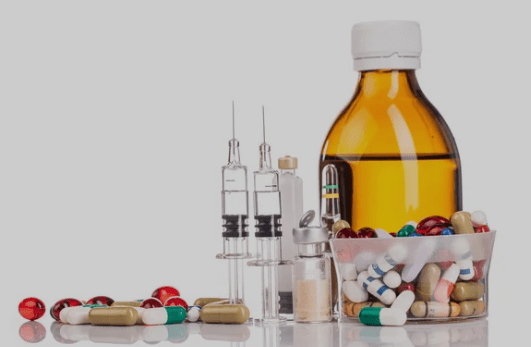
There is something wrong in our financial system. The institution of the Value Added Tax scheme for healthcare is something that was not well thought of. As a matter of fact, not only has it become a burden for the people, but a dumb idea to begin with. For example, the Department of Health has announced recently several medications which are now VAT exempt. I don’t know how the DoH is able to nitpick on which should and which should not be exempted, as diseases are specific for certain individuals. For example, if a patient with dementia will need a medicine but is not VAT exempted, the patient can either use the senior citizen (SC) or person with disability (PWD) trump card. However, if the patient is neither a SC or PWD (yet), then he/she will need to spend more for a disease that does not include them just because the drug is not VAT exempt. Only the poor suffer from the burden brought upon by VAT.

This begs the question of: how does the government choose which drugs can be VAT exempted and others cannot? How much power does the authorities have over which medicines can be granted VAT exemption? What is the science behind being VAT exempted or not, when it comes to medicines?

Let’s face it. Our healthcare system in both the public and private sector are broken. And while we are all trying to fix it so that we can provide better and affordable health to the Filipinos, the government can begin with a no brainer suggestion where removing all VAT from all medicines that require prescription and vaccines is a big step of the current administration in being serious at providing optimum healthcare to every Juan.

Omicron and the holiday season 2023

There’s good news. And there’s bad news.

Let’s start with the bad.

SARS-CoV2 isn’t done with us yet.

For the past 3 years, we’ve seen a volley of surges that occur during or after a holiday season. The last surge happened at the beginning of 2022 – the beginning of the Omicron variant. After the onslaught of this variant, the December numbers for the year dipped to less than 7% and continued to decline to 5.5% at the beginning of 2023. Omicron had continued to shift to different sub variants and while no new variant of concern had emanated after Omicron, people continued to get COVID with milder symptoms to being asymptomatic, in the majority. The most recent wave for 2023 occurred in May 14, 2023 where the PH peaked at 24% (7-day average, with more than 53,000 tests done). As Omicron continued to evolve, the JN.1 sub variant is likely responsible for the holiday wave today. As of this writing, the national 7-day positive rate is up at 21.2% (with only a little more than 10,000 tests).

Of course, the holiday spirit is at full throttle with vengeance – revenge travel, revenge shopping and dining, revenge parties, revenge concerts, and revenge reunions. Of course, this is what normal living is. And for our mental health, we cannot keep hiding under a rock because of COVID. And so what came naturally in this holiday wave is human nature.

It’s still bad news considering that the PH had one of the longest lockdowns in the world. Bad news in the sense that many people never learned about masking etiquette. I mean, seriously, we were the only country that implemented those useless face shields for years! The government even mandated that useless tool and there were scoundrels that profited from that idiotic idea. So you’d think that the simple mask was not a large ask for the general public to remember and practice self-care and personal responsibility when one has respiratory symptoms.

Then there’s the testing.

I hate saying it, but one of the best tests (or most useful tools) in diagnosing COVID-19 infection is the self-test swab kit. In a Cochrane review on “How accurate are rapid antigen tests for diagnosing COVID-19?” [https://www.cochrane.org/CD013705/INFECTN_how-accurate-are-rapid-antigen-tests-diagnosing-covid-19#:~:text=In%20people%20with%20confirmed%20COVID,cases%20had%20positive%20antigen%20tests).], three key messages of the findings were:

  • Rapid antigen tests are most accurate when they are used in people who have signs or symptoms of COVID-19, especially during the first week of illness. People who test negative may still be infected.
  • Rapid antigen tests are considerably less accurate when they are used in people with no signs or symptoms of infection, but do perform better in people who have been in contact with someone who has confirmed COVID-19.
  • The accuracy of rapid antigen tests varies between tests that are produced by different manufacturers and there is a lack of evidence for many commercially available tests.

Over-all, the rapid antigen tests (RAT) approved for commercial use in the PH, are stringently assessed by the local Food and Drug Administration.

The Cochrane review showed that “In people with confirmed COVID-19, antigen tests correctly identified COVID-19 infection in an average of 73% of people with symptoms, compared to 55% of people without symptoms. Tests were most accurate when used in the first week after symptoms began (an average of 82% of confirmed cases had positive antigen tests). This is likely to be because people have the most virus in their system in the first days after they are infected. For people with no symptoms, tests were most accurate in people likely to have been in contact with a case of COVID-19 infection (an average of 64% of confirmed cases had positive antigen tests).

In people who did not have COVID-19, antigen tests correctly ruled out infection in 99.6% of people with symptoms and 99.7% of people without symptoms.”

The RAT is a very useful, cost-effective point of care test to use. And I strongly urge everyone to make use of this tool, especially in the light of rising cases (or waves and surges). It is a personal responsibility which we owe to the community, particularly those in the vulnerable sector.

Finally, is the availability of an updated vaccine or a good vaccine for that matter. This topic will be a separate blog, but for now, let’s call a spade a spade. We will have to find a good vaccine that will block transmission of the virus. NONE (and I emphasize that) of the vaccines out there will do that. Getting shots against SARS-CoV2, no matter how updated they are, will not prevent an infection after exposure. However, the vaccines are helpful at decreasing the severity of infection, if one does catch COVID-19.

In summary, the bad news isn’t really Omicron. It’s a multitude of factors – human at that – that continues to challenge the evolution of respiratory pathogens based on the behavior of people globally.

Let’s face it, if we don’t observe better respiratory hygiene, we will continue to be overwhelmed with waves. Based on hybrid immunity, this will be most likely an annual affair.

The good news is short.

Thank God it’s Omicron.

Paranoia

That irrational and persistent feeling that people are ‘out to get you’.

That instinct or thought process believed to be heavily influenced by anxiety or fear, often to the point of delusion.

That feeling of of intense anxiety, or thoughts related to persecution, threat or conspiracy.

People who are paranoid mistrust others and remain in a state of suspicion.

Remember – it is NORMAL to have minor feelings of paranoia.  When paranoia causes significant fear and anxiety and results in a pronounced effect on social functioning, the person may have underlying mental issues and will need to seek professional help.

Is paranoia a psychiatric problem alone?  While schizophrenia may be an underlying disorder for paranoia, other medical diseases like Alzheimer’s, multiple sclerosis, alcohol intoxication and drug abuse may lead to feelings of paranoia.  The elderly population is at highest risk because an underlying disease may be synergistic with the drugs the patient is taking. The perfect storm is when all these are present.

In 1906 Auguste Deter, a 50 year old woman was the first person diagnosed with Alzheimer’s, a form of dementia. The disease was named after Alois Alzheimer, the doctor that first described it.  When Deter died, Alzheimer performed a brain autopsy and discovered that the brain of Deter shrunk dramatically and had abnormal deposits around the nerve cells.

Alzheimer’s disease is characterised by agitation, odd behaviour, paranoia, memory problems, disorientations, and delusions.

Dementia is not a specific disease and can be a presentation among patients with Alzheimer’s or due to other disorders that can affect the brain.  In short, dementia is a composite of symptoms that may be due to different disorders of the brain.

Patients with dementia have impaired intellectual function that interfere with the activities of daily living, including personal relationships.  This impairment includes memory loss, language difficulty, decreased perception, and impaired reasoning. Sometimes, people with dementia go through personality changes or develop delusions. Among the ageing population, dementia is often mistaken for senility or a mental decline as part of the ageing process.

The discourse on paranoia, dementia, Alzheimer’s disease and other mental health problems should be arrived at with proper professional help.

Paranoia is a symptom that is of grave concern that requires medical attention.

The key to true paranoia is when the person exhibits an unreasonable and/or exaggerated mistrust and suspicion of others. The suspicion is not based on facts.  Usually based on hearsay from friends and enemies, the paranoid person builds a world of fantasy and lives in that world, creating a delusion.  Untrue.  Unreal.  Unlikely.

To reiterate, paranoia is a symptom of some mental health problem and is not a diagnosis in itself.  It’s like saying that fever is a symptom of some other underlying disease like an infection, dehydration or metabolic disorder.  Paranoid thoughts can be anything from very mild to very severe.  The crux will depend on how much:

  • you believe the paranoid thoughts
  • you think about the paranoid thoughts
  • the paranoid thoughts upset you
  • the paranoid thoughts interfere with your everyday life

We all experience mild paranoia at some point in our lives.  They change over time.  It’s called reconciling with our past.  Moving on.  It does not mean we forget the events.  It just means that we’ve made peace with the issues that have dragged us to a corner and cower for awhile.

And then there’s the one that’s really bad.  Those delusions which are persecutory in nature.  They stay in your mind forever.  Destroying not only you, but your relationships with people around you because of the obsession of believing fantasy.

Believing in the paranoid is being duped of your principles of rational thoughts.  It’s like following a herd of swine where in the beginning, only one is afflicted with a disease.  When the disease spreads to the heard they either throw themselves off a cliff or the master slaughters all of them, afraid that the healthy herd would die as well.