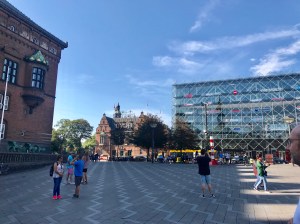
Loving Denmark

This year, my private vacation takes me to two Scandinavian countries.  At the top of the list were Copenhagen in Denmark, and Stockholm in Sweden.

On arrival at the airport, we picked up our Copenhagen Cards.  You can order these online (www.copenhagencard.com) and while they may be quite a bit steep, the 72 hours card was enough for our 5 days 4 nights stay because it included access to trains, buses, boat tours and yes, entrances to all the sights and sounds in the Copenhagen area.

The weather was slightly on the warm side when we got to Copenhagen.  Temperatures ranged from 29C – 19C.  Sunrise was 5AM and sunset 930PM.  Overall, the weather was pleasant.  Warm (but not humid) during the day, cool (but not cold) at night.

According to surveys, the Danes are the happiest people in the world. Year after year, for the 7th consecutive year, Denmark has been the happiest or one of the top 3 happiest countries in the world. And that’s attributable to the fact that:

  1. It has a stable government
  2. Low levels of public corruption
  3. Access to high quality of education and health

Mind you, this country has the highest taxes in the world. But the Danes happily pay for it – because they believe that higher taxes create a better society. (This will never work in countries where corruption is a way of life.)

Most importantly, however, is their structural construct called “hygge”. It means high-quality social interactions. It is sometimes translated as “cozy”, but a better definition is intentional intimacy, which can happen only when you have safe, balanced, and harmonious shared experiences.

In Denmark, hygge is integral to people’s sense of well being. Acts as a buffer against stress. And creates a space to build camaraderie. And in highly individualised countries like Denmark (and Norway, Sweden, Germany), can promote egalitarianism and strengthen trust.

This review, however, comes with a BUT…

Only a handful of hotels in Copenhagen have air conditioners.  Even the malls and market areas were warm during this summer trip. Of course, the Danes can always say that they didn’t anticipate climate change.  But climate change it did, and not even the Scandinavian countries were spared.

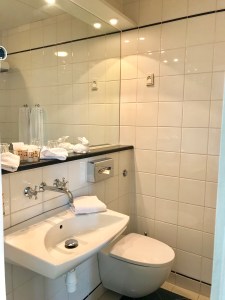
Hotel Alexandra was home to us for 5 days and 4 nights.  Of those days, we suffered from the warm weather.  One electric fan in the room.  All windows had to be opened.  The noise on the street (from the 3rd floor of our room) was irritating.  We had to open the curtains and the sun was up a couple of minutes before 5AM.  There is a separate review I madefor this hotel at TabletHotels.com.  The fine lines that were not revealed was the fact that the bill of the hotel included credit card charges of 3.5%.  A rip-off, because has TabletHotels provided these two main reviews from the get go, this wouldn’t have been a hotel I would choose.  For my readers, I wouldn’t recommend this hotel at all.  And TabletHotels should delist them.

Of all the touristy spots on the list, I would highly recommend (in no order of preference) only the following.  The rest (while we undertook because we wanted to get the most out of the Copenhagen Card) are truly for tourists only.

  1. Canal Tours Copenhagen
  2. Frederiksborg Castle
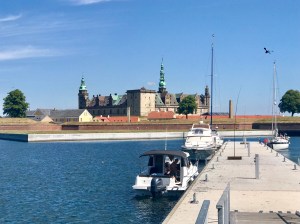
  3. Kronborg Castle
  4. Amalienborg
  5. Tivoli Gardens
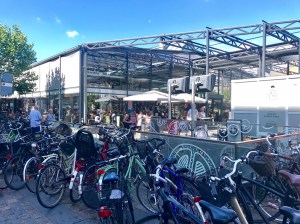
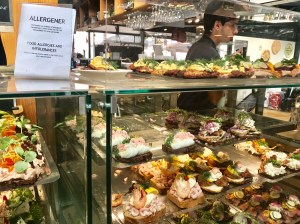
  6. Trovehallerne (food market)
  7. Stroget (a whole couple of blocks of shopping therapy)

  • Most of the museums are open up to 6PM and most of the stores are open up to 9PM.  The bigger department stores open up to 10PM.  Most of the toy stores around are Lego and BR. And there’s not a lot of these gadget shops that abound.  As a matter of fact, there was only ONE Apple Reseller I saw during my entire stay!

    Espresso Coffee and Joe and the Juice are Scandinavian brands that serve great coffee (although if you still like Starbucks, I think Starbucks is over rated). With that said, I strongly recommend a trip down to Trovehallerne for good food worth the buck.  The other restaurants are typical eclectic European cuisine.  But nothing comes close to home as the hotdog vans or pølsevogne! And at 32 DKK, you can have your best hotdog meal for lunch, dinner or anytime of the day.  You’ll find them on Central Station and around the square in City Hall.

    Like most European countries, drinking alcohol after six seems to be a way of life.

    Since we were here towards the end of summer, most of the days were beautiful.  And the temperature wasn’t too bad as well (considering that I was coming from a much warmer and rainier country).

    Copenhagen is one of the more touristy countries in the Scandinavian area.  This, despite the fact that their Value Added Tax is a whopping 25%! Imagine, the taxes of my 5 days 4 nights stay at the hotel was equivalent to another night stay!

    The Castles were not much of a tour compared to other European countries.  Because Castles are smaller than Palaces, one should not expect anything too grand except for the display of the crown jewels (which I don’t think were actually the real ones on display, but I may be wrong).  If there is only ONE tour you needed to take, I would highly recommend the Canal Tour.  The story and the one hour trip itself would give you an awesome picture of what Copenhagen is all about.

    Shopping hours are quite long and the whole Strøget area alone will leave you breathless for a whole day – from local fashion to boutique ware.  As I mentioned, there is a 25% VAT.  But you don’t get the whole 25% as a tourist refund.  Depending on how much you purchase, and minus administration fee (I don’t know where that goes to), you’d probably get around 10-15% refund on the total price of the goods you purchase.  And you’d need to make a total purchase of 300DKK (P2,500) in one store in one purchase, before you can even get a refund voucher.  That voucher must be filled up and presented at the airport of exit together with the goods purchased. So if you’re still traveling to, say, 3 more European countries, you can claim the refund in the last European country of departure back to your home country.

    As a tip: you’d need to pack all the items with a VAT refund separately (perhaps in a hand carry), and show them to the customs official on your way out.  You will find them in every Schengen airport.  And, if you’ve gone shopping galore, make sure you make an extra hour prior to your departure so that you can claim your refund (either in cash or as rebate to your credit card).  Remember, there is only ONE queue for this refund at every airport.  Be patient.

    As a final reminder, you will love Denmark the way I did.  The people are nice.  The place is safe.  The Danes are happy.  And what is there not to love when you come to a country that welcomes you with open arms, a million more smiles than the Filipinos, and yes, a people so cultured that you’d feel ashamed being rude.

    The tourist

    Decisions.  Decisions.  Decisions.

    For tourists traveling  for the first time to a new vacation spot, excitement fills the air.  An excitement  either from  the freedom of getting away from it all and/or getting to fulfil a dream come true.

    The ordinary tourist has a few days traveling on a budget and hoping to see all the places they need to visit in that particular trip.

    Every traveler, thus, makes an itinerary.

    Arrival. How to transfer to hotel. Drop bags.  Go out and start Day 1.  What to see. Where to eat. What to do. What to eat.  Where to go. What to eat. When to get back. Get some rest.

    Repeat.

    The Itinerary

    In a nutshell, it is mandatory that a city tour is part of one’s itinerary (or if you have a friend living in the country of destination, ask for the city tour). The local tour affords us  a brief overview of what the city or country is like – with a guide (cum interpreter or story teller) who provides an overview of what the city is like. They take us to major “tourist” spots, and if you’re lucky, point out en route the places where the locals congregate to shop and grab bargains.

    The most common form of city tour (that I’d even take or recommend because I am an ordinary tourist) is the Hop on Hop Off Bus Tour.  It will serve as your transportation for the day as you can get on any of these buses, get off at the places you want to stop over and just grab any of its buses that hover the same route the whole day long.  Don’t forget to make sure that you budget for this. This should be the FIRST on any itinerary.  Get to know the city before exploring on your own.

    As you begin your tour, remember, each destination will offer a city pass for tourists (well, except for the Philippines because our public transportation system is crummy). There are day passes, but I suggest that you buy one for a specific duration. For example, if you plan to stay there for say 7 days, then get a commuter pass for 5 days so that you do either the first and last day around your hotel area (make sure you read my blog on The Lodging for choosing a great location for your hotel), and use that commuter pass in between.  Passes that include entrances to various tourist sites will save you money if you wish to explore the city more.

    Transportation

    Most of the cities have subways, trains and buses for various routes. Get a map of the routes for reference.  Unless the city is walkable, you will not want to be scrimping on a commuter pass, only to end up with having to take a cab later on because one of your destinations was far from your lodging.  These incidentals will set off your budget and you may just miss the bag or shoe you wanted to buy.

    As in my blog on Roaming, it’s a good idea to have a pocket Wifi because Google maps will help you with the various modes of transportation including walking distance and time.

    Remember, getting a commuter pass saves more money especially if you want to go around the city.  Isn’t it envious how thoroughly efficient most of the countries are when it comes to public transportation?  And how well disciplined their drivers, pedestrians and commuters are!

    Don’t be lazy.  Take the opportunity to walk when you can.  It’s not only healthy but makes you appreciate the city you’re in.

    Water

    Water is the real elixir of life.  On the plane.  In a ship.  At your travels.  Rehydration keeps you going.  One of the MUST HAVES on any trip is water.  Make sure that you drop by a 7/11 or supermarket in your area of destination and stock up on large volume of water.  That’s the first order of the day (and not on the junk food).  It is essential for your medicines, your in-room coffee (or three in one which you may have brought with you), your instant noodle soups, and your overall rehydration source.  You can bring empty small water bottles with you to your trip and refill in aliquots these water bottles as you travel the city.  DO NOT BUY THE SMALL BOTTLES OF WATER.  It is wasteful and heavy and not environmental friendly.  Get the big gallons and drain in aliquots as needed.  Remember, some hotels MAY provide free bottled drinking water (usually a maximum of 1 per person or 2 per room).  That’s about it.  You need more, you pay more.

    Hong Kong for example is one of the worst countries to be sourcing water.  Tap water isn’t potable there and you need to buy your water even at the restaurants.  In some dining areas, tea is free.  In Europe, wine is cheaper than water.  So let’s drink to that!

    Remember the cardinal rule: the hotel industry is a business.  A business needs to profit. Nothing is free.  Even if they say it is “free”, you’ve paid for that. It’s already in the finer details.

    Car Rental

    If you know how to drive then considering a car rental may be a great alternative to going around the city and the countryside.

    The average car rental rate depends on many factors: size of the car, number of days of rental, among a few.

    In certain cities, moving from one place to another is impossible by public transportation alone.  For example, when traveling to Orlando, Florida, or San Diego, California I always rent a car for the duration of my trip.  Pick it up at the airport and return it at the airport. Make sure that you get ALL the insurances paid for, just in case.

    Again, in most countries, all you will need is a local driver’s license and a credit card.  You’re good to go! Take into consideration parking fees where you’re going.  If you’re driving in New York, the parking will end up more expensive than the car rental per day.  Other cities offer cheaper parking. Most hotels offer reasonable parking fee per night of stay.

    The upside of having a car at your disposal is that you get to go where you want, when you want. The freedom of not being a prisoner of public transportation has its perks, especially if money isn’t a problem!

    The Embassy

    It’s important that you know where the embassy of your country is in your place of destination.  You can never tell when you will need it most.  In some countries, your country may not have an embassy, but rather a consulate. If your country has an embassy in your destination, then there is a permanent diplomatic mission and is headed by an ambassador. A consulate is led by a consul and is otherwise known as a junior embassy.  The main task of embassies is to represent their government in another country. Embassies deal with political and diplomatic relations between nations.

    The major role of consulates is to promote trade (i.e., helping companies in the host nation invest in its country and vice versa).

    Embassies and consulates are important particularly when you’re traveling.  It will be your source of help from your government when you’re far from home.

    Churches

    Catholic is as catholics get.  Don’t forget to Google the nearby church in your area especially is you’re traveling over the weekend where you’re most likely want to have Sunday service no matter what language is used during the mass.  Not all catholic churches have anticipated masses.  Most of the masses are Sunday mass and usually filled with Filipinos (including OFWs).  The midmorning masses are usually in English.

    If you’re not sure with the church that’s nearest your hotel, you can always ask the concierge or front desk for the nearest Catholic Church and the schedule for mass.  Then again, a clue that the church you’ve gone into isn’t Catholic is when the church is devoid of the Blessed Virgin Mary.

    When in Rome, do as the Romans do. Which means, enjoy the city the way the locals would spend their daily routine. The food.  The shopping.  The entertainment.  Keep in mind that exploring on your own by doing thorough research before going to your destination is the key to enjoying the life of the wandering tourist.

    And yes, it’s alright to get lost in translation.  Half the fun is exploring yourself and the city.

    Roaming

    Technology has truly changed the landscape of everything. Travel included.

    There are many who still scrimp on data roaming and strangely stand next to a free WiFi connection when they’re abroad. If you like taking your audience with you on your next vacation, make sure the followers are with you on real time. Data roaming has never been cheaper and easier than today.

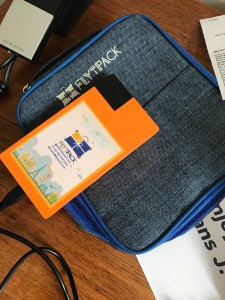
    Flytrack

    When we would travel, we’d go online and try to rent a WiFi device at the country of destination. Having a WiFi device allows more flexibility on the number of users for the gadget (usually up to 5-6 people). When you break the total cost down to the number of users per device, renting a portable WiFi is most cost efficient.

    Until my partner introduced me to a local vendor called Flytrack.

    For our trip to the Scandinavian countries, we rented our pocket WiFi from the Philippines. You can go to http://www.flytrack.com online and order your pocket WiFi. The total cost of P8150 includes 10 days of WiFi shared between my partner and I. Also included is an insurance fee (in case I lose the device). This is non refundable but is a small price to pay just in case I fuck up. It also includes delivery cost (courier to your address and return by courier as well). If you want to scrimp on this, you can pick up (and return) the unit in designated areas. Finally, when the unit is returned in good condition, there is a refund of P1800 to your nominated bank account.

    With two people using, this amount to around P270 per person per day. Not bad!

    The major advantage of having a pocket roaming WiFi is that you not only stay in touch with social media (or being socially relevant) but most importantly, staying connected with family, friends, and yes, work (even if you shouldn’t).

    Carrier Data

    Until lately, I’ve always attempted to use my carrier’s data plan. That means, P599.00 per 24 hours.

    What they don’t tell you is that if you turn it on at say, 9PM when you get to your destination, they automatically charge you the P599 up to 6AM the following day. Their excuse? It’s the way it is.

    What they DO tell you is that you need to stick with their carrier partners in the country where you’re roaming. And because the automatic carrier ability of our phone, you may not be aware that you’re “connected” with a carrier your carrier isn’t affiliated with. And that P599 a day may just end up P5999 a day!

    Smart Roaming

    You don’t want to receive jaw dropping charges. Remember, they wrote that in the fine lines when you signed the contract. It’s not their fault that you either didn’t read it or are plain stupid. On occasions though, some of these companies are a real ass. But it’s usually our fault.

    1. Turn off your cellular data

    2. Before you leave, at the airport, don’t forget to Settings > Phone > Call Forwarding (under calls) > turn on and have your calls diverted to a local phone. You won’t receive any call. They can’t charge you for calls you don’t receive.

    Remember, you cannot turn on this setting when you’re already in another country. When it’s too late, just make sure you turn your phone off and turn it on when you need to use it.

    3. If you want to receive calls, be prepared to pay for the call you receive. Yes my dear. When the other party in the Philippines is trying to reach you, you will need to answer the phone! It’s cheaper than not minding the ring.

    What most people don’t know is that once the call has been made, and is routed to an international roaming partner, and the recipient (that means you) has been reached (your phone has rung) via that route, you’re dead meat if you just let the phone ring forever. You’re paying for that call, even if you didn’t answer it. That’s because it’s not the fault of the caller who didn’t know you’re gallivanting somewhere in the world.

    Social media has changed the landscape of travel.  I’d like to believe that we post our travels because we share to the community our celebrations of life.  Our experiences and opinions have not mattered as much today than the pre-technology era.

    And here’s to sharing, commenting, liking, laughing, crying, hating and celebrating the joy of travel!

    Back at you

    So here’s to those memes who troll the internet.  Defending incompetence has never been arguably this tough.  I guess that’s because incompetence is built by other incompetent people.  Like two peas in a pod, it takes two to tango.

    It’s funny (and sad) that in spite of how the political scenario evolved in the last two years, there has never been a time when the word of the year INCOMPETENCE, has really hit the core of leadership.

    So here’s some reality check. And here’s saying it right BACK AT YOU…

    There are 7,632,819,325 people in the world.

    Why are you letting one of them ruin your life?

    Yup! It’s weird how one nut job actually affects our lives.  Emotions don’t right what is wrong.  Rational thinking does.

    Why, for heaven’s sake, does everything get splattered out of proportion? He says, she says, they say.  Social and mainstream media just seem to center on what are (to me) IRRELEVANT issues.

    Never argue with someone who believes their own lies.

    You’ll never win that argument.  It will be just one issue piled on top of another. Look at how the troll patrols (keyboard warriors) are so busy when a political issue hits the very core of incompetence. Rabid exchange of opinions and curses.

    If you don’t like something, just take away its only power:

    YOUR ATTENTION.

    But NOOOOOOOOO!!!! We give it so much attention that it’s like flooring the gas pedal! By the time we put on the brakes, the impact would affect all the passengers.  There are bigger issues at hand.

    I get it! Whatever is ongoing with the government is reportable.  Then again, there are a lot of events (good and bad) that deserve front page news as well.  But a lot of media don’t focus on what is relevant.  The intricate use of PR that spins an issue to divert other issues or praises irrelevant projects when it’s actually their job to do what they are praised for is paid advertisement.

    The bad news is, a lot of people CANNOT differentiate between a paid PR (public relations) columnist who receives payment to “slant” an issue.  The newspaper will always claim that the writings of these columnists are “personal opinions” and have nothing to do with the stand of the newspaper.  That’s why these columns are found in the OP/ED (opinion/editorial) page.  Only the EDITORIAL expresses the newspaper’s or publications view towards an issue and reflects the majority vote of the editorial board.  A COLUMN is a recurring piece or article where the writer (usually part of the stable of the publication, but sometimes they invite a guest writer) expresses his/her own opinion on an issue.  The operative words here: HIS/HER OWN OPINION.

    It’s sad, no, AGONIZING, that there are people who think that just because a column provides an opinion, IT IS THE GOSPEL TRUTH, and that all attention and resources should focus on this.  To those who give attention to half truths and half lies are poor in discernment.  And that, is GULLIBILITY.  (Well, alright, it’s called politics. I’m trying to be polite here.)

    A good columnist is objective.  Takes no sides.  Is not biased.  Checks all the facts and gets the other side’s story.  Is not PAID for a PR job.  And it’s easy to spot a bad columnist.  They flip-flop.  They change sides easily (depending on who is in power). They have a penchant for lying through their teeth.  Their stories are never consistent.

    With so much publications flying around (including this one), being a rational thinking human being in the time of digital technology can be quite challenging.  After all, we all don’t have the luxury of checking and cross validating the vast information that is being fed our way.  Most of us bank on EMOTIONS. No matter how wrong the scenario is, they just “share” away because of political survival.

    Excuses are the tools of the incompetent.

    We usually forget that there are only two options in decision making:

    • make progress or make excuses

    I wrote about the Dunning-Kruger effect a few months ago.  To reiterate, the DK effect addresses people who are ignorant or unskilled in any area and are too inept to notice.  They end up thinking they’re far more competent than they actually are.  Big mouth, bad words, all ego.

    A gentle reminder to everyone.

    Friedrich Nietzsche once said “They muddy the water, to make it seem deep.”

    “The doctor is out” #PetPeeveStories

    [PARENTAL GUIDANCE IS RECOMMENDED.  THE LANGUAGE USED MAY BE INAPPROPRIATE FOR CHILDREN]

    It’s never appropriate to give away your personal mobile number to patients. Unless the number you give is an office phone, or you have a personal secretary whom patients can get in touch with, then yes, it’s never appropriate to give away your personal phone numbers.

    Patients will ALWAYS want to know how to get in touch with the doctor. I get that. Many, usually ask for your mobile number – just in case – they need to get in touch with you when they or their kids get sick.

    Ever since I started my practice, asking for my personal number has been my number one pet peeve. “No you may not have it. On my card is the number of my clinic where you can contact me during office hours.”

    During the earlier days when the pager was still in vogue, I didn’t mind that my pager number was emblazoned on my calling card. After all, it was one anonymous number and the patient had to get through another anonymous person who would filter the information that would be sent to me. It’s like having a private secretary that you needed to go through before I got the “emergency” message. My pager would vibrate. The message would appear. And I could call from my landline or phone (there were no Smartphones then), wherever I was. Or I would just save it for later if it wasn’t urgent.

    But technology would change the landscape of clinical practice. Gone were the days when you were the CEO of your own private practice. Smartphones and tablets changed the way you dealt with patients. There are medical professionals who have “professionalised” their medical services providing online “consultations and opinions”.  Some take it a level higher by being able to “Viber” or  FaceTime with patients as well! And here’s where it gets really tricky and icky.

    I have no quarrel with technology. Just where and how it’s used.

    1. Personal space and professionalism is important

    Doctors have a personal life. When the patient has an emergency, I am not 911. Take them to the nearest hospital. They should know what to do there. For the younger ones who’re trying to give away their personal numbers so that they can create a following (or a patient base) – DON’T! You’re making yourself open to liabilities and law suits by acquiescing to the patients desires. Keep a professional distance.  If they can pay to go to the hairdresser and queue to watch a movie, I think they can pay for a professional medical/surgical consultation. NEVER EVER GIVE A DIAGNOSIS TO A PATIENT YOU HAVE NOT PHYSICALLY EXAMINED OR SEEN.

    I will tackle a general pet peeve on mobile phone use etiquette another day. Remember, you don’t have a right to call anytime you like. Because there is a text messaging service, kindly text first if the party you are calling can take your call. If they don’t reply in the next 5-10 minutes, it means they’re busy. Don’t call just because they don’t respond. If it needs attention, resend the message after 5-10 minutes. We may be seeing other patients or watching a movie or having fun with our family or cooking dinner or sleeping. We have a life, too.

    The rule of thumb is – if it’s urgent or an emergency, take the patient to the hospital.

    2. The email has landed… together with shit

    So the Smartphones have made it “business is open” 24/7 for everyone.  It’s like a “pager” all over your precious space.  It’s all over my business card anyway, so I allowed it to be part of how to “contact” me.  And with “data” being cheaper than SMS services, it was fine, until the day I received a lot of shit in my email. I meant, literally, SHIT.  Pictures of their baby’s SHIT! SHIT! SHIT! and more SHIT!

    Some moms thought that sending me those gross looking shit enveloped by a diaper would make me clinch the diagnosis.  It’s like an online revalida! I had questions to ask – did he have a fever, were there precipitating situations that made your boy poop green turd, is there any form of pain, are there rashes, what was his last meal? Of course, I wanted to ask if there was a stethoscope lying around in the house and could she listen to his tummy and tell me if the boy had hyperactive or normoactive or hypoactive bowel sounds.  Feel his tummy and tell me, is the liver big, can you feel the spleen, is there a mass, is there direct or indirect tenderness? Oh by chance do you guys have an ultrasound machine lying around in your house as well? Coz if you do, can you get to do an abdominal ultrasound while you’re at it?

    The email just threw my whole textbook of physical examination and history taking out the window! All because the mother was worried about the turd!

    The rule of thumb is – if it’s urgent or an emergency, take the patient to the hospital.

    The second rule of thumb is – for God’s sake, take him to the nearest doctor in your area. I won’t mind!

    You don’t have to flash all that turd or take naked pictures of the body and send it by email for me to give you a “provisionary” diagnosis. And hopefully get a prescription.  Some of these people will even exchange emails with you when you tell them that they need to bring the child to the clinic.  The favourite excuse? CODING!!!!!

    I’m like, come on, if you feel that the kid is really sick and you need to go to see a doctor, I don’t think the traffic officer will try to stop you.  If he does – SHOW HIM THE F*CKING TURD YOU SENT ME BY EMAIL AND THROW IT IN HIS FACE!

    3. Time is precious

    A few years after I started my practice, I tried implementing a “by appointment” system.  That meant that patients who wanted to be seen without having to wait could do so by setting up an appointment (instead of the first come, first serve basis).   That’s because patients were complaining that the queue was too long. There was no cut-off.  They had other appointments to go to. And so on and so forth.

    Did it work? NO!

    Sadly, I think I was either ahead of my time or that this kind of system is unfit for Filipino patients.  Why did I say it did not work? It’s like this – they liked to make appointments, BUT 99% DID NOT BOTHER TO CALL IF THEY WANTED TO CANCEL!!! It’s soooo Filipino.  It’s like sending out an invite with the letters RSVP in bold.  You think they’d even bother calling to say they’re not coming? NO!!

    The rule of thumb is – make sure that you respect each other’s time (both doctors and patients). 

    I hate it as well that when a colleague says that his clinic hours are 10AM-12NN, he arrives tadaahhhh – 1PM!  We need to be conscious of other people’s time. Professionalism dictates that we observe the time of our patients as well.  After all, they have a life as well.  We all need to be somewhere, somehow, doing something that is important to us. If you’re running late, let the secretary know so that the secretary can inform the patients the time of your arrival. Let’s all respect each other’s time and space.

    Of course, that means there’s the patient who’s also running late. Very very late. So when I say that clinic hours are 10am-12nn, it means that the last patient must come before 12nn because I need to leave at 12nn. But no!! Some of them pile up at 12nn so that they think they’re the last patient and won’t have to queue. (A separate blog on queuing is on the menu.) And the patients get irritated that they’re not the last to be seen. Five of them arrive at exactly 12nn. And there are still 2 more on the way. Each hoping to be the “last” patient for the morning. And that my friends is why the doctor is late for his next clinic at 2pm at another hospital.

    4. Dear Google 

    The internet has made everyone a keyboard warrior.  We’re only a few taps away from asking what the diagnosis of Burkitt’s Lymphoma or Kawasaki Disease is.  Press search and your friendly reference Google will help you find 1,000,000 hits in less than 1 second.  What do you do with all these references? Without appropriate training on how to critically appraise the published literature, the typical patient will scan through the easiest to understand (read – written in layman’s terms) or get discombobulated with the complex terms.  The next day, they’re at your clinic, all anxious and worried that their lives or of their children are about to end. On one hand is a whole envelope of print outs from what was downloaded last night! And they have a million questions…

    They are, after all, within their right to ask.  That’s why there is a consultation.  How you face Google as their defence attorney is another matter altogether.

    The rule of thumb is – Google is not a doctor.  Wikipedia is not a good reference material (READ: ATTENTION MEDICAL STUDENTS).

    Which goes to the point of keeping up with the changing paradigms in the practice of your specialty or subspecialty. It’s called CONTINUING MEDICAL EDUCATION. Medicine is not an exact science.  There are hits and misses.  Mostly hits.  But we need to make sure that we are updated in our practice.  Because the patient sure is! And it would be shameful that when you’re caught with your pants down where the patient knows more than you, they’re probably not going to go back to you or recommend you.  It would be doubly shameful that you try to get around the fact that you didn’t know the reply to the great question your patient posted, by LYING through your teeth.

    Remember, we’re all entitled to second, third, and even more opinions of our clinical condition.

    The second rule of thumb is – Brush up on your practice. Take your Continuing Medical Education seriously.  Patients deserve nothing less when it comes to treating them.

    Technology may assist us at organizing our office files and databases and create better efficiency in the hospitals and clinics. It is NEVER, however, the best way to assess the health of your patient. And not seeing the patient and fully examining, yet providing a prescription treatment through text messages or emails that later results in an adverse reaction is a recipe for disaster and a law suit.

    State-of-the-art gadgets, equipments and medical devices are useless if what is between those ears are empty.

    A gentle reminder. If your doctor gives you his/her personal mobile number – don’t abuse it. It doesn’t mean you’re besties already and that you need to send a text even at an ungodly hour or when he/she is out of the country (yes – we pay the roaming charges not you), if and when you need to. Proper decorum dictates that you treat each other in a professional manner or find someone who’s willing to live up with your expectations.

    Being considerate is highly appreciated.

    p.s. Don’t use the messenger on FB or other social media apps to get in touch with your doctor. It’s rude.

    The onlookers and the thing called rude

    There’s a Filipino habit that’s really both irritating and entertaining at the same time. We call these people “miron” (onlookers).

    They’re people who like minding other people’s business. (I guess it’s a cultural thing). They have so much time in their lives minding how others live even if they’re epic failures at their own.

    A typical example is when a minor accident on the already heavily crowded roads of Metro Manila occurs. As the drivers approach the scene of the accident, they slow down (I mean really slooooooowww down). And of course, add to the already building traffic. The people on the sidewalk are not much help. They’re just there. Looking. Staring. (No one will bother to call the police or assist). They’re like statues stationed at the site, listening to the exchange in arguments, and in a few minutes, the gathering swells large enough to obstruct the road.

    A more recent example is the latest spat between erstwhile local media “queen” Kris A., her ex husband James Y., and TV host Korina S. R.

    It has the netizens eyes glued on Bimby, the love child of Kris and James, being the center of the “fight”. While the pathetic online drama is being paraded by media as a “national issue”, the entertainment piece has incorporated a mix of political under toning by the tactless sister of ex-president PNoy. Washing dirty laundry is, after all, her forte. And what juicier news than being an “onlooker” at what’s happening to lives of the rich and famous.

    Nothing wrong in “appreciating” some salacious facts there. If this happened two decades back, it wouldn’t be given much attention except in some sleazy tabloid where it would be categorized as a WTF news. We’d have our own opinions and we’d probably gossip about it for gossip sake, but whatever opinion the public has over the matter is kept unrecorded. And the number of people “viewing” this, wouldn’t matter.

    In the digital age, the internet has played a role at fomenting rudeness online. Danny Wallace, in his book “F you very much: understanding the culture or rudeness – and what we can do about it” points out that “the rage the internet stirs up and allows us to vent threatens to derail the thing that once made it beautiful. Newspapers, once so proud to welcome in the community and get a discussion going, are now wary of their own below-the-line commenters. Those who stick their necks out sigh as they press “PUBLISH,” knowing that whatever they say and no matter how clearly they say it will be accused of racism, sexism, homophobia, stupidity, thoughtlessness. And as you already know, they have their favorite targets.”

    And he’s right. Whatever you “post”, people will either love you or hate you. A closed loop of friends may be the best alternative but that’s not going to happen for media.

    Social media has practically made us all “onlookers”. We scroll through posts and look at those that are interesting enough to “share”, “like”, or feel over. Then of course, we can take it a notch higher by commenting as well.

    But it’s easy to tweak a mob and they’re always just there waiting for it. A hungry, angry mob that can get angry about anything!

    The challenge is in dealing with the “onlookers” who, in so few words – need to get a life! Healthy scholarly discussions have become a thing of the past. Even among the supposedly more educated tribe, some of the commentary exchanges have become pathetically trivial, rude, and sadly, stupid.

    It’s like arguing with someone who has an IQ of 30 for a topic that requires at least a minimum IQ of 100.

    And then there are the fake onlookers. They’re not real people. Fake accounts. Trolls. It’s bad enough we have to deal with “real stupid” people. But dealing with trolls that are employed or just innately rude, is so not worth testing your patience with.

    Remember: no one wins an argument with stupid.

    No need to apologise

    We don’t need to apologize for everything that happens. Oftentimes we end up being too apologetic for moments that we shouldn’t even be sorry for.
    Saying no, for example, may be taken offensive by someone who demands a “yes” as a reply. Because we’re afraid to offend a friend or an employee, we give in to a “request” even if we mean saying NO rather bending rules and policies and principles in order to “please” people.

    Here are some moments where apologies are not needed:

    1. Loving someone

    2. Saying no

    3. Following your dream

    4. Taking time out for yourself and your family

    5. Prioritising

    6. Ending a toxic relationship

    7. Your imperfections

    8. Standing your ground

    9. Telling the truth

    10. Exercising appropriate etiquette at all times

    I like number 9 most of all. As Plato puts it, “no one is more hated than he who speaks the truth.”

    True or false?

    I couldn’t imagine the day when we’d be living in times when truth and lies would be challenging to discern. More confusing is how people today use/abuse social media in order to sow more incertitude.

    The recent Cambridge Analytica scandal that’s dragging Facebook CEO Mark Zuckerberg and the rest of the Facebook Team for using data analytics to promote a political thrust is an example of a social platform gone awry.

    Cambridge Analytica is a British political consulting firm which combines data mining, data brokerage and data analysis to change audience behaviour. Established in 2013 as an offshoot of the SCL (Strategic Communications Laboratory) group, the core business of CA is to influence the outcome of politics.

    Recently, CA has been at the center of criminal investigation when the New York Times and The Observer reported the data breach of Facebook and CA, wherein the company (CA) used for political purposes personal information acquired by FB users, by an external researcher who claimed to be collecting it for academic research.

    The breach in privacy of FB users has questioned the role of social media platforms at a time where digital technology plays a significant role in the lives of everyone in this planet.

    Once upon a space, I thought that my FB wall was a safe space. You wouldn’t think that posting a rant or a celebration or a loss, would even be a public concern or outcry (however you would like to put the scenario), just for having your own opinion. It is, after all, your wall and your opinion.

    But come to think about it, why would anyone give you free space to share if there wasn’t anything they’d want in return? That’s right. There are no freebies in this world. And what better source of tapping at the core of privacy than allowing social media access to it. After all, when the platform goes “viral”, the data that is mined would be priceless. Data is power!

    What began as a tech tool for a couple of thousand Harvard students in 2004 evolved as rapidly as digital technology boomed. As of this writing, there are more than 2.2 Billion users monthly for Facebook.

    And while social media has enraptured its subscribers as a means for reaching out and sharing opinions, pages, rants, raves, and commerce, it has also reared an ugly head. Fake news, hate speeches, rudeness, inappropriate sex and violence have enticed the gullible buffoons to “like” and “share” ideologies and ludicrous behaviour.

    Social media has, unfortunately, lately been a forbearer of malice and disarray.

    Here are a few tips on “posting” on social media platforms:

    1. The less you reveal, the more people wonder.

    While shoutouts may vary from a cause for celebration to letting people know of a loss, managing the kind of “shouts” are important. There are shoutouts that should actually be “shut ups”.

    2. It’s not the number of “followers” that make you better than anyone else.

    Yep. That’s right. You can have an army of idiots or trolls who follow you, but it gives no special meaning in life if the numbers don’t reflect the kind of person that can be trusted as a purveyor of truth rather than lies. Remember, Hitler had millions of followers, Jesus had only 12.

    3. Content is fire. Social media is gasoline.

    Social media platforms are meant to ignite the flames. Make sure that the content you provide speak of your level of maturity. You don’t have to broadcast your emotions in order to gain sympathy. Don’t be a “meme”. Unless you have no better thing to do in life.

    4. Be cautious of people whose actions don’t match their words.

    And yes, just because you asked me to be your friend, I truly apologize if I don’t accept it. After all, if I don’t know you that well or I don’t know you at all, I don’t want you prying into my wall or space. Be careful with people who ask to follow you just because you share common “friends”. Not all are who they say they are.

    This online NETIQUETTE is a gentle reminder on what we write, post, and share.

    The Dunning-Kruger effect

    In the field of Psychology, this is more commonly known as a cognitive bias where “people of low ability suffer from illusory superiority, mistakenly assessing their cognitive ability greater than it is.

    In 1999, two psychologists from Cornell University – David Dunning and Justin Kruger – published a paper entitled “Unskilled and unaware of it: How difficulties in recognising one’s own incompetence lead to inflated self-assessment“. Over several studies, they found that “participants scoring in the bottom quartile grossly overestimated their test performance and ability.” What did this mean?

    “People who are incompetent at something are unable to recognize their own incompetence. Not only do they fail to recognize their incompetence, they’re also likely to feel confident that they actually are competent!”

    It’s been 19 years since the published paper, and the fact is that the psychological phenomenon is as relevant today as it was before the technological and internet boom.

    The study was done in the United States and I have to see some data with regards to the research being conducted among Filipinos, if we would see consistent data or not.

    It’s very interesting because the global geopolitical landscape has dramatically shifted and it is without doubt that the Dunning-Kruger Effect is more relevant today than when it was first published. And this applies not only to the political field but encompasses even the medical, economic, academic and religious groups as well.

    I write about this not as an expert in the field of psychology but to share interest in a topic that should make us pause and read up further on how to mitigate such cognitive bias.

    Illusion of knowledge and propaganda

    I told some friends the other day, that it’s more difficult to write a story with a lie than using the truth. One has to be a prolific fictional writer in order to build one lie after another in order to sell a story.

    Steve Hawking once said that “the greatest enemy of knowledge is not ignorance, it is illusion of knowledge“.

    It is sad that in this day and age of social media and technology, there are scumbags who utilise the gullibility of a few (?) in media in order to sell a propaganda.

    When someone lacks the knowledge to run a company or an agency, and utilises the illusion of knowledge through fake press releases via paid columnists or paid trolls who feign intelligence in order to keep his job, you know the company is in deep shit. That’s because the “artificial intelligence” was sold to a bunch of idiots who never even checked the facts. To the reader, the lie was enough. The story was believable. And everyone was happy.

    And then there are the peddlers. They disseminate the already wrong information and make it more complicated than it already is. These are the pushers of bad news. It’s disproportionate to the level of complexity (or simplicity) and is used to gather a lynch mob scenario in the propaganda. The peddler is the enabler for confusion and hate. They serve no other purpose in life but to collaborate with the propagandist to achieve fame.

    Collateral damage is not important to them. After all, they are needy people. Need attention. Need likes on FB or social media. Need the entitlement. They are deceptive and make friends with the most culpable. They disguise themselves as helping or working for a cause, when in actuality they do this to gain a following (a petty pathetic following at that).

    They are perfect examples of what illusion of knowledge is. They parade their accomplishments in public because it affirms their illusion.

    These are the most dangerous kind of people. Every move made has a hidden agenda. Their deviousness is their skill. And manipulating people is their way of life.

    And the gullible follower?

    Well, there’s a Chinese proverb that describes them best – no greater fool than the fool that was fooled by a fool.