Follow the leader

Yes.  This is an opinion regarding the “rumours” on the health of the President.  Even before he was elected into office, the wagging tongues claimed that “reliable sources revealed” that the president was not “physically fit” for office.

Politics, after all, has no greater friend than envy.

I get that. For someone like him who has practically lived a more laid back political life as Mayor in Davao, the presidency does NOT provide the same “stress” condition as a city official. I don’t think the president even thought that this was going to be a very, very, very difficult job.

For the record, I am not a fan of any president.  I believe that each and every government official – voted or appointed – should serve the public well.  I may be an optimistic fool, but that’s my take.  Every person sitting, breathing, working and living from the money paid by taxpayers, owe the people their unrelenting allegiance to serve the people well. Your accountability is greater.  And because you’re a public official, everyone has the right to call out the inadequacies of those in government.  Those in government should not be onion-skinned about the right of people to voice their opinion on matters that count.  Or on what is real from fake news. Those who follow the leader, should keep an open mind that the world does not revolve around them alone, their political affiliations or their personal agendas.

While we give everyone the “benefit of the doubt” or try to “see the good” in everyone, accountability is an issue that cannot be simply looked at the other way. The truth, after all, is essential to all government officials.

For months on end, there’s been speculation after speculation of the health of the president.  From the colour of his skin, to the way he walks. From the increased girth of the abdomen, to his holding up his right chin.  From those visits to the hospital at the odd hours of the morning, to the unscheduled trips abroad.  People wonder – is he really sick?

Unlike the previous presidents, where a medical bulletin is provided by the attending physicians regarding the health of the president(s), this sitting president leaves all to speculation.  Perhaps for personal reasons, he would rather keep his health issues to himself.  And while we respect that, it so happens that he is, after all, the president of the Republic of the Philippines now.  Where the consequences of his health will definitely affect a nation, the political scenario, and those surrounding him.  Any bad news would make him a lame duck and will definitely shake up the political environment, considering that the rightful constitutional successor, is (A) a woman, (B) a “yellow”, and (C) was bullied beyond recognition by the “boys” in the circle of the president.

It’s “friends” like these who destroy his name that make him feel so alone today.  I am willing to bet that if he reveals his true medical condition, prognosis and all, the political landscape will change overnight.

But this is how politics plays out.  A total circus in every sense of the word.

And there’s no turning back at this political point in his life.  He was duly elected.  Sworn.  And cannot just say, “I quit. I’ve had enough”.

At 73, you’d really wonder what we’d want out of life.  I get the fact that his intentions are pure.  And will continue to give him the benefit of the doubt that he wants to solve the country’s problems.  The dream of a better nation, after all, isn’t his alone.  It’s the dream of 106,512,074 (as of this writing) Filipinos.  And we’re all depending on one man to lead us to the Promised Land.  And that’s a lot of weight to carry.

The issue here is that we can’t all be at the Promised Land.  Like every journey, there will be people who won’t make it with the herd.  There will be squabbles along the way.  There will be those who will get lost because the road was rough and difficult to follow.  But that only happens when there is division in the ranks.  When there are people during the journey that would want take advantage because they want to be there ahead of others.  This journey is not about colour or creed or sex.  It is about a race that has been wanting to have a better life for the longest time.  It is about the people of a nation that wants to move out from the shame of being called “sick man of Asia”.

But it is the role of the President, as head of the herd, to try to make sure that no one is left behind.  That division among its people because of friends and those he owes election debts to is kept to a minimum if not nil.  Mr. President, you owe nothing to anyone.

You see, we are all following the President’s path.   We, the people, are tag-alongs.  Some of us may not be as close up front as to where the President is.  There are those that are just a “selfie” away from him. Critics will need to understand where the question of the health of the president is coming from.  It is because the current living and economic conditions have become more difficult to bear for every ordinary Juan. Those who are lugging behind, would want to have a quick peak at the leader of the pack.  Asking, where on Earth are we headed for?

And that’s the reason for asking about his health.  We get that.  Everyone gets sick. We all will die eventually.  The leader of the pack must show transparency.  There is no shame in saying whether you are sick or not.  After all, with modern medicine, every disease has better prognosis nowadays.  And when truth is revealed, people tend to be more understanding and sympathetic. It puts all speculations to rest.

At 73, he’s lived a great life.  Family.  Friends.  An industrious city built from scratch.  He has a lot to be proud of.  When health lets you know that it’s time to slow down, it’s a sign.  To reflect on who and what matters most in life.  Regrets are only for fools.  Remember, it’s not only your family that worries about you. In reality, 106 million Filipinos are banking on you to leave them with a better Philippines. That’s the political agenda every President should be committed to. No more. No less.
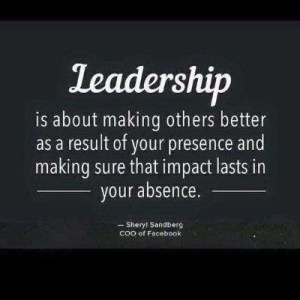
It is time to show that the administration takes more effort an leaving a legacy worth remembering.

Especially for the last, the least, and the lost.

Hubris syndrome

In 2009, Lord David Owen, a British parliamentarian who served as foreign secretary published an article, co-authored with Dr. Jonathan Davidson in Brain, “Hubris Syndrome:  An acquired personality disorder? A study of US Presidents and UK Prime Ministers over the last 100 years.

Hubris syndrome is a disorder of the possession of power, particularly power which has been associated with overwhelming success, held for a period of years and minimal constraint on the leader.

Yes, there is a leadership personality disorder. And it is called Hubris Syndrome.

The 14 symptoms of this disorder are:

  • narcissistic propensity to see their world primarily as an arena in which to exercise power and seek glory
  • predisposition to take actions which seem likely to cast the individual in a good light (i.e., in order to enhance image)
  • disproportionate concern with image and presentation
  • messianic manner of talking about current activities and a tendency to exaltation
  • identification with the nation, or organisation to the extent that the individual regards his/her outlook and interests as identical
  • tendency to speak in the third person or use the royal “we”
  • excessive confidence in the individual’s own judgement and content for the advice or criticism of others
  • exaggerated self-belief, bordering on a sense of omnipotence, in what they personally can achieve
  • a belief rather than being accountable to the mundane court of colleagues or public opinion, the court to which they answer is History or God
  • An unshakeable belief that in that court they will be vindicated
  • Loss of contact with reality; often associated with progressive isolation
  • restlessness, recklessness and impulsiveness
  • A tendency to allow their “broad vision”, about the moral rectitude of a proposed course, to obviate the need to consider practicality, cost or outcomes
  • hubristic incompétence, where things go wrong because too much self-confidence has led the leader not to worry about the nuts and bolts of policy

This was an interesting study where Hubris Syndrome was noted with President George W. Bush and observed a history of alcohol-related problems as related illness.  Bush demonstrated hubristic traits.  British prime ministers David Lloyd George, Neville Chamberlain, Margaret Thatcher and Tony Blair fitted the criteria for Hubris syndrome.

Interestingly, the “comorbidity of narcissistic personality disorder, and perhaps hubris syndrome, with other personality disorders such as histrionic, borderline and sociopathic disorders presented a real problem…If hubris syndrome, or traits of hubris run in families, this would tend to support the existence of the syndrome, or point to possible comorbidity associations. ”

The paper goes on to pointing out that

Because a political leader intoxicated by power can have devastating effects on many people, there is a particular need to create a climate of opinion that political leaders should be held more accountable for their actions.

Hubris syndrome in politicians is a greater threat than conventional illness to the quality of their leadership and the proper government of our world.

Qualities protective against disproportionate hubris, like humour and cynicism are worth mentioning.  But nothing can replace the need for self-control, the preservation of modesty while in power, the ability to be laughed at, and the ability to listen to those who are in a position to advice.

At a time when we are seeing a rise in the populist rulers, it is a good reflection to step back a bit and consider the merits of the study of Owen and Davidson.  After all, as early as 1964, RE Neustadt has argued that a “governed people’s view of a leader’s effectiveness is typically determined by what is happening to them during the leader’s term of office.”

Hubris syndrome is not something that we see in government alone.  It encompasses even the field of academics or business.  From the whiteboard to the board room.  This personality disorder can afflict everyone who has had a taste of power but has not been able to recognise and manage their hubris well.

The history of madness is the history of power.  Because it imagines power, madness is both impotence and omnipotence.  It requires power to control it.  Threatening the normal structures of authority, insanity is engaged in an endless dialogue – a monomaniacal monologue sometimes – about power.

– Roy Porter, “A Social History of Madness: Stories of the Insane”, Weidenfield & Nicholson, p. 39, 1987

Aristotle couldn’t have summed up better the outcome of hubris.

“Storms make trees take deeper roots”

We often underestimate our abilities, simply because we’re used to being undermined.  We’re afraid of exploring of what’s in store in our lives because more often than not, we’ve settled into our comfort zone.

Dolly Parton once said, that “storms make trees take deeper roots“.

I’ve had friends that have asked me about making career changes.  Interestingly, of all the professions, the health and medical profession is the most resilient.  That’s because a lot of doctors (nurses, pharmacists, medical technologists, etc) go into this field because of their “calling”.  Unlike other professional journeys, those in health care and its allied specialties are “dedicated” servants to their careers. Of the health professionals, being a doctor is perhaps the most difficult and challenging.  And I’m not talking about the tests and costs to becoming one here.

Few career paths require such relentless resolve and commitment as the path to becoming a doctor. I am sure that the thousands of doctors out there have their own stories to share.  Some memorable and fulfilling, others tragic and disappointing.  Like everyone else, doctors have feelings.  As a matter of fact, I think that it’s one of the most (if not the most) stressful professions.  Ever.

Being a physician is like tiptoeing on eggshells.  It’s not everyday that you get run of the mill cases where it’s only a cough or cold that needs water and bed rest in order to get better.  It’s usually the cases of having to decide on life and death, on having to tell the patient or their relatives the bad news, of having to grieve with patients rather than celebrating life – that make the profession challenging to hold on to.  The younger ones are usually burned out early.  The older ones would prefer to retire.

Ironically, while there is distinction in being a physician in the Philippines, there are challenges in the daily grind. Multitasking is the norm.  There’s the select few who mix teaching with a little bit of practicing the profession.  They join the academe while dedicating a few select hours to healing.  The second class are those who mix corporate life with an even thinner (or no) practice.  These are the captains of the industry who manage to sneak in a few patients after office hours.  Some of them give up their clinical profession and eventually stay in the corporate world. The third group are those who are full time government employees but engage in private practice if and when they can (usually after office hours or on weekends).  The fourth group are the entrepreneurs who squeeze in personal business trade with their clinical practice.  They usually personally own the business and are able to balance their (other) dream job with their practice.  Finally, there’s the full time practitioner.  He/she hops from one clinic (or hospital) to another (braving the horrendous traffic of the metro) from the break of dawn to dusk is their way of life.

Each of these categories have their pros and cons. The reason for multitasking range from financial remuneration to a personal satisfaction of being able to fulfill one’s passion (academics, research, corporate, business, governance).  The bottomline is, we spread ourselves too thin.

Too busy that we’re not mindful of our daily activities and end up being caught by the burden of doing things for others. Forgetting to be kind to ourselves in the process is not the kind of existence we signed up for, just because we are doctors. We cannot heal others when we are not strong.

You see my friends, we are like trees.  Nature (or life) creates storms to test our resilience every now and then.  Sometimes the storms come one after another testing how strong our roots are.  Other times, and hopefully more often, there are good days – allowing our roots to dig deeper and become more resilient as we prepare for the storms of our professional lives.

Even sad birds sing

Everyone’s life has a story.

It begins the day we’re born. More often than not, it’s the most joyous occasion to our parents.

Childhood are usually the best years of ones life. Carefree. Dependent. Wanting. Until we’re ready for school. And that’s when the first chapter begins.

School isn’t what it used to be. These days, you see the kids taking on so much assignments that you’d think your 4th grade son is taking a Master’s degree. You can hardly talk to them anymore. Maybe because we’re also too busy chasing our future or providing a roof over everyone’s head. Whatever the circumstances are, it’s not difficult to observe that a dysfunctional family has become a norm rather than an exception to the rule.

It’s because “life’s like that”.

But it isn’t.

Because there are pitstops in every journey of our life. Time to reflect o how we have lived, loved, laughed, cried. Being there for one another, not only during celebrations and victories, but during disappointments and sorrows will always be part of our stories.

Notice how quickly time has passed us by. How our children have quickly grown. How it’s impossible to turn back the hands of time. How many “what if’s” we’ve regretted.

Like autumn’s colors, our days take on a different hue. We wilt. We prepare for the cold of winter. Alone. Dreary.

For many of us, autumn is the second to our final pit stop in life. Nothing is too late. To live. To love. To laugh. To cry. To change. Because as long as we live, no dream is too late to change. No reconciliations too late to amend.

Only we can write the final chapter on how this story ends.

For even sad birds sing…

The beauty in kindness

One word that is so wanting nowadays.

Kindness is more than deeds. It is an attitude. An expression. A look. A touch. It is anything that lifts another person.

I’m writing this as an observation at the random posts we’ve shared in the last 30 days. There’s too much gore and hate and dislikes being pushed around. It’s like a doomsday prophecy. Sad. Dark. Bitter.

While I agree that social media has bordered to the point of irritation because people use it as a tool to peddle lies and fake news, we only worsen it by sharing it. It stirs the inner anger among us. It confuses our priorities and misdirects what we need to focus on. While it is true that we need to educate the misguided lot, sometimes not minding them at all is all it takes to put out the fire.

The beauty in kindness is found in each of us. No matter how dark our past or how difficult life is. There are stories of small, yet significant, victories in the world. The laughter and joy of life. The way life should be lived seeing rainbows after the worst storm.

We need to teach one another that sharing stories of love and kindness inspires us to be better human beings in an unkind world.

We can only conquer evil by doing good. And kindness repaid for the wrong that has been done melts even the hardened of hearts.

For beauty, after all is in the eyes of the beholder.

What if?

What if a drug or an app or a seer could tell where, when, and how we would die, would we live our lives differently?

Where would the challenges in life be if we lived each day laden with anxiety and regrets? It’s probably the reason why there’s no such things as being able to see the future.

We can, however, prepare for it. To live and love each day without regrets. After all, preparing to die is painful to live. But living each day as if it were your last makes you ready for the worst without regrets.

God always brings in the storm of our lives so that we can enjoy the sunshine afterwards.

God’s hand is upon us today and everyday. Good or bad. Sunshine and rain.

– touching our life with joy

– blessing our heart with love

– comforting our soul with peace

What if I can wipe away the tears in your eyes? I will. But I can’t take you back to yesterday. Nor help you see your future. Or prepare you for the storms or sunshines of our lives. So I’m writing this for you… because only we can live the ‘what ifs’ of our lives.

Too busy to remember and enjoy life? Have you hugged lately the ones you will miss most when you or they are gone?

Ubuntu

Ubuntu, a South African term, is translated as “I am because we are” or “humanity towards others“.

While there are various definitions of what Ubuntu is, the core philosophy rests on the idealism suggesting that humanity is not embedded in one person (or an individual), but rather a quality of humanity that we owe one other.

Archbishop Desmond Tutu describes ubuntu as a person who is open and available to others, affirming of others, and does not feel threatened that others are able and good, based from a proper self-assurance that comes from knowing that he or she belongs in a greater whole and is diminished when others are humiliated or diminished, when others are tortured or oppressed.

Ubuntu speaks of an upright and moral individual who does not think or act because of gain for one’s self. He does not use others in order to boast of his achievements or qualities.  Low-keyed and quiet in his work, the person leads by example rather than trumpeting personal wants or dislikes particularly when there is an agenda.

At the memorial of Nelson Mandela, U.S. President Barack Obama is quoted:

There is a word in South Africa – Ubuntu – a word that captures Mandela’s greatest gift: his recognition that we are all bound together in ways that are invisible to the eye.  That there is oneness in humanity.  That we achieve ourselves by sharing ourselves with others, and caring for those around us.

We can never know how much of this sense was innate in him, or how much was shaped in a dark and solitary cell.  But we remember the gestures, large and small – introducing his jailers as honoured guests at his inauguration; taking a pitch in a Springbok uniform; turning his family’s heartbreak into call to confront HIV/AIDS – that revealed the depth of his empathy and his understanding.  He not only embodied Ubuntu.  He taught millions to find that truth within themselves.

At a time when political divide and senseless philosophies rule governance and logic, it is a good time to step back and think about Ubuntu.

As Filipinos, we need to dig within ourselves and reflect on the kind of country we want our children to inherit in the next decade.  Existence is not simply about the wants and needs during a political rule. I am sure we all know what is wrong and what is right.  Regardless of who the political divide benefits, we need to refocus on building a future for each and every Filipino.  We need to remember, that the more we perpetuate what is wrong, the more difficult it is to rebuild what has been destroyed.  It will take a whole generation to restore decency and nationalism among Filipinos all over the world after so much divisiveness being peddled.

Where has our compassion and kindness gone?

Changes…

There are three Cs in life that are important – choice, chance, and change.

You must make the choice to take a chance if you want anything in life to change.

I’ve always believed that of the three Cs, change is the most difficult and challenging.

When I was much younger, the ideal was a totally different outlook from the real. Those days of idealism begin to fade as we age. I’m really not sure if it’s just being tired of shouting out to what you can’t change, but fighting for the truth and what will always be the right thing to do is physically, emotionally and spiritually draining.

Perhaps we need to give it to ourselves a break in life by changing the way we look at things. We have the choice to remain where we are or take the chance to see where our passion leads us.

After all

Nothing changes, if nothing changes…

Background noise

Often times in our lives we’re too busy doing multiple things. Juggling from one chore to another becomes a handful. I guess the words “spread too thin” is an understatement for being too busy to even appreciate life.

The thing with being busy enough is that it makes us forget about depression and anxiety. Being too busy to even mind the daily worries. Oftentimes, we’re envious with people who don’t even care about anxiety.

In reality, all these “busy” events are but what I call background noises. We all understand the vicious cycle of working for the money. The career. The fame. But we all forget that the purpose for all these is to live a fulfilled life.

It’s ironic that there are many that see material things as the measure of success. Or popularity and going albeit, viral, as the measure of success. They’re background noise to true contentment.

Think about it. How much background noise is there in your life?

Turning a new leaf

Each October of the year reflects a season I most love – Fall.

The incredible beauty of fall is most tangible as it breaks away from the humid and hot summer blitz.  It symbolises a time to prepare.  To reflect on the past.  To be ready for the upcoming dreary months.

Nancy Tafuri is author of a children’s storybook entitled The Busy Little Squirrel. The book was chosen as one of the Best Children’s Book of the Year by Bank Street College of Education and a finalist in the Connecticut Book Awards.

The leaves have started to fall. The air is cold. And Squirrel needs to get ready for winter.  He cannot nibble on the mice. He does not time to hop with the frogs or run with the dogs.  And this busy little Squirrel doesn’t seem to be slowing down.

V02_0689873417

It’s a wonderful book that ushers in the autumns of our life.

The season (and yes I get the fact that we don’t have autumn in the Philippines or in the Southern Hemisphere), is symbolic of our life. We bid goodbye to the vibrance, warmth and eclectic summer joys reflective our youthful days.  When trees and plants shed their garments of leaves and blossoms temporarily, and rest and wait with hope while they endure the cold, dreary winter season, before blossoming once again in Spring…just like our lives.

I am sharing with you some beautiful thoughts of Ellen Shuck written in October 2007.  I couldn’t have fallen in love with autumn more…

Our lives are like that.  We experience many autumns, physically, spiritually, and emotionally…while watching their dust I see an upcoming time of rest, planning and letting go of what was.  I join nature in preparing for a deeper time of hibernation — winter.

Days become shorter and the nights longer.  But the blackness of evening brings a cozy blanket of contemplation.  Although activity thrives during the autumn and winter, too, there’s a different aura present.  One can think about his endeavours — why he attempted these, and where they’ve brought him.

Perhaps your autumn is learning to cope with the death of someone significant, you’ve lost a job, a divorce took place or a child disappointed you.  A relative had to move to a nursing home.  Your self-esteem is at low ebb.  Have you lost your dreams?

God allows the spiritual seasons of our lives to coincide with the physical seasons.  There’s hope there.  Regardless of droughts, floods or failed crops, there’s always another tomorrow…If spring and summer were always present there would be no time to regenerate.  Autumn brings wisdom, reflection and time to repair and plan.  New chances and new life are promised.

There’s beauty in passing from the green productivity of summer into the shadowy hues and sluggishness of the fall…all things change, somehow.  There are lessons to be learned from our times of activity and productivity.  But we can only find what God is attempting to show us by stepping back, ridding ourselves of some of our leaves of dogged purpose and just being still for a while.

Indeed, autumn is a time of ambiguity.  The winds blow causing flags to furl and unfurl, but they remain connected to their pole — that centre that holds them.

For when the storm subsides they will know life’s contentment and lounge in the breeze.

So, what autumn are you experiencing now? Regardless, remember God is there in all seasons — life and death.

Like the story of Squirrel, how do we prepare for the winters of our life?

Through reflection and by turning a new leaf…