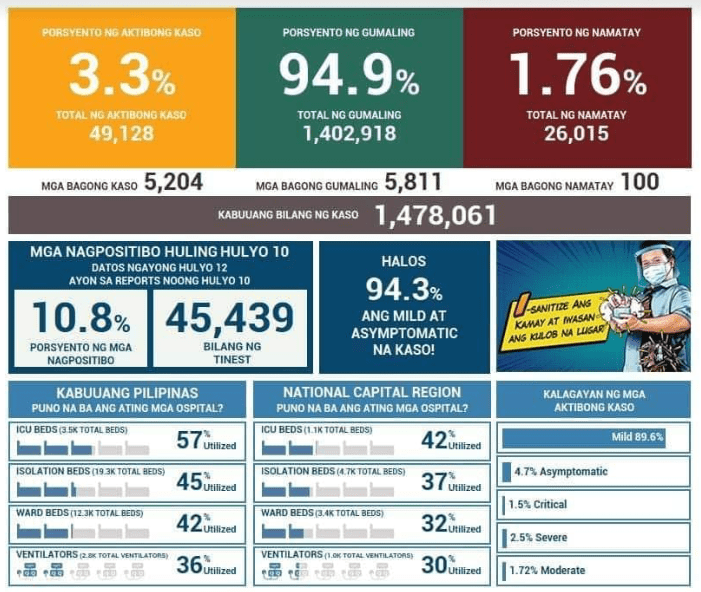
The Health Agency reports 5,204 new cases today based on data from July 10 with a positivity rate of 10.8%. Note, however, that 8 laboratories failed to submit results (accounting for 0.45% of all more than 45,000 tested samples or 1.3% of positive individuals). The past days have shown that the cases are rising outside of the National Capital Region, although the Rt is now past 0.9 in Mega Manila.
With 100 new deaths recorded, the Philippines passes the 26,000 deaths mark and the case fatality ratio for outcomes remains at 1.82%.
CALABARZON led among all regions with almost 50% more cases than NCR.
It was Laguna, Cavite and Batangas that continued to account for the haul in Region IVA, with Laguna topping the provincial rankings.
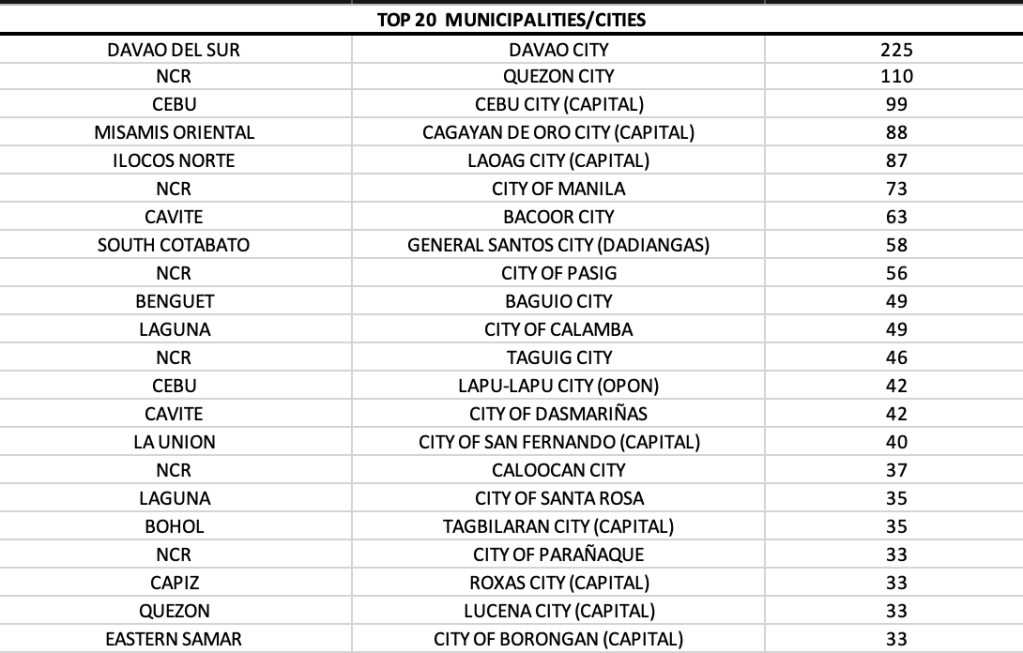
Among LGUs, Davao City took back the lead today, with more cases than Quezon City and Cebu City combined.
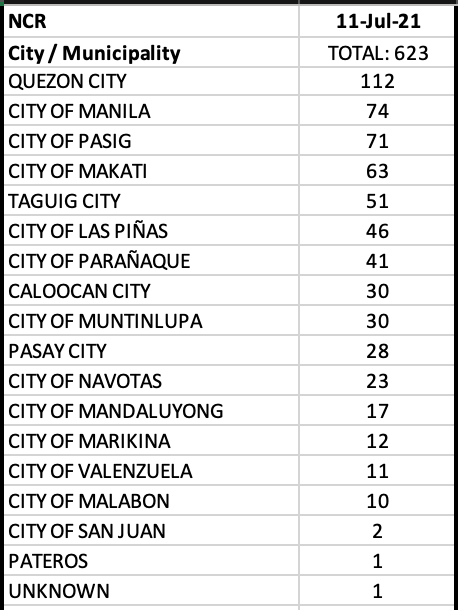
In NCR, Quezon City remained the top contributor to the daily cases with triple digits.
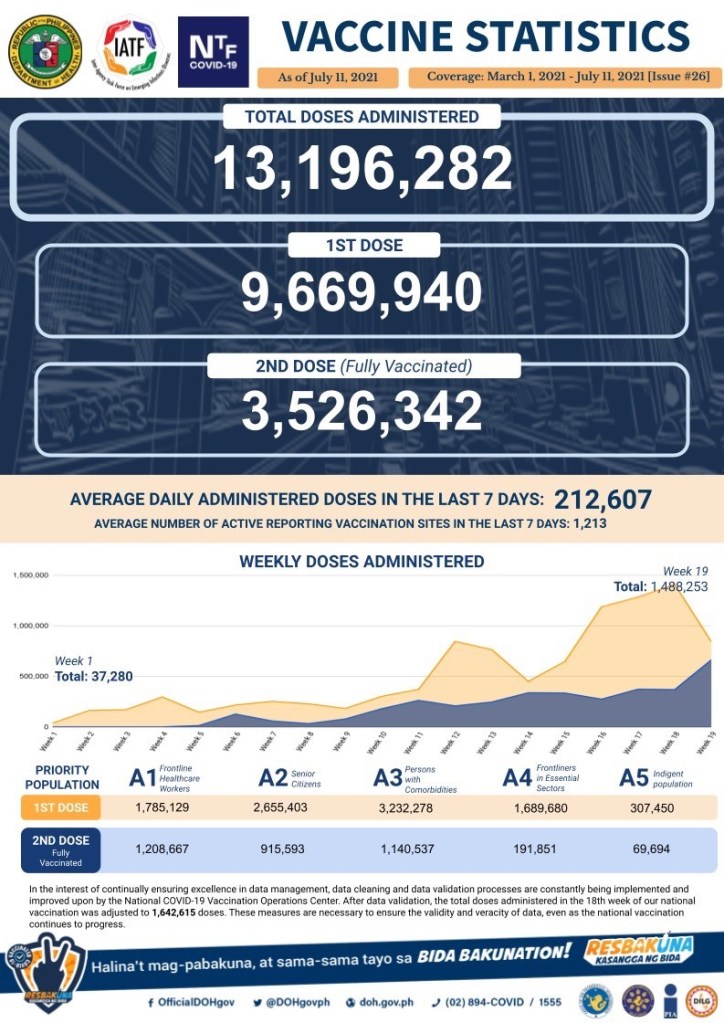
As of July 11, the DoH reports that more than 13M doses of COVID-19 vaccines have been given. More than 3.5M have been fully vaccinated bringing the percentage of fully vaccinated to 3.2% of the population (which may be higher at 5.1% considering the eligible population is only approximately 70M).
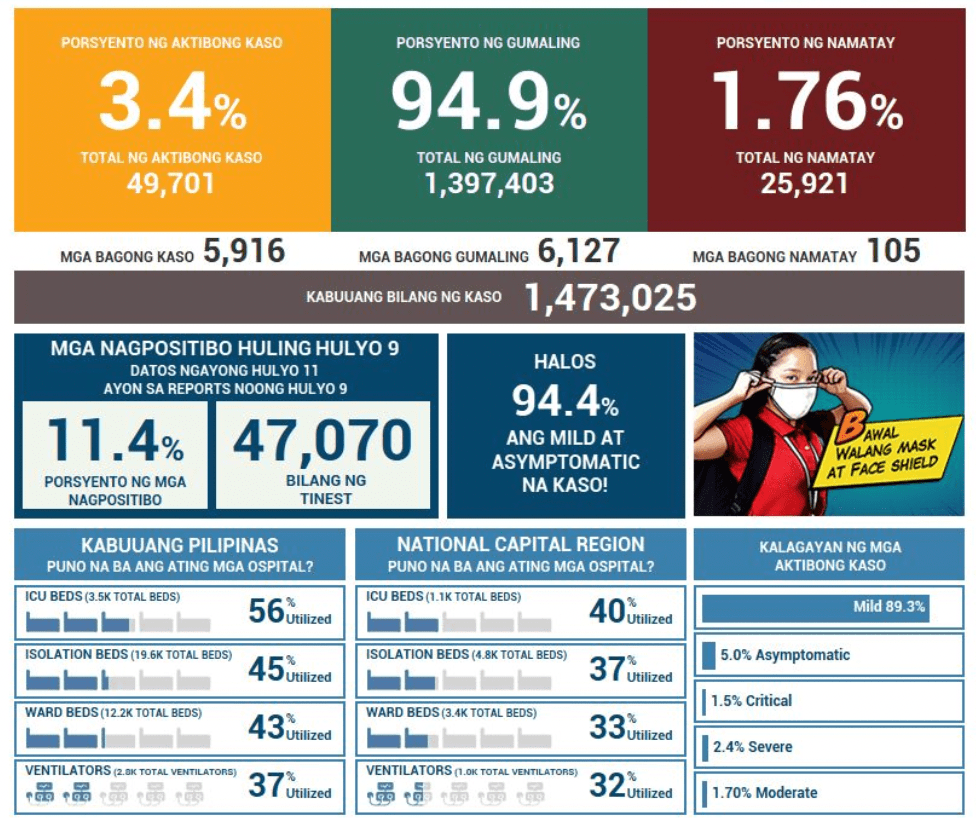
With 3 laboratories not submitting data for July 9, there are close to 6,000 new cases with 11.4% positivity rate. The active cases still hover at around 50,000 per day and while there are significant recoveries, the number of new cases continue to pace with the recoveries.
There are 105 new deaths announced and the case fatality ratio for outcomes remains at 1.82%.
CALABARZON and Western Visayas take back the lead today, while Central Luzon is back in the top five regions with most cases, joining NCR and Central Visayas.
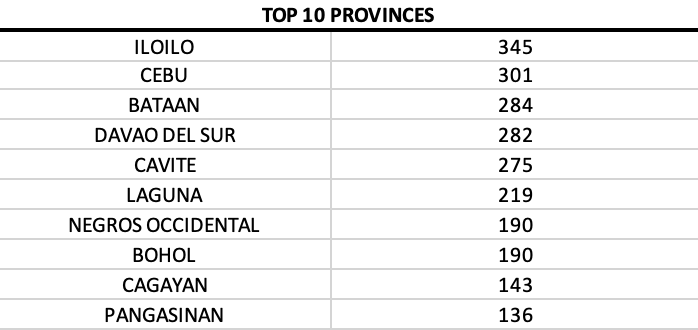
Among provinces, it is Bataan that saw a dramatic increase in cases, coming in number 3 among the top 10 provinces in the country. It is the same province that pushed Central Luzon to fourth rank among regions. With the 284 new cases in Bataan alone, Mariveles took over as the LGU with the most cases for the day.
The overall reproduction rate for the country hovers at 0.93. While that is welcome news, notice that many of the provinces remain steady or are seeing a decline (trending ‘flat’). The NCR, while flat is seeing a slight upward trend at 0.91 (after staying less than 0.9 the past 2 months). The NCR needs to maintain a Rt <0.6 or better because any slight upward movement in reproduction number will affect the total number of cases in the Philippines. It is the most vulnerable region for any surge.
The LGUs outside of NCR with most new daily cases from July 4-10 are seen below. Among the four different indicators, Cebu City has the highest reproduction number, Iloilo City the highest ADAR (average daily attack rate), Iloilo City the highest ICU utilization rate and General Santos with the highest positivity rate.
THE WEEK THAT WAS
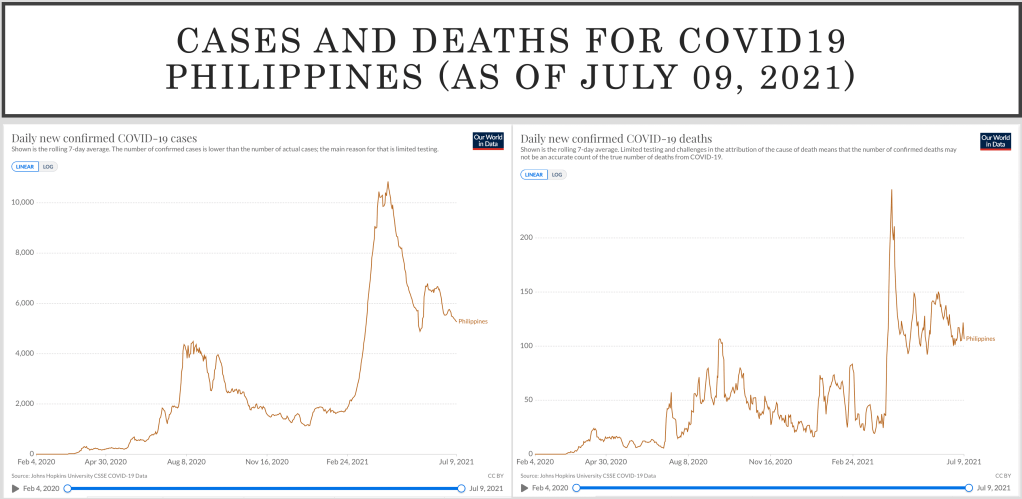
While the cases took an upward spike the end of May 2021 because of increasing cases in regions outside of the NCR plus, lockdown measures in the major provinces is seeing a slow decline in new daily cases. The 7-day average is lower by 7% to around 5,250/day this week. The number of deaths is also slightly lower, but the case fatality ratio remains steady at 1.82% (based on outcomes – recorded recoveries and deaths). CFR based on outcomes provides a more accurate picture of fatality rates because deaths are always reported late.
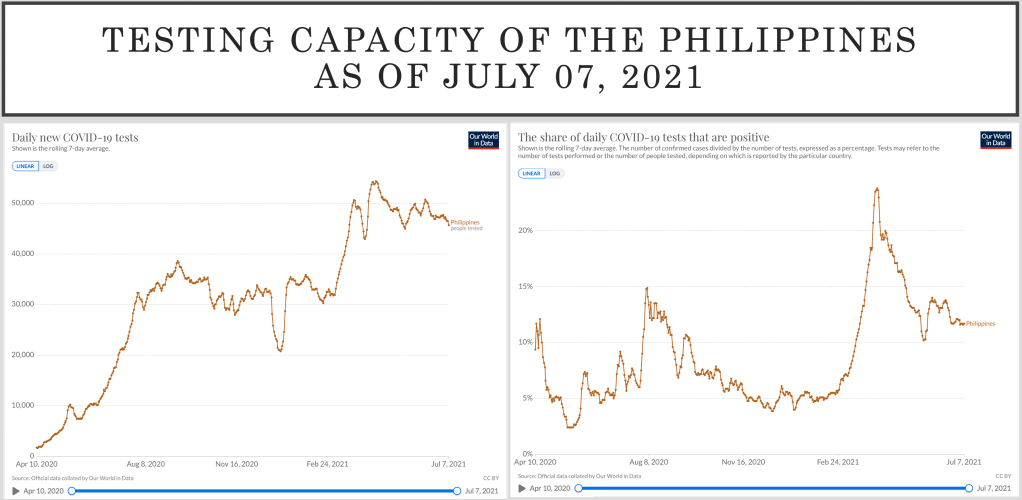
Testing capacity is erratic and is slightly lower the past week. This is due to the fact that there are fewer cases in NCR, where the bulk (>40%) of the testing facilities in the country are located. That is also the reason why the positivity rate remains above the acceptable 5% standard. As most of the testing facilities are concentrated in Mega Manila, test results from the provinces eventually are delayed.
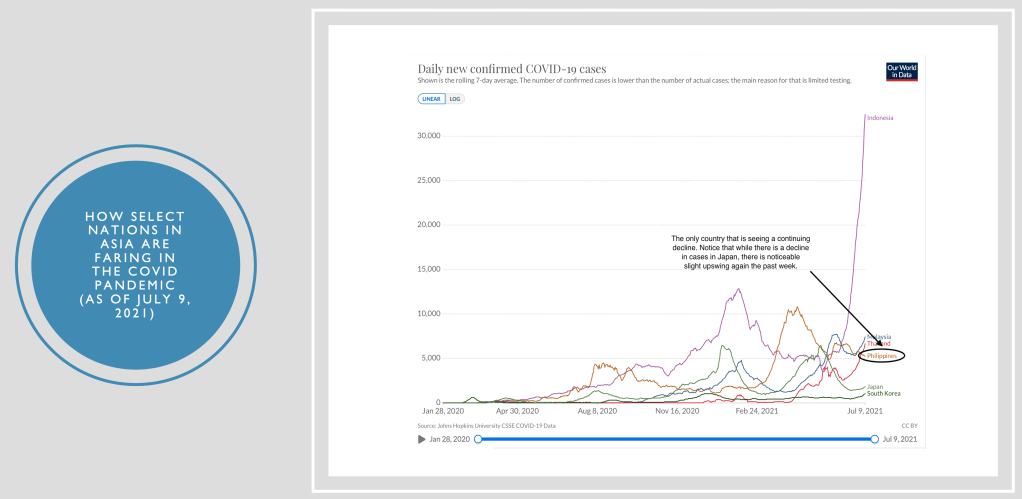
In Asia, where we are seeing a resurgence in cases, particularly in Indonesia, Malaysia and Thailand, the Philippines is performing much better in controlling the outbreak as we see a very slow and steady decline. We need to vaccinate quickly because of emergence of variants among the unvaccinated. If we continue to vaccinate at a slow pace, the emergence of variants can derail the over-all benefit of the vaccines.
This is how the world is currently doing with COVID-19 vaccines. Notice that Asia leads in terms of number of people who have received a single or even full doses. However, the population of Asia is also the largest in the world. For now, the solution is not providing additional boosters to those already immunized. Rather, it is vaccinating a greater percentage of the population. The 70% number to achieve ‘herd protection’ is arbitrary, as this will depend on the efficacy of the vaccines available in the country or community. And that’s a fact. The solution of manufacturing companies on getting booster shots is in theory, a self-serving solution for financial gains of the industry. It does not make sense that you keep immunizing those that have already gotten the vaccine, when a larger majority of people in the world have not even received a single dose.
Let’s get majority of the people in the world vaccinated first, before we even talk about boosters. There isn’t enough going around for now. And the great divide between richer and poorer nations couldn’t be more obvious than today.
With 3 laboratories failing to submit results on July 8, 2021, the Health Agency reports 5,675 new cases from over 50,000 tests and an 11% positivity rate for that date. The number of active cases is a notch below 50,000 with more recoveries today.
A total of 96 new deaths were announced today. The case fatality ratio for outcomes remains steady at 1.82%.
The current 7-day average of new cases is 5,275 and 107 new deaths for the Philippines.
Western Visayas leads over all regions today, with cases pouring in from Iloilo and Negros Occidental provinces. NCR, CALABARZON, Davao Region and Central Visayas round up with the top five with more than 500 new cases apiece.
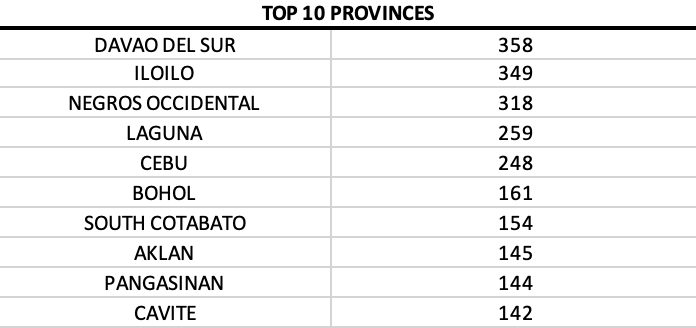
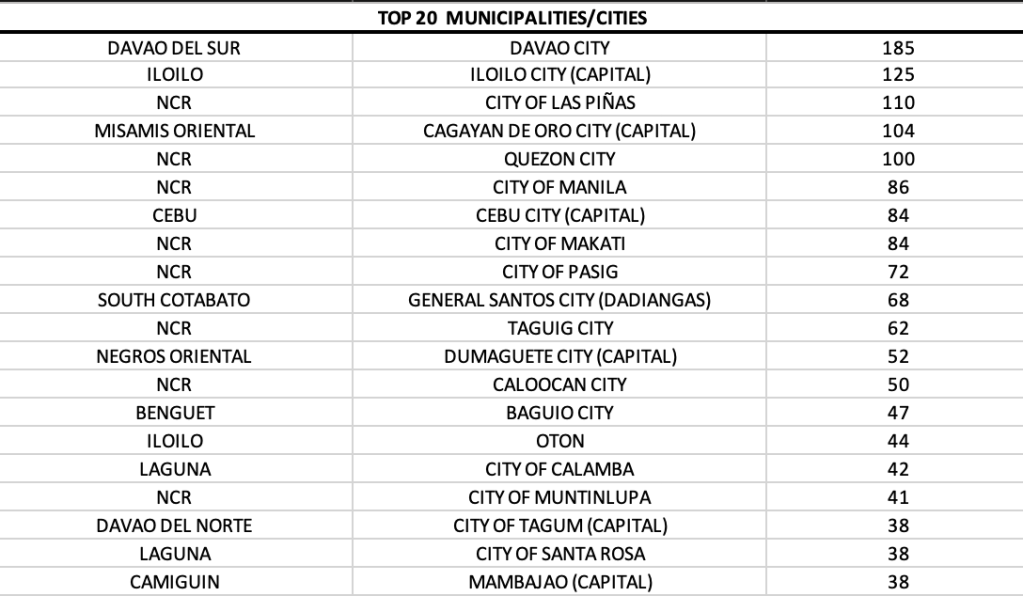
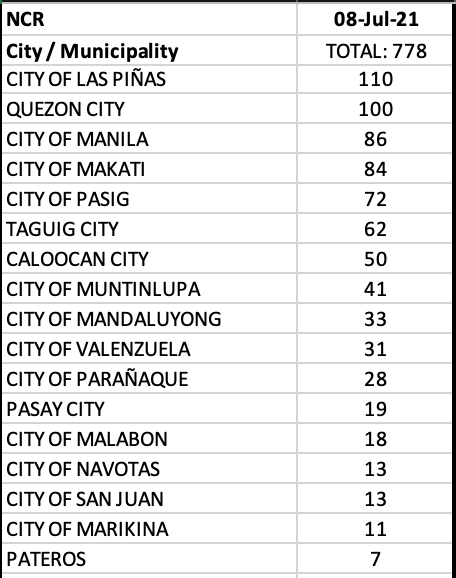
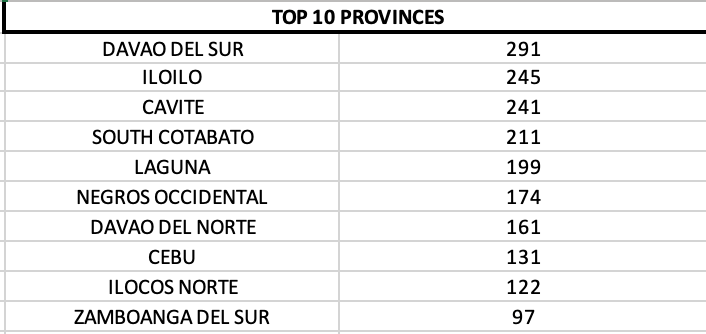
Davao del Sur continued to top the provinces in number of new cases and Davao City among LGUs in the country. Davao City had more cases than the top three LGUs in NCR – Quezon City, City of Manila and Pasig City – combined.
Six of 17 LGUs in NCR are among the top 20 cities with most cases today, while we are seeding a heady mix of LGUs in the top twenty list including Tagbilaran (in Bohol), San Fernando (La Union), and Kalibo (in Aklan).
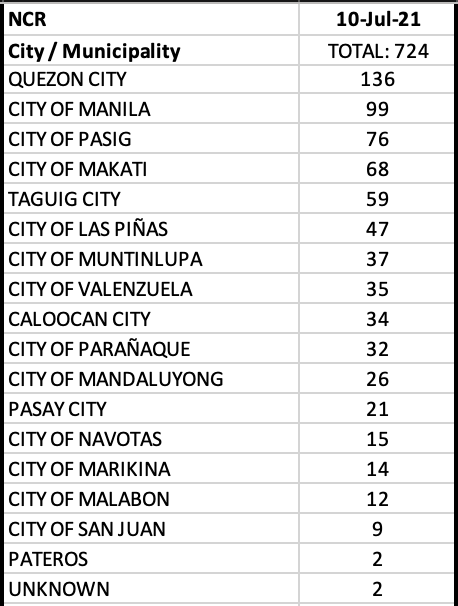
In NCR, Quezon City continued its triple digit reports and stayed in number one.
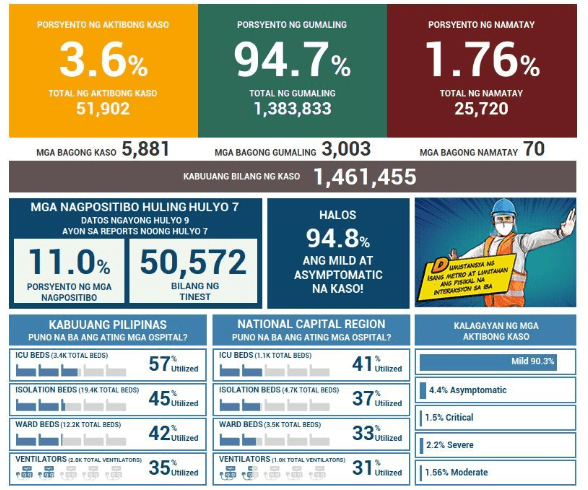
With 5 laboratories (making up 2.2% of the testing results) failing to submit last July 7, the Health Agency reports 5,881 new cases today (about 400 more than yesterday), from more than 50,000 tests done for an 11% positivity rate. With more cases than recoveries reported, the active cases remain above 50,000.
There are 70 new deaths reported, placing the case fatality ratio for outcomes steady at 1.82%.
The NCR continued to lead once more, followed by its sister CALABARZON. NCR accounted for more than 13% of todays total cases. All regions except BARMM reported triple digits.
On a provincial level, Iloilo province, Davao del Sur and Laguna continued to lead. And evidently, Davao City stayed as over-all leader (but saw slowing down in cases) among all LGUs in the country. Quezon City, Iloilo City, Bacolod City, and Cagayan de Oro made up the top five.
Quezon City was back on the leader board with close to 200 cases, as several NCR LGUs saw a see saw in cases in its own locality. Six of 17 LGUs in NCR were among the top twenty cities/municipalities with most cases for the day.
The OCTA Research Monitoring update for Friday, July 9, 2021 shows better numbers with a declining trend in reproduction numbers, ADAR, ICCUR and positivity testing in the Philippines. However, ICU utilization is still high in Davao City and Iloilo City, Reproduction number is still above 1.0 in Iloilo City, General Santos, Cebu City, Baguio City and Tagum, and General Santos City is seeing a positivity rate of 30% (3 of 10 who test are positive).
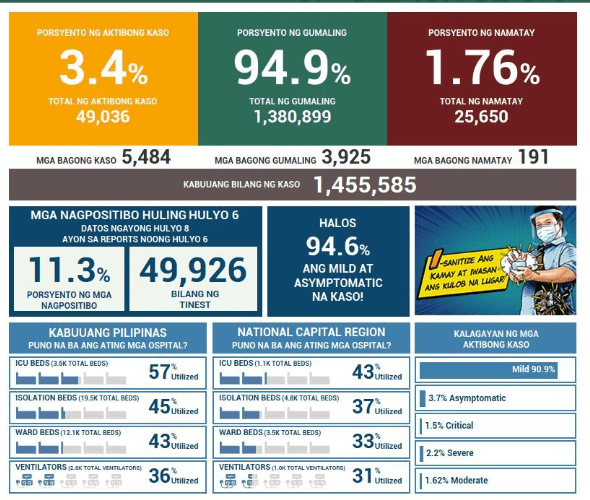
The Health Agency reports 5,484 new cases today for tests done last July 6, Monday, with 11.3% positivity rate. While this shows a continued slow down in cases, the deaths climbed quickly with 191 new death reported today. The case fatality ratio for outcomes stands at 1.82 percent.
Healthcare utilization is still higher on the national level compared to the NCR alone. This is in all categories – ICU beds, isolation beds, ward beds and ventilator use.
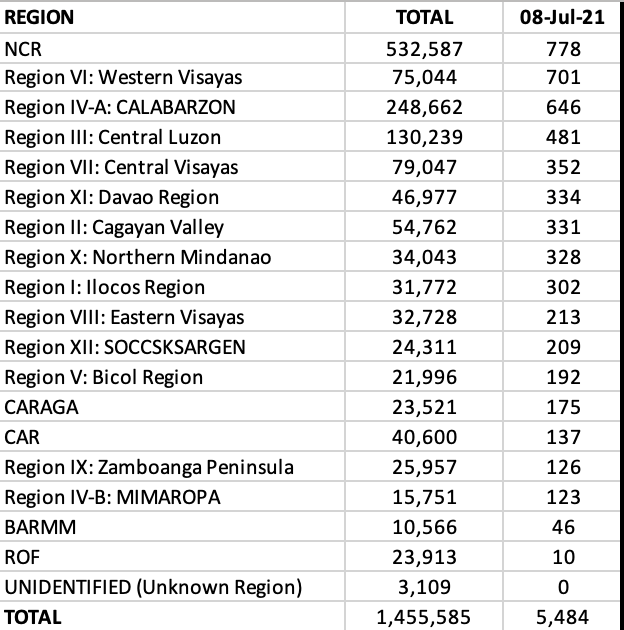
NCR is back in number one among regions today with more than 14% of the total new cases. And as erratic as the daily numbers go by region, Western Visayas and CALABARZON come in second and third.
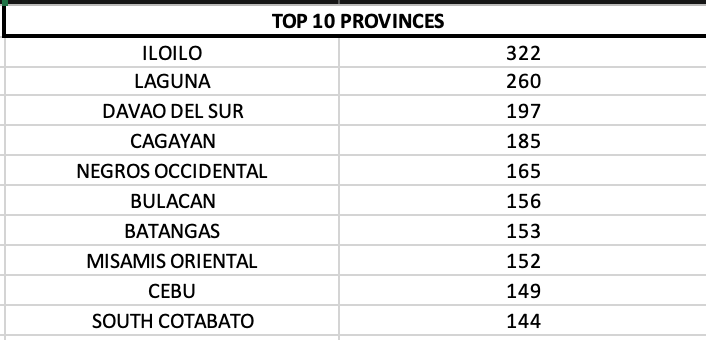
Iloilo Province, Laguna and Davao del Sur remain the top three provinces in the country with most cases. And Davao City continues to be the LGU with most cases today.
As NCR gains ground to top the region with most cases, 8 of 17 LGUs are back in the top twenty cities with most cases. The shocker of the day is – LAS PIÑAS grabs the lead as the city in Mega Manila with most cases, overtaking Quezon City.
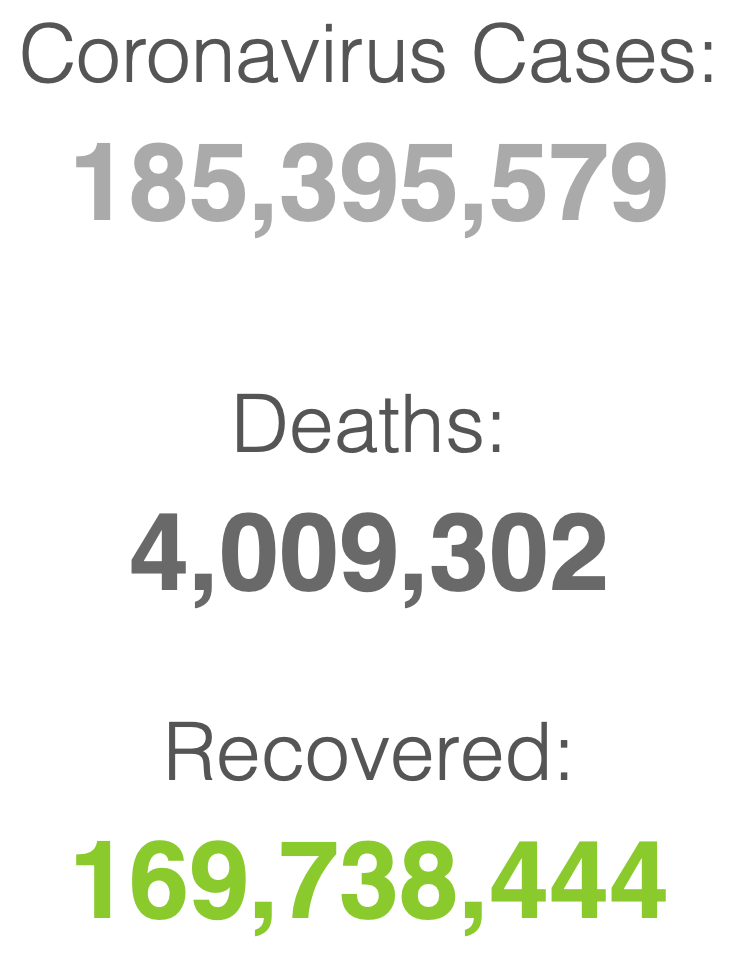
It’s been awhile since I’ve tracked the global numbers. As of July 7, 2021, the world has now passed the 4M mark for deaths attributed to COVID-19. And as the other countries begin to reopen their economies, the variants pose a threat to future surges, particularly in countries that do not have adequate vaccine supply.
The Health Agency reports 4,289 new cases for tests done last July 5 with 11.3% positivity rate. This pushes the total now to more than 1.45M COVID-19 cases. There were 4 laboratories that failed to submit results for this day.
While the low cases yesterday and today may be good news (hopefully it stays lower), the 164 new deaths reported today had pushed the case fatality ratio for outcomes (recoveries and deaths) a tad up from 1.81 to 1.82%. As repeatedly mentioned, death reports will always be late (anywhere in the world).
For the first time, since the beginning of the pandemic, NCR manages to slip to fourth rank as CALABARZON, Western Visayas and Davao Region each represent Luzon, Visayas and Mindanao as the top regions in each of the parts of the Philippines.
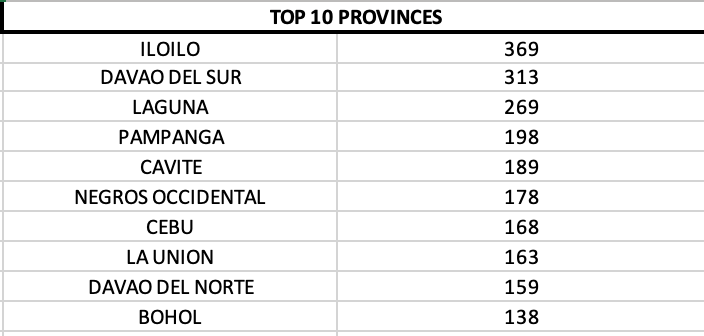
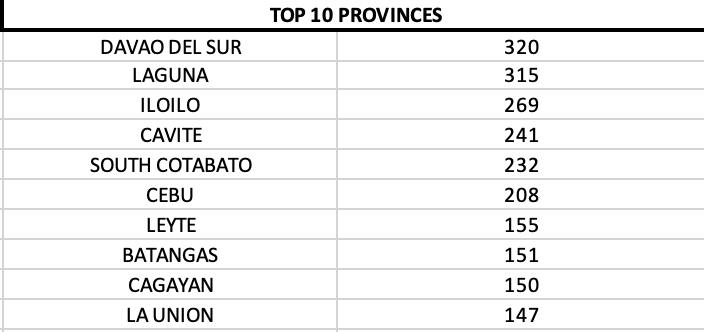
Davao del Sur, Iloilo province and Cavite are the top three provinces for the day.
On an LGU level, the top three does not even include a city in NCR. Davao City, Iloilo City and Bacolod City are the top three cities with most cases among the top 20 list. There are only 3 of 17 LGUs from NCR that even made it to the top twenty – which is very good news for the day. Laguna managed to include three cities in the top 20 ranking – Calamba, Santa Rosa and Cabuyao.
In the NCR, only Quezon City continued to report triple digits, while Navotas and Pateros continue their good job at maintaining single digit new cases.
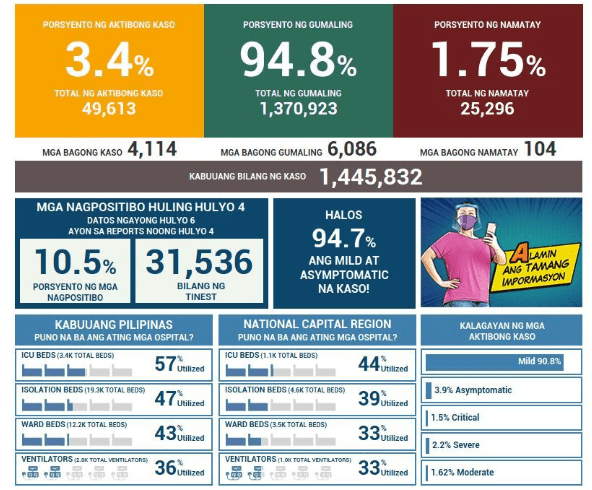
As typical of any Tuesday, there are 4,114 new cases announced by the Health Agency based on a little over 31,000 tests done on July 4, Sunday with a 10.5% positivity rate. While the active cases are slightly below 50,000, this data is erratic as the number of cases are still above 5,000 based on a 7 day average.
The total number of deaths reported today are 104. The case fatality ratio for outcomes is steady at 1.81%.
CALABARZON and Western Visayas led todays haul, with 12 ROF (returning overseas foreigners) added to the list of new cases. To date, 23,845 ROFs accounted for the over 1.44M total COVID-19 cases in the country. While they make up only 1.62% of the total cases in the country, the concern of their carrying variants of concern from their places of origin is significant.
In NCR, Quezon City continued to report triple digits while five LGUs stood out among the pack with single digit cases only – Valenzuela, Navotas, Marikina, Malabon and Pateros. Only 4 of 17 LGUs from Mega Manila were among the top 20 cities with most cases for the day.
Davao City continued to lead among LGUs, albeit with lower cases today than the previous days. Joining Davao City in the top five are: Quezon City, General Santos, Baguio City and Cebu City. Majority of the LGUs in the top 20 are from the Visayas and Mindanao.
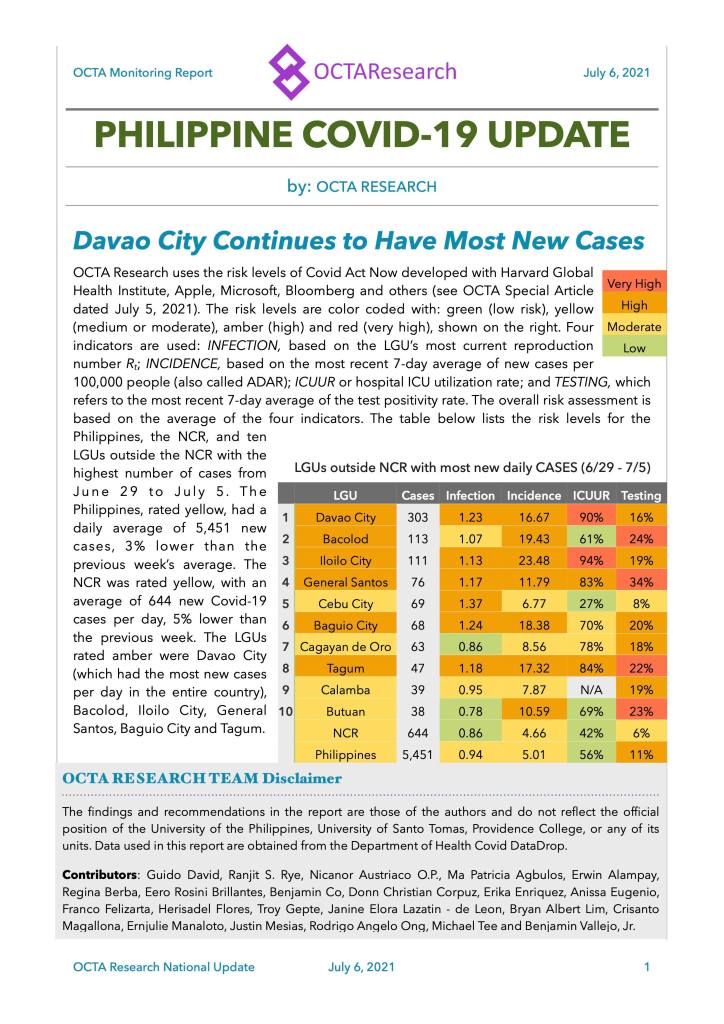
The OCTA Research Monitoring update for July 6, 2021 shows that Davao City continued to lead among cases.
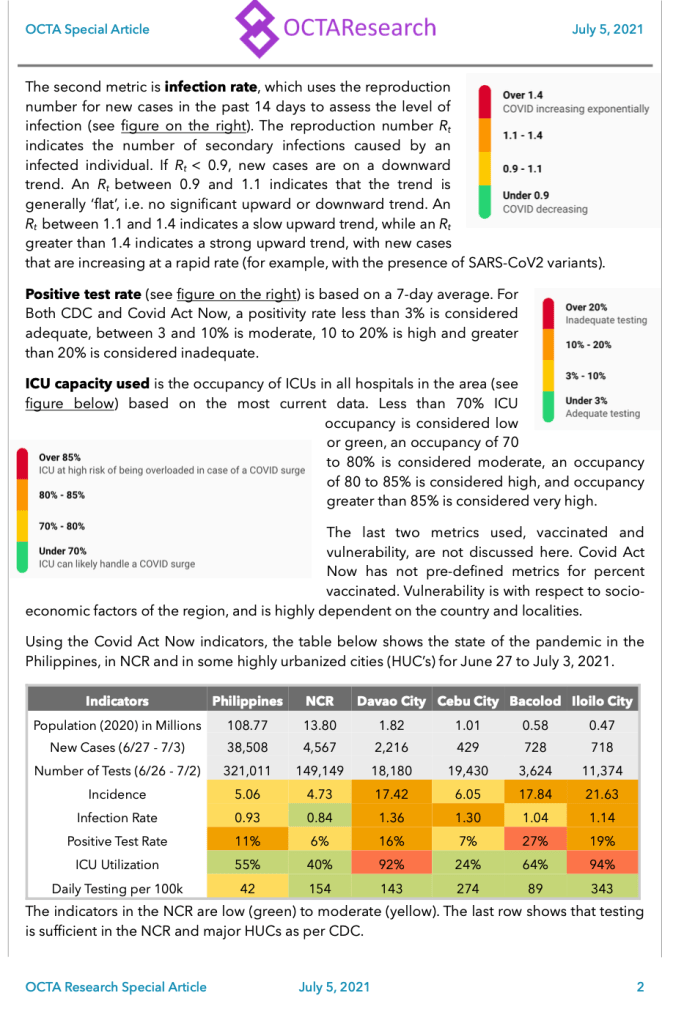
The research group now uses the risk levels of Covid Act Now, developed with Harvard Global Institute, Apple, Microsoft, Bloomberg and others.
The risk classification is color coded. Meaning if the code is green then it is classified as low risk, yellow as moderate, orange as high and red as very high risk for the indicator.
There are four indicators used: INFECTION, INCIDENCE, ICCUUR (hospital ICU utilization rate) and TESTING (7-day average of the test positivity rate).
This set of indicators was published on July 5 and is expounded below. Standardizing indicators is vital in measuring how we are doing as a nation. This translates also to regional, provincial or LGUs in the country. Standardizing with metrics that have endpoints and are measurable are subject to less bias as well. Utilization of standardized metrics also affords one to make sound decisions on creation of policies and exit plans for the government.
LGUs outside of the National Capital Region that are seeing higher cases are summarized below. Overall, the Philippines is at moderate risk considering these indicators. The table below is self-explanatory. For example, Davao City showed the highest infection rate (Rt = 1.23), positivity rate was highest for General Santos (34% or 1 of 3 tested would test positive), incidence highest in Iloilo City with a daily attack rate of 23.48 per 100,000 population, and Iloilo City also with the highest ICCUUR at 94%.
The LGUs outside of NCR that are considered overall high risk are: Davao City, Bacolod, Iloilo City, General Santos, Baguio City and Tagum.
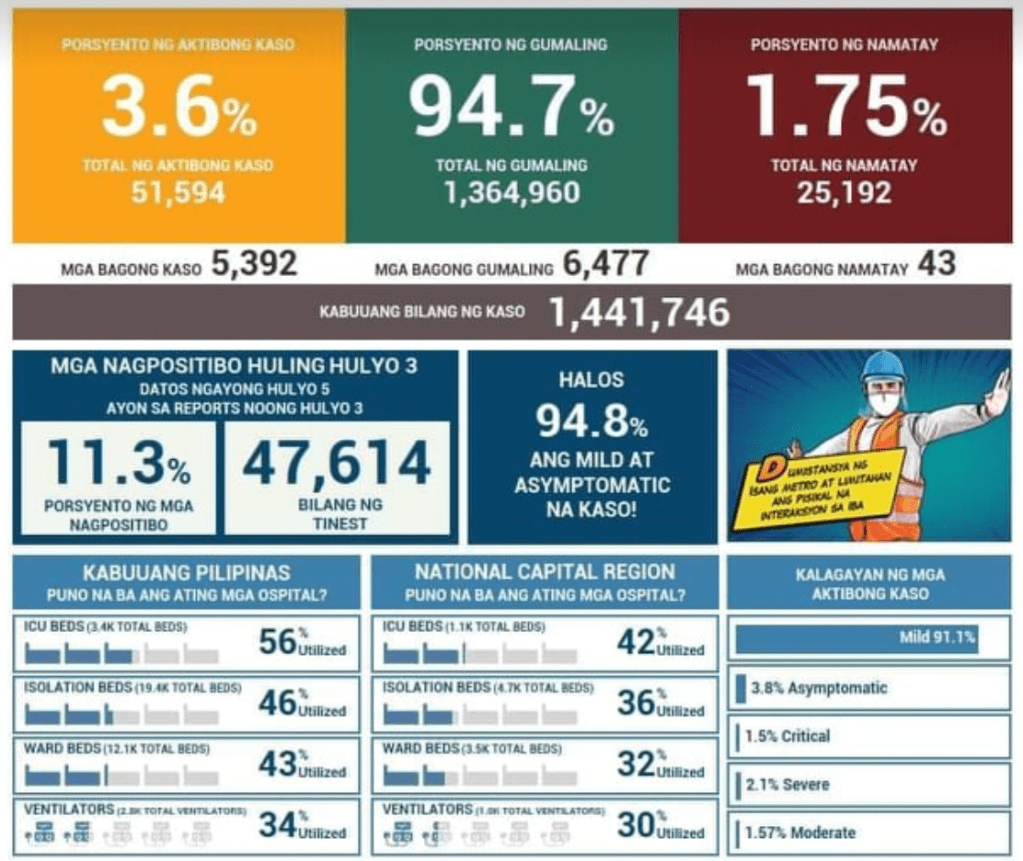
The Philippines recorded 5,392 new cases today for tests done last July 3 with a positivity of 11.3%. Hopefully, this translates to a continued downtrend in the NCR and CALABARZON, which contribute to the bulk of cases in the country. Any spike from these two regions will automatically send us spiraling back to square one. The cases in these two regions are the most critical as they are the most difficult to contain.
With 43 new deaths, the case fatality ratio for outcomes is steady at 1.81%.
CALABARZON and NCR are back in the lead with NCR generating 11.5% of the total cases for today. Davao Region, Western Visayas and Ilocos Region round up the top five.
In NCR, Quezon City continued to lead with 123 new cases. Five of 17 LGUs in NCR are in the top 20 cities with most cases.
On a provincial level, Davao del Sur, Laguna and Iloilo dominate the top three provinces.
Davao City continues to lead among all LGUs in the country. Its total cases are more than the cases of second and third rank Quezon City and Iloilo City, respectively. Four cities in Laguna land in the top 20 – San Pedro, Santa Rosa, San Pablo and Biñan.
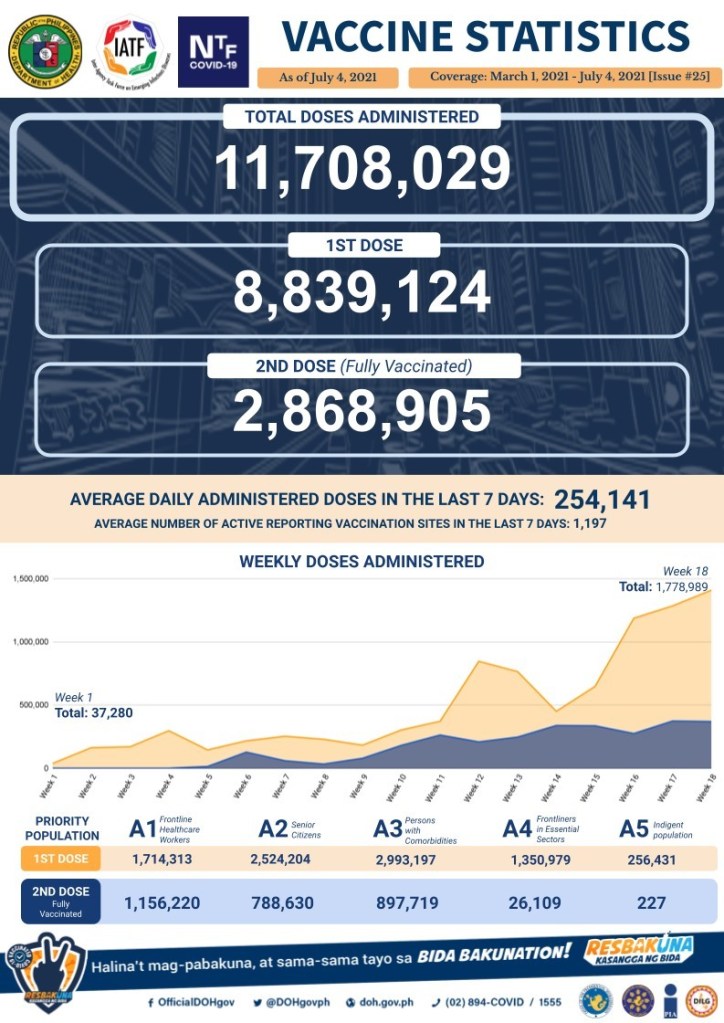
Based on data from the Health Agency, as of July 4, 2021, close to 12M doses have been administered with close to 2.6% being fully vaccinated. There’s still a challenging road ahead, and hopefully, we get to take a jab when any vaccine is made available to us.
One testing center failed to submit reports for July 2.
The Health Agency announces 5,966 new cases today based on 11.5% positivity of less than 44,000 tests done on a Friday – July 2. Active cases remain above 50,000 and ICU rate utilization is up in the NCR from 40% yesterday to 46% today. Nationwide, the ICU rate is also up from 55 to 57%, perhaps driven by the NCR’s increase in ICU utilization due to slight uptick in moderate and severe cases.
There are 86 new deaths reported, bringing the total to more than 25,000 (which we officially passed yesterday). The case fatality ratio is steady at 1.81%.
While Western Visayas and CALABARZON dominated the days numbers. Nevertheless, the NCR is seeing a higher share in cases, owning 13.5% of today’s 5,966 cases.
Quezon City and Manila continue to declare triple digit numbers while 7 of 17 LGUs in NCR land in the top twenty cities with most cases for the day.
Among provinces, Iloilo grabs the spotlight and leads all provinces in total new cases.
On a national level, while Davao City continued to lead, it had lower numbers compared to the past week and will hopefully see a downtrend in coming week. In the top five are Davao City, Bacolod City, Quezon City, City of Tagum and Iloilo City.
With a Rt = 0.95, the cases go down a tad. The national Rt is driven by increasing cases in the provinces mostly in the Visayas and Mindanao regions. With a 7-day moving average of around 5,600 new daily cases, the Philippines still has high numbers considering that these daily cases are more than 500% of the new daily cases before the second surge. The regions outside of the NCR have lesser health care capacities and will definitely struggle as the numbers continue to escalate. The balance between healthcare and economy is more difficult in these areas because the income per capita is lower than in NCR plus.
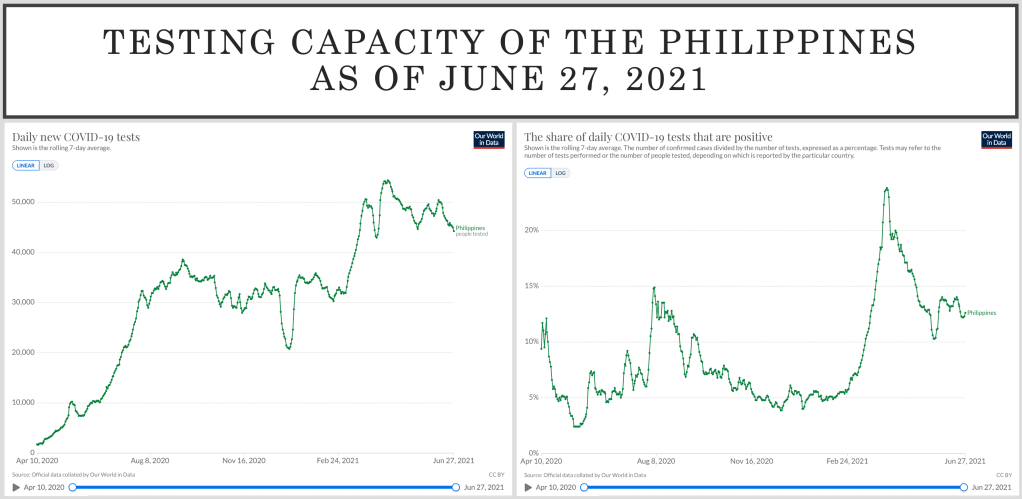
The testing capacity of the country is not stellar, as the reports of COVID-19 cases are dependent on the Health Agency insisting to count only those that are positive by RT-PCR. While it is not prohibited to use rapid antigen test kits that have been approved by the Philippines Food and Drug Administration, it is not encouraged as well. Only those tested with RT-PCR are counted, traced and subjected to isolation in facilities in the country. The Philippine Health Insurance agency (PhilHealth) also reimburses only those that get tested by RT-PCR and are positive. With the positivity rate still way above even 10% daily (which is a far cry fro the pre-surge levels where the positivity rated were 4-6% on the average), the Philippines is definitely NOT testing enough. This puts us in a precarious position because only through adequate testing (including patients who are not symptomatic but have significant exposure and considered close contacts or are immunized to some degree) can we do significant contact tracing. Containment of the outbreak will need extensive testing, tracing and isolation.
If we are plateauing at these numbers as the vaccines are rolling out tepidly (for now), we will not be able to stimulate economic growth, reopen borders anytime soon, or contain a future surge. The numbers are just too high to call these data as ‘good’ or classify us as ‘low risk’.
This is how we stand among other countries that are experiencing recent surges. Japan and Taiwan are significant control in cases. Thailand, Malaysia and Indonesia are seeing rapid rise in cases while the Philippines remains flat.
The good news is that we’re seeing a slight decline in new cases in the country this week. The Health Agency announces 5,908 new cases today based on more than 50,000 tests done last July 1 with a positivity rate of 10.6% (much lower than the previous weeks). Note the comparison of our data prior to the surge in late March 2021. The Philippines plateaued at 1,100-1,600 cases/day with positivity rates 4-6%. While we are seeing a slight decline in cases and positivity rates, this is still a far cry from the pre-surge numbers, which will take awhile to work on as we reopen the economy.
Healthcare utilization rate is low and manageable in the NCR, while it remains challenging in some parts of the country outside of Mega Manila.
With 90 new deaths today, the case fatality ratio for outcomes remains steady at 1.81 percent.
CALABARZON and NCR took back the lead from all regions today. Nevertheless, the rounding up the top five region, were Western Visayas, Davao Region and Central Luzon – all contributing to more than 500 cases apiece.
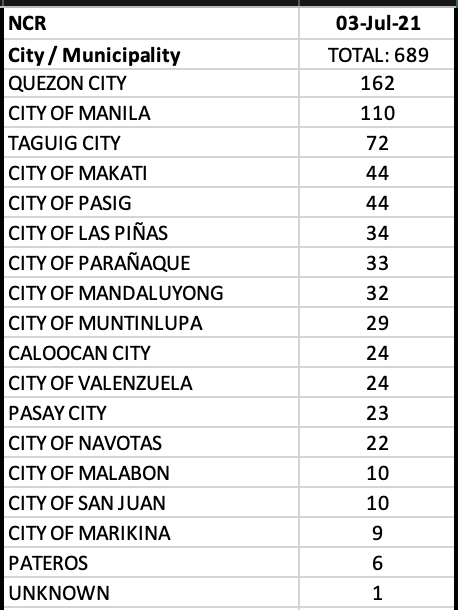
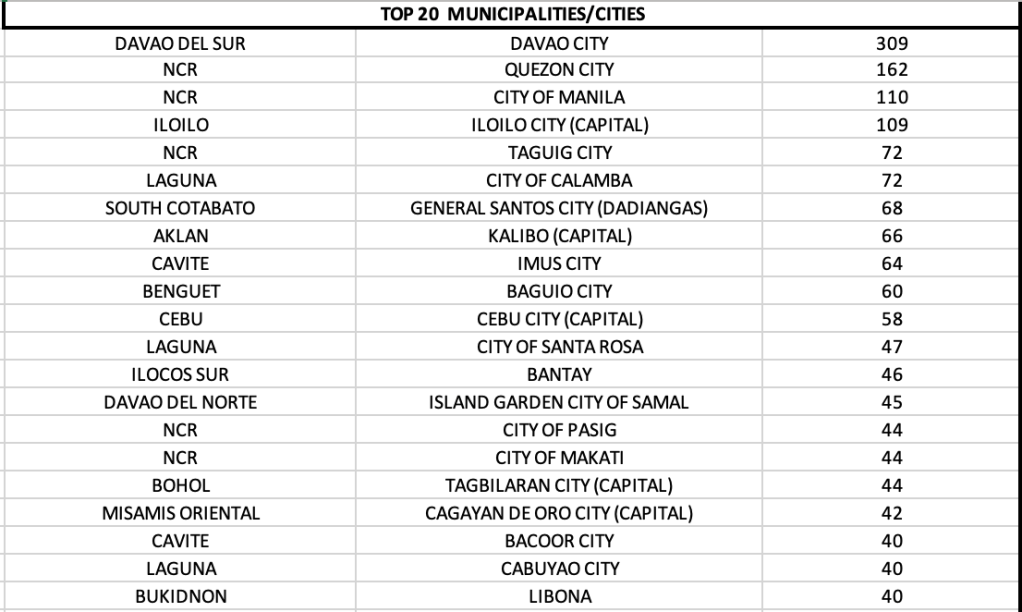
In the NCR, it was Quezon City and the City of Manila that reported triple digits. Mega Manila accounted for 12% of the total cases in the country today. Five of 17 LGUs were among the top 20 cities with most cases.
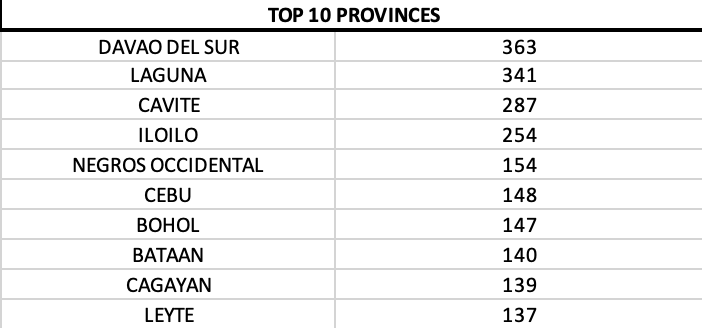
On a provincial level, Davao del Sur, Cavite and Laguna were the top three provinces.
And on a national level, three LGUs from NCR were in the top five: Davao City, Quezon City, Manila, Iloilo City and Taguig City.

























 Relative Joy