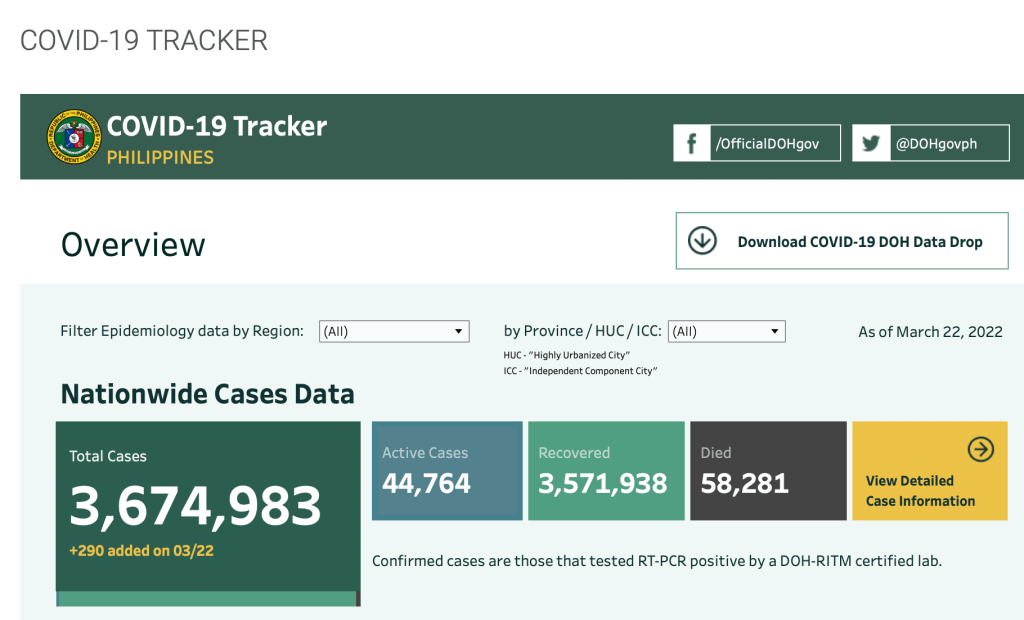
The Health Agency announces 290 new cases, and 5 added deaths today. The other good news is that that 7 day positivity rate is at 2.5%.
Now the downside. As other regions see lower cases, NCR accounted for more than 35% of the total cases for the day with 103 cases. The cases in NCR were led by the City of Parañaque that had 22 cases and the only LGU with more than 20 cases. City of Manila reported 16 and Quezon City had 11 cases today. All other LGUs had single digit numbers with three LGUs reporting only 1 case each. They are: Muntinlupa, San Juan, and Pateros.
Outside of NCR, the following provinces reported double digits: Cavite 20, Rizal 11, Iloilo Province and City 12, and Zamboanga City 17. Many provinces are now reporting ZERO COVID cases.
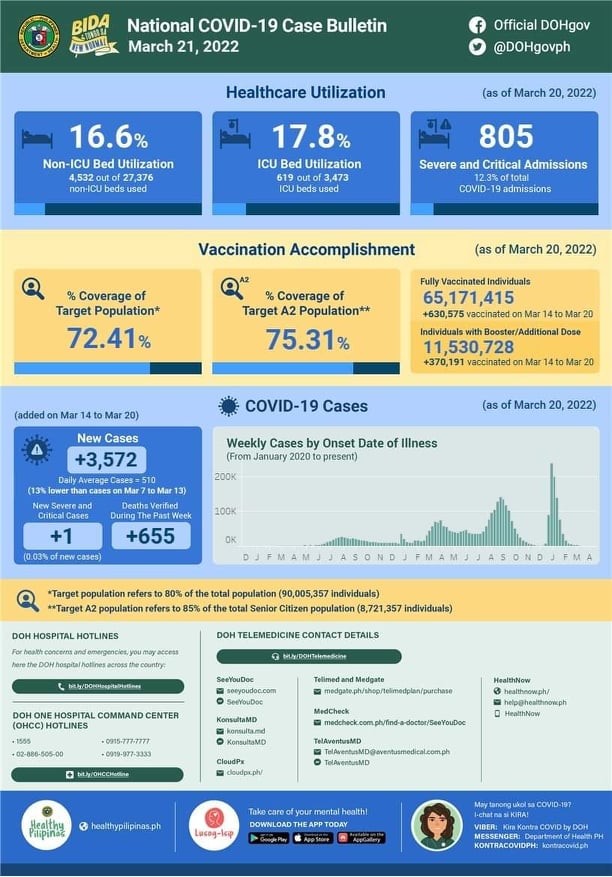
It’s a Monday. Which means, it’s the day when the Health Agency provides a summary for what transpired from the last 7 days (March 14-20, 2022).
And here’s the rundown:
Healthcare utilization is at very low risk with both ICU and non-ICU bed utilization at <20% for COVID cases. The number of severe and critically ill is now at triple digits from a previous week of four digits.
Vaccination is slightly higher but at a very slow increase with only a little more than 630K added to fully vaccinated individuals and >370K added for booster or additional dose. More than 75% of the target A2 (senior citizen) population is now vaccinated.
There were 3572 new case this week (no saying if they include backlogs or not) for a 7-day average of 510 cases/day. While there continues to have a decline in cases, the decrease has slowed down to -13%. Which means that we are likely reaching a trough.
There were 655 deaths added (for about 95 deaths a day). Most likely, this includes those who were declared recovered but eventually verified to have passed away due to COVID19. Of the 655 deaths, 97 occurred in March (14.8%), 122 in February (18.6%) and 81 in January (12.4%). That meant that 54.2% were from August 2020 to December 2021! The largest bulk were deaths in October (101) and September (100).
The DoH today report 415 new cases with 13 deaths. The positivity rate is a tad up at 2.8% (from 2.7%) but can be due to very few tests being done. On March 20, less than 15,000 individuals were tested. (412 of 14,645 individuals tested last March 20 tested positive.)
NCR owned 115 of the 415 (27.7%) of the total cases for the day. Only 4 LGUs in NCR had double digits: City of Manila 20, Quezon City 19, and Taguig and Caloocan 14 each. All the rest had single digit cases with Pateros, the lone LGU reporting zero covid.
The Health Agency announces 577 new cases today, with 229 belonging to the NCR. That’s 40% of the total share of cases for the day. Which really is quite worrisome considering that we have no idea if they are backlog cases or up-to-date. There are 9 of 17 LGUs with double digit cases in the NCR led by the City of Makati and Pasay City with 30 apiece, Parañaque with 28, Manila 27, Quezon City 25, Caloocan 23, Taguig 18, Pasig 16, and Las Piñas 10. All other LGUs had single digit with 2 LGUs reporting zero covid – Pateros and Navotas.
Outside of NCR, the following provinces of HUCs lead the tally: Cavite province 30, Iloilo Province and Iloilo City 46, Zamboanga City 20.
There are 240 new deaths added today.
The positivity rate holds at 2.7%.
Health care utilization has not been updates since March 3, 2022. We most likely will get an update tomorrow, and hopefully, one that is truly up-to-date.
THE WEEK IN REVIEW
South Korea became the epicenter of the global COVID19 pandemic this week as it hit an all-time high of more than 620,000 cases in a single day last March 17 for COVID19. For the past week, S. Korea has been churning 1M cases every 2-3 days.
Vietnam wasn’t far behind with almost 180,000 daily cases (based on a 7 -day average.
As omicron lashes at the East Asian nations, the good news is that the vaccination rate of these countries are at more than 80%, diseases are mostly mild, and their pandemic management is different from that of the Philippines. They are, to put it in words, more disaster prepared in spite of the onslaught of the omicron wave.
Only those countries with lower vaccinations in the vulnerable population (read: senior citizens) like Hong Kong were at a lost when they began counting the dead, placing corpses beside those who had COVID19 because the funeral parlors could not keep up with the mounting deaths.
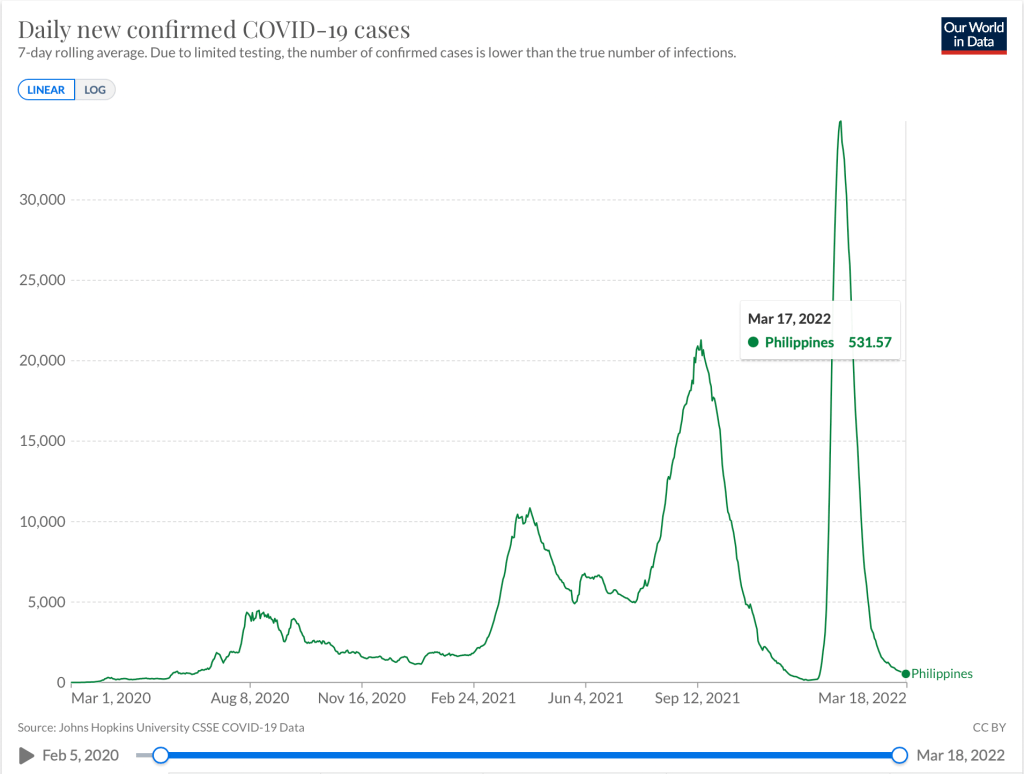
The Philippines continued its low cases streak but has most likely hit a trough in spite of the lower reproduction number (Rt = 0.53 +/- 0.05). We ended last week with a 7-day average of 590 daily cases and as of yesterday averaged 531 daily cases (which isn’t a significant decline compared to the lower cases we had in December 2021, after the delta surge and before the omicron wave. Majority of the daily cases remain concentrated in the National Capital Region, most likely because of the density of the region and that testing is more accessible and plentiful in Mega Manila.
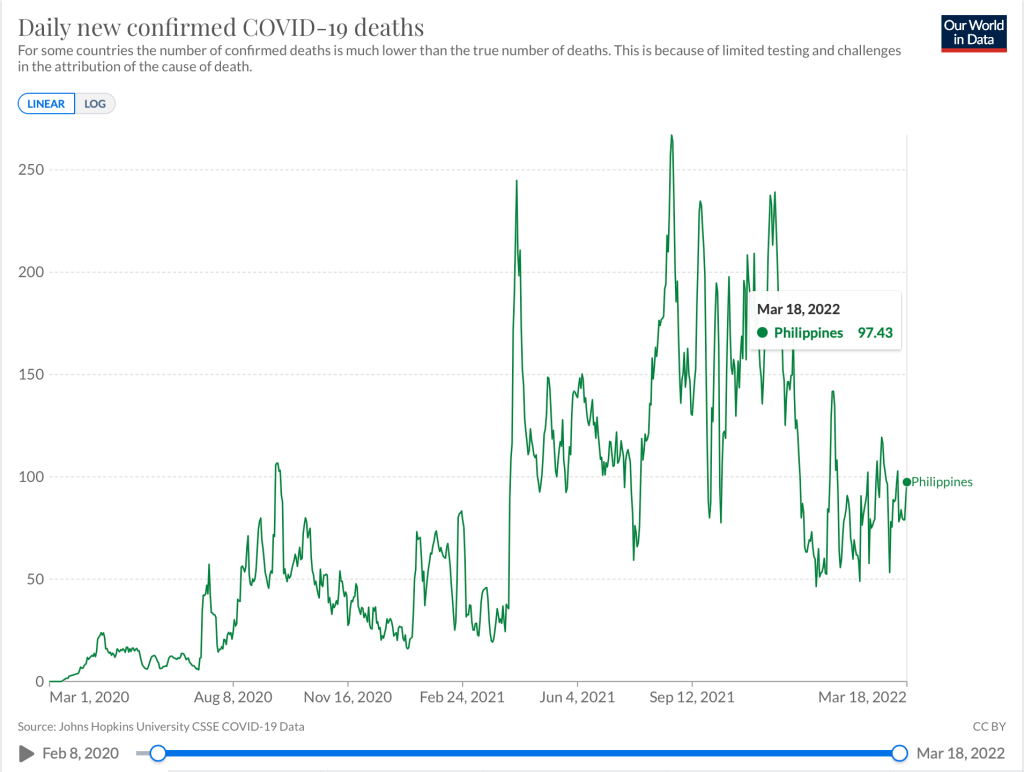
Deaths were erratic the whole week as the agency were reporting backlogs aside from the daily deaths. Daily deaths averaged 97 per day based on a 7-day moving average.
Comparing this to how the other countries performed, the graph below shows the 7-day average in the different countries (with China and Brunei added).
Based on a per capita (number of cases per million population), South Korea led the pack. And while Brunei may have around 2150 daily cases only, the small nation of half a million people was enough to push it into second spot with 4860 cases per million population. Hong Kong comes in third with 3500 per million, Vietnam fourth with 2800 per million and Singapore fifth with 2000 per million. The Philippines and China are the sole nations with single digit per million population. The data may not be a reflection of the actual situation as the stark contrast is that the Philippines has decreased its testing capacity by limiting it to A1, A2 and A3 and contact tracing is not routine anymore. On the other hand, China aggressively tests and does contract tracing in almost every province or city where there is an outbreak of cases noted.
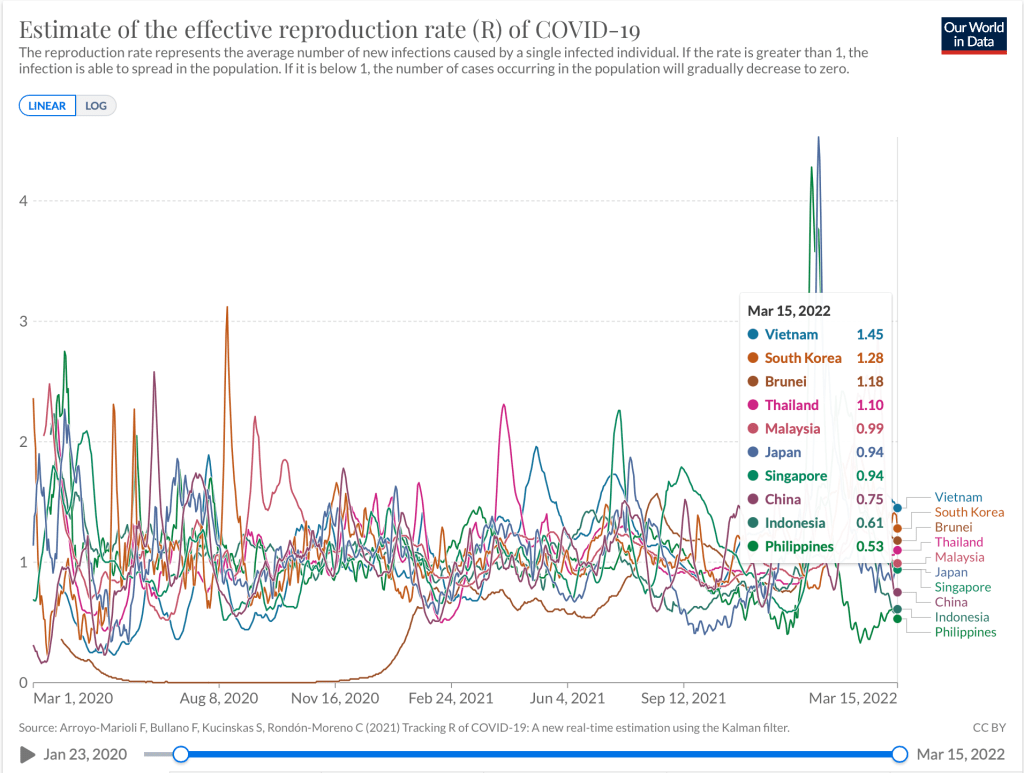
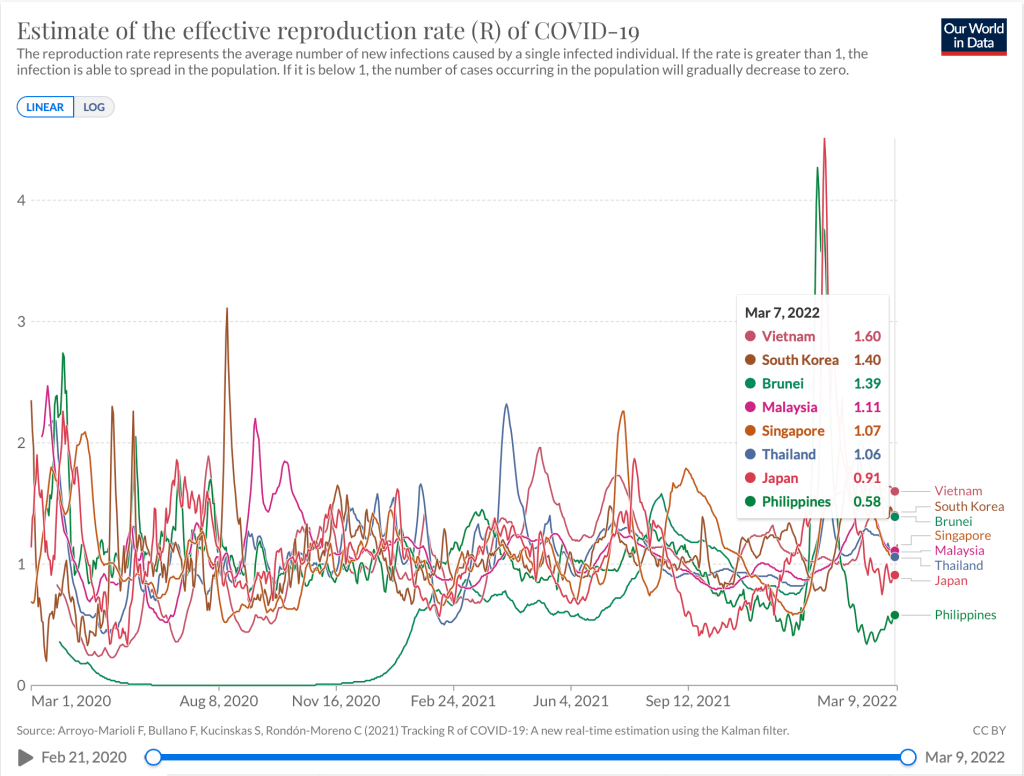
With that data, the reproduction rates of the various countries show that Vietnam and Korea remain critical. The upcoming week will see Vietnam continue to report a slight uptick in numbers and should be peaking anytime soon. South Korea has lower Rt this week compared to last and is seeing a slight decline in numbers. Most likely, it has reached its peak. With aggressive testing in Korea, 1 in every 20 individuals are currently testing positive. Brunei has also peaked and are seeing a slight decline in numbers. Those with Rt < 1.0 are Malaysia, Japan, Singapore, China, Indonesia and the Philippines.
At the current trend, East Asia should see better days in the next four weeks. With the aggressive stand of China on the ZERO COVID policy, they should be able to handle omicron much better than other countries. Otherwise, a country with 1.4B people will create a global havoc with numbers soaring if omicron is allowed to breakthrough in each and every province and city.
With a slight bump in cases due to BA.2, the question is – do we need a fourth dose?
Pfizer and Moderna, the two big mRNA vaccine developers have been pushing through media and various press releases their application with the US Food and Drug Administration for that ‘fourth dose’. The evidence they present is based on “data from the Center for Disease Control and Prevention that found the effectiveness of both company’s vaccines against hospitalization dropped from 91% two months after a booster shot to 78% after four months”. This sweeping statement is reckless and the evidence for a fourth shot is based on “how well the Moderna vaccine has protected against the omicron variant in the United States and Israel”.
Let’s dissect the statement provided as justification for another dose.
The United States and Israel are two different countries – and are not the only nations that implement mRNA as the sole vaccines for their citizens. Singapore, a country of 5M people uses mRNA vaccines in over 90% of its population. If you look at the number of COVID19 cases in these countries, the US, a country of 334M people has recorded more than 81M COVID19 cases since the start of the pandemic. In short, it has at least 250,000 cases per million population OR 1 in every 4 Americans have had COVID19. Israel, a country of less than 10M people and the first to roll out the mRNA vaccines and boosters and pediatric vaccination now has more than 3.75M total COVID19 cases. This gives them a per capita of 400,000 cases per million population or 2 in every 5 Israelis has had COVID19. Singapore will exceed the 1M number of COVID19 cases tomorrow. This puts the country at 170,000 cases per million population (or around 1 in every 5-6 people having had COVID19). The data clearly shows that the mRNA vaccine are NOT transmission blocking agents. It works at reducing the risk of more severe infections, but will definitely change how mild or asymptomatic infections develop among those who get sick from SARS-CoV-2.
Deaths are a different endpoint. The US has also the highest number of deaths in the world with close to 1M dying from COVID19 since the start of the pandemic. Deaths are a lagging indicator and therefore underreported everywhere. The US has almost 3000 deaths per million population or 1.3% case fatality rate. Israel on the other hand has had just more than 10,000 deaths or 1117 deaths per million population or 0.3% case fatality rate. Singapore has almost 11,000 deaths or 201 deaths per million or 0.18% case fatality rate. This shows that other factors are highly dependent on outcomes of this pandemic. Why some countries have lesser fatality rate compared to others are likely due to factors not due to vaccine protection alone.
The study of the CDC Prevention and Control was a very broad snapshot. Very broad is an understatement. It failed to factor in hospitalization by age, presence of underlying conditions and basically other intangible factors like mask wearing, distancing and other minimum health standard measures.
If a second booster after two full doses is short-lived, what assures the developers of the vaccine that additional doses will provide longer protection? Which begs the answer to the question – how many booster shots should one get? At the rate the recommendations are coming from the “pharmaceutical companies”, it looks like a quarterly jab. If this is true, then the bottomline is that the mRNA vaccines are short-lived and providing a homologous vaccine may not be the way to go in preventing COVID19 infections (even from mild infections). There are ‘mix and match’ studies (heterologous vaccination) that demonstrate a more sustained immunologic response against mild infections. The other observation is that while protection MAY be waning against mild infections, without more data and better randomized controlled trials, is protection waning against severe disease? If the answer to the latter question is NO, then why would you push people into getting more shots. Again.
The uptick in cases in the past week is driven by countries who are going through BA.2 wave. But governments and people are tired of lockdowns and this pandemic has affected global economies and the way people interact with others.
There are no long term studies for ALL the COVID19 vaccines. We know they work at preventing more severe disease. We know they do not block transmission. We know that there are adverse effects in a very minority of the population. We know that it doesn’t work at lower doses in a select age group for now.
The drug companies and regulators forget that the pillars of a drug being approved for human use and recommendation lies in three key words: quality, safety and efficacy. One cannot help but think that there are those that simply take advantage of the pandemic situation.
Before making further recommendations and giving the nod to Moderna on the fourth dose for all, the data presented must show definite advantage in the long run on those key issues. Do we really need another shot soon?
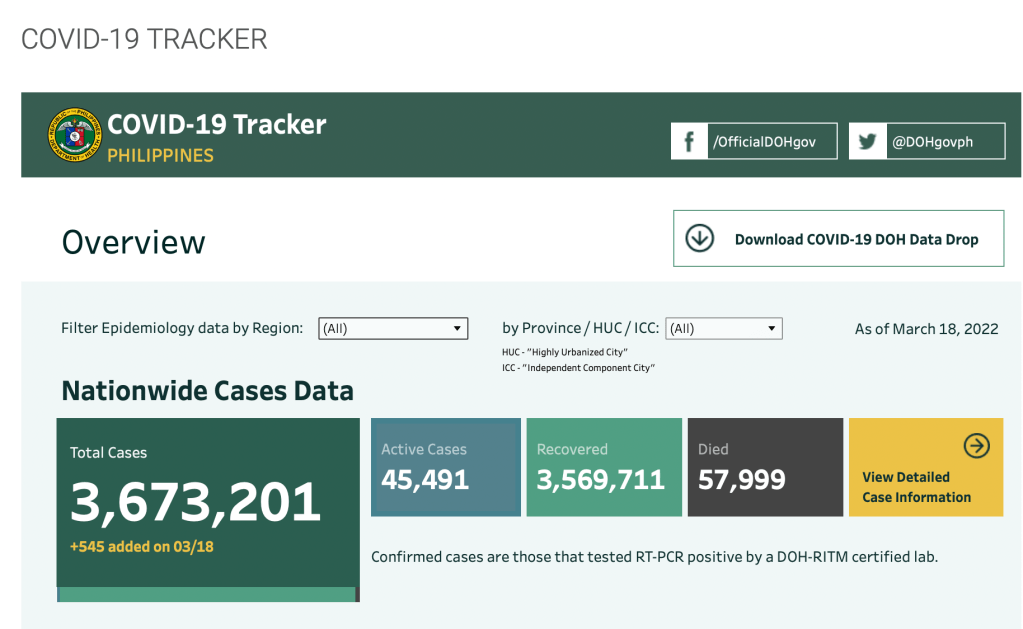
The Health Agency announces 545 new cases and adds 119 deaths today. The NCR accounted for 23% of the total cases in the country. The decline in cases has slowed down and at the rate of decline now, it looks like we will reach a trough of around 400-500 cases per week. Which shouldn’t be the objective. We need to bring the numbers significantly lower than 300 cases nationally and less than 100 in NCR alone. But because we’re really not testing enough anymore, our low numbers may not be an actual reflection of the current state in the country, in spite of the 2.7% positivity rate.
The NCR had 128 cases today, with 6 LGUS reporting double digits. They are: City of Manila 28, Quezon City 20, Caloocan, Makati and Pasay City with 11 cases apiece, and Parañaque with 10. The rest of the Mega Manila LGUs had single digit with Navotas reporting ZERO covid.
Outside of NCR, it was the province of Iloilo that reported the highest cases today with 56 followed by Cebu City and Cavite Province with 22 each.
The good news is that the daily data is back. (Thank you DoH)
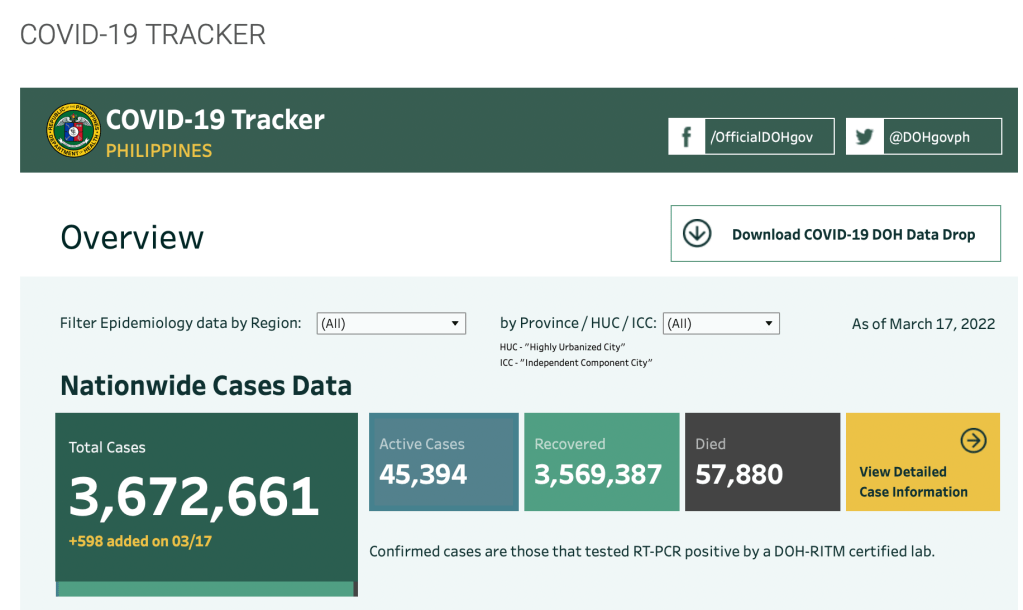
The bad news is that of the 598 new cases announced by the Health Agency today, 229 of them are from NCR alone.
There are 145 added deaths today as well.
It was Pasay City that had the most cases for the NCR with 48 cases. Other LGUs with double digits were: Parañaque 37, Manila 31, Quezon City 25, Makati 17, Caloocan 16, Pasig 13 and Las Piñas 11. Other LGUs had single digit with Pateros reporting zero covid.
There is also a slight uptick in cases in some provinces but without added information, hoping that it’s just some backlogs being reported.
It was a day late, but nevertheless, there is data. I personally think that the DoH should just continue with the COVID-19 tracker daily upload. After all, they will need to count the daily cases and because they will, in the spirit of transparency, all they need to do is to provide the daily report.
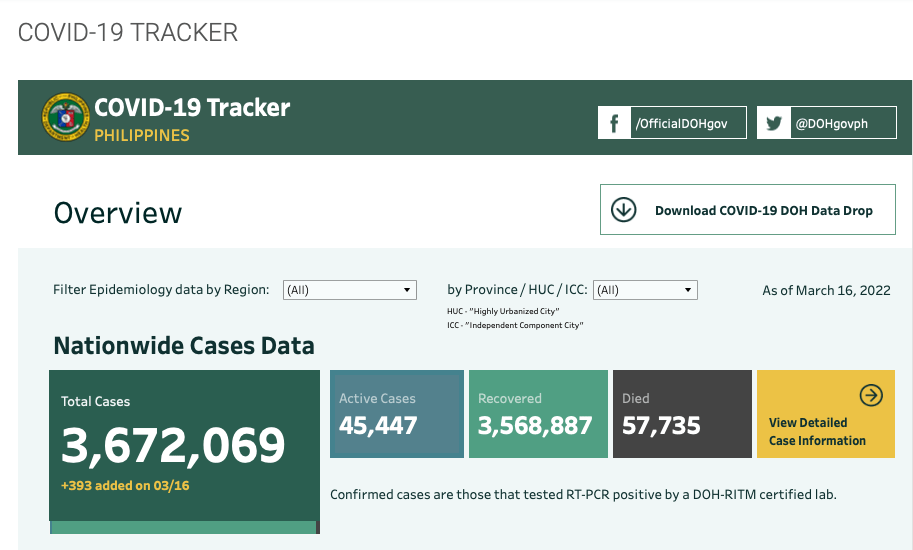
With that, the Philippines continues its low Tuesday as 393 new cases were added yesterday. There were 55 deaths added as well. Positivity rate for the 7-day average is down to 2.7% (and this should be taken with a grain of salt as testing and contact tracing is at an all time low in the country).
The NCR accounted for 29% of the cases for the day with all LGUs reporting less than 20 cases. Only 4 LGUs reported double digits – Quezon City 19, City of Manila 18, Pasay City 11 and Parañaque 10. All other LGUs had single digit with Pateros the lone LGU with ZERO COVID.
There’s a pattern one sees with the COVID-19 cases in Asia and Australia. Countries which did not experience massive surges are feeling the brunt of the omicron wave in these two regions of the world. Perhaps one of the strongest explanation for this is the lack of natural immunity due to the ZERO COVID policies. After all, while many countries cheered on the success of their ZERO COVID program, SARS-CoV-2 found a way to mutate into other variants of concern.
The last two years saw an evolution of alpha, beta, gamma, delta and omicron as the major variants of concerns that would play a role in how the pandemic evolved.
It began in 2019 in Wuhan, China as the epicenter of what would be a global pandemic of the 21st century. More than four months later, China would contain the outbreak in Wuhan and institute a ZERO COVID policy. The most draconian of lockdowns was implemented in China.
It took the World Health Organization almost three months, and upon pressure of other nations, to declare the outbreak in Wuhan as a pandemic on March 11, 2020. There was no turning back after that announcement. The global knee jerk reaction was to shut down borders. And the rest was history.
More than two years and several variants of concerns later, the world continues to turn and life goes on. The pandemic is still very much around, in spite of the vaccines that have probably been instrumental in averting more deaths. Economies continue to sputter. At the end of the day, the challenge remains on how different governments address the balancing act of health and economy. After all, the political platform of a nation is the very root cause of where we are today.
Omicron – whether as BA.1 or BA.2 – has become a global nightmare. Do we learn to live with this or not? From a peak of almost 4M daily cases in the month of January alone (due to omicron), the world now sees an average of 1.6M daily cases.
worldometers.info/coronavirus
While South Korea broke its own record high today with more than 400,000 cases, all eyes are actually on China where it saw numbers jump to more than quintuple numbers due to its ZERO COVID policy.
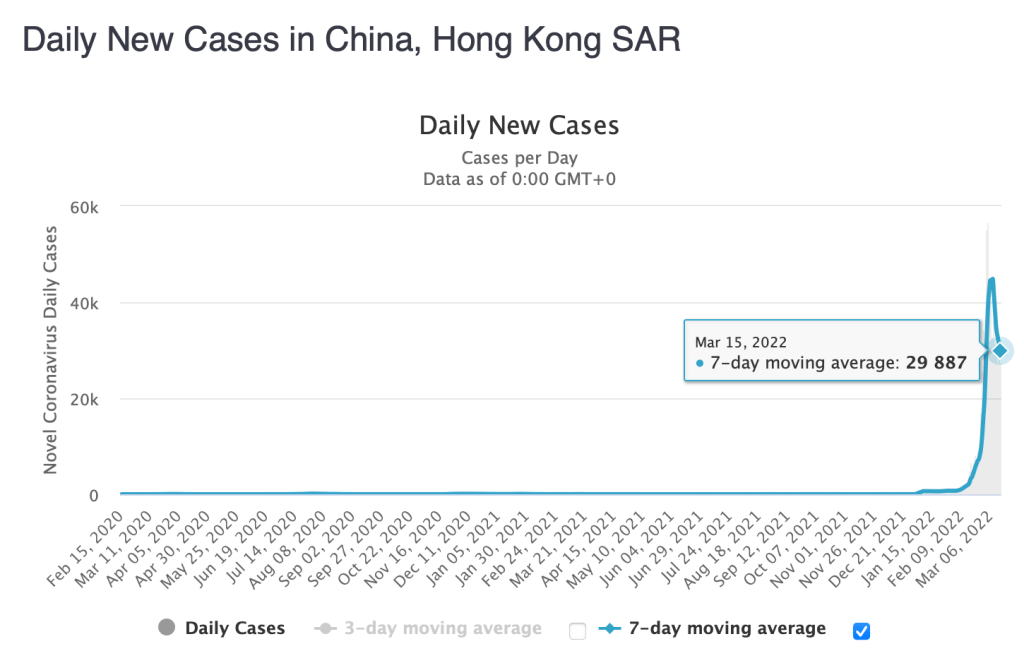
Hong Kong, a special administrative region of China is in the midst of the omicron wave, with news of hospitals full to the brim and now owning the highest death rate due to COVID-19 in the world. With a population of 7.6M, this puts deaths at 601 per million population (mostly the elderly) in this tiny nation south of China.
For now, Europe is seeing a slight uptick in number of cases as more than 771,000 cases were from this region alone. Asia saw more than 734,000 cases of the close to 1.69 M cases on March 15, 2022, with more than half coming from South Korea alone. The Philippines has stopped its daily reporting (for reasons that are not explained well) and readers (and I) will need to make heads or tails of the ‘weekly report’ moving forward.
As the country is now at very low risk from data in the past week (590 daily cases on the average), let’s try to keep this in check by continuing to observe minimum health standards and jump starting the economy without compromising the gains made in the past weeks. After all, 2021 wasn’t the best year for us because we went through all the variants of concern from alpha, beta, delta and omicron. It was the worst year. As we reopen the country for business, we should not let the political noise of the upcoming national election distract us from the pandemic.
The next leader should remain focused on how to help the Filipino during a crisis. Performance rather than promises should count when choosing the next president of our nation for the next 6 years. We will still be in for a ride because the pandemic is NOT YET OVER.
The Health Agency announces 554 new cases and 15 deaths today, March 14, 2022 with a 2.8% weekly positive rate (398 positives from 14164 who were tested). The National Capital Region led the haul with 25% of the national cases with 141 positives.
The City of Manila led the haul with 33 cases followed by Quezon City with 21. LGUs in NCR with double digits were: Caloocan and Parañaque with 15 cases each, and Makati and Pasay City with 13 cases each. All other LGUs had single digit number with three LGUs with ZERO COVID – Pasig, Navotas and Pateros.
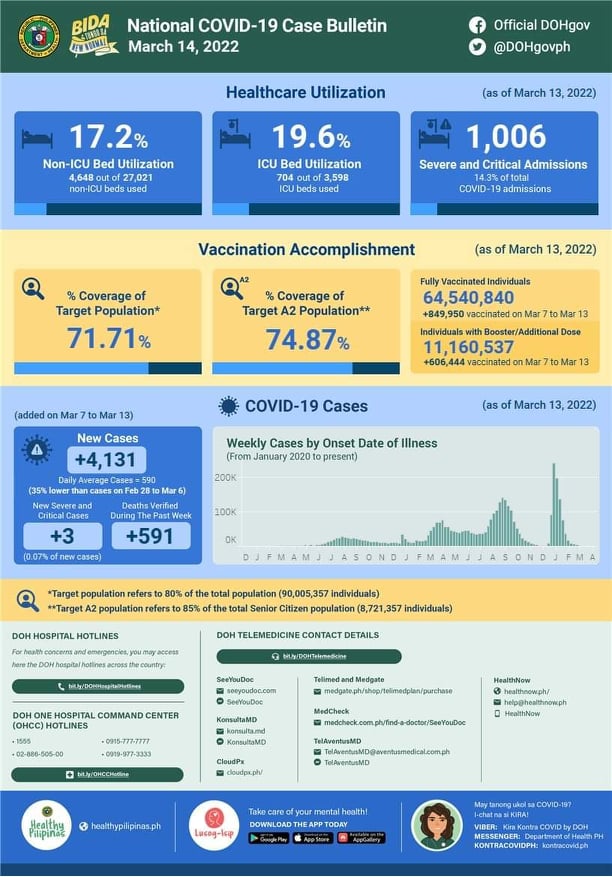
The summary for the week March 7-13 since was 4131 new cases or a 7-day average of 790 cases. The added deaths for the same week was 591 or 84 deaths a day.
Both non-ICU and ICU bed utilization is at less than 20% (very low risk), while there are 1006 patients admitted as severe and critical.
On vaccination status, close to 72% of the target population (80% of total population) has been vaccinated, while close to 75% of the target A2 population have also received their vaccines. Unfortunately, for the whole week of March 7-13, only 849,950 individuals were added to the fully vaccinated list, while a little more than 600,000 got an additional dose or booster. With the millions of vaccines that the government has received, everyone is enjoined to get their booster or added doses before another variant of concern circulates.
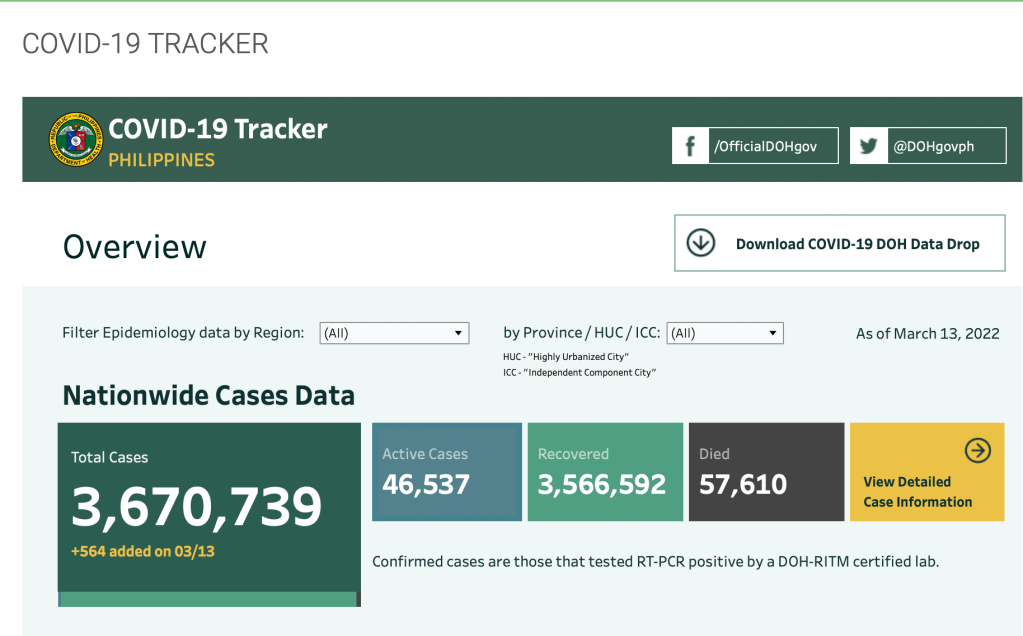
The Health Agency reports 564 new cases with 197 or 35% of the total cases coming from the NCR alone. There are 169 added deaths today.
The City of Makati had the highest cases today with 42, followed by the City of Manila with 28, Pasay City 24, Quezon City 21, Caloocan 19, Parañaque 14, Taguig 13, and Pasig 12. All other LGUs had single digit cases while Malabon and Pateros had ZERO Covid today.
THE WEEK IN REVIEW
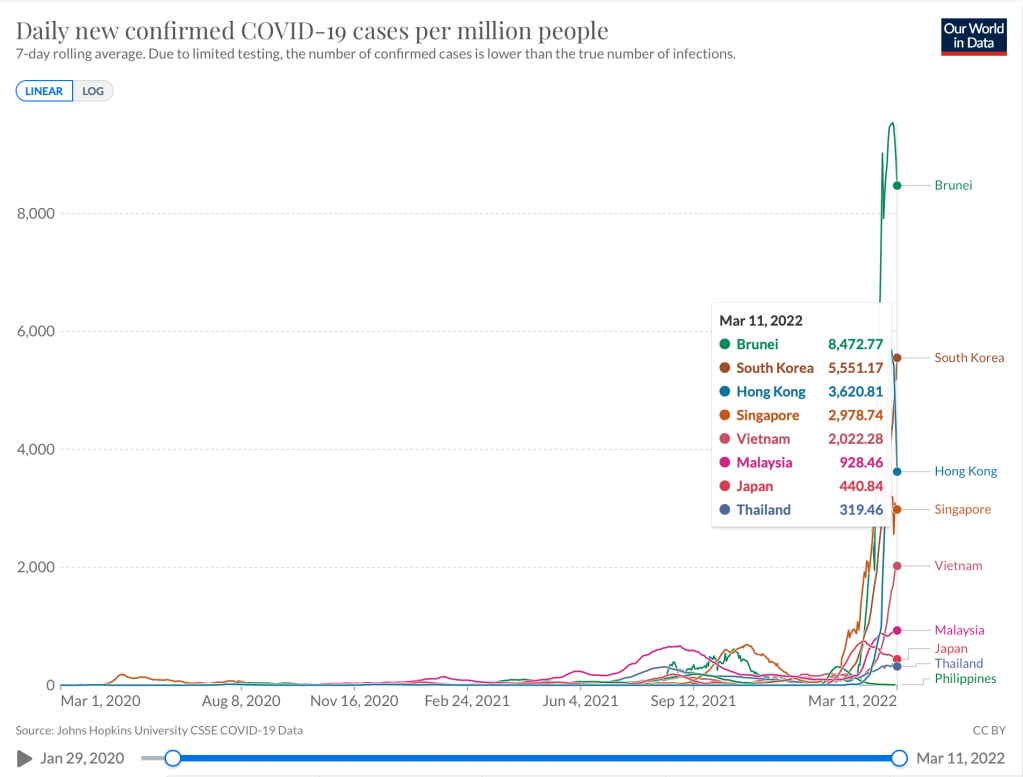
South Korea is seeing more than 1M cases every 3 days. Vietnam is recording the same increment every 4-5 days. As the omicron surge continues to grapple many Asian nations, here’s a summary of how we and our neighbors did the last 7 days.
While South Korea reports a y-day average of close to 300K daily cases, it is Brunei that leads the group with 8472 seven-days average based on population size (per capita). The Philippines is at the bottom with 6.9 cases per million population.
Vietnam, S. Korea and Brunei will continue to see higher cases in the upcoming week as its Rt, although effectively slightly lower this week, is still at critical levels >1.2. The Philippines maintains its effective reproduction rate at 0.58, which essentially is a good sign. Meaning, we will still see continued declining numbers in the upcoming week. We close the week also with a 7-day average of 500 new daily cases in the PH.
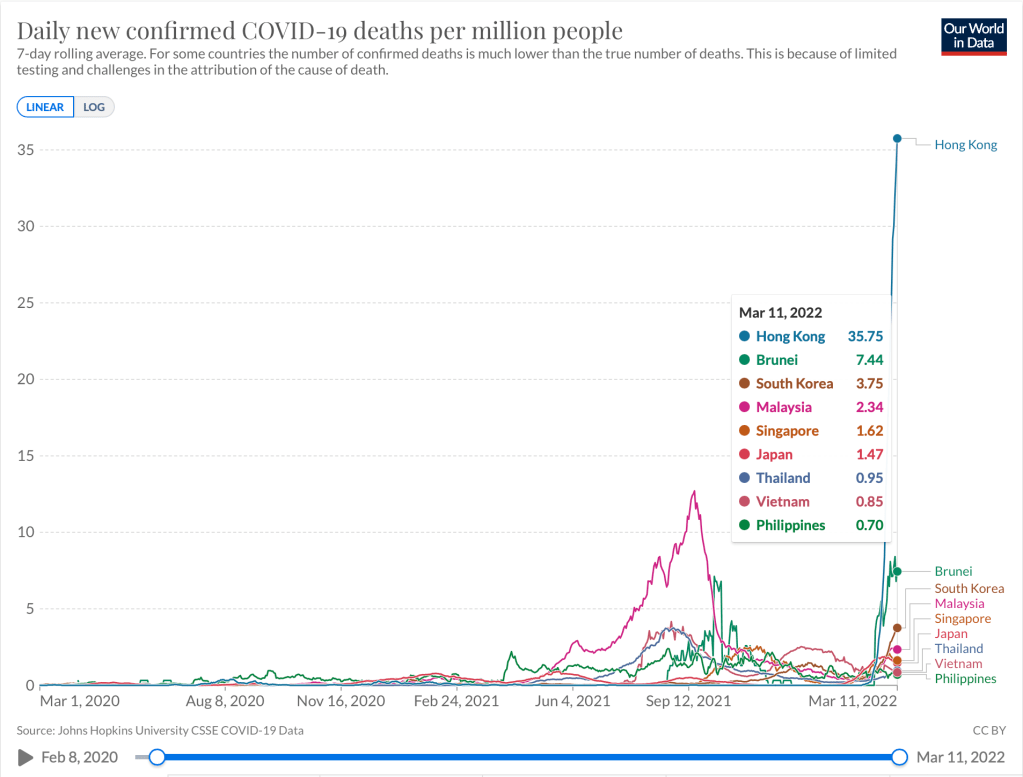
The most bothersome indicator is death and Hong Kong is at the brunt of this problem. It has the highest deaths per million people at 35.75, while Thailand, Vietnam and the Philippines are at <1 per million population.
With the shift in data, the Philippines moves quickly to 26th rank globally from a previous 21st spot, which it held onto since the start of the year 2022. South Korea climbs to 14th, Vietnam to 16th, Indonesia is in 17th, Japan in 19th, and Malaysia in 22nd spot. Thailand is at 33rd, Singapore in 60th and Hong Kong in 73rd rank.
While China is 124th in rank globally, and seems to have contained the pandemic there with its ZERO covid policy, the past week has been a challenge as it sees outbreaks in certain provinces. For the first time, China reported a daily high with 3,393 new cases on 03.12.2022. The previous day it had more than 1900 cases. All eyes should be focused in this country with a population of 1.4B as we watch and learn how they will and how they can overcome an omicron wave.








 Relative Joy