The great divide

I usually walk to the next door mall to pick up my take away lunch. Even during the sweltering mid-day sun, with those darn face shields glaring back at you and your breath warm because of the hot summer weather, I pick up my lunch from the mall to eat back at the clinic.

I rarely make conversation with anyone I meet along the way. A nod. A smile (under my mask). That is all the mechanical greeting I can spare for now. The pandemic has kept us all conscious on how we deal with people we meet, even under casual circumstances.

But this pandemic has changed more than just the way we meet and greet. It has upended lives completely and todays short story is about the very short conversation between the waiter and I. As I stopped to pick up lunch (and give him tip – God knows he needed it more than I did), he asked me discreetly, “sir, may alam ba kayo may opening na trabaho? Kahit na ano. Maglinis o mautusan ninyo?” That sentence alone took me by surprise. I had that shocked look in my eyes and told myself “damn, it’s really worse than we think”. Unfortunately, while I would like to help him more (aside from the tips I give to those who work in restaurants), all I could muster was, “sorry wala akong alam na puede ka. Mahirap talaga ngayon ano?” And he just nodded, gave me my salad, and I gave him his usual tip.

As I was walking back to the office, I noticed how many of the struggling stores had closed. How tepid the mobility was. The casualty of this pandemic were not only lives but livelihood as well. And for developing countries like ours, the daily wage earners were at the core of the nuclear bomb on our economy.

The rich would always have their ivory towers to look down from. There would be those who would blog, or vlog, their life stories on how they got COVID-19 and survived it. How they were able to isolate and swab families and friends after their gathering. How they were able to get hospital beds or have relatives who are doctors who are able to scavenge for rooms for them when there was no more room at the inn. How they were able to separate their families into various houses they own, with one family heading off to their 2 bedroom condominium and the other family to their rest house near the sea. At the end of the day, with all that moolah splashing around, they would tell you stories of how they became blessed with the distinction of being “covid survivors”.

And then there are those who have absolutely nothing left in life. Like the waiter in my encounter today, whose daily life is a battle in itself between the virus and putting food on the table. Between buying a face shield or spending for two eggs.

The decisions that the rich and poor make everyday are no-brainers. One decides on what vaccines to get or how to get them, the other decides on how to feed his family or even making ends meet. One decides on how many rooms the children can play in with the air-condition on during this scorching weather, the other decides on where to get the payment so that they can keep that single electric fan shared by the whole family running to stave off the heat. One decides on when can they go out of town to enjoy the warm waters on the beach, the other decides on when they can even go home to the provinces so that they can start life anew, away from the madding urban life. One decides on what Telehealth platform they can access to get in touch with their private physicians, the other will need to make do with whatever medicines they can access for now.

Life is never fair. Even during prepandemic days, the disparity of those who have versus those who don’t, has already been obvious. But the poor just strive harder to make ends meet, and are able to get by day to day. The pandemic, however, revealed the more obvious and uglier side of this great divide. The government’s response was sadly one that was discombobulated. Egos came ahead of logic and critical thinking. Experts were flying left and right and everyone had an opinion. While some gave more than they could, some stole more than what they could morally account for.

The community pantries will die a natural death. Resources will deplete itself. The “ayudas” will come to a stop and eventually haunt us. Vaccination roll out isn’t quick enough and how to get a jab is proving difficult for those belonging to class D and E especially when you need to book a slot online.

Over a year into the pandemic and the great divide between the rich and poor is more glaring than ever.

Less than 5K for 05.24.2021

I’m really not sure om whether the 4,973 new cases announced by the Health Agency today included already the unreported data from COVIDKaya yesterday. But I will take a good news any day of the week. Based on the May 22 reports, there were 12.8% positive for almost 50,000 tests done. This means that around 5,550 tested positive (but some of them may be repeat tests). There was no explanation provided by the Health Agency in today’s report regarding the data (unlike yesterday when they announced why the number of new cases suddenly decreased.)

There are now less than 50,000 active cases and with 39 new deaths reported, the case fatality ratio for outcomes remains steady at 1.76%.

It’s been quite awhile (on rare occasions) that another region overtakes the numbers in NCR. And today was that day. CALABARZON, a region south of Mega Manila that closely trails NCR in terms of daily new cases had more new cases than the imperial megapolis of the Philippines with 1,041 vs 1,034 new cases.

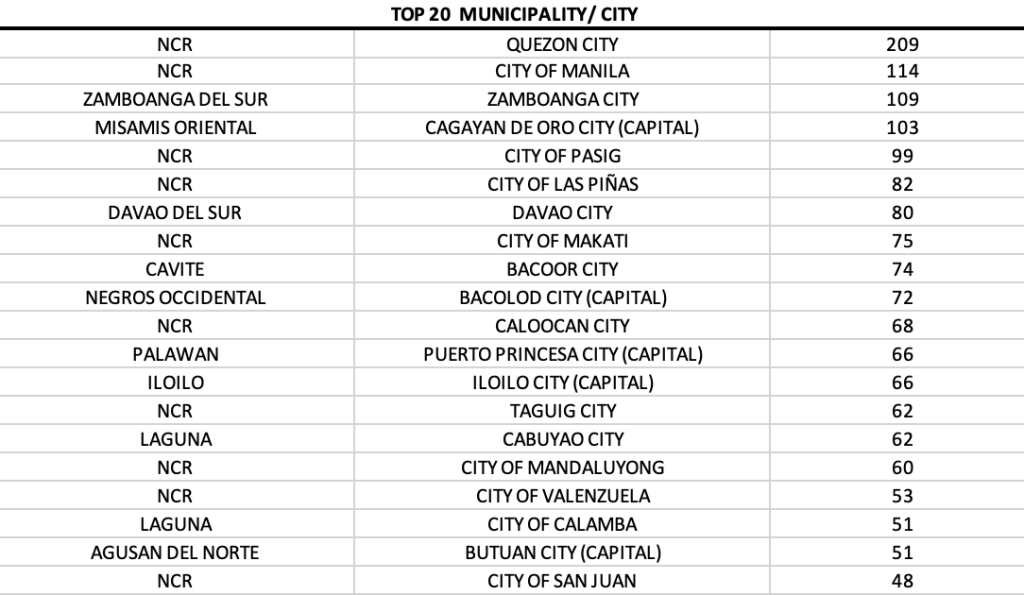
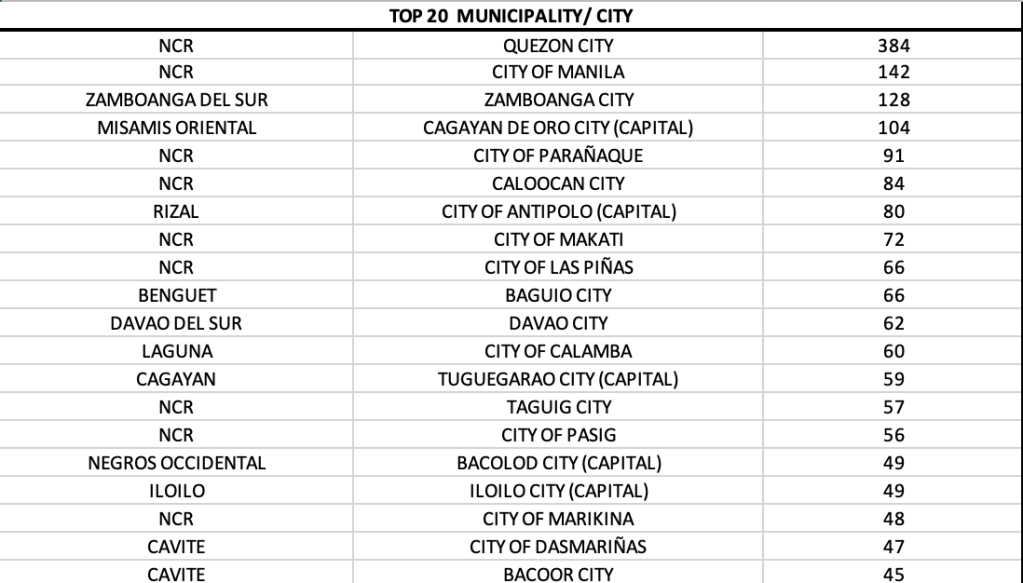
In the National Capital Region, Quezon City and Manila continued to lead the haul with triple digits. And on a national level, ten of 17 cities from NCR are among the top twenty cities with most cases in the county. The other half of the top cities outside of NCR include: Zamboanga City, Cagayan de Oro, Davao City, Bacoor City (Cavite) and Bacolod City (Negros Occidental), that are in the top ten.

Unusually low 3K plus cases on 05.23.2021 will haunt us the coming days

Of course, it is good to know that the Health Agency reported only 3,083 cases today. Notice that the report is based on 13% positivity rate from close to 43,000 tested on May 21. This means that more than 5,500 tested positive that day. There were only 3 laboratories (accounting for 4.1% of the tested patients) that were not included. Even on the presumption that there were repeat tests of some patients on May 21, it would impossible that more than 40% were repeat tests. The Health Agency notes in that the low cases today are due to update of COVIDKaya. Several data were not included in todays case bulletin and currently being handled by the COVIDKaya technical team. I think we should expect the additional cases in the coming days after the technical glitch in COVIDKaya is remedied.

In the meantime, enjoy the low numbers, including the low deaths reported. With 38 new deaths, the case fatality ratio based on outcomes for today is a tad lower at 1.76%. This will adjust itself when the unaccounted data is added the next few days.

ICU bed utilization is higher again in Mega Manila compared to the national census. Of the more than 50,000 active cases, almost 5% were moderate, severe or critical at the time of testing.

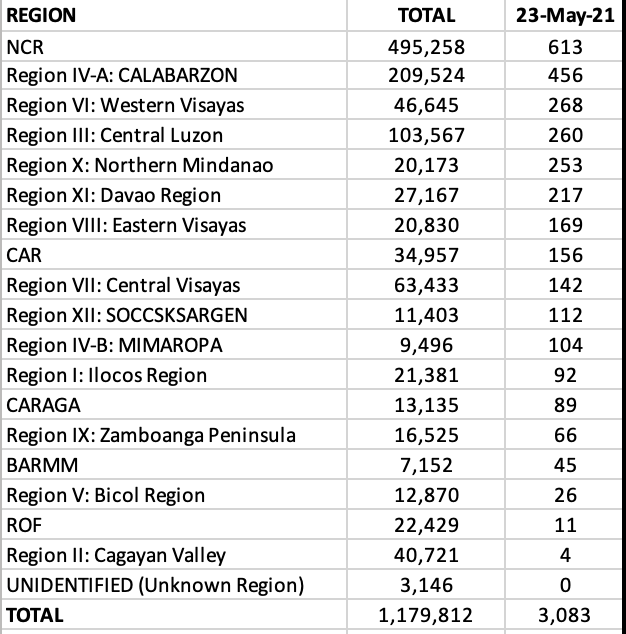
And how we wish that NCR would really see only 613 cases a day. But that’s not going to happen anytime soon, yet, so enjoy the granular data below based on the 3,083 cases reported for the day.

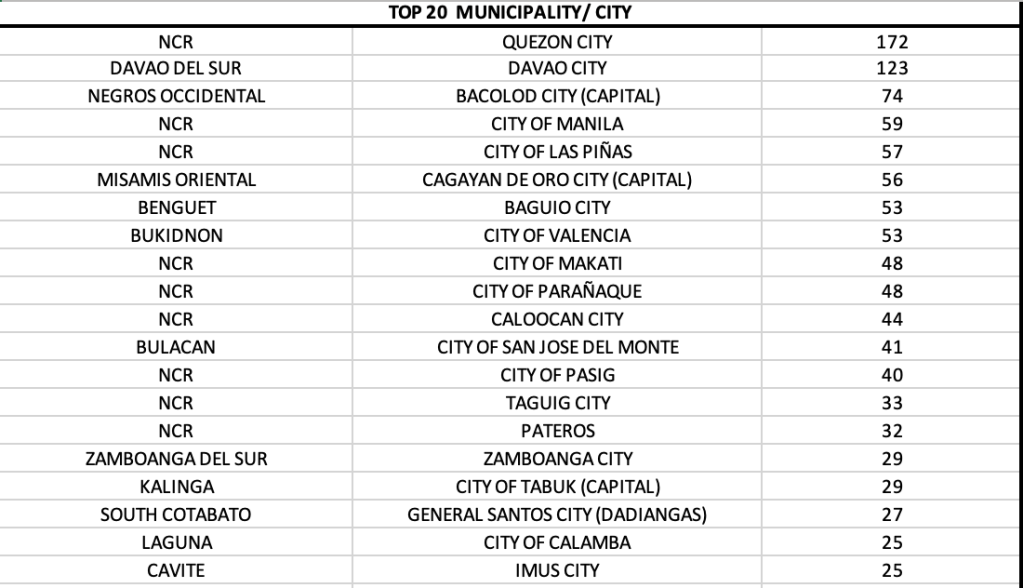
While Quezon City remained the top hauler on a national level, it saw half the cases it would normally see and there were only 9 of 17 LGUs in NCR that were in the top 20 cities with most cases. Shockingly, Davao City took second spot for the day (based on incomplete data provided by the DoH).

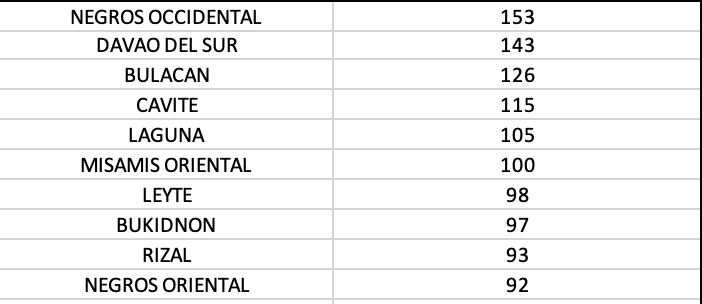
On a provincial level, the under count was most prominently in the NCR, CALABARZON and Central Luzon regions because suddenly Negros Occidental and Davao del Sur were ranked first and second for the day.

As of May 21, 2021, the PH had 40,047 additional cases and 896 additional deaths for the period May 15-21, 2021.

The period May 15-21 wasn’t that bad, but it wasn’t as impressive as well. The national reproduction number stayed flat at 0.85, which means that while it is below 1.0, we may be plateauing at the 6k level. The past weeks (during the period of ECQ and MECQ) saw a continued decline of cases, while the past week saw a stabilization of cases within the 6K range. Even deaths were erratic as the week saw an uptick in total deaths compared to the past week.

Testing in the country was between 40-50K on a good day. In spite of this, we were testing less this week compared to the past weeks. However, the positivity rate plateaued again around the 13% mark.

While our Asian neighbors are seeing troublesome numbers as well, we need to work at improving the various policies on how the pandemic is being handled in the Philippines. There is a need to thoroughly review what has been written down in 2020 and utilize lockdowns only as a tool of last resort when addressing surges. Vaccinations will always be the major tool out of the pandemic and the government must shuck all other useless policies and address vaccine hesitancy in the country and work at vaccine accessibility for the lower socioeconomic class who have no access to digital enrollment and screening methods. Because the vaccines are purchased by the National Government, LGUs must avoid making it difficult for every Juan to get immunized. Inclusivity should be the guiding factor in any vaccine roll out program.

Within the 6-7K this weekend, but the deaths are up on 05.22.2021

While the PH continued to report in the 6000+ range, the Health Agency reports an increase in both cases and deaths for the day. The DoH announces 6,831 new cases based on 13% positivity rate for May 20 data with close to 50,000 tests run. Notice, however, that while there is a slight uptick in ICU beds utilization for the country at 60%, there is a spike in the ICU bed occupancy for the NCR – from 56% to 61% (an overnight jump of 5%). Based on the condition of the cases at the time of swabbing/testing, almost 5% of the 54,526 active cases are moderate, severe or critical. The Health Agency does not track the clinical course of patients, hence, the data on clinical condition of the active cases are their clinical status at the time of the report. Some (or many) may have deteriorated (as a patient who may have been diagnosed to be asymptomatic at the time of swabbing may have progressed to critical state in a few days).

There were 183 new deaths today, bringing the 7-day average deaths to 115/day. The case fatality ratio for outcomes steady at 1.77%.

NCR continued to lead in cases again today, it accounted for 20.6% of the cases. CALABARZON and Central Luzon reported four digits as well. The three regions were responsible for 54.4% of the total cases in the country today. Except for BARMM, all regions continued to report triple digits.

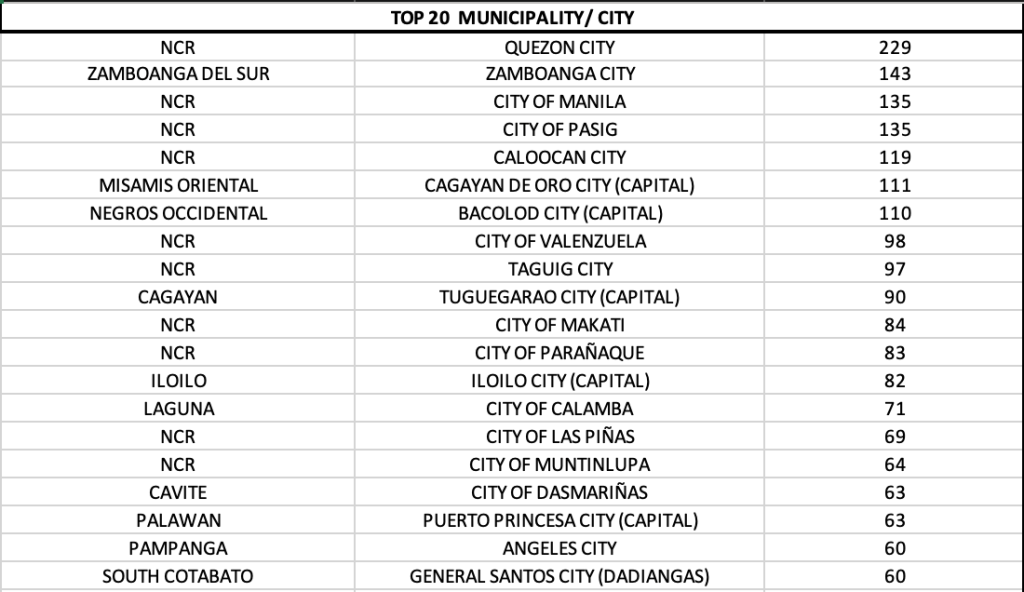
In NCR, Quezon City reported 313 new cases, with Pasig, Manila and Caloocan rounding up the triple digit contributors. Eleven of 17 LGUs in NCR were among the top 20 cities with most cases for the day. Cities outside of NCR that were among the top ten included: Zamboanga City, Cagayan de Oro City, Davao City, and General Santos City.

On a provincial level, Cavite and Laguna were the only cities that continued to rake in more than 300 cases.

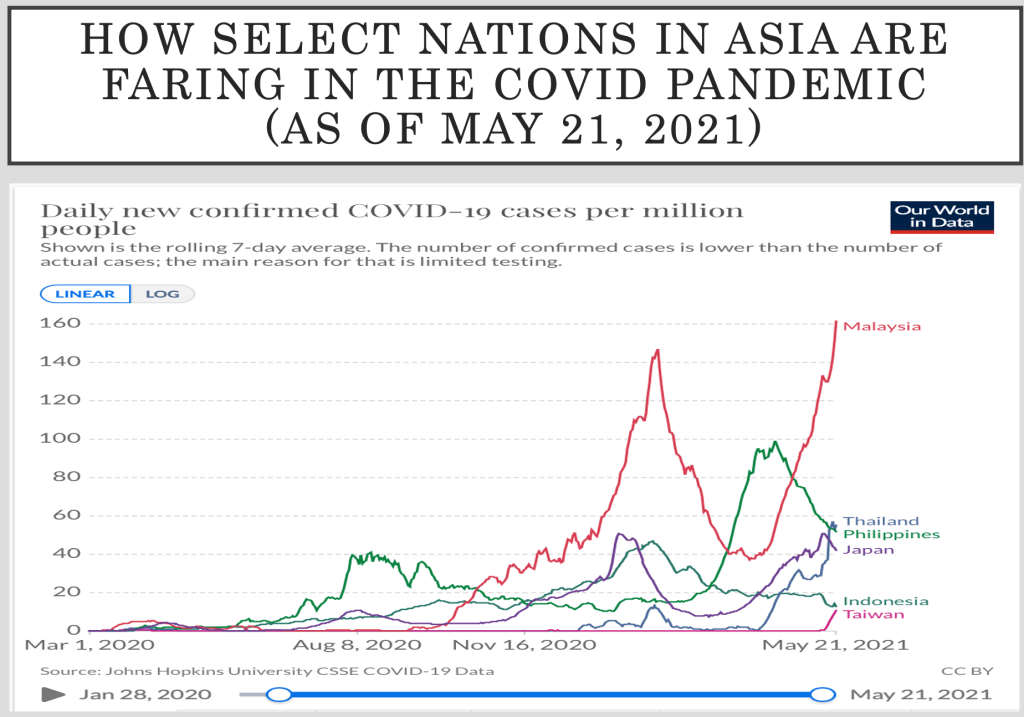
Yesterday, four Asian countries were among the top twenty countries with most reported cases for the day (based on https://www.worldometers.info/coronavirus/). These were: Malaysia, the Philippines, Indonesia and Japan. They ranked between 13th to 16th spot for May 21, 2021. Other countries in Asia are seeing increasing cases also as has been reported by various news agencies. These include: Taiwan, Singapore, Thailand and Vietnam.

NCR Rt at 0.54, but are the other regions outside doing better? The update for 05.21.2021

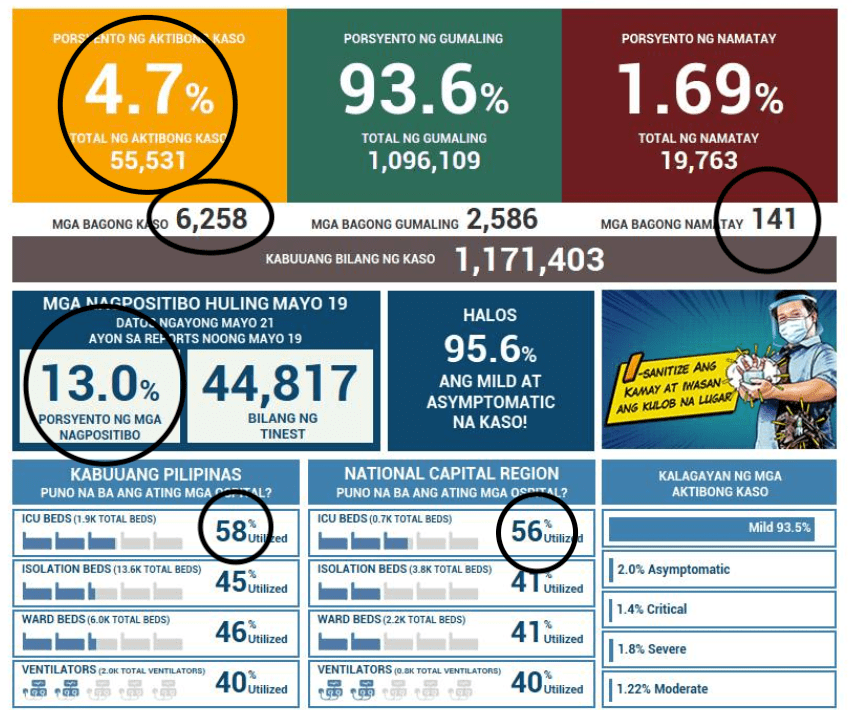
The Health Agency reports 6,258 new cases today (up from 6,100 yesterday). However, this is considerably lower than the past week average as we probably will pivot around the 6K this weekend. With only a little over 2,500 new recoveries announced, the active cases are back to more than 55K (4.7%). Positivity rate for May 19 data is at 13%.

There were 141 new deaths today which pushes up the case fatality ratio for outcomes to 1.77% (from 1.76%).

ICU utilization is slightly down for the NCR compared to the utilization nationally.

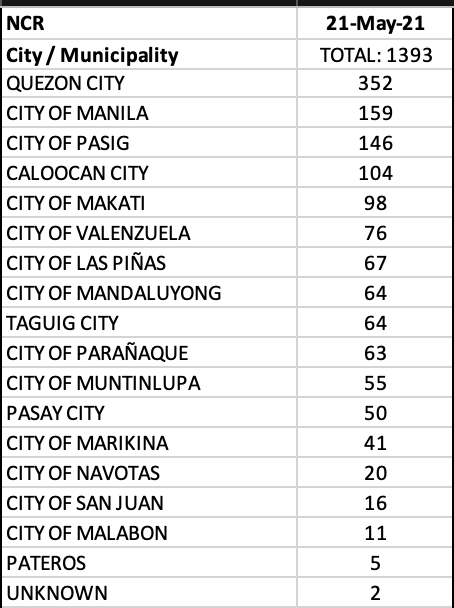
Today, NCR reported a close to 1,400 cases (22%) of the total cases in the country. CALABARZON maintains its close second chase in numbers to Mega Manila. Notice, however, that for the first time, ALL regions in the PH report triple digit cases. The rise in cases outside of the NCR plus bubble is disconcerting.

In NCR, four cities continue to report triple digits, and this is led by Quezon City that has the highest number of daily cases nationally and by city. The other cities include: Manila, Pasig and Caloocan. Twelve of 17 LGUs in NCR make it to the top twenty cities with most cases for the day.

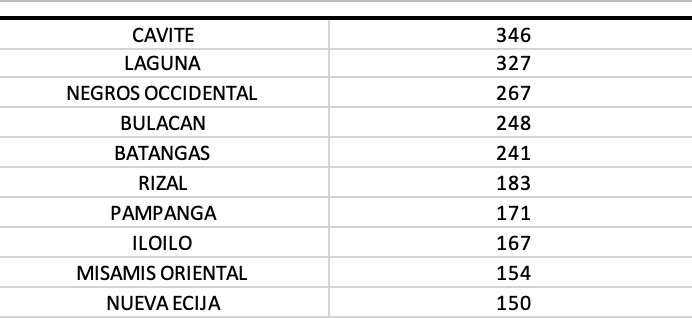
Two provinces in CALABARZON continue the haul among provinces with most cases – Cavite and Laguna – with more than 300 cases apiece.

The OCTA Research monitoring report for May 21, 2021 is reported in toto below. The good news is the lower reproduction rate for Mega Manila, which is now down to almost half at 0.54. The average cases per day from May 14-20 is around 1,300. Several LGUs in NCR have been downgraded from high to moderate risk based on ADAR (average daily attack rate). While Quezon City continued to rake in the most number of cases daily, its daily numbers have significantly declined from more than 1,200 cases to 250 plus cases per day.

Notice, however, the rise in health care utilization rate in cities outside of NCR. In particular, Zamboanga City, Baguio City, Cagayan de Oro, Dasmariñas (Cavite), Tuguegarao, San Pablo (Laguna) and General Trias (Cavite). The latter is almost 100% in HCUR.

The growth rates in other cities are also disturbing. The positivity rate in Puerto Princesa was extremely high at 87% during the last week.

Back to more than 6K on 05.20.2021

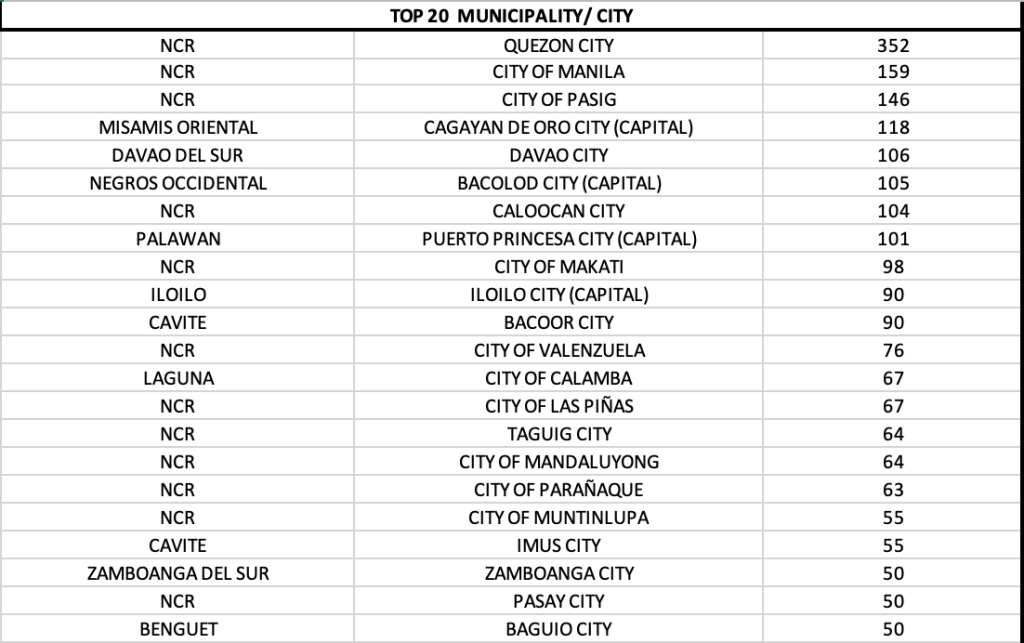
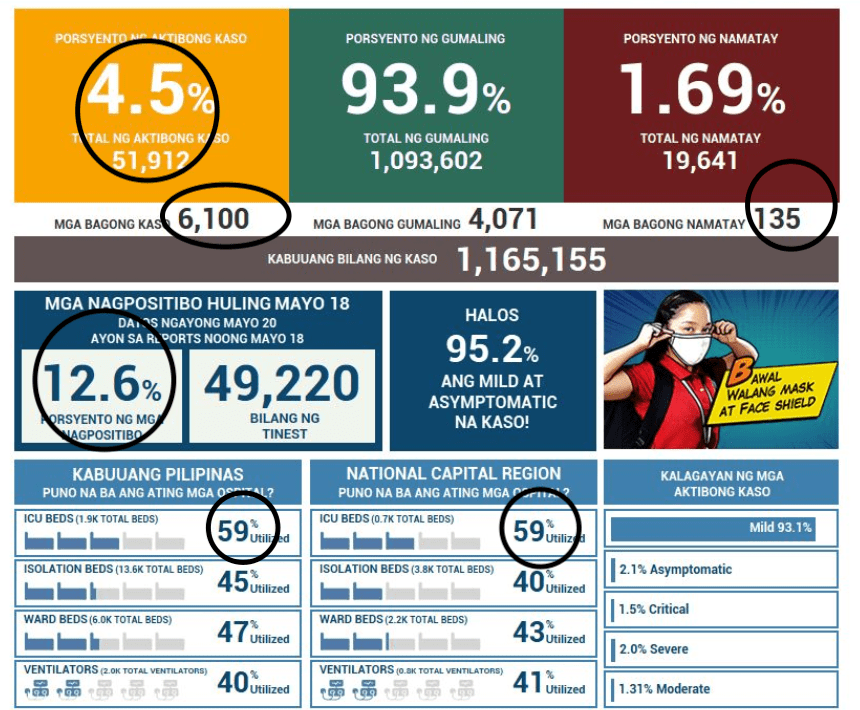
With close to 50,000 tests done on May 18, 2021, and a positivity rate of 12.6% for the country, the Health Agency reports 6,100 new cases for the day. And because there were less recoveries than cases, the active cases are up at more than 50,000 again (4.5%) as the NCR sees a slight bump in utilization of ICU beds to 59% (from a previous low of 56%).

With 135 new deaths today, the case fatality ratio for outcomes (recoveries and deaths) holds steady at 1.76%. Note, however, that the total number of deaths for March, April and May accounted for more than 1/3 of the total deaths in the Philippines since the start of the pandemic last year. At the current average deaths being reported by the Department of Health, we will breach 20,000 reported and recorded deaths in the next 5 days.
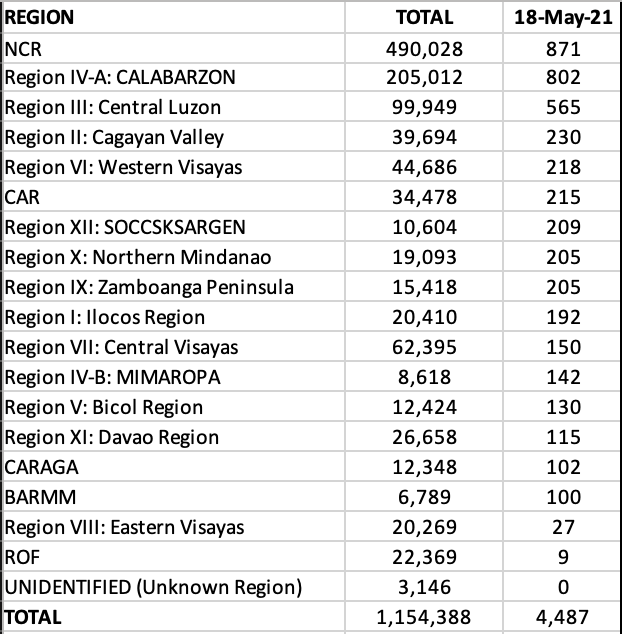
The NCR continued to account for 22% of the total cases in the country, followed closely by CALABARZON, both reporting quadruple digits. Twelve other regions reported triple digits, with MIMAROPA seeing a bump up in cases together with the Zamboanga Peninsula.

Ten of 17 LGUs in NCR continue to be among the top 20 cities with most cases. Quezon City, Manila, Pasig and Caloocan City report triple digits.

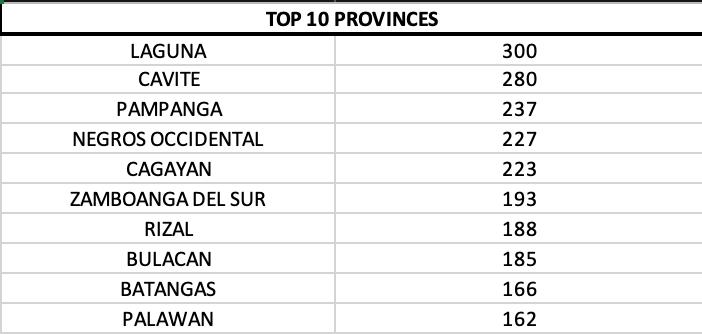
Laguna and Cavite, two provinces in CALABARZON stay as top contributors to the pool of COVID19 cases for the day.

Cases are increasing outside of NCR, with 05.19.2021 reporting 4,700 new cases

The good news is that the reproduction number in the NCR is down at an all time low of 0.54. With 4,700 new cases reported today by the Health Agency, the lower numbers (while it is a Wednesday) actually show a declining trend as vaccines continue to roll out (hopefully at a faster pace). The data reported data are based on 13.8% positivity from the reports last May 17. With close to 7,000 new recoveries, the active cases are lower at 4.3% (less than 50,000 cases).

New deaths reported are 136 for the day, with the case fatality ratio steady at 1.76%.

NCR continued to report less that 1,000 cases (but will most likely breach that again tomorrow as the real numbers come in). CALABARZON trails it closely with 912 cases. Twelve other regions report triple digits.

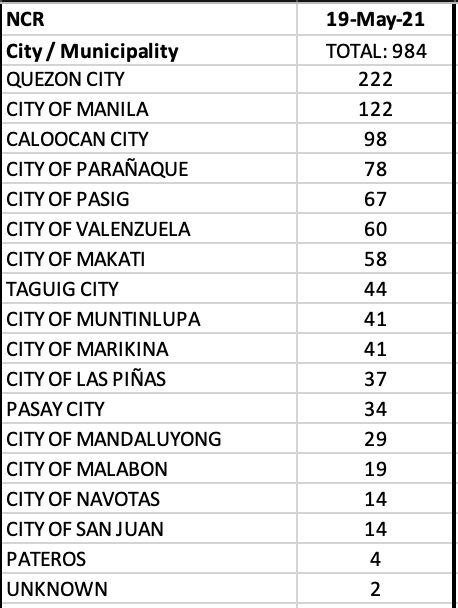
In NCR, it is Quezon City that continued to lead both nationally and on a city level with 222 new cases. Eight of 17 LGUS in NCR are among the top twenty cities with most cases.

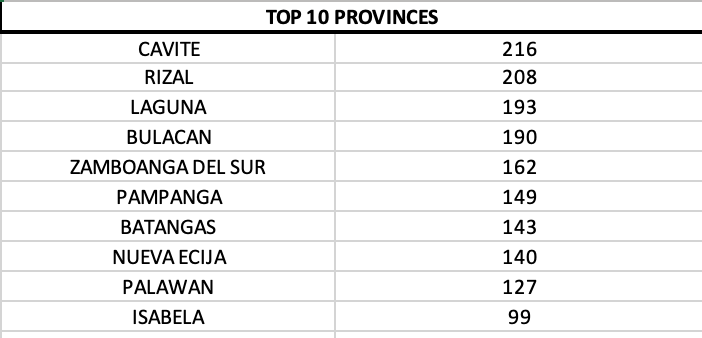
On a provincial level, three provinces in CALABARZON continue to hog the top provinces with most cases – Cavite, Laguna and Batangas.

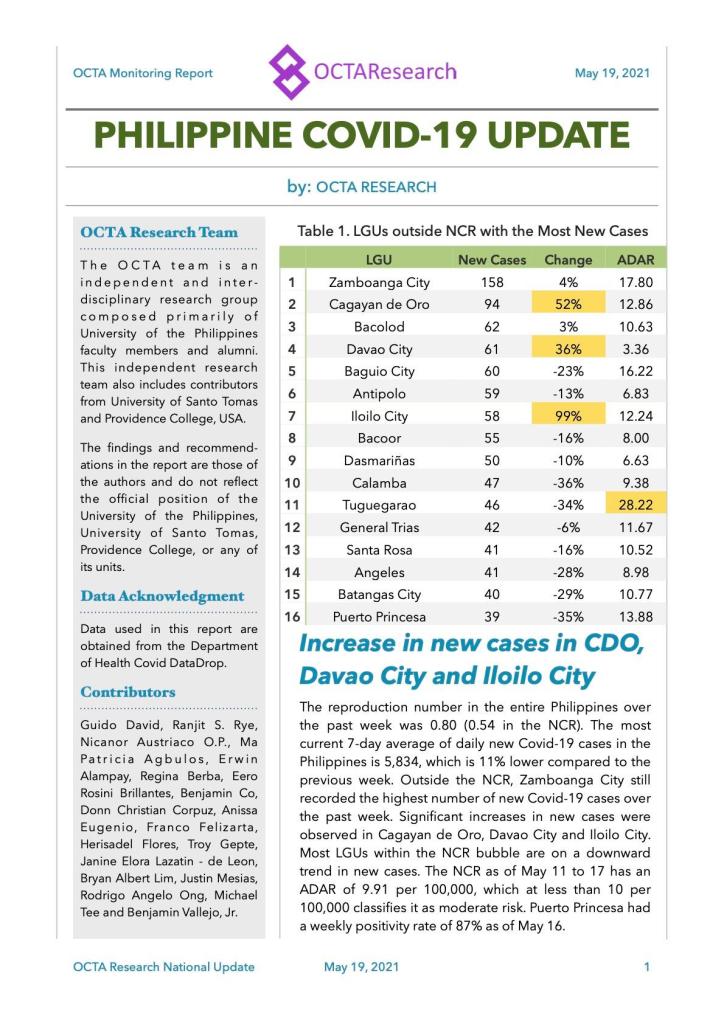
The latest OCTA Research update on the cities outside of NCR (yesterday we reported the good performance in the National Capital Region), show the top LGUs outside NCR with the most new cases (May 11-17). Notice that Cagayan de Oro, Davao City, and Iloilo City are seeing higher average increases. The average daily attack rate is highest in Tuguegarao at 28 per 100,000 population. Puerto Princesa, while seeing a decrease of 35%, is under reporting its actual situation as the city has a positivity rate of 87% as of May 16, 2021. Which means that 8-10 people being tested there are most likely positive. This is a problem of under (or not) testing (from whatever reason like no cartridges or the machines are not working or under maintenance) or not contact tracing enough people to get tested.

Less than 4.5K on the Tuesday of 05.18.2021

As all Tuesdays (and Wednesdays) have lower numbers, the new cases for the day are at 4,487. With more than 6,300 recoveries, this brings the active cases to 4.5% (still over 52,000 cases). Note that today’s report were based on tests for May 16 (Sunday) where testing facilities are not all operational.

There were 110 new deaths today. The case fatality ratio for outcomes remains steady at 1.76%. Intensive care unit utilization is greater nationally (57%) than the National Capital Region (56%). While ICU utilization is lower now in the NCR, there are still many hospitals where healthcare utilization is still more than 70%, which means that the average utilization is not reflective of every LGU.

On a low Tuesday, even the NCR had lower cases with less than 1,000 (for the first time in a long time) new cases. The trend was the same for CALABARZON. While only two LGUs in NCR reported triple digits, nine of 17 LGUs in Mega Manila still managed to make it to the top 20 cities with most cases. Sixteen of 17 regions in the country registered triple digits.

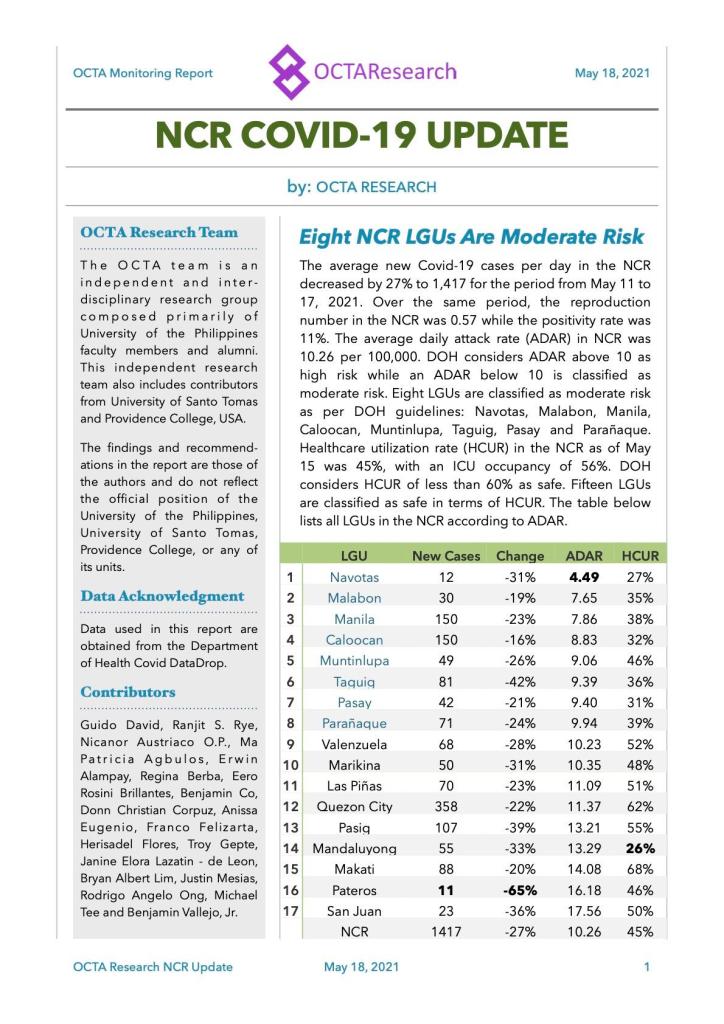
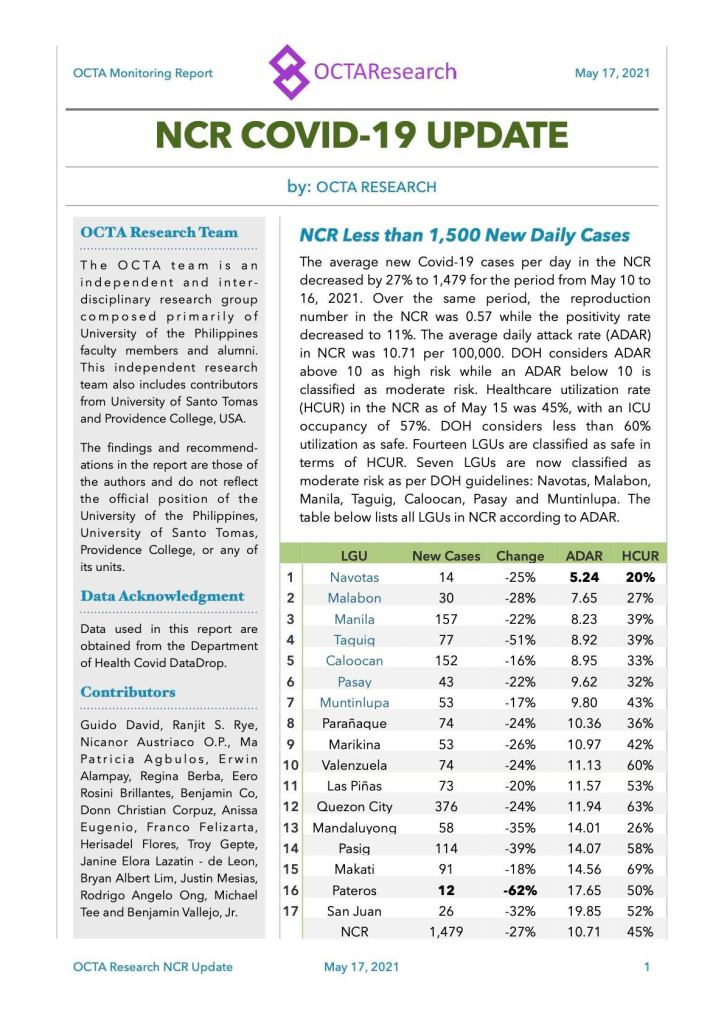
The update from the OCTA Research for May 18, 2021 showed improving numbers in the National Capital Region. The eight cities in Mega Manila whose risk status have been downgraded not to moderate risk are: Navotas, Malabon, Manila, Caloocan, Muntinlupa, Taguig, Pasay and Parañaque. All nine remaining LGUs are still at high risk. Note the negative change (decline) in average cases in ALL the cities in NCR, for the period May 11-17, 2021.

NCR sees lower numbers but still close to 6K for the PH on a Monday 05.17.2021

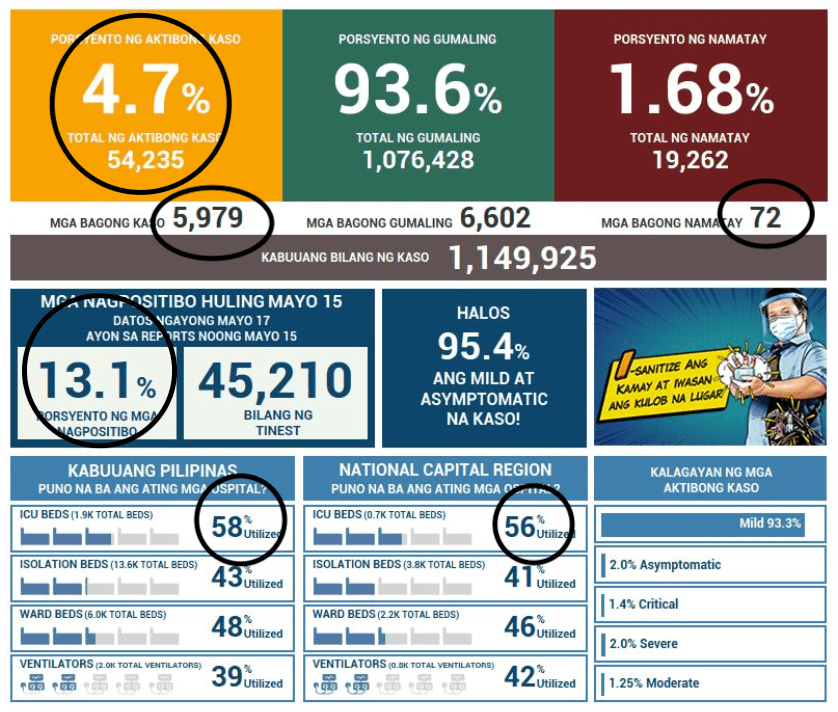
So the numbers are still within the 5K margin, but it’s on the high end with 5,979 new cases. With 6,602 recoveries notice that brings then active cases to 4.7% based on 13.1% positivity last May 15 and reported today. This also brings the discrepancy of utilization of ICU beds on the national level to 58% with the NCR down at 56%.

With 72 new deaths reported today, the case fatality ratio for outcomes (recoveries and deaths) is steady at 1.76%.

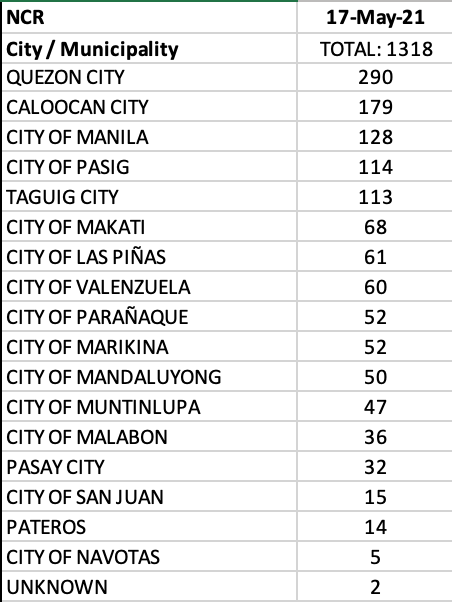
The granular data shows that the NCR is trending lower than 1,500 so far with CALABARZON trailing it very closely. NCR accounts for 22%, while CALABARZON 21% of the total cases in the country. Thirteen other regions have triple digits for the day.

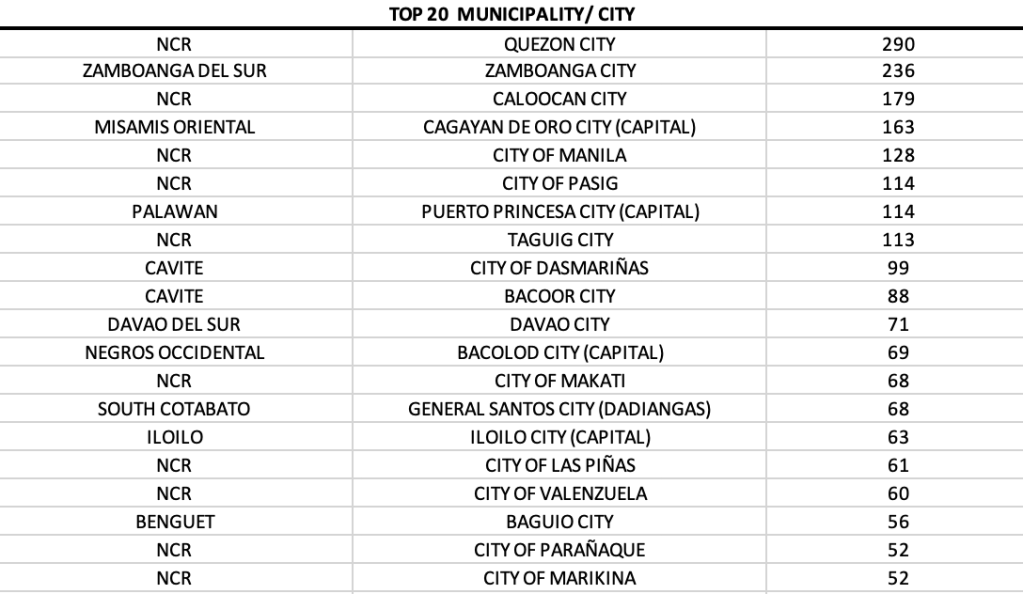
Ten of 17 LGUs in the NCR are among the top twenty cities with most cases. Zamboanga City recorded 236 new cases, pushing them to second over-all among cities with most cases for the day. Puerto Princesa City (Palawan) is in 7th rank among cities with 114 cases.

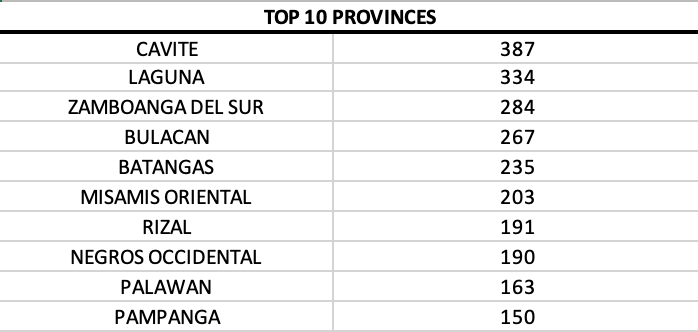
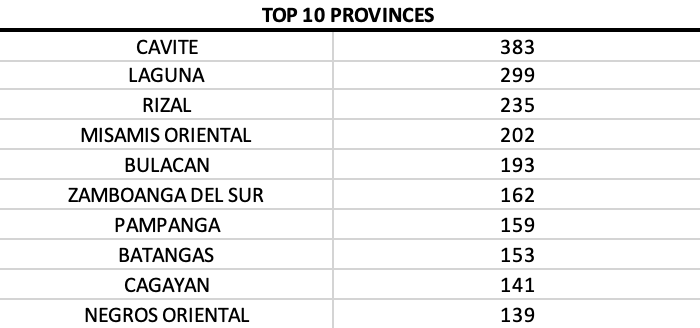
Cavite, Laguna and Zamboanga del Sur are the top provinces for the day.

The OCTA Research monitoring reports today that NCR is now seeing less than 1,500 new daily cases. This is a decline of 27% for the period from May 10-16. The reproduction rate is at 0.57 with the positivity down to 11% and a daily attack rate down to 10.71 per 100,000 population overall for the region. Notice that 14 LGUs are classified as safe in terms for Health Care Utilization (< 60% utilization) and 7 LGUs are at moderate risk based on DoH guidelines as their average daily attack rates are <10 per 100,000 population. The report in full in provided below.

5K plus cases on 05.16.2021 still pushes the PH up at 24th in global rank

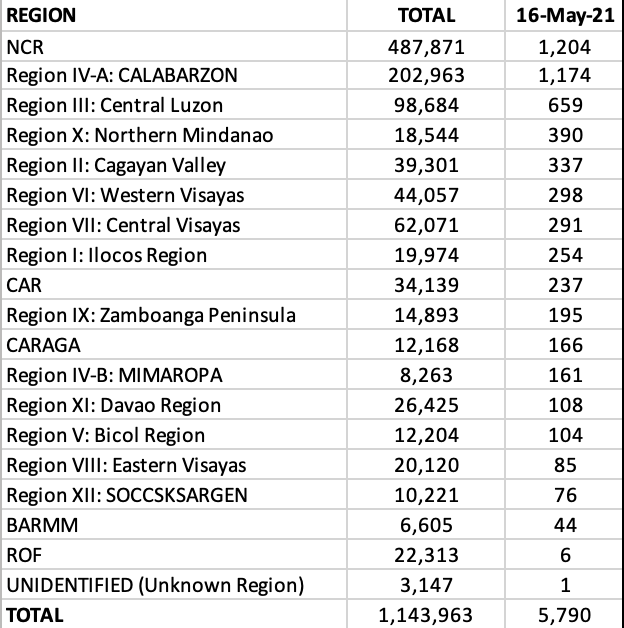
We’re definitely seeing a decline in cases and while the decline will never be a dramatic one, it is a significant stride as the Health Agency reports 5,790 new cases today. The positivity rate continued to hover at the 13% average for this week based on positives from laboratory reports of May 14. With over 7,500 new recoveries, the active cases have decreased to less than 5% with 54,904 active cases. With 1,143,963 total COVID-19 cases, the Philippines moves up to 24th in global rank overtaking Iraq.

Notice the difference, however, in intensive care unit beds in the whole country vs. the National Capital Region. With the increasing cases outside of NCR, the ICU bed capacity is now lower in Mega Manila compared to the whole country (57% vs. 58%).

New deaths reported today was 140, bringing the case fatality ratio based on outcomes (recoveries and deaths) is steady at 1.76%.

For the week of May 9-15, 2021, the Philippines recorded 43,272 new cases and 777 new deaths.

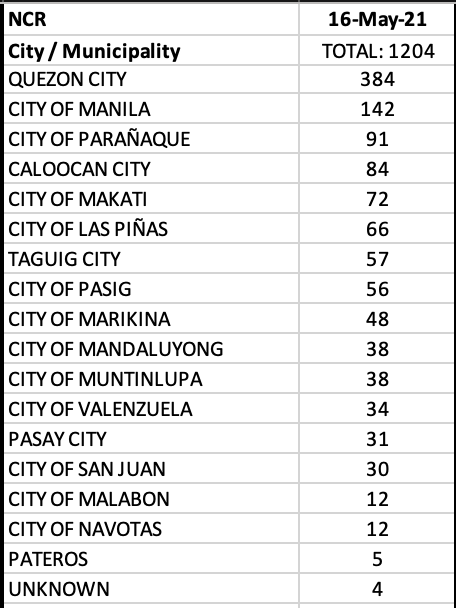
The granular data by region, LGUs in NCR, top ten provinces and top twenty cities are provided below. Nine of 17 LGUs in NCR are among the top twenty cities. Palawan is under testing. Which makes this troublesome because testing is a reflection of the actual situation in the area. And this does not make the statistics accurate and therefore is highly disturbing as the data does not reflect the actual situation in the country.

The summary of how the week was is seen in the infographic provided below. The decline in cases comes as good news. However, the erratic death reports are disturbing as they are not real-time reports and like cases, are underestimates the actual situation in the Philippines.

The testing capacity is also quite erratic as testing is not consistent over the whole week. Number of tests conducted in the PH range between 45K to 55K. The positivity rate is now lower than 15% and continues to decline week on week.

Several countries within the Asian region are currently experiencing increasing cases as well, while others who are were doing worse are beginning to see better days ahead. With the various variants of concern and interest raging globally, this will be one long drawn battle and it is definitely taking a toll. The only exit strategy for now is greater catch basin for immunization and of course, vaccine availability.