The PH now ranks 28th globally with 12,674 new cases on 04.10.2021

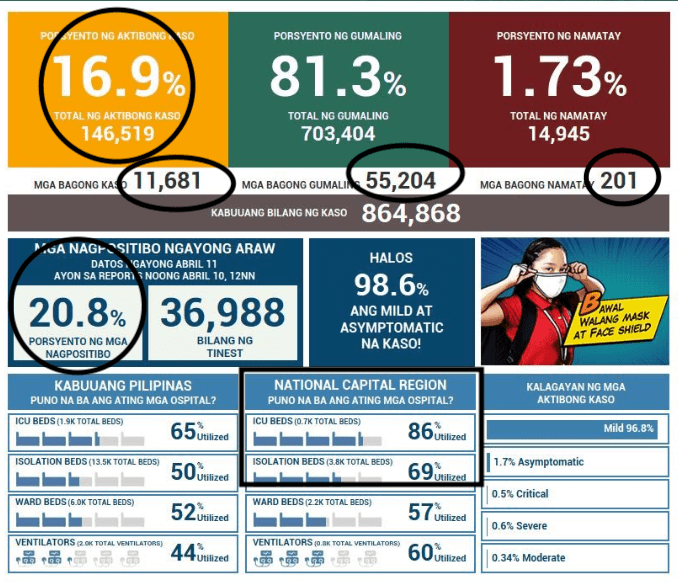
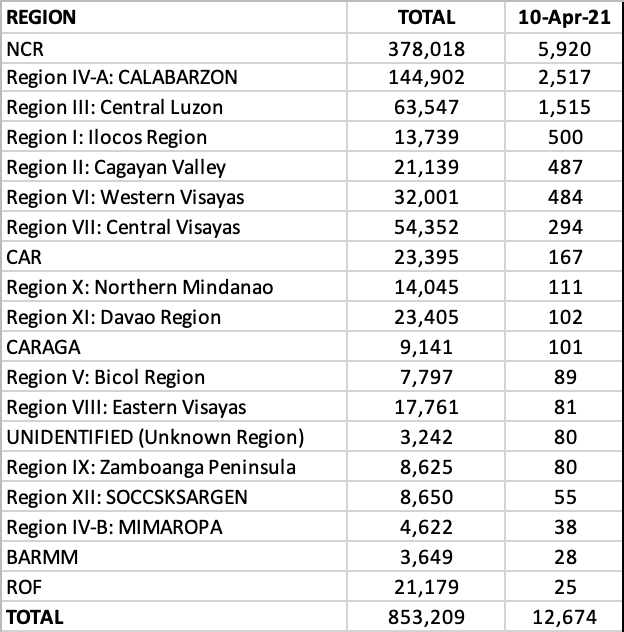
With 12,674 new cases announced today, this is actually the highest number of cases recorded for a single day in the second surge of the pandemic in the Philippines. The 15,280 cases on April 02, included carry over of more than 3,700 backlog cases from the previous days, making the actual total cases recorded for April 02, 2021 at 11,601. This pushes the total active cases now to more than 190,000 and the total number of cases in the country to 853,209. With a positivity rate of still more than 20 percent (with more than 50,000 samples tested daily in the past several days), we will most likely see more than 10,000 cases daily in the upcoming week.

New deaths reported was 225 today. Healthcare capacity is at alarming capacity with 86 percent of ICU beds and 69 percent of isolation beds now occupied.

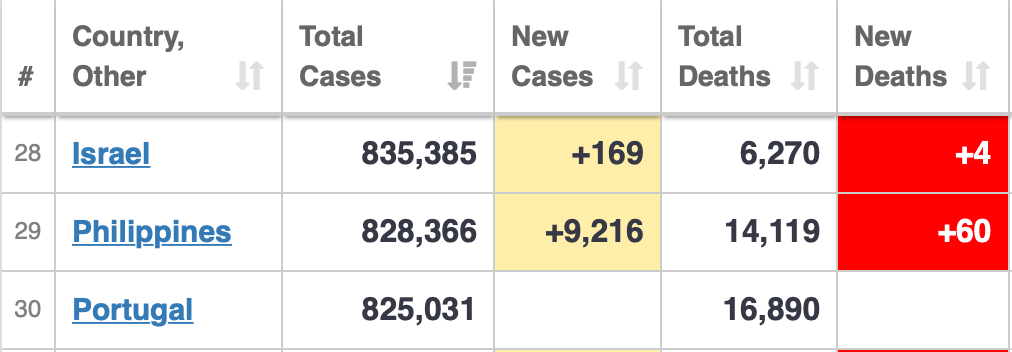
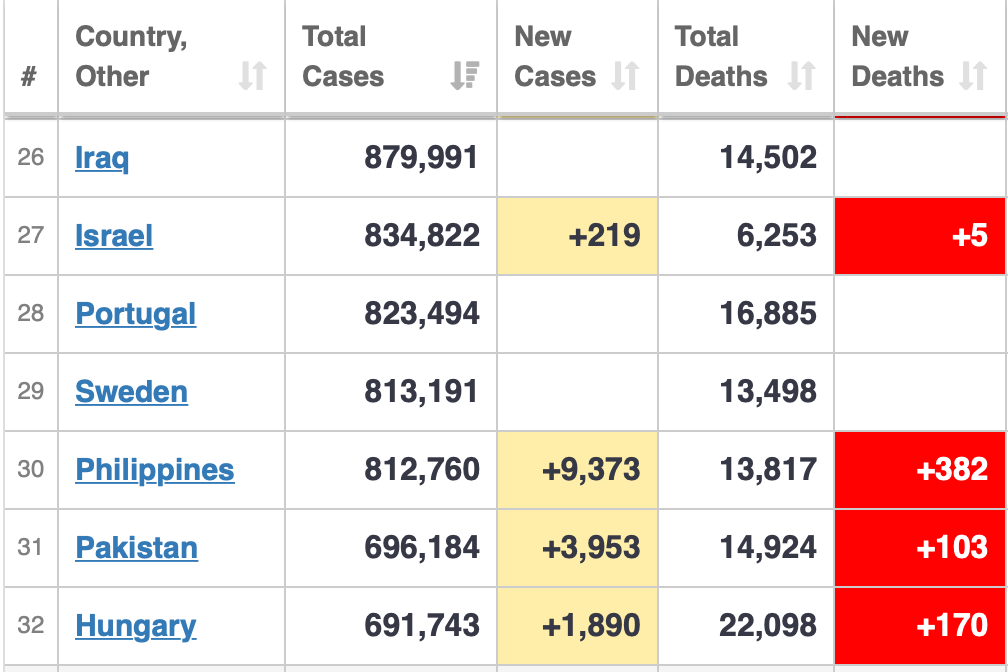
As the world shoots past 135 million COVID-19 cases and close to 3 M deaths from COVID-19, the Philippines moves up another rank to number 28, displacing Israel. As the numbers rack up, we will most likely displace Sweden for 27th spot tomorrow.

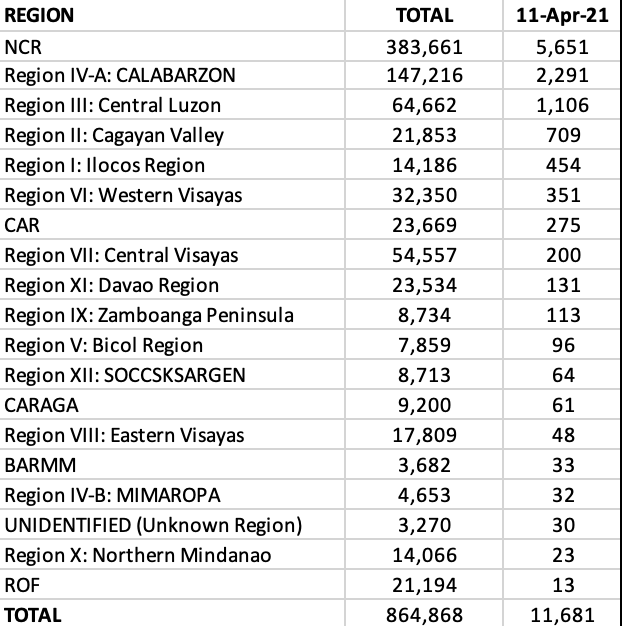
While NCR continued to lead with 5,920 (46.7 percent) of the total cases in the country, CALABARZON (2,517), Central Luzon (1,515), Ilocos Region (500), Cagayan Valley (487) and Western Visayas (484) accounted for more than 90 percent of the total cases today. There were 80 cases with no known location on a regional level, while there were 25 ROFs.

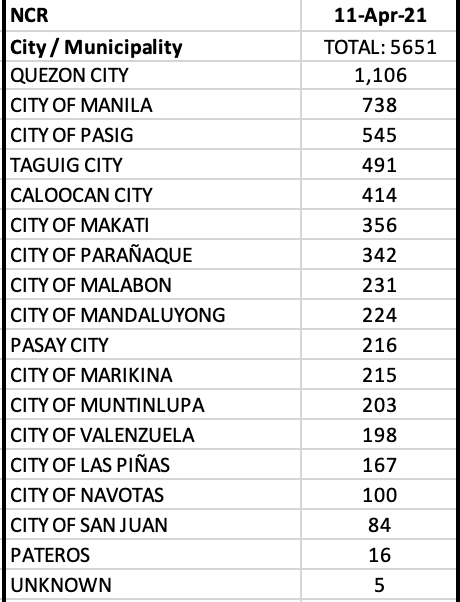
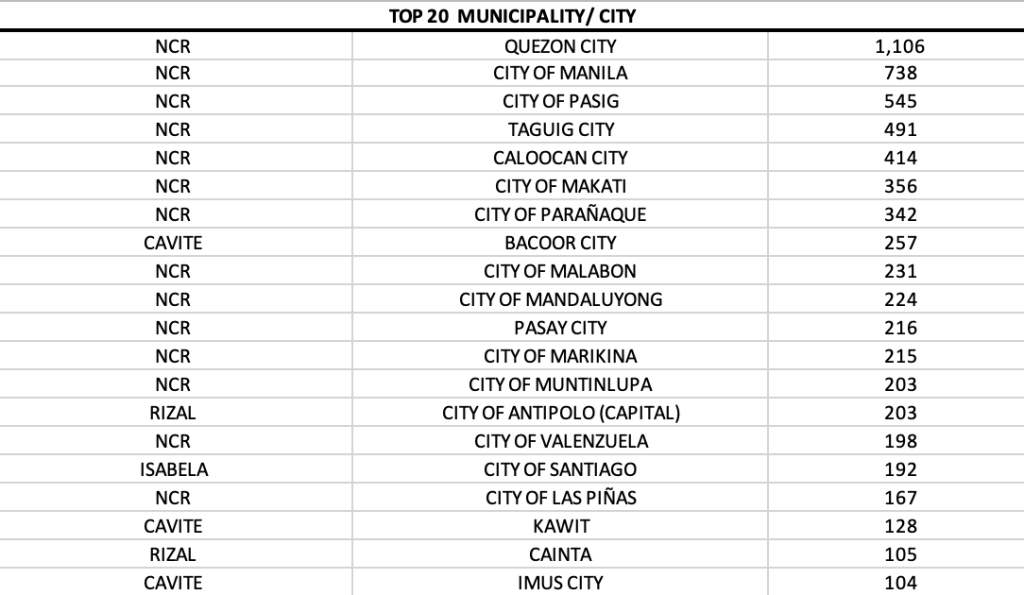
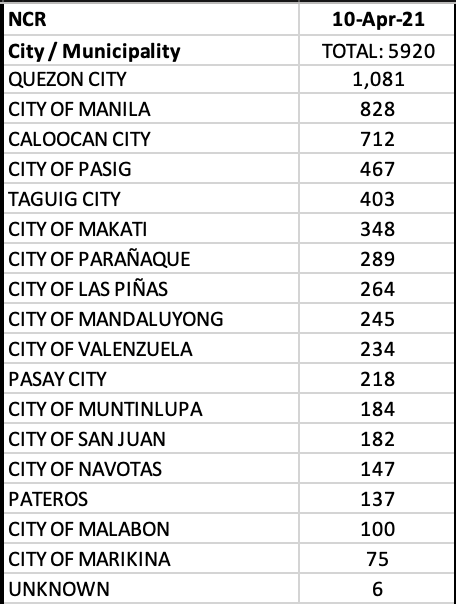
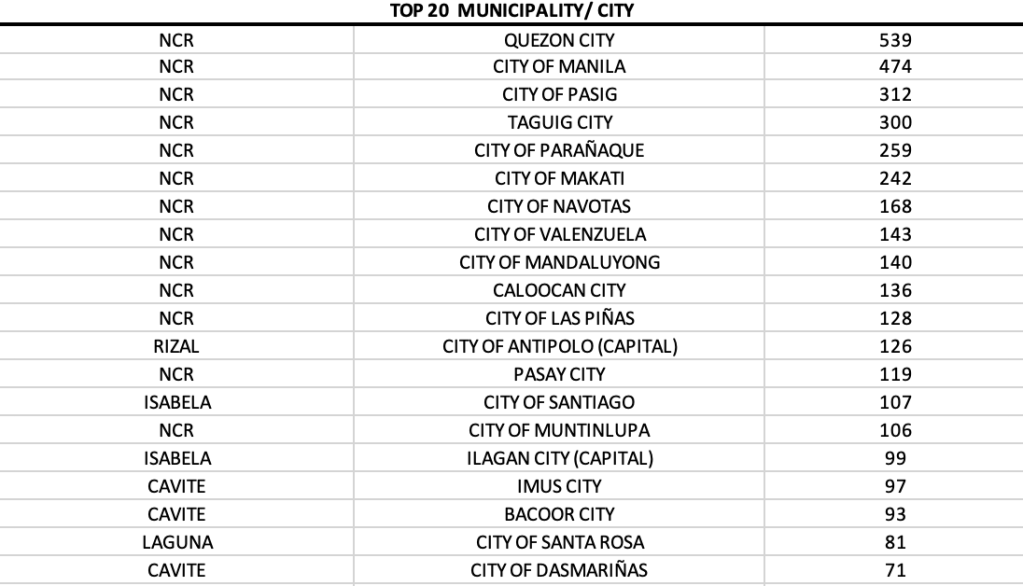
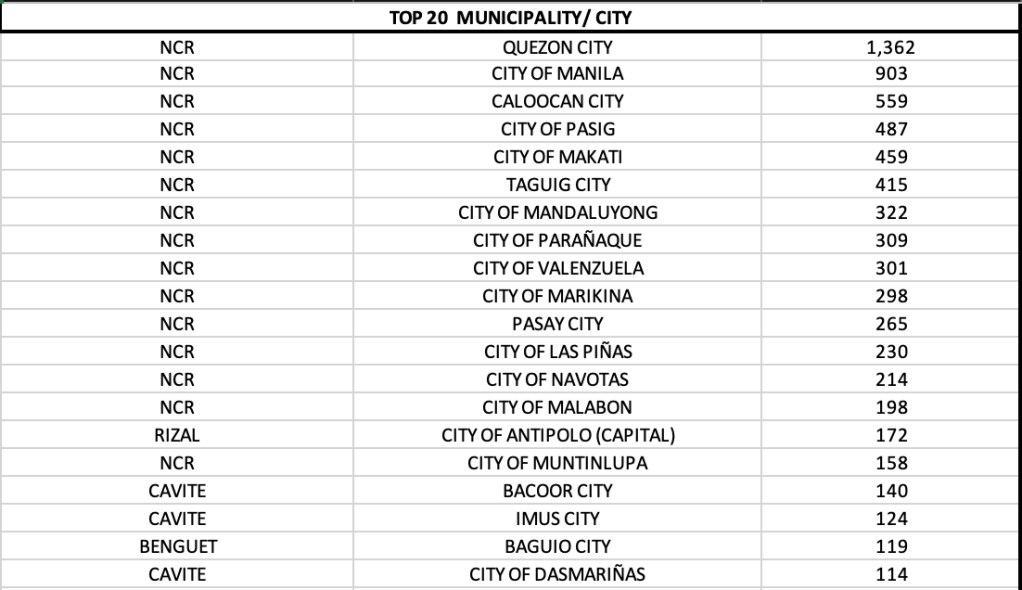
In the National Capital Region, Quezon City, Manila and Caloocan City were the top contributors responsible for over 44 percent of the cases in Mega Manila. Only the city of Marikina posted double digit cases. Fifteen of 17 cities in the NCR were in the top 20 cities with most cases for the day.

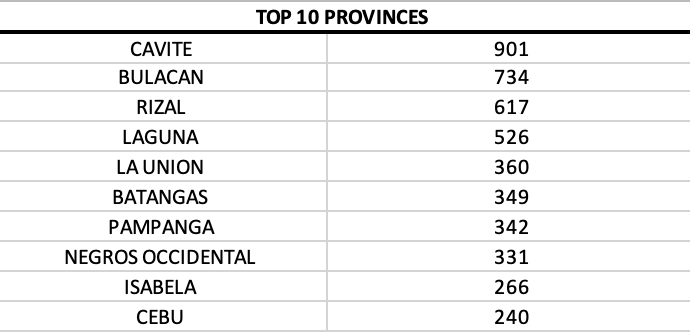
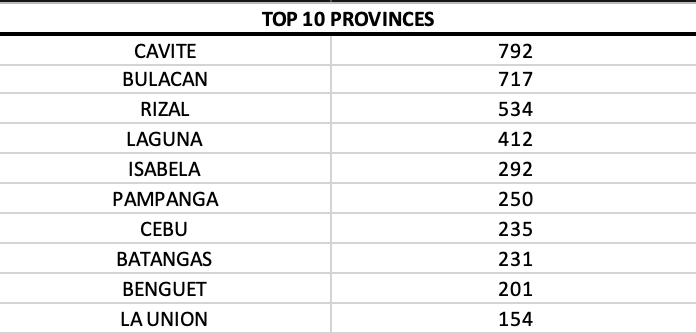
On a provincial level, Cavite, Bulacan, Rizal and Laguna had more than 500 new cases for the day. The fewest number of cases among the top ten provinces was Cebu, with 240 new cases.

401 deaths, 12,225 cases as the PH records a grim day on 04.09.2021

One of the grimmest day came ironically on Valor Day, otherwise called the fall of Bataan in the past, as the Philippine records the highest number of deaths in a single day with 401 and 12,225 new cases. Majority of the cases come from NCR, followed by CALABARZON, Central Luzon, Cagayan Valley and CAR. While the reproduction rates are lower this week at 1.24, the total number of new daily cases are plateauing only at the higher boundaries. Which means that if I have for example 12,500 daily cases but a Rt of 1.0, I will still have 12,500 daily cases in subsequent days. And it will take time for the number of cases to significantly drop because the reproduction rate is still above 1.0.

The number of active cases are now close to 180,000 as the Philippines passes more than 840,000 total cases. The positivity rate is still above 20 percent and the hospital ICU beds and isolation beds are past the critical level.

The OCTA Research Monitoring Update report gives the public an overview on the current situation in the Philippines after 2 weeks of ECQ. The reproduction rate has decreased, but it simply means that the new cases have simply slowed down in the increase and not decreased in actual numbers.

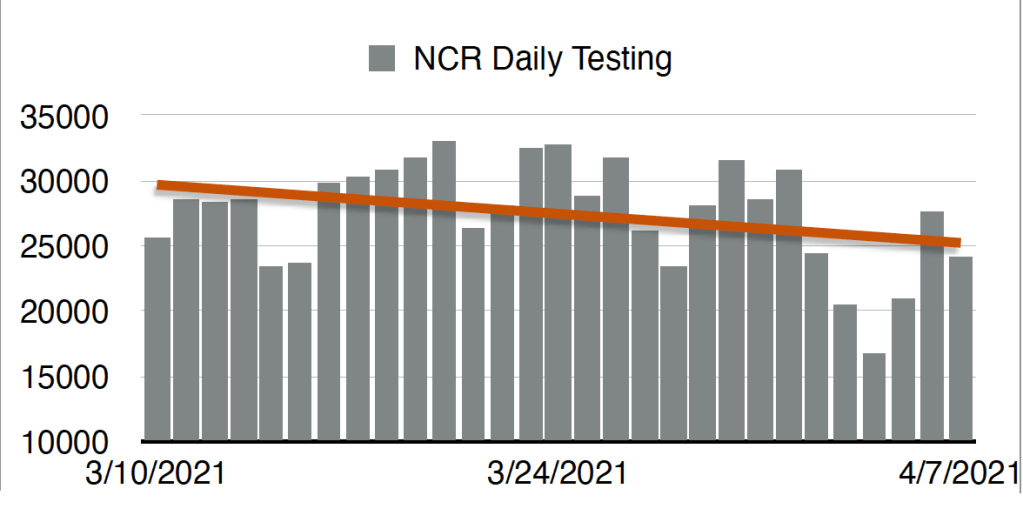
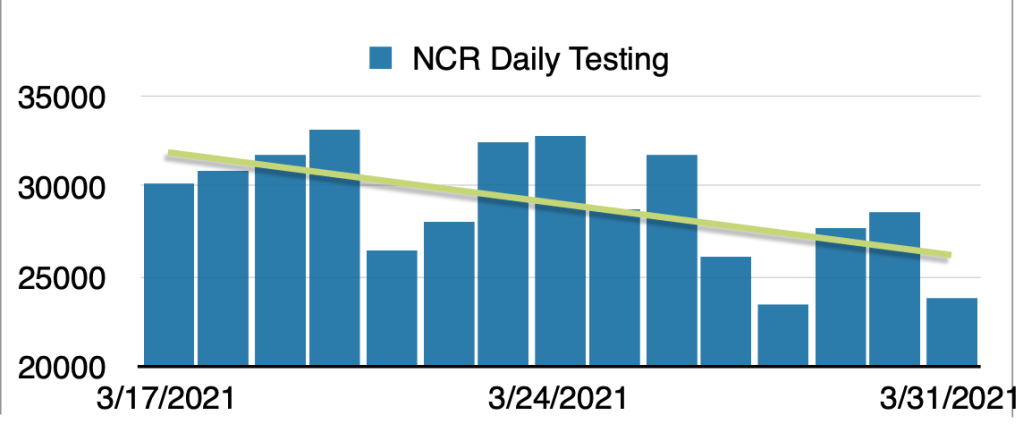
During this period, the NCR was averaging lower tests per day (19 percent less than the average over the week before ECQ). This means that we may not be seeing the complete picture of the ongoing pandemic.
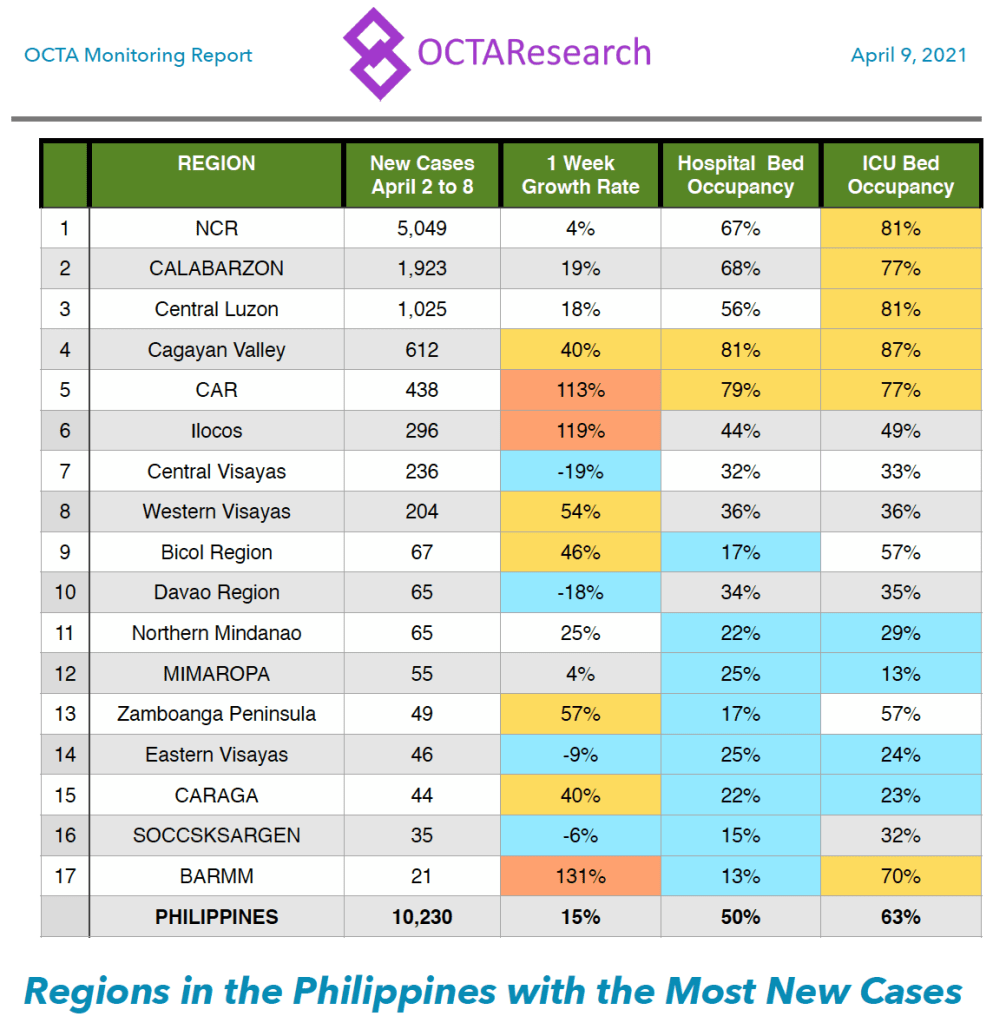
The table below shows the regions in the Philippines with the most new cases for the week April 2-8, 2021, the growth rate of cases in the week, hospital bed occupancy and ICU bed occupancy.

The regions with the highest single week growth rate are BARMM (133 percent), Ilocos (119 percent), and CAR (113 percent). Moderate growth is seen in Cagayan Valley, Western Visayas, Bicol Region, Zamboanga Peninsula and CARAGA. The greatest impact of the surge is on the ICU bed occupancy in the NCR, CALABARZON, Central Luzon, Cagayan Valley and CAR – the top 5 regions in the country with most cases.

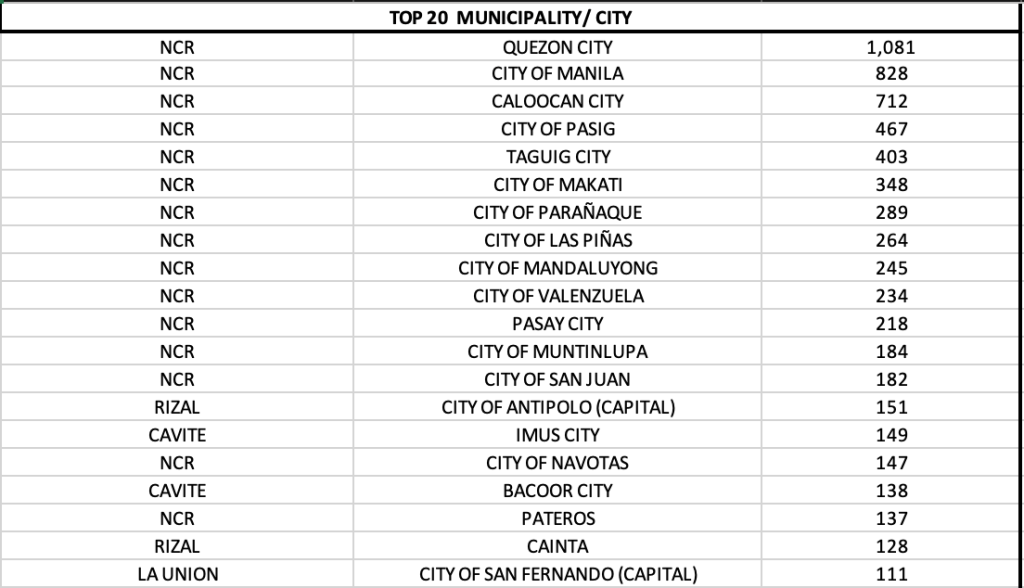
The top twenty cities with most cases are tabulated below and show that only Muntinlupa City in Mega Manila is seeing the highest growth rate at 68 percent, while many of the LGUs have shown a large decline in growth rate (note in blue the negative decline). ICU occupancy is already filled up to 80-100 percent in 15 of the 20 top LGUs.

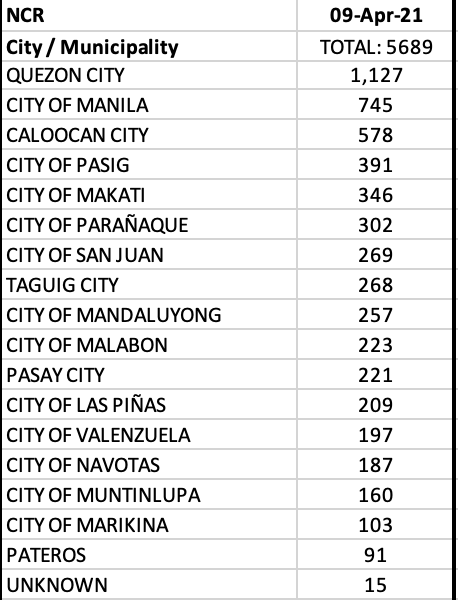
In the meantime, the breakdown of the 12,225 cases for today were as follows:

  1. NCR, CALABARZON, and Central Luzon accounted for 77.5 percent of the total cases today with 9,489 cases. Nine other regions reported triple digits.
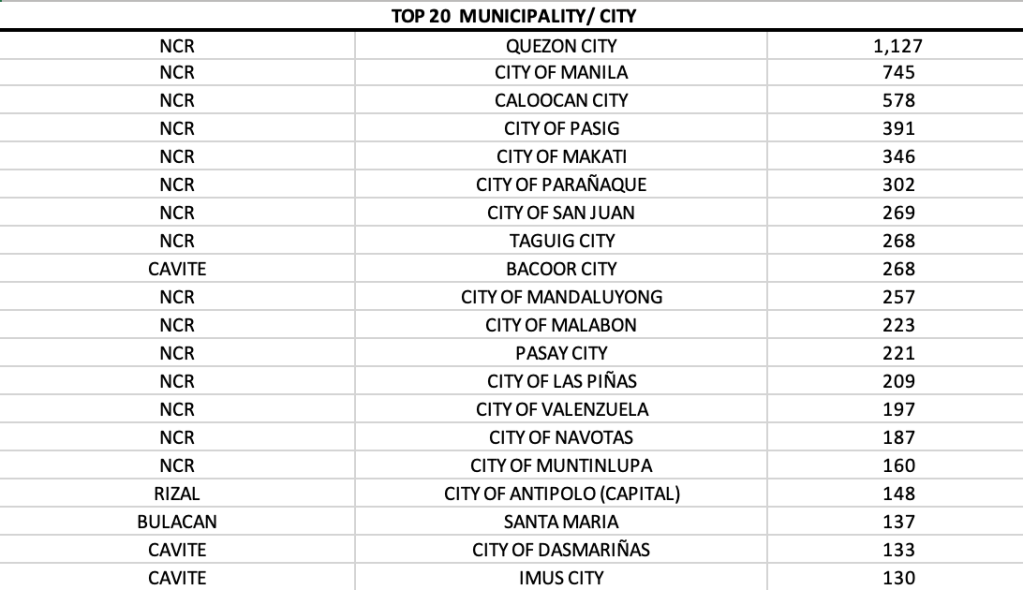
  2. Quezon City led with 1,127 new cases followed by Manila with 745 cases and Caloocan with 578. 16 of 17 LGUs had all triple digits. Fifteen of 17 LGUs were in the top 20 cities with the most cases. Muntinlupa Cities, while reporting only 160 cases had the highest growth of cases among all LGUs in the NCR.
  3. Cavite for the first time saw quadruple digits with 1,005 new cases followed by Bulacan (632) and Rizal (541).
  4. All top ten provinces reported triple digits.

PH has more than 20% active cases, the data for 04.08.2021

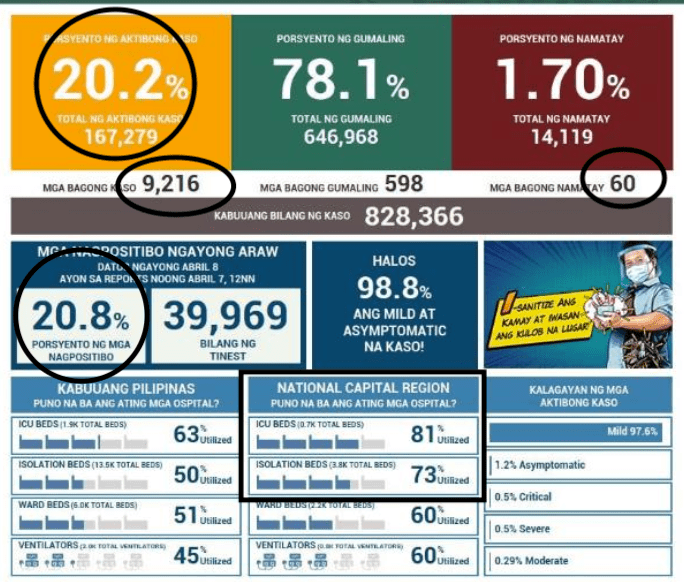
With 9,216 new cases announced by the Health Agency today, the total number of active cases are closing in to 170,000 (or 20.2 percent). The highest on record. There are now 828,366 total cases as the Philippines quickly overtakes Portugal for 29th rank in the world. Will we most likely overtake Israel tomorrow and move up to rank 28? Highly likely.

Positivity rate remains above 20 percent and ICU beds are at 81 percent utilization rate and isolation beds at 73 percent utilization rate as well.

There are 60 new deaths announced today.

Todays data drop showed NCR (4326), CALABARZON (1824), Central Luzon (995) and Cagayan Valley (586) account for 84 percent of the total cases for today.

In the National Capital Region, Quezon City and Manila continue to lead among the LGUs with 740 and 685 cases, respectively. Fourteen of the 17 LGUs in NCR were among the top 20 cities with the most cases.

On a provincial level, Cavite continued to lead with Rizal and Bulacan having more than 400 cases. All the top 10 provinces had triple digits.

242 new deaths for 04.07.2021

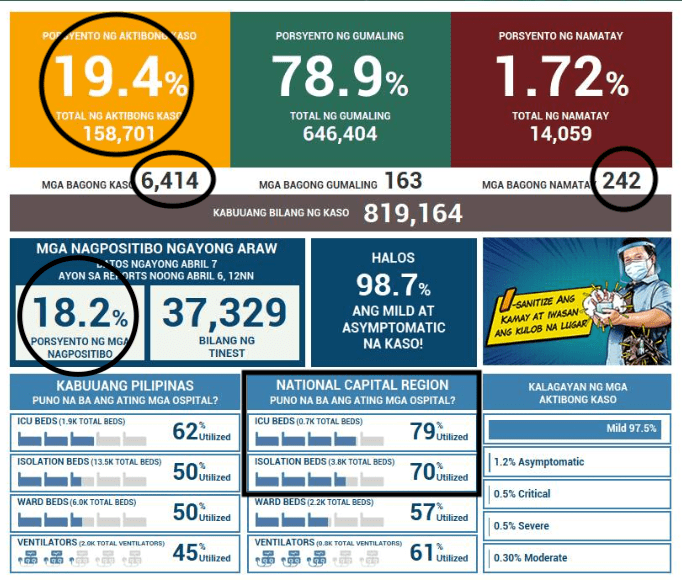
Tuesdays and Wednesdays regularly report lower cases. As mentioned before, there is a 2 days lag in the announcement of the Health Agency on new cases. Today they announced 6,414 new cases. However, the DOH also states that the reason why the numbers are low, is that the number of samples submitted for testing was also fewer last April 5, 2021.

The bad news is the announcement of deaths. From 1.7 percent case fatality rate, we now jump to 1.72 percent as 242 new deaths were reported today, bringing the total deaths past 14,000.

While the positivity rate is a bit lower at 18.2 percent, this is still relatively high for the country.

The healthcare capacity remains overwhelmed with ICU beds at 79 percent and isolation beds at 70 percent – both past the critical mark.

The growth in number of cases considerably declined in the National Capital Region, as reported by the OCTA group in their weekly Monitoring Update.

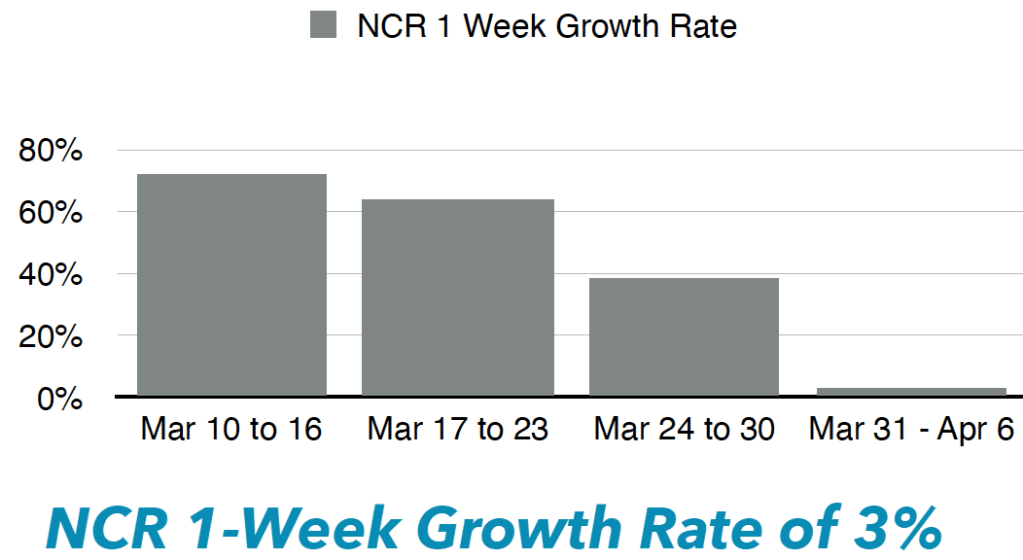
The reproduction number in the NCR decreased to 1.43 for the week of March 31 – April 6, while the reproduction number in the Philippines was up at 1.45. The average number of new COVID-19 cases reported per day in the NCR was 5,146 over the past week, with a one week growth rate of just 3 percent. During this period, the NCR is averaging 24,000 tests per day, 17 percent lower than the previous weeks average. This means that we are not seeing the complete picture with respect to growth rate and trends, and once data come in this week, there will be corrections in the findings.

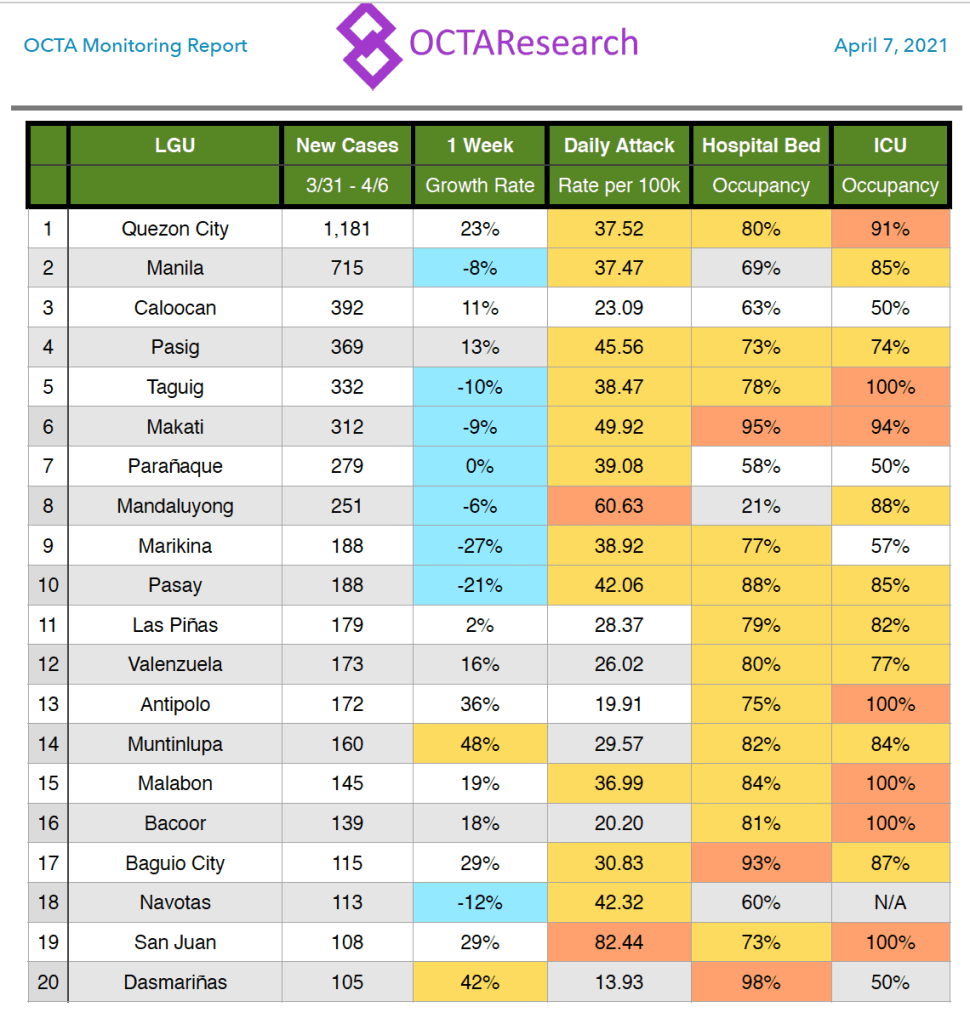
OCTA Research, Philippine COVID-19 Update, April 7, 2021

The top ten regions/provinces in the country with new cases are provided in the table below. While new cases have decreased significantly in Cebu, cases in Isabela and Benguet have increased significantly. The ICU capacity in various regions and provinces in the top 10 have breached the critical level capacity (70 percent) set by the Health Agency.

Among the top 20 cities with highest cases in the Philippines, notice that many LGUs are seeing a slowing down in the growth rate. The highest growth rate in cases has shifted to some LGUs which have never seen significant rise of cases. These are: Muntinlupa City (48 percent) with the highest growth rate in all LGUs in the country followed by Dasmariñas City in Cavite (42 percent). ICU and bed occupancy are mostly past 80 percent in 13 of the 20 top cities.

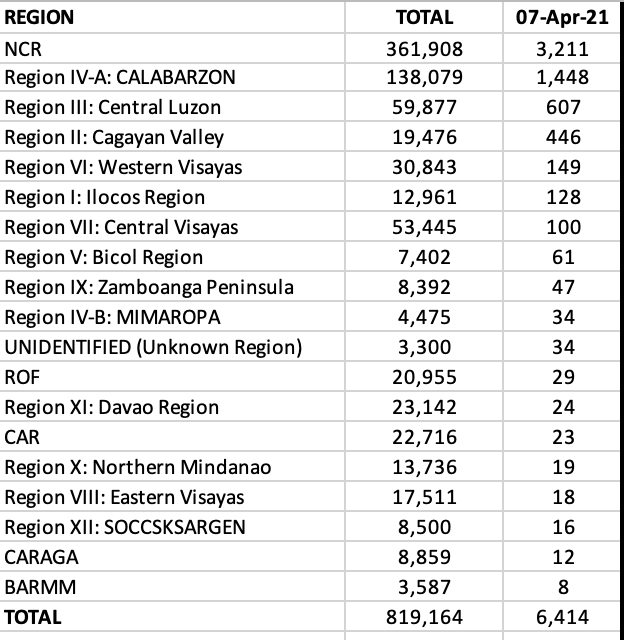
NCR accounted for half the total cases for today with 3,211 cases. Together with CALABARZON (1,448), Central Luzon (607), and Cagayan Valley (446), these four regions hauled 84.4 percent of the cases for the day. There were 34 cases with unknown locations on a regional level, while 29 were ROFs.

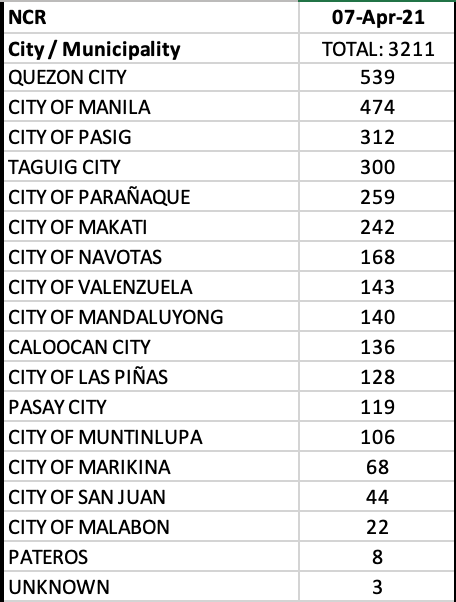
In the National Capital Region, some of the LGUs were seeing lower cases today because of the lower samples tested in the country in general and in Mega Manila in particular. Thirteen of 17 LGUs in NCR were among the top twenty cities with most cases for the day.

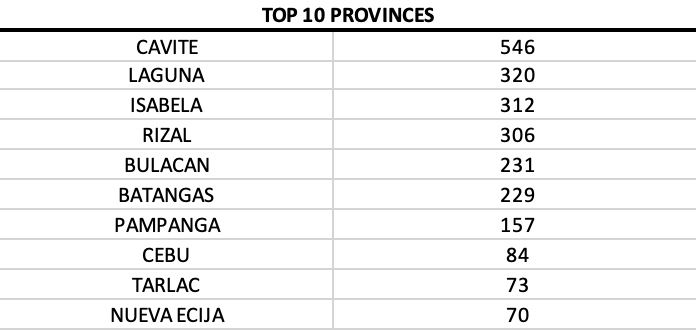
On a provincial level, Cavite is back on top, with Laguna, Isabela, and Rizal with more than 300 but less than 400 cases.

382 new deaths reported on 04.06.2021

Today marks the highest number of deaths reported in a single day in the Philippines as the Health Agency announces 382 new deaths (of which 341 occurred prior to April 2021). The highest deaths recorded in the country were on two occasions – September 14, 2020 (258 deaths) and February 20, 2021 (239 deaths). As mentioned in past posts, deaths may take quite some time to occur because of the long duration of illness among those that are severe or critical. In addition, reported deaths are validated thoroughly and may take quite some time to report as due to COVID-19 as the cause of death or other co-morbid diseases.

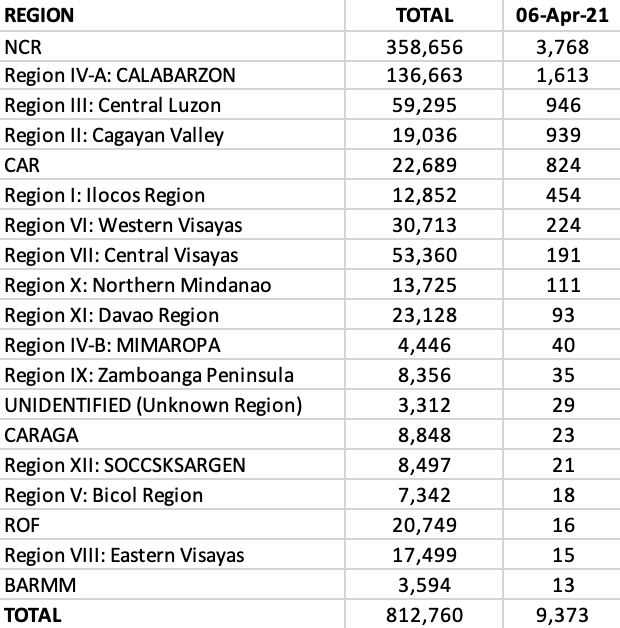
Tuesdays and Wednesdays usually report lower cases. There were 9,373 new cases reported today, pushing the total cases now to 812,760. Note, however, that the positivity rate is still at 20 percent and the healthcare capacity is at an alarmingly high level. ICU beds are 82 percent occupied in the National Capital Region, while isolation beds are at 71 percent. On a national scale, the ICU beds are at 63 percent capacity already.

We will most likely overtake Sweden and settle for 29th spot after the 4PM count tomorrow. In the global tally below, at the rate the number of new cases are being reported daily, we will most likely overtake Portugal and Israel before this week ends.

NCR as usual posted the highest number of cases for the day with 3,768 new cases (or only 40.2 percent) for the day. CALABARZON had 1,613 (17.2 percent) and Central Luzon 946 (10.1 percent). It was Cagayan Valley (939 new cases) and CAR (824 new cases) that contributed to the haul for the day. These five regions in Luzon accounted for 86.4 percent of the total cases of the day.

In NCR, it was Quezon City that continued the lead with 906 cases followed by Manila (629). The surprise of the day? Muntinlupa City which reported 216 cases and shot up to 6th place among all cities in the Philippines including all LGUs in the Mega Manila. Thirteen of 17 LGUs were among the top 20 cities with most cases.

Isabela was the overall leader on a provincial level with 601 new cases, overtaking Cavite. Notice that the rankings on a provincial had significantly shifted to the northern part of Luzon, extending to Benguet, La Union, Cagayan and Mountain Province.

Day 8 of ECQ part 2…data drop for 04.05.2021

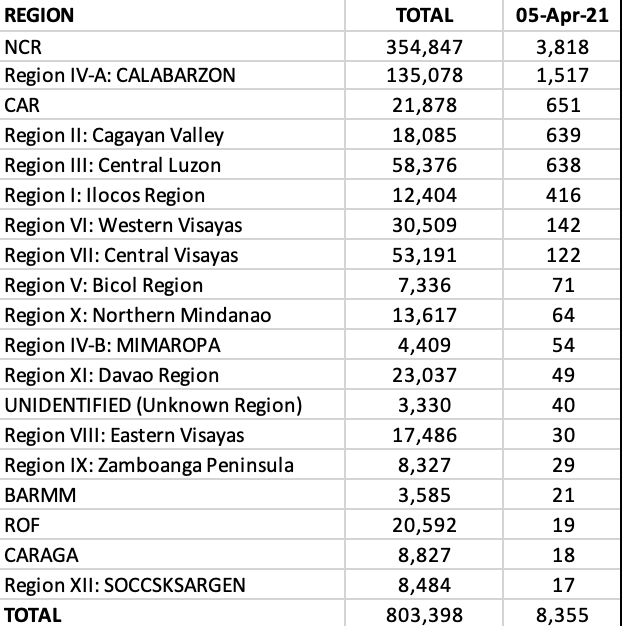
The Health Agency reports 8,355 new cases today, as the data for testing during the Holy Week are released. The data announced today were from testing done during the Holy Week (with some testing centers closed for the long holiday). Note that the number of tests done in the past few days are less than optimum, with the positivity rate at more than 20 percent for the past week. With the more than 8,000 new cases today, the Philippines has now breached the 800,000 mark.

The healthcare capacity, in spite hospitals opening additional beds is at a critical high with 79 percent ICU capacity and 72 percent isolation bed capacity in the National Capital Region. Notice, however, that the ICU beds in the Philippines has increased as well. It is now at 61 percent from a previous 51 percent occupancy in mid March, nationally.

The OCTA Monitoring Report showed that the reproduction number in the NCR had declined from 1.88 to 1.61 after one week of ECQ. The goal of a lockdown is meant to slow down the increase in new cases. With an additional week of strict ECQ, we can hopefully bring down the Rt to 1.0 (or anywhere near it).

The average number of new COVID-19 cases reported per day in the NCR was 5,538 over the past week, an increase of 20 percent compared to the previous week. The NCR as a whole is now on a period where the increase in new COVID-19 cases is slowing down. The moving average trend lines have started to level off.

OCTA Research Monitoring Report, Philippine COVID-19 Update, April 5, 2021

The table below show significant increases in the provinces of Laguna, Batangas and Pampanga. Only the province of Cebu has seen a significant decrease in daily new cases. In terms of ICU capacity, all top ten provinces are past the 70 percent critical level except for Batangas (65 percent) and Cebu (23 percent). Only Cebu has a positivity rate less than 10 percent for testing. All other provinces in the top 10 have a positivity rate ranging from 17-38 percent!

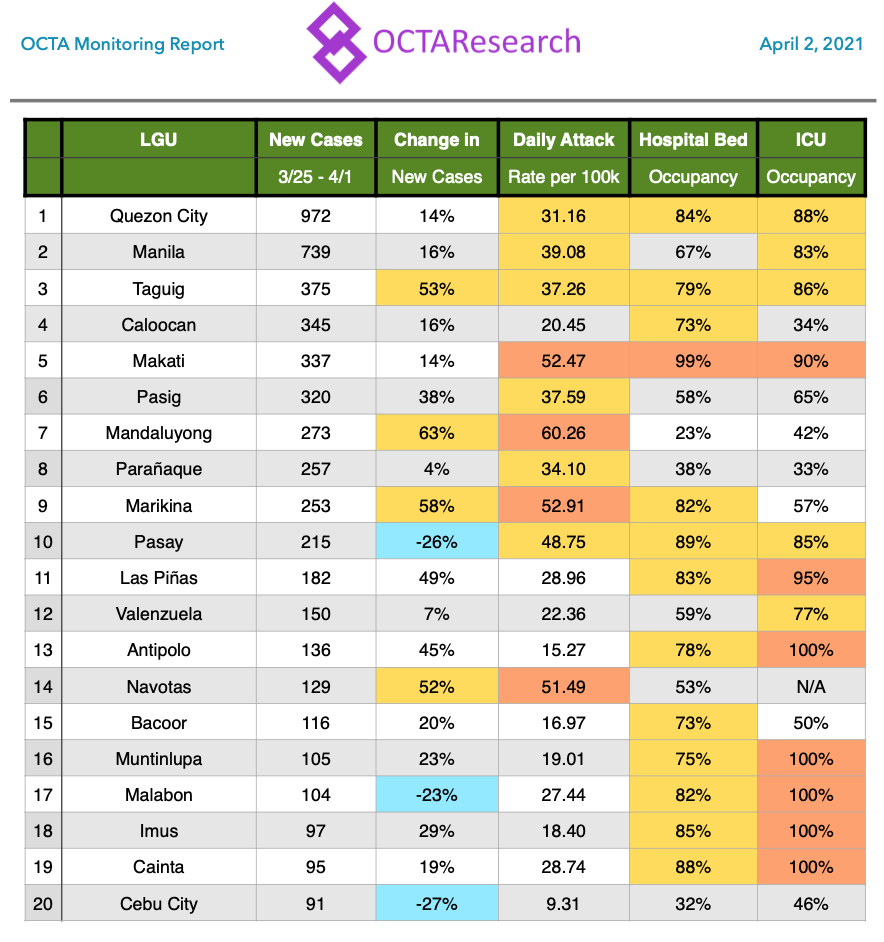
The top twenty LGUs with highest cases are in the table below. Makati and Pasay were the only LGUs that saw a negative change (decline) in daily new cases. Attack rates were highest, however, with Makati, Navotas, Mandaluyong and San Juan. Hospital bed occupancy is at critical levels in 15 of the 20 top LGUs. ICU occupancy is at critical levels in 14 of the top 20 LGUs in the list. Taguig, Mandaluyong, Antipolo, Imus and Cainta are at 100 percent ICU occupancy as of this writing.

What makes it difficult for ICU occupancy is the management of critically ill COVID-19 patients. They occupy ventilators longer and are managed in the intensive care for a significantly longer duration than nonCOVID patients. In addition, they also add to the challenge of healthcare worker manpower in the hospitals. When HCWs are infected because of the hazard from being exposed to ill patients, the healthcare system becomes overwhelmed and the quality of care becomes compromised during these difficult times.

The government should work at efforts at alleviating the burden of caring for mild (and some moderately ill) patients in hospitals by creating more isolation facilities dedicated to COVID19 cases alone. The healthcare staff caring for COVID19 patients should receive better pay and additional personal and health hazard benefits because of the antecedent risks when caring for patients with COVID.

Todays data showed NCR, CALABARZON, CAR, Cagayan Valley and Central Luzon grab the spotlight with 87 percent of the total cases for the day. Other regions with triple digits were: Ilocos Region, Western Visayas and Central Visayas. There were 40 cases with no tagged location on a regional level.

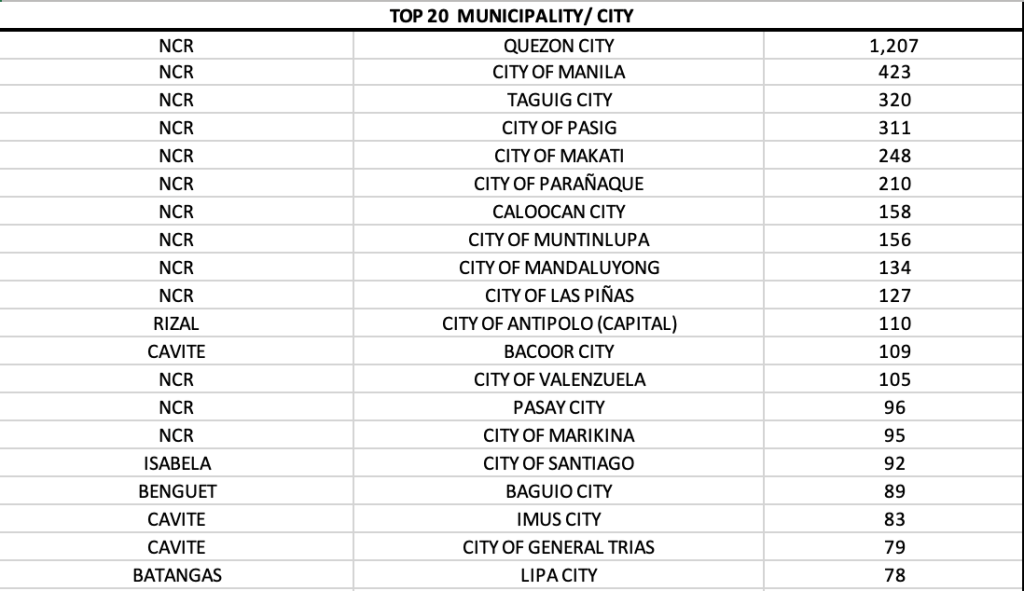
In the National Capital Region, where 46 percent of the total cases for today were from, Quezon City continued to dominate the numbers with close to one-third of the cases for Mega Manila. City of Manila had 423 cases. Those with more than 100 cases were: Taguig, Pasig, Makati, Parañaque, Caloocan, Muntinlupa, Las Piñas, and Valenzuela.

Thirteen of 17 LGUs in NCR were among the top 20 cities with most cases.

On a provincial level, Cavite and Isabela ruled the day. Cebu is no longer in the top 10 provinces. All the top ten provinces are found in Luzon.

The Easter Sunday data drop 04.04.2021

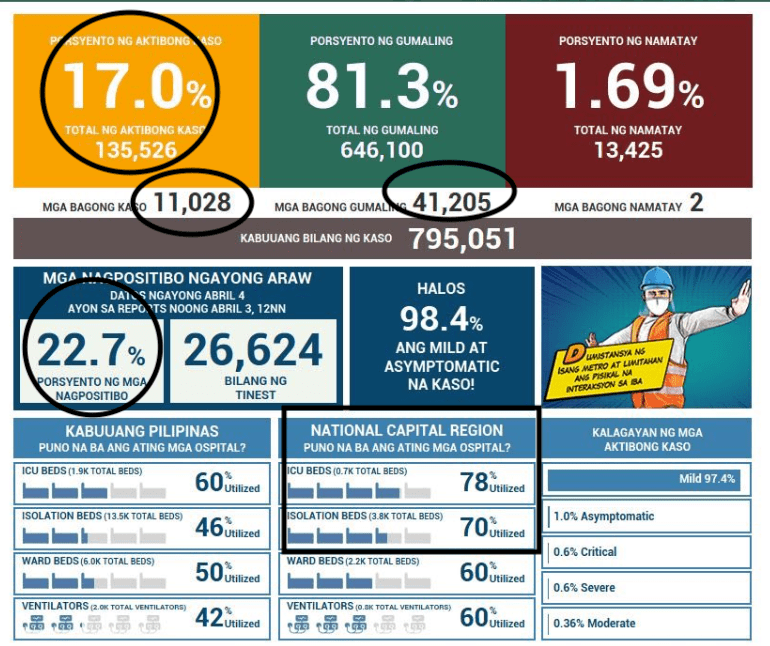
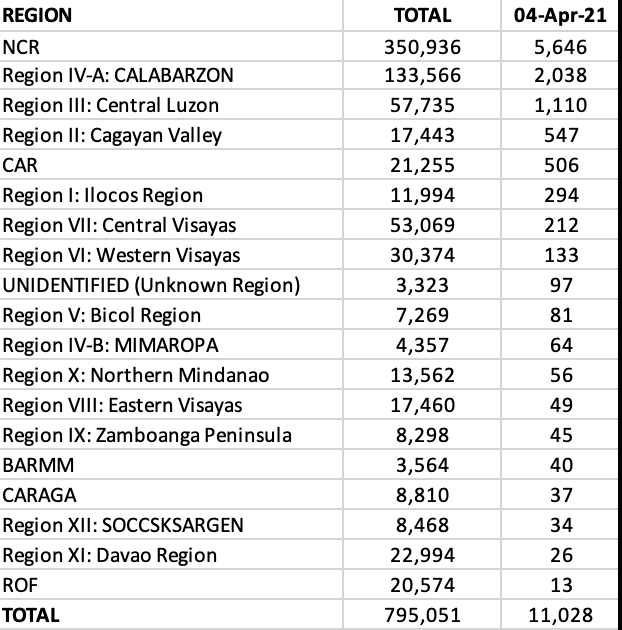
The Health Agency reports more than 40,000 new recoveries in the Easter Sunday recovery haul. New cases, however, totaled 11,028 new cases pushing the total a few thousand short of 800,000 cases. The positivity rate remains above 20 percent with fewer laboratories open during the long Holy Week holiday.

Hospitals in the National Capital Region are in filled beyond critical levels with ICU beds at 78 percent and isolation beds at 70 percent.

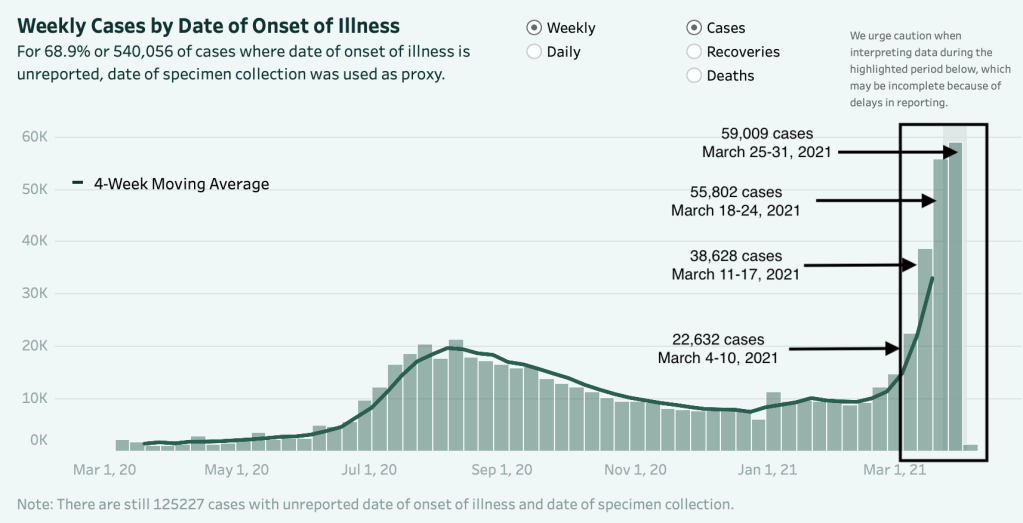
The surge in the country is now on its fourth week. Notice in the graph below as provided by the COVID-19 Tracker site of the Department of Health that the week on week cases from March 4-10, followed by March 11-17, then March 18-24, and March 25-31 saw the highest number of cases within the March 25-31 frame. However, with the growth of cases has significantly slowed down compared to the past three weeks. Nevertheless these are high still high numbers to contend with and will take time awhile before it can be brought down considering the fact that the current cases were exposures within the past two weeks.

Based on the actual cases, the Philippines recorded 71,603 cases from March 28-April 03, 2021, or a 7-day average of more than 10,000 new cases daily.

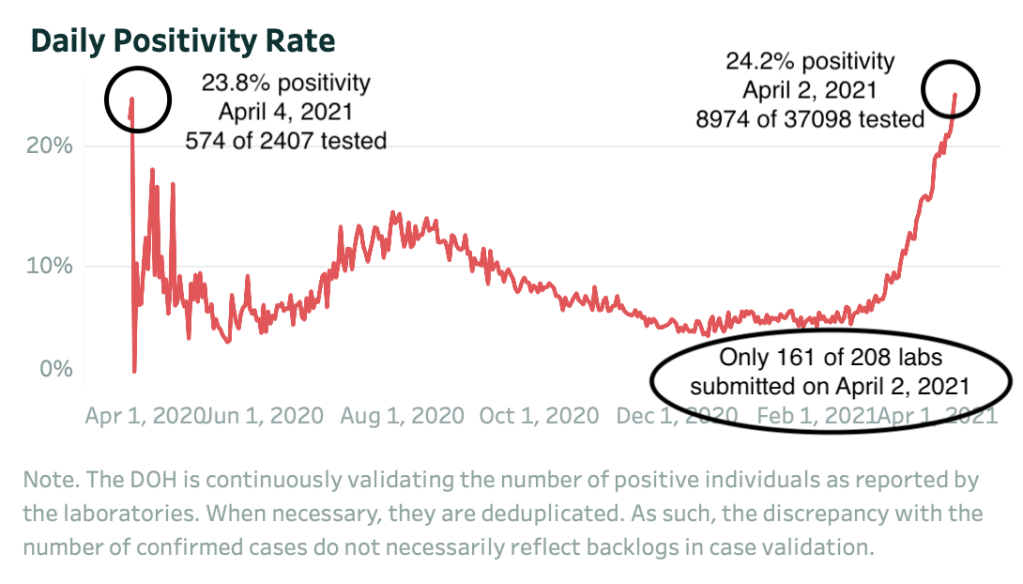
The daily positivity rate for the Philippines as of April 02, 2021 was higher than the highest positivity rate almost one year ago and only 161 or 208 laboratories submitting data on April 2, 2021.

Todays data drop showed NCR continue to lead with 51.2 percent (5,646 new cases) of the total. As usual, CALABARZON came in second with 2,038 (18.5 percent) and Central Luzon in third with 1,110 (10.1 percent) cases. These three regions continued to account for more than 80 percent of the total cases in the country.

Cagayan Valley and CAR contributed 547 and 506 cases each, respectively. Others with triple digits were: Ilocos Region, Central Visayas and Western Visayas. Sadly, there are 97 patients who were positive for the virus but had no tagged location on a regional level. It is cases like these that make it difficult to find where and who the patients are. Obviously, if you don’t know who and where they are from, there is no way you can do contact tracing.

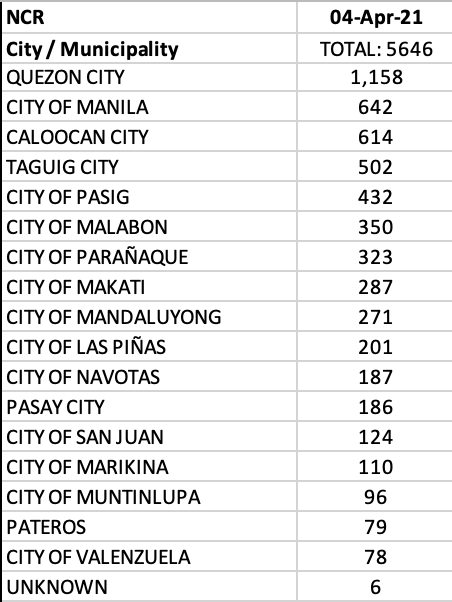
In the NCR, Quezon City continued to dominate the daily haul with 1,158 new cases or 20.5 percent of the cases in Mega Manila for the day. Ironically, Quezon City had more cases than the whole of Central Luzon reported for April 4, 2021.

Two cities reported more than 600 cases: Manila and Caloocan City. Taguig had 502. Pasig with 432. Malabon and Parañaque had more than 300 but less than 400 cases. Makati, Mandaluyong, and Las Piñas had more than 200 but less than 300 cases. The following cities had more than 100 but less than 200 cases: Navotas, Pasay, San Juan and Marikina. Muntinlupa, Pateros and Valenzuela reported double digits.

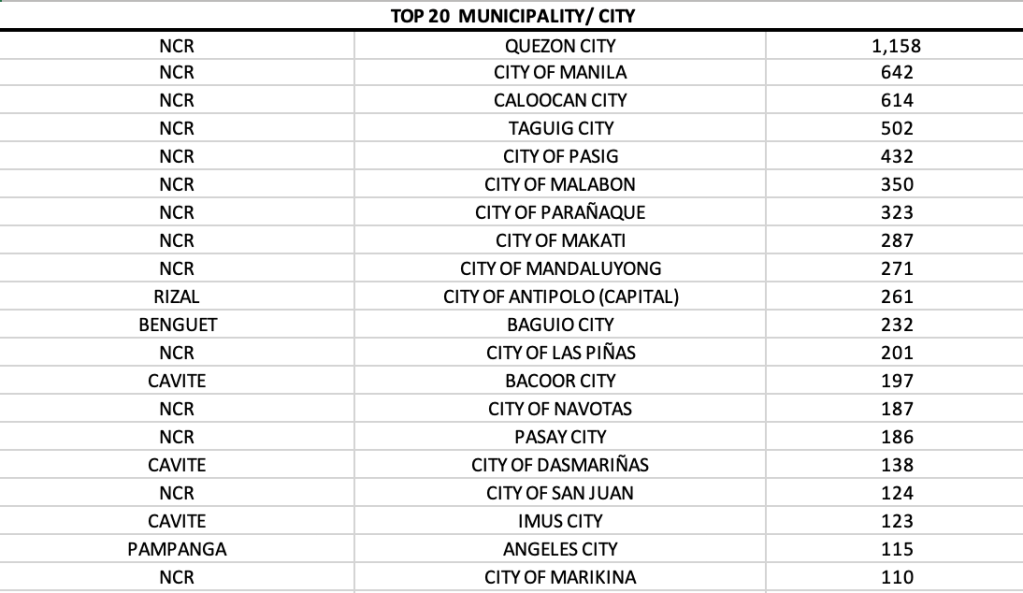
Fourteen of 17 LGUs in NCR were in the top 20 cities with most cases.

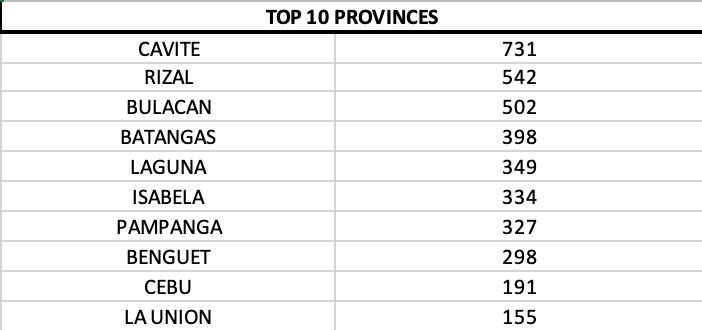
On a provincial level, Cavite continued to lead in number of cases, followed by Rizal and Bulacan. The following provinces are seeing a rise in cases: Batangas, Isabela, Pampanga and La Union.

Black Saturdays high numbers – the prelude to a longer ECQ… 04.03.2021

We ranked 10th in the world yesterday, as the country recorded more than 15,000 new cases (with 3,760 from an underreporting mishap last March 31, 2021). That meant that 11,601 were the actual new cases reported for April 02, 2021.

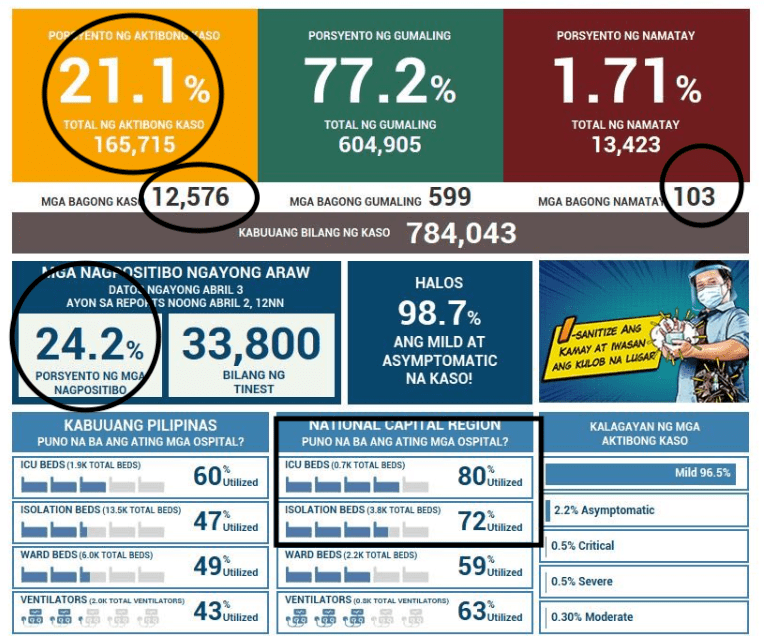
Today, the Health Agency reports 12,576 new cases and 103 new deaths with astonishingly high positivity rate of 24.2 percent. This means that around 1 in every 4 individuals tested will most likely test positive. And we’re only talking about those getting tested. The Philippines now has 784,043 total COVID-19 cases. A quick look at the hospitals in the NCR show that utilization for ICU is now at an all time high of 80 percent and isolation beds at 72 percent. The reality on the ground is more heart breaking as many patients cry for help in getting admitted, but there is literally no room at the in. Family members end up having to care for the sick and quickly get exposed and turn up positive as well. The number of active cases has exploded to more than 165,000 (21.1 percent).

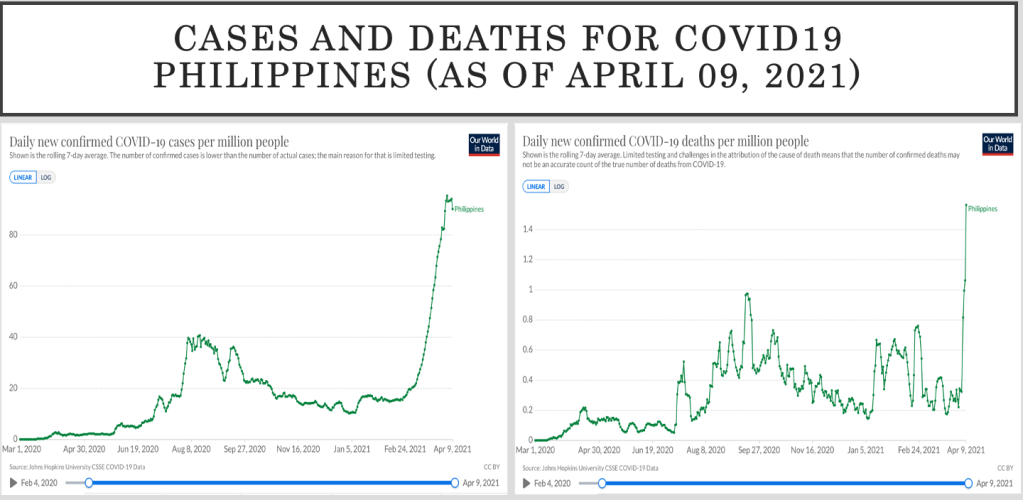
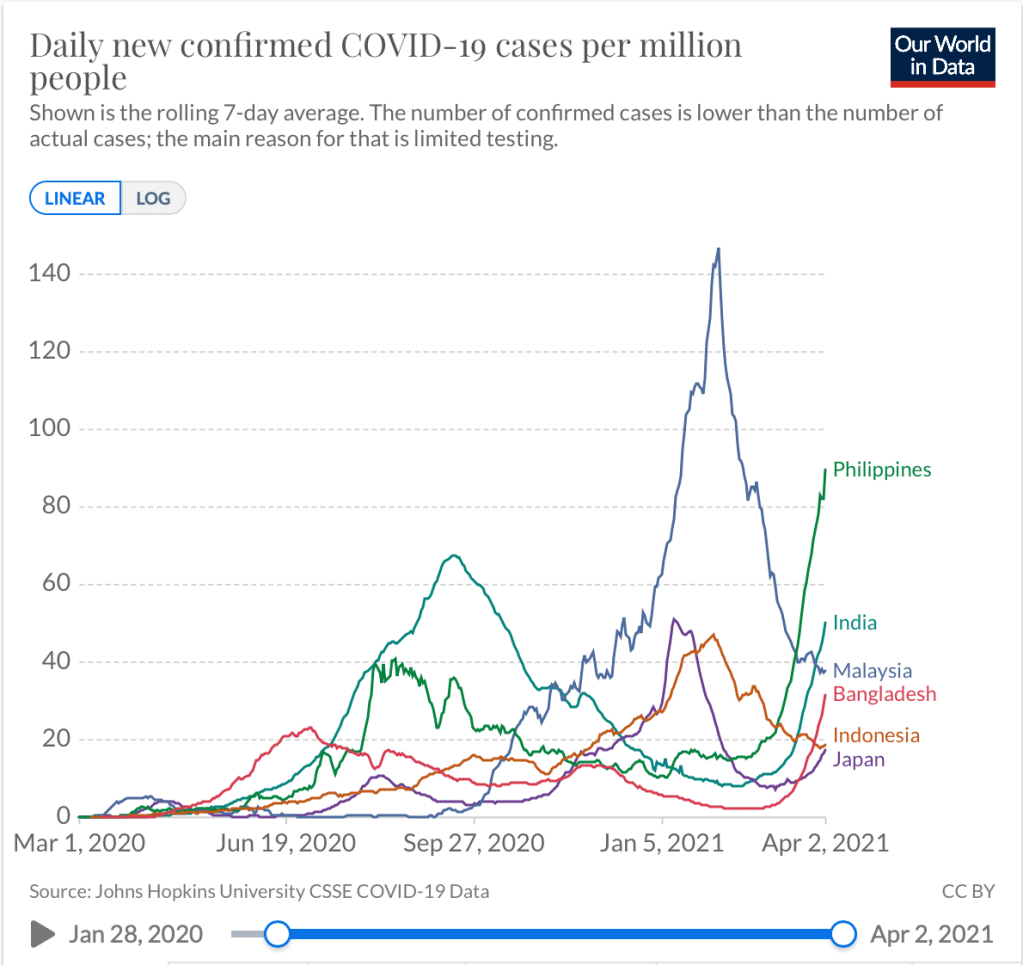
In the Asian region, our data show how steep the trajectory for the Philippines is, compared to other countries that are seeing a resurgence in cases. While Indonesia and Malaysia see significant improvement, the Philippines, India, Bangladesh and Japan are on a surge. The Philippines has close to 100 new cases per 1,000,000 people or 0.01 percent of the population daily are turning up positive. Note that the data is based on PER CAPITA, and is a better reflection on how we are doing compared to other countries based on population size and not simply numerical values alone.

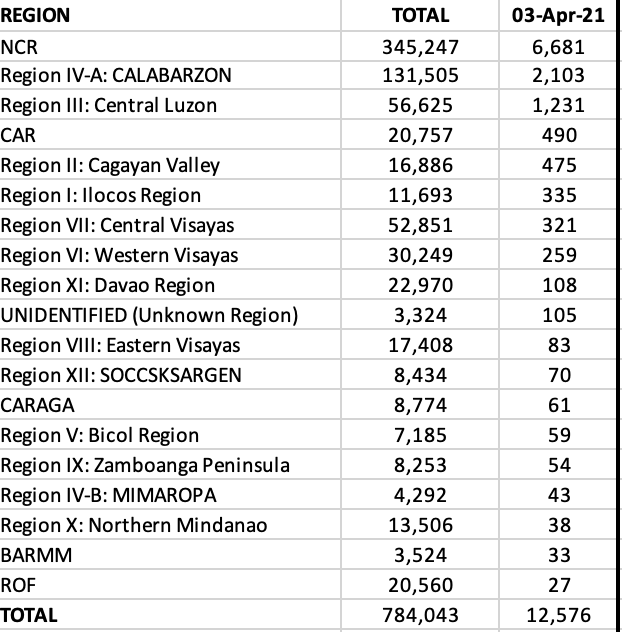
Today’s data showed NCR owning 6,681 (53.1 percent) of the total. CALABARZON came in second with 17 percent (2,103) and Central Luzon with 1,231 (9.8 percent). Other regions with triple digits were: CAR, Cagayan Valley, Ilocos Region, Central Visayas, Western Visayas, and Davao Region. There were 105 cases with no known location on a regional level. Twenty-seven cases were from ROFs.

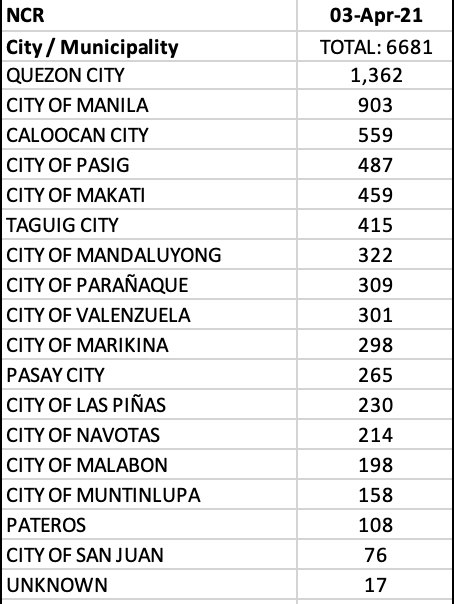
In NCR, Quezon City and Manila continued the account for most of the cases for the day. A total of 2,265 cases were from these two LGUs alone – comprising more than one-third of the cases in NCR. Caloocan had more than 500 cases. Pasig, Makati and Taguig had more than 400 but less than 500 cases. The cities of Mandaluyong, Parañaque, and Valenzuela had more than 300 but less than 400. Marikina, Pasay, Las Piñas, and Navotas had more than 200 and less than 300. Malabon, Muntinlupa and Pateros had more than 100 but less than 200 cases. The lone city with double digit cases was San Juan with 76.

Fifteen of 17 LGUs from NCR were in the top twenty cities with most cases for today. First to fourteenth place? All from NCR.

On a provincial level, Cavite and Bulacan continue to lead the haul. All provinces in the top 10 continued to rake in triple digits.

Good Friday’s calvary 15,310 new cases for 04.02.2021

The road to Calvary is short and difficult. That’s the story on Good Friday. The total number of 6,128 cases on March 31, 2021 did not include 3,709 backlogs. In short, there should have been 9,837 cases for March 31. With the correction by the Health Agency, that deficit is carried to todays numbers – 15,310 new cases announced on April 02, 2021 (or 11,601 in actuality were it not for the backlog added). This horrific number pushes the total cases to 771,497 with almost 20 percent active cases (more than 153,000). With 20.7 percent positivity, the effect of the ECQ on the daily cases will most likely not be seen anytime soon.

The total cases in the world now breaks the 130 million mark as there are increasing cases being seen globally. Yesterday, the world recorded more than 700,000 new cases and close to 12,000 new deaths with countries like Brazil, India, Peru and European nations spiraling into another difficult and deadly surge.

The granular data for the day showed that NCR continued to lead with 7,879 (51.5 percent) of the total. This is followed by CALABARZON with close to 3000 cases and Central Luzon with 1,647. Note again that these three regions alone totaled 12,432 or 81.2 percent of the total cases for the day. These three regions reported quadruple digits. Nine other regions reported triple digits in todays blood bath. These were: Cagayan Valley, Central Visayas, CAR, Ilocos Region, Western Visayas, Bicol Region, MIMAROPA, Davao Region and Northern Mindanao. There were 76 cases with no identified location on a regional level.

In the NCR, Quezon City and the City of Manila had more than 1,000 cases each. These two cities in Mega Manila accounted for 38 percent of the total cases for NCR. Caloocan and Pasig had more than 500 but less than 600 cases. Parañaque, Makati and Mandaluyong had more than 400 but less than 500. Taguig, Valenzuela, Muntinlupa and Marikina had 300-400 cases. Pasay City, Las Piñas, and San Juan had 200-300 cases. Malabon had 130 new cases.

Fourteen of 17 LGUs in NCR were among the top 20 cities, with 1-13 in rank all coming from Mega Manila alone.

On a provincial level, three provinces had more than 800 cases – Rizal, Cavite and Bulacan. Laguna had 656 followed by Batangas and Cebu with more than 400 cases. All provinces in the top 10 had triple digits.

Batanes now has 10 cases, with 4 cases added today. Biliran and Davao Occidental were the only two provinces with NO cases reported for today.

OCTA Research Monitoring Update

The latest update from the OCTA Research Monitoring Update shows the significant decline in the reproduction number in the National Capital Region on the week of the Enhanced Community Quarantine. While the Rt is now at 1.58 (from almost 2.25 two weeks ago), the continued rise has slowed down to 19 percent. Note that this increase is considerably lower compared to the previous weekly increases of 60 percent.

The ECQ has a greater effect in reducing the reproduction number compared to the GCQ. The average number of tests per day in the NCR from March 28-31 was 25,880, a 12 percent decline in tests compared to the daily average from March 21-27. The problem is that with a high positivity rate of 23 percent in the NCR, there is a need to further scale up PCR testing to be able to keep up with the surge in new COVID-19 cases.

Philippine COVID-19 UPDATE, OCTA Monitoring Report, April 01, 2021

The hotspots in the country remain NCR plus, Isabela and Batangas.

In the list below, note the variety in positivity rate among the top 10 provinces in the country. Only Cebu has managed to bring down its positivity rate to 10 percent. Pampanga has an 18 percent positivity rate while the rest of the provinces have over 20 percent positivity rate. The highest positivity rate on a provincial level is Bulacan at 32 percent. This means that 1 in every 3 patients in that province will most likely test positive for the virus.

The average daily new cases is in the second column, while the third column shows the percentage change. Cebu saw a significantly decline in cases, Benguet had no change from the previous week and Isabela had the highest increase in cases.

The top 20 LGUs with the most cases are seen in the table below.

While Quezon City remained at the top with the highest average cases for the week, the following cities saw significant decline in cases: Pasay City, Malabon and Cebu City. The following LGUs saw significant increases (> 50 percent) in cases: Taguig, Mandaluyong, Marikina, and Navotas.

Sadly, majority of the hospitals have already filled hospital bed occupancy especially Makati where 99 percent hospital bed capacity and 90 percent ICU occupancy is reported. Notice, however, that other LGUs like Antipolo, Muntinlupa, Malabon, Imus and Cainta have ICU occupancies at 100 percent.

The daily attack rate is also highest in Mandaluyong, Makati, Marikina and Navotas.

We need to test more people…the data drop: 04.01.2021

The first day of April looks like it’s opening on a better note with 8,920 cases reported by the Health Agency for Maundy Thursday. But it isn’t.

As you comb through the infographics for the day, one can easily deduce that the lockdown and the calls for a stricter lockdown came two weeks late. Had the call been made two weeks ago, we would not be struggling the way we are today. Healthcare capacities have now breached the critical level of 70 percent. This data is inaccurate and most likely underreported as almost all hospitals in Mega Manila see queues of patients waiting at the throngs of the Emergency Rooms for someone to even attend to them.

The positivity rate is at an all time high of 21.1 percent (or almost 1 in every 4-5 people tested ending up positive for COVID-19). Worst of all is the number of active cases which are almost 140,000 or 18.4 percent of the total cases. This is one of the highest number of active cases in the world based on the number of positive cases for COVID-19. Unless the positivity rate drops together with the number of active cases, this surge will not be controlled before Easter Sunday and the ECQ should be extended further, notwithstanding the economic concerns of the business sector.

Why are we still seeing high cases in spite of the ECQ? And are the slightly lower cases the past two days due to the ECQ?

The answer is NO. The ECQ is not a miracle solution. The incubation period of SARS-COV2 is between 2-14 days. The duration of the incubation period here makes the control of the infectiousness of this virus a challenge. Shortening the duration of lockdowns and quarantine or isolation have the potential to create a false sense of complacency among patients who are asymptomatic and are not all tested and thereby jeopardizing any gain made from stricter lockdowns. Mobility is the key driver to this infectious disease, and sadly, is also the key driver to economic revival in the country. With the NCR, CALABARZON and Central Luzon contributing to an average of 80 percent of the daily total cases and are major centers of commerce in the country, the delicate balance of healthcare and economy may tip heavily in favor of the economy if the government does not offer assistance (financially or in kind or as tax rebates) to the business sector and the community. Shortening the stricter lockdown will have serious consequences to the healthcare sector and any gain made during the stricter lockdown can be wiped out in a week when easing mobility is considered.

The National Capital Region reports more than 5,000 cases today, marking a grim moment as it registers more than 56 percent of the total cases in the country. This is the highest percentage share for NCR in the past days. CALABARZON has 1,684 (19 percent), followed by Central Luzon with 882 (10 percent). These three regions alone account for an astounding 85 percent of the total cases in the country for today.

There were 45 ROFs included in todays case count and 31 cases with no information on a regional level.

In Mega Manila, Quezon City continued its quadruple digit roll with 1,047 cases (21 percent), followed by Manila with 783. Pasig is third with 410. Taguig, Caloocan, Makati, Marikina had less than 400 but more than 300 cases. Parañaque and Pasay had less than 300 but more than 200 cases. The cities with more than 100 but less than 200 cases were: Valenzuela, Mandaluyong, Las Piñas, and Muntinlupa. There were 13 cases from unknown LGUs.

As in the past days, 14 of 17 LGUs in NCR continue to dominate the top 20 cities with most cases, with ranks 1 to 12 all belonging to the NCR.

Among the provinces, Cavite led the pack with 527 cases. Three provinces in the CALABARZON region were among the top five. Aside from Cavite, Rizal and Laguna were those provinces.