Perfectly

All of the best love stories have one thing in common. You have to go against the odds to get there.

For most of us who have a better half or a partner in life, there’s always a love story we tell.

There’s the perfect person who we picture. The one who will take our breath away. Finding Mr or Ms Right will always be our goal. For some, the perfect one may never come along. And they remain single throughout life. But I’m willing to bet that sometime in their life, they have loved…and lost…but they nevertheless have a love story to write.

As all relationships, and love stories are, one discovers imperfections along the way. People change. After all, circumstances change with time.

When we love, we need to see beyond the perfect. We love even the imperfections of the better half. Not the bitter half. Because love, sees through seeing perfectly the person that was meant to share our life with.

Because when we truly love someone, you don’t give up. Ever. Perfectly.

7 Cardinal rules for life

They say that when life hands you lemons, you make lemonade.

It’s our attitude that determines how we embrace the endless possibilities of life.

When faced with adversity, we always have choices.  To throw in the towel.  Or use it to wipe the sweat.

I’m sharing this interesting post I found at Pinterest on the 7 Cardinal Rules for Life.  I’ve added a few thoughts of my own.  The cardinal rules are highlighted in bold letters.  The rest of the notes, I’m writing this for you…

Rule #1: Make peace with your past so it won’t disturb your present

Making peace with our past is important, not because we forgive others but because we learn to forgive ourselves. Whatever we’re going through – from broken relationship to grieving of a loss – we need to move on without them.

Rule #2: What other people think of you is none of your business

What people think of us is complicated.  It may be because of our actions or thoughts.  For example, some people may not like my being opinionated.  When I think it’s the right thing to do, being popular isn’t my cup of tea.  Unless you’ve done harm to other people, what people think of you shouldn’t be your concern.  Only the paranoid value other peoples opinion.

Rule #3: Time heals almost everything.  Give it time.

While it is true that time heals all wounds, there will be those that will take it personally till their graves.  And we either forgive the hurt and learn from it, or develop Alzheimer’s eventually and forget it totally.  Time, after all is the greatest arbiter when it comes to healing the past.

Rule #4: No one is in charge of your happiness. Except you.

We are, after all, the captain of our ship.  Only you can create your own happiness.  And yes, that includes those who are depressed day in and day one.

Rule #5: Don’t compare your life to others and don’t judge them.  You have no idea what their journey is all about.

The grass on the other side isn’t always greener.  And we don’t have to keep up with the Joneses.  Whatever luck comes your way, be glad that it’s on your side.  You don’t have to look at the other side of the fence and malign those are less fortunate in life.  Sometimes, understanding others may be difficult.  But let’s try to see the bigger picture.

Rule #6: Stop thinking too much.  It’s alright not to know all the answers. They will come to you when you least expect it.

We tend to overthink a lot of things.  Problem with this is that you don’t know if you’ll still be alive tomorrow to face what you worried over today.  I admire those people who throw the cares to the wind.  You’ve got to really love them especially when the world looks like it’s about to end, yet they have that cool approach to all that stress.

Rule #7: Smile.  You don’t own all the problems in the world.

The sky didn’t fall. You’re still breathing.  It’s another manic Monday.  The traffic is bad but we still got to our destination.  We celebrate another milestone in spite of all the problems we encountered in the launch of the project.  Your household left at a bad time.  The rain spoiled the kids parade.

There will always be sunshine and rainbows after the storm.

The teacher

Once upon a time, there was a teacher. She taught with passion. She made sure that the kids in the class would know the objectives of the lecture of the day. Would get to participate in the recitation. Would be able to submit assignments correctly and as scheduled. They all passed the exams with flying colors. Today, all her students are professionals from all walks of life. Doctors. Businessmen. Engineers. Lawyers. Architects. Actors. They all have one common root – the teacher.

I remember fondly some of my teachers who taught me many things. From learning to read and write, to being kind and upright. Even when they were tough on us, they also pointed us in the right direction. To who and what we are today.

They are, after all, our second parents who mold us when we’re students. Their passion is infectious. It’s not easy to be a teacher. Patience. Integrity. Honesty. They’re all virtues that make the student admire these unsung heroes. Their pay isn’t as much as the CEO. Their hours are not confined to class. They lug all those test papers back home and burn the midnight oil. The hours of preparing for classes are not paid by the school. Schools only pay them for physical presence in classrooms.

Then there’s the teacher that’s a cut above the rest. Not because of the selfies. Or their being friends on Facebook or Twitter. But because he or she is just a damn good teacher. These are the ones that are born to teach. To be mentors. To dedicate their lives to educating. And they don’t complain about the long hours or the bad pay.

But teaching isn’t confined to the four walls of a classroom. Even in the workplace, you will find a teacher who will inspire you to be the best.

They do it because they’re teachers.

The best teacher, after all, is making students who are better than them.

The master has come full circle when his pupil is now ready to become a master.

It’s hard being stupid

This is a personal opinion.  If you feel alluded to, you can make your personal comments or opt not to follow my blog.

And yes, this post is about the upcoming election.  It’s that time of our life where we say, “here we go again”.

In the Philippines, every three years the circus comes to town.  Full of clowns and animals, or a magic trick or someone on a flying trapeze, the crowd gathers for the upcoming midterm election.

You can’t blame my cynicism.  It stems from a deep disappointment at a government that has failed me.  That’s my take.

The senate

While we are a democracy, we take “crazy” to a higher level by just accepting every Tom, Dick and Harry to run for public office.  The more the merrier.  Almost 75% of them running for just the senatorial slot are nuisance candidates.  Did you know that when you have a lot of choices to choose from, it becomes an instinct to just do name recall? Yep.  That’s the way our brain works.  So that you don’t have to think deep or think hard, name recall is the road to the senate.  These include actors/actresses, controversial people or personalities, anyone that perturbs the norms, political clans and their namesakes.  Too many choices dilutes the mind into having to use your brain on who to vote for.  That’s the reason why the pollster results are the way it is.  Lackeys leading the pack.

The surveys are enablers for the name recall. Every week or so, they come up with the names from a random interview. Those that topped their last survey. With media being the mouthpiece of the results, people remember only the top names on the list. After all, it’s free publicity that they’re splattered all over by the press.

Congress and the den of wolves

In my blog yesterday, I provided data on demographics of the Philippines.  In 2016, there were approximately 55M voters during that election.  It is estimated that for the 2019 elections, there would be almost 60M voters.  That means that based on demography, every succeeding election will be the youth who will vote our future leaders. We hope they are more intelligent than we are.

There are 1.4M OFW voters separately.  In 2016, there were 115 party lists that joined the fray for a congressional seat during the last national election. Of these, 46 groups were proclaimed winners. The last three seats were won by: Magdalo (270,589 votes), Manila Teachers (263,742 votes), and Agbiag! (236,441 votes).  It will, therefore, not be far-fetched that the woman from PCOO who recently resigned because of the “pepe” and “dede” scandal or the spokesperson who sold his soul to the devil, or any other enabler of false prophecies and peddlers of lies are running as “party list” in the upcoming elections. You’d just need a fraction of these OFWs, the most gullible in the group of voters, to bring them to becoming lawmakers.  Why the hell do you think they’ve been joining the cavalcade of the president during his official businesses?

The local government

Elections at the local level (from Governor to Mayor to Councilor to Barangay Official) is a different animal altogether.  We all know that this is more personal.  It’s all about the family.  About the clan.  And local government elections are bloodier, dirtier, and deadlier than the other national positions.  These little kingdoms need to be protected.  Like a business enterprise, it is difficult to win a position in these towns and provinces.  Never mind having to make national laws.  These tiny kingdoms will always be the bailiwick of the dynasties.

The dynasties are not fueled by the middle class.  It is the informal settlers or squatters that are kept happy for a few months leading up to the election that vote these dynasties into office.  Term after term after term.  The lives of these informal settlers continue to be pathetic.  Like vermin, they grow from sewers and provide sustenance to the local government official every three years when they come out in full force.  Paid to vote for the incumbent to stay in power.  And for them to stay as illegal settlers in land that is not theirs.  Until one day, when their mayor decides to sleep with the devil and makes a deal with the developer to drive them out of their nest – either by force or through a man-made calamity like arson. The survivors are resilient because they are needed by the devil come election time.

The aftermath

I’ve always told people that we’re not a very cohesive citizen.  While I get the fact that politics has always been dirty, we’ve really not learned from the mistakes of one generation.  We’ve never been able to elect leaders that heal a wounded nation.  It has to always be some form of retaliation.  That kind of mindset is not healthy.  It is destroys peoples lives.  There is no sustainable growth.  There is no long term planning for a nation. It will always be “weather weather lang”.

I am not siding with who you should vote for.  And you may have your personal reasons – ranging from an alliance with the political party or that you’ve really enjoyed him in Ang Probinsiyano.  Whoever you vote for will impact on our lives and the future direction of the nation.  If there are those that are misguided when selecting who they want to lead them, help them realise that they need to see the overall picture of the country.

We need to send the take home message, that we need to be more patriotic than selfish.  That people with integrity, qualification and vision should be the stewards of the nation.  Vested interest will always be the harbinger of corruption.

Yes. It is hard being stupid. Not because they don’t realize they are stupid. But because stupid has no reason to exist except to perpetuate corruption and evil.

Who’s afraid of digital technology?

Data analytics is one of the most interesting tools in information. Whether you’re using it for research purposes or your business, databases have provided a wealth of knowledge to verify facts from fiction.

At one of the meetings we had, I was explaining to the group that digital technology needs to get embraced by everyone. Or get left behind.

Let’s put a few facts in order.

The Philippines is a relatively young population. Of the approximately 107M Filipinos in the world, more than half are below the age of 24. Which makes about 50M 25 years old and above. Because the aging population live longer lives today, almost 10% are 60 years old and above with males outliving females. This rounds off approximately 40%, or around 40M of Filipinos between 25-59 years old.

Let’s use the general rule that 25 is the age for working adults and that 60 is retirement. If only 40% or 16M Filipinos in this segment are gainfully employed, that means that a large majority or about 97M are dependent on the 16M working people.

(I purposely did not include those less than 25 or above 60 as contributors to the economic gains of a family. It is important to remember that these two groups shouldn’t be working yet, or anymore, respectively. Hence, factoring them in for purposes of contribution to gainful employment is mathematically wrong and deceiving.)

A younger population – Generation Z

Referenced from indexmundi.com for the Philippines demographic profile, 2018, one-third or 33.39% or 34M Filipinos are between 0-14 years old.  19.2% or about 20M Filipinos are between 15-24 years old.  This very large pediatric population is not a driver of economic growth.  They are dependent on the working class.  The total dependency ratio of the Philippines is 58.2 – with the youth dependency ratio at 51 and the elderly dependency ratio at 7.2.

Dependency ratios are used to compare the percentage of the total population (classified as working age), that will support the rest of the nonworking age population.  As the percentage of nonworking people increase, those who are working are likely subject to increased taxes to compensate for the larger dependent population.  A high dependency ratio, like the Philippines, means that those of working age, and the overall economy face a greater burden in supporting a segment of the population.  In this case, supporting the young versus the old is much higher (and costlier) in the Philippines.

The take home message is obvious.

We have a large class that is not gainfully employed and yet are dependent on technology for communication, learning, and information dissemination.  At an era where technological advances have made strides in leaps and bounds, the very large young dependents rely on their parents or working relatives for gadgets and other paraphernalia to connect with the digital world. They are additional unnecessary  expenditures for an average family in order to stay “connected” or “wired”.

But staying connected we are.  One should not be surprised at global data showing the Philippines as the texting capital of the world or where there is a higher number of gadget/cellphone ratio to people in the country.

The young population is driven by technology, or should I say, tech savvy.  You can see how your 5 year old manoeuvres an iPad.  You can’t say the same with your 65 year old grandmother.  After all, we live in a digital age.

The digital dinosaurs

I remember less than a decade ago, many of my “senior” consultants would tell me that they were “too old” to embrace any gadget.  They said that when it came to digital technology, they were dinosaurs.  I recall telling one of them that she either sank or swam with the tide.  They were afraid to embrace technology.  To them, it used to be easier when pen, paper, and other transactions were face-to-face.

Yet 95% of the digital dinosaurs, including my 81 year old mother embraced technology.  I think many of them didn’t think that they’d make it over another decade.  I told my mom, she’d have to catch up with technology if they were to survive another decade.  And swim she did.  She now has a Facebook, Instagram, and email account.

The remaining 5% died along the way.  They were right.  They didn’t need to catch up with technology.  Life had its way of preserving those that needed to move on with the times.

Into the future

Today, everything is simply in the “air”.  Let’s put it this way.  All that information is in “cloud”.  Bank transactions are made in a few seconds.  Payment is just a click away.  You can schedule your meetings and your watch will remind you of the event a day before.  Music is on Spotify or iTunes. Virgin records has ceased operations. If you get lost, there’s always Google Maps. Checking into your flight is a breeze as you can pick the best seats hours before you check in at the airport. Lifestyles are about Tablet.com or Agoda or Expedia.  Messages are exchanged with Telegram or Viber.  Texting isn’t a norm anymore.  People chat instead. My mom who can hardly travel with me anymore, can still enjoy viewing the Aurora Borealis when I Skype with her while I am in Norway.  I don’t need to bring my wallet.  After all, they’re on my phone.  When the weather sucks, I don’t need to go to the supermarket when my fridge is empty.  There’s Honest Bee.  Sending a few things to my friend will not entail my having to go from South to North of the city.  There’s LalaMove. To make reservations with restaurants, I can do Booky and still get P500 off my bill.  And my reference books are on my tablet or my phone.  My watch tells me not only the time, but that it’s time to stand or stretch or breath. Conferences and education don’t need to have my body physically THERE! I can earn my degree or additional continuing professional education through Webinars.

The business models have been modified to technological advances.  After all, the wealth of information of data analytics has come at no better time and better use than today.  Businesses that did not grasp this were left behind.  Nokia and Sony have been overtaken by HuaWei and Oppo.  Amazon has become larger than Walmart and Target.  Sears has declared bankruptcy.

Unlike drugs, the addiction to digital technology has no cure.

Once you’re dependent on it for every little thing you do – breath, stand, eat, sleep, take 10,000 steps, write, research, find, play, present, vote – there’s nothing else that can take you back to doing what you used to do.  Only your fingertips would literally do the walking.

And the way the world will be in the next decade is one that will evolve according to technology.  No matter our age, we need to adapt to the times.  It is one exciting future for all.  And a scary one as well.
Remember the statistics on demography I started with? That’s going to be your next generation working class and customers.  They’re all wired to connect with one another.  Or wired to destroy each other.

…after all,  digital tech can build an empire or destroy a nation.
Messiah complex

Stephen Diamond, writes in Psychology Today (Sept. 29, 2014), about Messiah Syndrome and the psychology of terrorists.

We all have a “messiah complex” dwelling deep within.  But not everyone becomes completely possessed and grandiosely inflated by it.  The desire to redeem and “save the world”, when kept in check, can be a very positive force in life, motivating us to do good deeds and to leave the world a better place – if only infinitesimally – than when we came into it.

But when one has been chronically frustrated in realising this positive, creative potentiality, it remains stillborn in the unconscious, dissociated from the personality, rendering them highly susceptible to possession by the messiah complex.  This is especially true when the sense of self has been underdeveloped or weakened due to trauma and other early narcissistic wounding.

What is the messiah complex?

It’s a complex psychological state when a person believes that he or she is a saviour today or will be in the near future.  It is a state of mind in which an individual holds a belief that they are destined to be the saviour (otherwise called Christ or saviour complex).  

While the term ‘messiah complex’ is not addressed in the DSM (Diagnostic and Statistical Manual of Mental Disorders), the symptoms of people with a ‘messiah complex’ resemble those found in individuals who have grandiose delusions or delusions of grandeur.  This form of delusional belief is more commonly seen in patients with bipolar disorder and schizophrenia.

What is true is that we all have some form or degree of messianic complexes.  Because idealism should be a path normal people would take.

Vincent van Gogh even in his “abnormal state of mind” puts it well

Normality is a paved road: It’s comfortable to walk, but no flowers grow.

We live at a time where in spite (or despite) using advances in digital technology to propagate truth, our world is more confused.  Nonsense is being elevated on a pedestal. Personal gains and agenda are without a conscience any more.  And there will be those who with delusions of grandeur will promise the gullible a better world.  Not that it’s bad, but it can be wrong when it is impossible to give the sun and stars.

What better way to create a following than the make a situation as dire and as unsustainable as possible, and have some looney bin lead you all to hell?

Remember, all the people with messianic complexes are delusional. And there is no greater fool than the fool that is fooled by a fool.

A cup of hope

The other week when I was making rounds with my residents, we were discussing a patient who was the victim of a vehicular accident.

Prognosis was poor. Complications post surgery were multiple. Financial resources were scarce. What do patients or their relatives expect from their doctors? When faced with this dilemma, how do we arrive at a holistic approach at addressing this matter?

In medical school, we are taught the essentials of diagnosis and treatment. While bioethics is part of the theoretical considerations taught to us, placing this into practice is often forgotten. Until we are faced in real life with the dilemma in patient care.

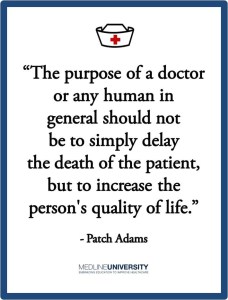
As healers, we need to remember that it’s not only providing treatment to patients that are important. I tell my residents:

1. The patients expenses should always be taken into consideration. After all, it is not your money. And you have no right to spend it any way you want. Make sure that you approach the work-up based on the working diagnosis. Do a good history taking. Be sensitive to the needs of the patient and their family.

2. As medical students or those in training, don’t treat patients as training materials. Empathy, sympathy and genuine concern are the cornerstones of the good doctor. Remember: we are not god. Learn to touch their hearts more than their hands.

3. Sit down with them and discuss their illness. Everyone – whether they pay or are charity patients – deserve equal care and attention. Before prescribing, make sure that the patients need the medicine. If natural treatment is available (bed rest, water, fresh air, change in lifestyle), don’t prescribe medicines that are not superior to these.

4. Break it to them gently. Especially for those where the bad news will need comprehension and a bit more time to process, make sure you use terms that are understandable. Pause in between explanations and ask them if they understood and if they have additional questions.

5. Reassure them that you are with them in their road to recovery. Constantly update them on day-to-day changes. If you need to add tests, tell them why. Don’t be trigger happy requesting for unnecessary tests. Think before requesting. It’s not your money to spend. Imagine yourself as the patient. Always. How would you want your doctor to approach your illness?

6. During end of life issues, gather the family and explain in a language and words that they will understand. Provide them with clear options on both BENEFITS and RISKS on outcome. Place yourselves in their shoes and ask yourself, how will I want to hear the bad news?

7. And in our daily prayers, don’t forget the people we care for. Pray with them and for them. Adding a layer of faith by asking for spiritual guidance and enlightenment during these difficult times lighten the burden, and buys a cup of hope.

I get the point when patients or their relatives are taken aback when an unlikely diagnosis is heard. After all, no one is ready to look at death straight in the eyes.

Medicine after all provides every day with the possibility of a miracle.

Hippocrates said that

Wherever the art of medicine is loved, there is also a love of humanity.

Incidentally, the patient from the vehicular accident passed away. The family who was poor from the get go now has a mounting debt to settle. The party responsible for the “reckless imprudence” stopped providing funds to the victim.

We need to learn to let go…

because even at the throngs of death, there is dignity…

Love songs always make me cry

They say that music is a piece of art that goes in the ears and straight to the heart.

Music is poetic justice at its finest. It’s a beautiful expression of sadness, loss, beauty, courage, anger, frustration, patriotism, happiness, fear. In all these situations, there is one message it brings – it talks about love.

Of all the ways love is shared music serves as the universal language of understanding the virtue of love.

Music calms my soul and takes me to a place away from my problems and anxieties. It’s therapeutic to the weary heart and soul. It is where we sometimes find an escape from all the worries and cares of the world.

A lullaby. A ballad. Rock. Sonata. Opera. Pop. Soul. Whichever genre we choose, there will always be a song that will be your story.

Music no matter how sad or happy will always bring us home to the miracle and magic of our life journeys.

Sometimes it feels like the lyrics to a song you’re listening to were written just for you.

The song. The lyrics. The melody. The mood. Love songs will always make me cry.

Because in my life, I have lived kindly and loved without regrets.

Changing diapers

As one gets older, one starts to do things in reverse.

When I see babies, I explain to parents that part of the neurodevelopmental assessment is their cephalocaudal growth. Which means that control of motor skills begin from the head first.  Then they turn from side to side, are able to sit with support, sit alone, stand with support, stand alone, walk with support, walk alone, climb and run effortlessly.  Even their brain development is too rapid that you’d miss these milestones at the blink of an eye.

It’s the opposite as one gets older.

Things happen in reverse.  You have difficulty ambulating, standing, and later prefer to lie down. Even the synaptic discharges are far and few.

As one gets older, one starts cutting out people from their lives.  Either because you’ve seen your friends (and relatives) get buried ahead of you, they’ve moved away, or you’ve simply drifted apart.  It becomes painful to attend homecomings because lately, you’re but a handful.

The Christmas season causes anxiety because for many, that Christmas list becomes practically nonexistent.

You take less pictures because those selfies aren’t great shots anymore.  Or that some memories are best kept in your heart and not the iCloud or a photos app.  And instead of looking for love, you dig for it from within your heart.  There are no tears left to shed, because there is nothing to cry over anymore.  The feeling of waking up each day becomes tedious, taxing, and routinary.

Changing diapers from childhood to our senior years and moments is the irony of ageing.

This is the mirror image called LIFE.

Selective mutism

I learned two new words today.

Selective mutism. The American Speech-Language-Hearing Association (ASHA) puts this into perspective:

Some children are shy and do not like to talk to people that they don’t know. They usually start talking when they feel more comfortable.  However, some children will not talk at certain times, no matter what.  This is selective mutism.  It is often frustrating for the child and others.

The DSM V (Diagnostic and Statistical Manual of Mental Disorders 5th Edition) classify and diagnose social and mental disorder for selective mutism when you notice the following:

  • have an anxiety disorder
  • be very shy
  • be afraid to embarrass themselves in public
  • want to be alone and not talk with friends or others

I am seeing this more frequently in children who are bullied. But bullying into being cowered to the point of being silenced out of fear is not privy to kids alone.

Adults are not included in the DSM V classification for this as a social and mental problem.  And while its disorder is primarily for pediatric patients, hypothetically, the two words encompass what is seen in every walk of society and social class today.  When people refuse to voice out their opinion because are afraid of being bashed or sounded off when they provide personal thoughts on various social issues, “selective mutism” are two words that find relevance during these times.

It’s really difficult when you have to deal with intellectually disabled people who have a lack of GABA (gamma amino butyric acid) in their brains because they think they wear a crown.

We need to speak out, when we should. After all, that quiet voice is still a voice that needs to be heard. When all that silence is broken, it will be louder than you think.