Shopping!

Retail therapy is therapeutic.

As long as you have the cash, of course.

Sale

Unlike Manila, where a sale is sale of junk goods, sales in most countries is dependent on the season.  The best time therefore, to travel is when it’s near a great sale.  In Singapore, the great sale runs for almost two months (this year being June 08 – August 12, 2018). These sales make shopping a huge bargain, particularly for designer goods.

The HongKong shopping festival runs from June 1 to August 31, 2018 this year.  Retailers offer great big discounts on fashion labels (slashed to as low as 70% off on one season late designs).

As a general rule, it is best to travel when the season is about to end.  Unlike the Philippines (where there are just two seasons – the wet and the dry), most Asian countries celebrate the four seasons of the year – Spring, Summer, Fall and Winter.  And for all countries where there are actually four seasons in the year, there are multiple sales before each season ends. When the season is about over, the sale begins.

Buying locally or international?

Let’s face it.  Most of the designer items are found in the Philippines as well.  But they are far more expensive than buying in another country (unless you’re buying Filipino items).   For example, a LouisVuitton wallet will cost you almost P35,000 at an LV store in Makati. The same wallet will cost me 3200 Kr (around P26,310.54 inclusive of 25% VAT).  Because I’m a tourist, I can avail of 25% VAT refund (about P6577.63), which means that same LV wallet I wanted in Manila will just cost me P19,732.90 in Copenhagen! It’s even cheaper if you buy it in Paris or Madrid. The P16,000 less is a steal in itself.

If you plan to travel within the year, you may want to consider buying your designer goods when you’re out of the Philippines.  (I understand that there is the factor of having to pay for plane fare and hotel accommodations, but seriously, if I can afford a real LV bag and matching wallet, I can afford to fly out of the country, go on vacation in Europe, and go on a shopping spree.)

Remember, retail designer therapy is not a necessity.  It is an extravagance rather than an importance.

Souvenirs

There are people that collect just anything.  From magnets from every country traveled to coffee mugs from every Starbucks  each country where a Starbucks is found.

An important rule of thumb is bringing home souvenirs.  As I mentioned in past blogs, you’re not obligated to bring home a little memento for everyone that knows you left. Your family tree is also not part of the gift giving spree.  It’s your vacation.  Not theirs.  Enjoy it.  Spend for yourself.  If you want to get them something, choose something that’s both inexpensive and representative of the country you came from.

And NO! It should never be a t-shirt that screams the country (like “Someone went to Taipei and all he got me was this t-shirt” kind of gift), or a box of chocolate coated macadamias  that scream “Hawaiian Host”.  While they are standard souvenirs, they are actually not well thought of but rushed gifts from the Duty Free shop.

Gadgets and electronics

I have friends that buy their laptops and other gadgets in another country (like the US or Europe or Japan).

Here’s the rub.

While purchasing them in these countries may save you a little more money (perhaps 10-15% less than buying in Manila), the warranty of these gadgets and other electronic items are not valid in the Philippines.  For example, your laptop freezes over hell when you’re back in Manila, a week after buying a MacBook Pro in San Francisco, you decide to bring it to one of the resellers in the Philippines like PowerMac.  Unfortunately, the validity of your warranty is not worldwide.  Too bad.  You can’t exchange it for a new laptop because (1) they are RESELLERS and not THE Apple store and (2) the resellers will need to send the gadget to another country like Singapore or HongKong or wherever in order to get this fixed.  Even if they can fix it locally, they will charge you.  Resellers are not obligated to swap what is not bought from their stocks and are accountable only for the merchandise in their stocks.

Think twice before spending for gadgets whose warranty is out of coverage when it leaves the country where you purchase it.

Food (fresh or packed)

If the food is packed and sealed tightly, you shouldn’t have any worries about it getting spoiled or unmasked when you go through customs.  Of course, there is the kind of food that “smells” badly or isn’t packed properly.  I recall a few years back on a trip to San Diego, two Filipinos traveling were asked to step aside for inspection at Customs.  The woman hid dried fish inside a whole large can of Nido milk.  The man in front of me hid fermented duck eggs inside his dirty underwear inside his luggage.  I should know, I was behind them.  Although I did not bring any processed or fresh food (I was traveling to San Diego for a poster presentation in a Pharmacology meeting), I am a Filipino.  It was shameful to be segregated this way at customs just because fellow Filipinos smuggle in food that’s not packed appropriately and may be danger to the health of the overall American community.

It is important to remember that bringing in fresh produce is NOT allowed for health reasons.  Of course, we take the risk.  And while we do take that chance, hopefully we don’t endanger other people because of irresponsible risk taking.

Everyone loves to shop.  Whether it is designer clothes, gadgets, make-up and perfumery, food, shoes, goods and candies…let’s all remember that we need to follow rules on what we can or cannot bring home.

The tourist

Decisions.  Decisions.  Decisions.

For tourists traveling  for the first time to a new vacation spot, excitement fills the air.  An excitement  either from  the freedom of getting away from it all and/or getting to fulfil a dream come true.

The ordinary tourist has a few days traveling on a budget and hoping to see all the places they need to visit in that particular trip.

Every traveler, thus, makes an itinerary.

Arrival. How to transfer to hotel. Drop bags.  Go out and start Day 1.  What to see. Where to eat. What to do. What to eat.  Where to go. What to eat. When to get back. Get some rest.

Repeat.

The Itinerary

In a nutshell, it is mandatory that a city tour is part of one’s itinerary (or if you have a friend living in the country of destination, ask for the city tour). The local tour affords us  a brief overview of what the city or country is like – with a guide (cum interpreter or story teller) who provides an overview of what the city is like. They take us to major “tourist” spots, and if you’re lucky, point out en route the places where the locals congregate to shop and grab bargains.

The most common form of city tour (that I’d even take or recommend because I am an ordinary tourist) is the Hop on Hop Off Bus Tour.  It will serve as your transportation for the day as you can get on any of these buses, get off at the places you want to stop over and just grab any of its buses that hover the same route the whole day long.  Don’t forget to make sure that you budget for this. This should be the FIRST on any itinerary.  Get to know the city before exploring on your own.

As you begin your tour, remember, each destination will offer a city pass for tourists (well, except for the Philippines because our public transportation system is crummy). There are day passes, but I suggest that you buy one for a specific duration. For example, if you plan to stay there for say 7 days, then get a commuter pass for 5 days so that you do either the first and last day around your hotel area (make sure you read my blog on The Lodging for choosing a great location for your hotel), and use that commuter pass in between.  Passes that include entrances to various tourist sites will save you money if you wish to explore the city more.

Transportation

Most of the cities have subways, trains and buses for various routes. Get a map of the routes for reference.  Unless the city is walkable, you will not want to be scrimping on a commuter pass, only to end up with having to take a cab later on because one of your destinations was far from your lodging.  These incidentals will set off your budget and you may just miss the bag or shoe you wanted to buy.

As in my blog on Roaming, it’s a good idea to have a pocket Wifi because Google maps will help you with the various modes of transportation including walking distance and time.

Remember, getting a commuter pass saves more money especially if you want to go around the city.  Isn’t it envious how thoroughly efficient most of the countries are when it comes to public transportation?  And how well disciplined their drivers, pedestrians and commuters are!

Don’t be lazy.  Take the opportunity to walk when you can.  It’s not only healthy but makes you appreciate the city you’re in.

Water

Water is the real elixir of life.  On the plane.  In a ship.  At your travels.  Rehydration keeps you going.  One of the MUST HAVES on any trip is water.  Make sure that you drop by a 7/11 or supermarket in your area of destination and stock up on large volume of water.  That’s the first order of the day (and not on the junk food).  It is essential for your medicines, your in-room coffee (or three in one which you may have brought with you), your instant noodle soups, and your overall rehydration source.  You can bring empty small water bottles with you to your trip and refill in aliquots these water bottles as you travel the city.  DO NOT BUY THE SMALL BOTTLES OF WATER.  It is wasteful and heavy and not environmental friendly.  Get the big gallons and drain in aliquots as needed.  Remember, some hotels MAY provide free bottled drinking water (usually a maximum of 1 per person or 2 per room).  That’s about it.  You need more, you pay more.

Hong Kong for example is one of the worst countries to be sourcing water.  Tap water isn’t potable there and you need to buy your water even at the restaurants.  In some dining areas, tea is free.  In Europe, wine is cheaper than water.  So let’s drink to that!

Remember the cardinal rule: the hotel industry is a business.  A business needs to profit. Nothing is free.  Even if they say it is “free”, you’ve paid for that. It’s already in the finer details.

Car Rental

If you know how to drive then considering a car rental may be a great alternative to going around the city and the countryside.

The average car rental rate depends on many factors: size of the car, number of days of rental, among a few.

In certain cities, moving from one place to another is impossible by public transportation alone.  For example, when traveling to Orlando, Florida, or San Diego, California I always rent a car for the duration of my trip.  Pick it up at the airport and return it at the airport. Make sure that you get ALL the insurances paid for, just in case.

Again, in most countries, all you will need is a local driver’s license and a credit card.  You’re good to go! Take into consideration parking fees where you’re going.  If you’re driving in New York, the parking will end up more expensive than the car rental per day.  Other cities offer cheaper parking. Most hotels offer reasonable parking fee per night of stay.

The upside of having a car at your disposal is that you get to go where you want, when you want. The freedom of not being a prisoner of public transportation has its perks, especially if money isn’t a problem!

The Embassy

It’s important that you know where the embassy of your country is in your place of destination.  You can never tell when you will need it most.  In some countries, your country may not have an embassy, but rather a consulate. If your country has an embassy in your destination, then there is a permanent diplomatic mission and is headed by an ambassador. A consulate is led by a consul and is otherwise known as a junior embassy.  The main task of embassies is to represent their government in another country. Embassies deal with political and diplomatic relations between nations.

The major role of consulates is to promote trade (i.e., helping companies in the host nation invest in its country and vice versa).

Embassies and consulates are important particularly when you’re traveling.  It will be your source of help from your government when you’re far from home.

Churches

Catholic is as catholics get.  Don’t forget to Google the nearby church in your area especially is you’re traveling over the weekend where you’re most likely want to have Sunday service no matter what language is used during the mass.  Not all catholic churches have anticipated masses.  Most of the masses are Sunday mass and usually filled with Filipinos (including OFWs).  The midmorning masses are usually in English.

If you’re not sure with the church that’s nearest your hotel, you can always ask the concierge or front desk for the nearest Catholic Church and the schedule for mass.  Then again, a clue that the church you’ve gone into isn’t Catholic is when the church is devoid of the Blessed Virgin Mary.

When in Rome, do as the Romans do. Which means, enjoy the city the way the locals would spend their daily routine. The food.  The shopping.  The entertainment.  Keep in mind that exploring on your own by doing thorough research before going to your destination is the key to enjoying the life of the wandering tourist.

And yes, it’s alright to get lost in translation.  Half the fun is exploring yourself and the city.

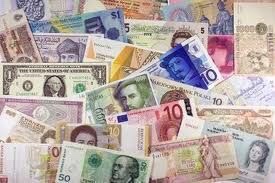
Currency exchange

Let’s face it.  The Philippine Piso is not one of the most popular currencies globally.  It’s worth among other Asian currencies is so volatile that money changers put little value in the Philippine Piso.

For the record, this is true even from the time of Cory Aquino to Gloria Macapagal-Arroyo and Noynoy Aquino being president.  This is not simply about the president of the Philippines. It’s about our economic worth.  And believe me when I say, that as a frequent traveler, the Piso is really not worth much.

Even among credit card providers, the exchange rate of the piso to foreign currency ranges from an average 0.50 centavo on top of the selling rate of the Bangko Central ng Pilipinas (BSP) to as sordid as plunging the piso into oblivion.

These are my tips for the weary traveler on currency exchange.

Cardinal Rules

As a general rule, have a budget on your estimated expenditure in your next trip.  That way, not only will you save on useless expenses on your vacation, but get to buy only what is essential.  So how do you compute your estimated expenses? The first query is: are you going for business or pleasure?

It is rare that your boss will give you pocket money for a vacation.  If yours does, you should work for him/her the rest of your life.

Most, however, travel for business.  There is a fixed per diem depending on the country of destination.  However, some companies are stingy and will provide a fixed per diem, regardless of destination for the business trip.

There are two distinguishing factors that change the rule of the game with respect to business trips.  If it is a legitimate trip or a junket? Junkets have deep pockets.  They’re the kind of bribery that are disguised as business ventures. Wine. Dine. Dance. And tour the clients.

The second rule of thumb is asking Google the question – what is the VAT of my country of destination? If you’re too lazy to ask Google, Siri may know the answer.

You know your destination.  Google the taxes where you’re going to and use that as a factor on your daily expenses.  For example, if you’re going to Thailand for vacation, $10 on breakfast will take you a long way.  Lunch will cost around $15-20 and Dinner around $25.  This is considering that you’re eating in a least 3-4 star restaurants. The current rate of VAT (Value Added Tax) in Thailand is 7%.  While they have been meaning to increase it to 10%, it has been put on hold several times.  The wonderful thing with Thailand is the incentive for tourists to get a refund when you see the sign “VAT refund for tourists” provided that the value of goods is 5000Baht and single purchases must have a value of at least 2000B. There are other countries that also have VAT refund for customers.  Japan and Singapore offer VAT refunds for tourists. HongKong and Dubai are tax free destinations, so no tax refund is necessary or applicable.  In short, if you plan to spend 5 days in Thailand for a personal vacation, USD$50 would be sufficient for you to live on a good meal three times a day. X 5 days = $250.  You can throw in $50 for transportation to and from the airport, and daily transportation to and from the hotel you’re staying.

That would mean a total of $50 a day x 5 = $250 for the 5 days vacation is more than enough for food (add $50 more or less for public transportation and that makes $300 and you’re all set).

Then peg your shopping expenditure.  Are you doing retail therapy? Or are you packing for friends?  Knowing the VAT for goods and services is helpful for your budget.  You will know what to buy, when to buy, and how to buy.  More importantly, it will help you figure out if you should carry that item all the way back to Manila, when the cost in Manila is just a measly P100 ($1.75) difference!

A gentle reminder – WHEN YOU’RE TRAVELING, YOU’RE NOT OBLIGATED TO BRING EACH AND EVERY MEMBER OF YOUR STAFF OR CIRCLE OF FRIENDS A MEMORABILIA FROM TIMBUKTU.  FIRST OF ALL, THEY DID NOT CONTRIBUTE TO YOUR TRIP.  THIS IS YOUR VACATION, NOT THEIRS. FINALLY, IF THEY ASK YOU TO BUY THEM SOMETHING AND THEY SAY, “I’LL PAY FOR IT WHEN YOU GET BACK”, DON’T FORGET TO COLLECT THE PAYMENT (OTHERWISE, THEY’LL GET USED TO MAKING YOU A MULE.)

The third rule is to change your hard earned piso to the foreign currency of your destination.

Remember, money changers make a killing at changing currencies.  That means that by changing to a different currency, you will need to pass through third party providers that are willing to change your currency to another (and risk the piso plunging or appreciating).

Don’t change a day or two before you leave.  You may not be getting a good rate.  Constantly follow the exchange rate at least for a month before traveling.  That way, you know the average exchange rate.  If the rates are volatile, the best thing to do is to change only enough for your daily needs (see computation above).  If you have a credit card in good standing, use that for purchasing the extras when you get to your destination.  Exchanging too much may end up with you having with too much foreign currency only to find out that on the day you leave, the piso has appreciated considerably.  And you losing from this.

Don’t attempt to change into DOLLARS only.  Remember, the DOLLAR is an acceptable currency globally.  BUT IT IS NOT THE ONLY CURRENCY UNIVERSALLY.  Exchanging into USD for travel to a country whose currency is Euros ends with you having to lose twice! That means that you bought dollars with your pisos (losing anywhere from 50 centavos to 1.50 for every dollar) then your dollar losing again to the Euro when you exchange your dollar to the Euro, say in Rome.

For example you bought $5000 at P53.00 (exchange rate is P52.50), then you lost 2,500 pisos.  When you get to Rome you need Euros.  Current exchange is $1 = 0.86 Euros.  Your $5000 is worth approximate 4318.92 Euros.  But that’s the exchange rate.  With the money changers, the exchange at the airport may be much less making the $5000 worth only $4200 Euros at best.  Not including the service fees of which they take 5% making the dollar lose more.  So you may lose an additional $250 in the next change, making you lose a total of P13,250 from dollar to Euro and 2,500 from piso to dollar or a grand total of P15, 750!

Double jeopardy always hurts.

There are countries that don’t have currencies available locally. Whether we like it or not, double jeopardy hits home.

Or not.

Credit Cards

The wonderful thing about that little plastic card that allows you to “borrow” money from a lender institution.

There are a few things you need to remember before flashing that card and swiping it.

1. Remember your credit limit. We all have one. Even the Queen of England or Mark Zuckerberg. The limit is in the local currency of issuance of the card.

2. If you have multiple credit cards then that may work in your favor. Foreign banks usually charge more when conversion compared to local banks.

I stopped using Citibank when in another country because their exchange rate is horrendous. If the current exchange rate is $1=P53, using your Citibank card would most probably put the exchange rate to P54.50 to the dollar. (The acceptable rate should be at least 50 centavos).

The credit cards that give the best exchange rates are: BDO, BPI and HSBC.

For all the cards, you get to earn points as you spend along. Sometimes, enough to get something of value in exchange on a later date.

Flexible payment options are also provided with credit cards. However, there’s an interest pegged at the amount you borrow. After all, a bank is a business. And a business needs to earn. Like all usurers, the cardinal rule here is – payback is a Bitch!

Mix and Match

It’s always a wise idea to bring a bit of cash and some credit cards. You’ll never know when you’ll need it.

As for me, I always check the exchange rates daily. When I see that the piso has appreciated (compared to the time I bought my currency), I use my credit card. When the piso loses while I’m on a trip, I use my cash.

Take my advice. Never. Ever. Bring. Philippine piso with you to exchange currency in a foreign country. At best, you’ll get a very lousy exchange value (except in countries where we have gazillion OFWs). At worst, no one will want to change your Piso.

(They don’t change Danish and Swedish Kronos in Manila. I will have to live with double jeopardy for this trip.)

p.s. Piso is the correct global philippine currency. Peso is the currency for the money of Mexico and other South American countries.

Roaming

Technology has truly changed the landscape of everything. Travel included.

There are many who still scrimp on data roaming and strangely stand next to a free WiFi connection when they’re abroad. If you like taking your audience with you on your next vacation, make sure the followers are with you on real time. Data roaming has never been cheaper and easier than today.

Flytrack

When we would travel, we’d go online and try to rent a WiFi device at the country of destination. Having a WiFi device allows more flexibility on the number of users for the gadget (usually up to 5-6 people). When you break the total cost down to the number of users per device, renting a portable WiFi is most cost efficient.

Until my partner introduced me to a local vendor called Flytrack.

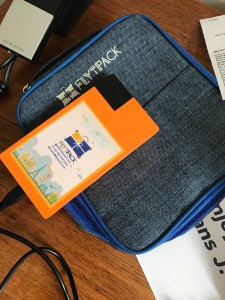
For our trip to the Scandinavian countries, we rented our pocket WiFi from the Philippines. You can go to http://www.flytrack.com online and order your pocket WiFi. The total cost of P8150 includes 10 days of WiFi shared between my partner and I. Also included is an insurance fee (in case I lose the device). This is non refundable but is a small price to pay just in case I fuck up. It also includes delivery cost (courier to your address and return by courier as well). If you want to scrimp on this, you can pick up (and return) the unit in designated areas. Finally, when the unit is returned in good condition, there is a refund of P1800 to your nominated bank account.

With two people using, this amount to around P270 per person per day. Not bad!

The major advantage of having a pocket roaming WiFi is that you not only stay in touch with social media (or being socially relevant) but most importantly, staying connected with family, friends, and yes, work (even if you shouldn’t).

Carrier Data

Until lately, I’ve always attempted to use my carrier’s data plan. That means, P599.00 per 24 hours.

What they don’t tell you is that if you turn it on at say, 9PM when you get to your destination, they automatically charge you the P599 up to 6AM the following day. Their excuse? It’s the way it is.

What they DO tell you is that you need to stick with their carrier partners in the country where you’re roaming. And because the automatic carrier ability of our phone, you may not be aware that you’re “connected” with a carrier your carrier isn’t affiliated with. And that P599 a day may just end up P5999 a day!

Smart Roaming

You don’t want to receive jaw dropping charges. Remember, they wrote that in the fine lines when you signed the contract. It’s not their fault that you either didn’t read it or are plain stupid. On occasions though, some of these companies are a real ass. But it’s usually our fault.

1. Turn off your cellular data

2. Before you leave, at the airport, don’t forget to Settings > Phone > Call Forwarding (under calls) > turn on and have your calls diverted to a local phone. You won’t receive any call. They can’t charge you for calls you don’t receive.

Remember, you cannot turn on this setting when you’re already in another country. When it’s too late, just make sure you turn your phone off and turn it on when you need to use it.

3. If you want to receive calls, be prepared to pay for the call you receive. Yes my dear. When the other party in the Philippines is trying to reach you, you will need to answer the phone! It’s cheaper than not minding the ring.

What most people don’t know is that once the call has been made, and is routed to an international roaming partner, and the recipient (that means you) has been reached (your phone has rung) via that route, you’re dead meat if you just let the phone ring forever. You’re paying for that call, even if you didn’t answer it. That’s because it’s not the fault of the caller who didn’t know you’re gallivanting somewhere in the world.

Social media has changed the landscape of travel.  I’d like to believe that we post our travels because we share to the community our celebrations of life.  Our experiences and opinions have not mattered as much today than the pre-technology era.

And here’s to sharing, commenting, liking, laughing, crying, hating and celebrating the joy of travel!

The lodging

Traveling to another place will always require accommodation.

And just like flying, the choices have now diversified into so many options.

Staying Smart

Location. Location. Location.

The best place will always be at the heart of where the action is.  And where public transportation is most accessible.

For example, if your 5 days trip will require you and your family to spend 3 days at a theme park, then book your stay at a hotel near the theme park! You can go to other places for shopping, dining and entertainment FROM the hotel near the theme park on the remaining days.  Hotels near the theme or amusement parks are usually far cheaper than those centrally located in the business and shopping district.

In short, your choice of lodging will depend on your itinerary.

Boutique or Standard?

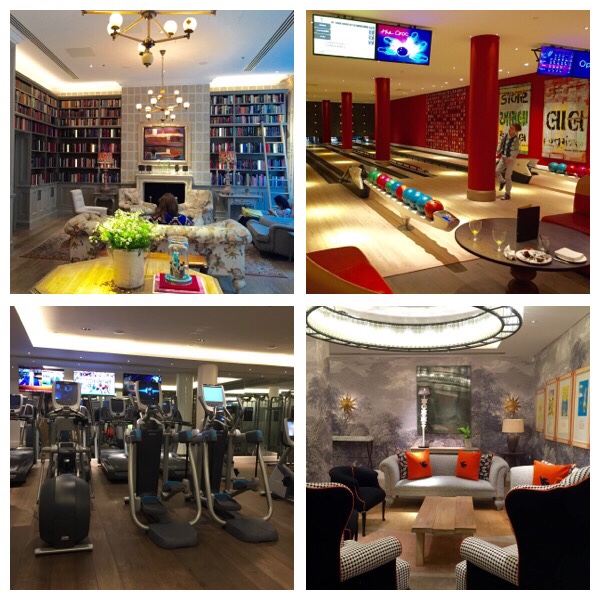
I have always had preference for Boutique Hotels. They are quaint. Have more personal service.  Usually have larger rooms compared to commercial standard hotels.  Not too noisy. And smell better!

The downside with many Boutique Hotels is that most of them are located a bit further down the road.  And there are few Boutique Hotels that are chain hotels with reward benefits.

(These are The Haymarket and The Ham Yard Hotel during our travel to London).

With so much information at our fingertips, searching for hotels together with airline deals are available from http://www.expedia.com or other websites that offer hotel deals like trivago.com or agoda.com.  These third party sites actually employ people to stalk the various promotions of airlines and hotels (and other events). They also cater mostly to standard business hotels (very rarely do I see a Boutique Hotel on their sites). Personally, I have tried some of these sites and you do get better deals for hotel cost (compared to booking directly at the hotel site) more often than not. However (and this is the however part), if you’re a member of the chain of hotel and made a booking through Agoda or Trivago or some other third party site, your stay in the hotel cannot be credited to earning points for upgrades or future redemption for free hotel stays. YOU HAVE BEEN WARNED.  Please do not fight with the front desk by brandishing your Hotel Stay Rewards card without checking the finer details.  Pay less but don’t expect to get rewarded with the discount afforded.

You cannot have your cake and eat it too!

The upside of a busy business hotel chain is the smorgasbord treat to a heavy breakfast spread.  Or the unlimited wine and cocktails if you’re booked on their executive floors.

If you’re still interested in a Boutique Hotel, then I suggest http://www.tablethotels.com or www.mr&mrssmith.com for your luxury escape.  These sites are uber luxurious and provide membership benefits.  Room upgrades (based on availability. Who doesn’t want to stay in a suite?!?!), late check-outs, free wifi (especially for hotels that make you pay extra for wifi use), free gifts and breakfast, travel and food vouchers, or simply escape to the world of being pampered?

(Photos of the Tokyo Station Hotel.  My favourite hotel in Tokyo, Japan)

Airbnb

Stands for Air-Bed and Breakfast. And it is a company.

Formed in 2007, it started as Airbedandbreakfast.com from a serendipitous alliance between friends.

Brian Chesky and Joe Gebbia had just moved to San Francisco and became roommates.  Both didn’t have a job and needed money to pay rent. Both were designers and because the International Design Conference was coming to San Francisco in October and all the hotels were fully booked, the two thought that they could make some money by renting out their place and turning it into a bed and breakfast.

They got 3 airbeds and created a website called “Air Bed and Breakfast”.

People signed up to rent the airbeds and they cooked them breakfast every morning and acted like tour guides. Both Brian and Joe did not mean to start a business. It wasn’t a stroke of genius.  It was from a need – to pay the rent. It gradually became a big idea. They eventually expanded beyond their apartment and their three airbeds and shortened the company name to Airbnb.

The rest is history.

It’s an online marketplace that allows people to share their accommodations for a fee. Launched officially in 2009, it’s an online marketplace that allows people to rent out their properties or spare rooms to guests (“strangers if you asked me”).  Airbnb takes 3% commission of every booking from hosts, and between 6-12% from guests.  Not bad for just a website born from needing to pay rent.

The upside and why people are into Airbnb is, you can rent prime property at half the cost of having to stay in a 15 sqm hotel room. Easy to book. Personal communication with the host. Well maintained and up-to-date. And safe.  It’s like an Uber for lodging – anywhere from a room to a whole villa!

Relatives and Friends

Now this has never been a good idea to me.

They say that’s “what friends are for”.

So you decide to go on a trip and announce to the world that you’re traveling to some part of the world. And expect friends to host.

In all honesty, it’s always difficult to have guests over at your place.  Expecting them to put up with you, AND your family may be difficult for some. Place yourself in the position of the guest before considering staying with them.

Wherever you stay, remember that there are rules to be followed.  It is not your home.  There are others that are occupants in the place.  Being considerate is vital to co-existence.

The best way to fly

I am not Skytrax and this is not a review of all the airlines.

So here’s my take on flying.

Flying Smart

The most important factor in choosing an airline is the flight record.  After all, we need to get from Point A to Point B. The basis for bestowing an airline as being safe include: previous incidents, average age of their fleets, and audits from governments and aviation industry’s regulatory bodies.

With that said, the world’s safest airlines for 2018 are (in alphabetical order):

  1. Air New Zealand
  2. Alaska Airlines
  3. All Nippon Airways
  4. British Airways
  5. Cathay Pacific Airways
  6. Emirates
  7. Etihad Airways
  8. EVA Air
  9. Finnair
  10. Hawaiian Airlines
  11. Japan Airlines
  12. KLM
  13. Lufthansa
  14. Qantas
  15. Royal Jordanian Airlines
  16. Scandinavian Airline System
  17. Singapore Airlines
  18. Swiss
  19. Virgin Atlantic
  20. Virgin Australia

Of course, just because they’re not up there in the list does not mean that the airline isn’t worth the trip.  Just make sure they’re not in the bottom of the pack. For those who fear flying, traveling by air is one of the safest way to get to your destination of choice. While there are reports on tragic accidents, it is impressive to note that the airline industry has placed safety as its priority.  Data from year 2000-2017, showed that the range of fatal accidents was between 10-37 and the number of deaths between 256-1139 for the years 2000-2016.  In 2017, there were 10 fatal accidents for commercial flights, resulting in 44 deaths. None of the fatalities involved passenger jets.

Options Options

Choosing a destination to travel should take into consideration the shortest route with the least possible jet lag, and the best available time without having to perturb your body clock.

That, to me, is a no brainer.  Obviously, the cheapest fares will always be the least traveled routes.  While it looks economically appealing to just book the cheapest, sometimes it ends up as being more expensive because you arrive either in the wee hours of the morning (where you’ll need to drop your things and stroll around town because your room isn’t available yet) or super late in the evening (because that’s the time you arrive).

The worst kind of flight is the long haul with (1) a very long (> 3 1/2 hrs) layover, or (2) multiple pit stops (> 1).  Even when you’re traveling on first or business class, try to factor in the long layovers and try to see if it’s really worth the long wait. I mean, yes, you want to arrive at your destination but if you’re arriving like part of the luggage (that’s been tossed and thrown around), you might as well save enough to afford a trip that will make you arrive like a human being!

The Upgrade

We all love free tickets.  Or an upgrade! Believe me when I say, when you’ve flown in business class (especially for the long hauls), flying on economy class is a blah! With various airlines competing with each other for more customers nowadays, this is the best time to strike a deal by traveling in comfort. And getting away from it all.  After all, your vacation can begin from the time you step into the airport, without having to wait till you get to your destination.  From the personal lounges, you can sit and sip your margarita while watching CNN or the planes arriving and departing on the oversized windows facing the tarmac.

It’s not just about the better service or the personal space or the unlimited food and drinks, the extra amenities, the turn down beds, those large comforters and pillows and a 180 degrees lie flat bed or a chair that massages you all throughout your flight.  Or those slippers and night shades or the midnight snacks, or another round of Martini with your tenderloin steak at 35,000 feet.  Of course, there’s the extra space around you and the multiple sockets for your gazillion gadgets. You’ll never need your battery pack on board.

And no queue to the larger lavatories! That alone is worth the price of a business class ticket for long hauls.

And flying business class does not have to be too expensive that you’d break the bank.  Stalk the internet and the various airfare promotions so that you can anticipate these mega sale where some business class fares are given for a song. Compare the various airlines that leave from your destination to the places where you want to go.  And choose an airline that have alliances so that you’re earning miles on whichever alliance (not just the airline) that you’re flying! Pretty soon, you’ll be traveling free or on an upgraded flight!

If your budget won’t fit the business class seats, choose a plane that may offer premium economy seats or pay a little extra from front or choice seats.  This is where your miles will also come in handy because some airlines offer the upgrade to better seats in exchange for miles earned.

Hello World

Preparing for a flight is important.  If you have maintenance medicines which you need to take during the flight, keep them in your carry-on bag.  Don’t pack your house and insist on cramping everything into your carry-on luggage.  You need to be considerate of other passengers who are sharing the same luggage bin as you!

At the airport, be mindful of the departure schedule.  Try to be there 2-3 hours ahead of your flight.  Take note of the announcements on boarding time and gates.  Don’t hold up the plane because you’re still busy shopping at the duty free shop.  Remember: you don’t own the plane! You don’t want people to clap or glare at you when you’re the last to board or that they will have to get rid of the baggages that you checked in because they won’t allow you to board any longer.

There are in flight reminders and instructions.  In case of emergencies you will need to remember them.  Take time to remember these announcements.  They were made for you!

Oh and finally, please make sure that you dress appropriately even if it is a commercial flight.  Other passengers still have their sense of smell intact.  Don’t make it a 13 hours hell ride for the passenger next to you just because you’ve not showered or your clothes have been worn for several days.  It is violative of human rights on an airtight enclosed area.

With these in mind, I hope you have a safe journey and enjoy your flight.

The getaway

To me, this poster is an apt description of why we all need a break.

From the humdrum of life.  From the stress of work or school. We live to seek adventures and to learn what it is like to live.

Sometimes we travel with the people who are most dear to us, like family and friends or your life partner.  Then there is traveling alone, because ONE is a peaceful number.

Others travel in (usually on a budget) in order to write (or blog) about it because it’s their line of work.  The latter isn’t my cup of tea.  I don’t squeeze in traveling at a budget.  While some may dream of seeing the world on a budget, I think of a “getaway” as a form of reward for the hours one toils.  If you will scrimp on yourself, then why even splurge or spend for a vacation? We are not getting younger.  And trying to enjoy a vacation when we will need ambulatory assistance is no fun at all.

Then there are others who take advantage of their work in order to travel.  Nothing wrong with that.  But the idea of a vacation rather than mixing work and pleasure isn’t appealing to me.  If I need to travel for work related matters, then it is for that very purpose alone.  It is tiring, weary and stressful to squeeze in the “fun” in your itinerary when you need to catch a 7AM meeting the next few days. Believe me.  Been there.  Done that.

This month, I will take you to some of my private getaways. To recharge.  To see the world. To appreciate life.  To dream and reflect.  After all, we only live once. To make moments out of our lives, because we have stories to tell when we are old and grey.

Isolophilia

There are days that just weigh you down.

Figuratively and literally.

And we need to take a respite from all the burden of work, home, relationships and life itself.  Someone once said that being alone is a lonely number.  I told them that once in a while, looking out for number one keeps your sanity in check.

One needs to contemplate on solitude as providing respite to the mind, body and spirit.  After all, we all work to enjoy life.  When all that work becomes a necessary ending to simply living without knowing why we work, we miss out on the opportunities to create memories that serve to inspire us to strive harder for some “me time”.

Remember:

Take every chance you get in life…because some things only happen once.

And so I close July with more than 10,000 visitors, with almost 15,000 views on over 200 posts… thank you for following because I’m writing this for you.

I hope you enjoy my August blogs on my Travel Stories, where I find my isophilia moments. It’s time to recharge.

Masturbating before sex

I know you’ll all want to read this with a title like that.

A man went to see a urologist that he had a problem when having sex.  He wanted it to last longer during a sex tryst.  The doctor told the guy that masturbating before sex often helped men last longer during the act.

The man decided, “What the hell, I’ll give it a try.”

He spent the rest of the day thinking about where to masturbate before going home to have sex with his wife!

He couldn’t do it in his office.  He thought about the restroom, but that was too open.  He considered the alley next to his home, but figured it was too risky and unsafe.

Finally, he realised his solution.  On his way home, he pulled his pick up truck over on the side of the highway.  He got out.  Crawled underneath as if he was examining the truck.  Satisfied with he privacy, he pulled his pants down and started masturbating.

He closed his eyes shut and thought of his wife.  As he grew closer to the final explosion, he felt a quick tug at the bottom of his pants.  Not wanting to lose mental fantasy or the organ, he kept his eyes TIGHTLY SHUT and shouted…”WHAT?!!?!?!”

“Sir.  This is the police.  What’s going on down there?”

The man replied, still with his eyes shut, “I’m checking the rear axle of my truck.  It’s busted.”

The cop replied back, “Well, you might as well check your brakes too while you’re down there because your truck rolled down the hill five minutes ago.”

The hen

One night, Tom did what he always did to his wife every Friday night.

He would kiss his wife.  Crawl into bed.  Fall asleep.

Suddenly, he awoke and an elderly man dressed in a white robe stood in front of his bed.

“What the hell are you doing in my bedroom? And who are you?”, he asked.

“This is not your bedroom,” the man replied.  “I am St. Peter, and you my son, are in heaven.”

“WHAT?!?!?!!? Are you saying I am dead? I don’t want to die.  I’m too young,” replied Tom. “I want you to send me back immediately!”

“It’s not that easy”, said St. Peter.  “You can only return as a dog or a hen.  The choice is your own.”

Tom thought about it for awhile.  He figured that being a dog would be too tiring.  But a hen probably has a nice and relaxed life.  Running around with a rooster can’t be that bad.

“I want to return as a hen,” Tom replied.

And in the next second, he found himself in a chicken run, really nicely feathered.  But now he felt like his rear end was going to blow.  Then along came the rooster.

“Hey you must be the new hen St. Peter told me about,” the rooster said. “How do you like being a hen?”

“Well okay I guess, but it feels like my ass is about to explode.”

“Oh that!” said the rooster.  “That’s only the ovulation going on.  You need to lay an egg.”

“How do I do that?” asked Tom.

“Cluck twice, and then you push all you can!”

Tom clucked twin and pushed more than he was good for, and then ‘plop’!! An egg was on the ground.

“Wow!!”, Tom said.  “That felt really good!!” So he clucked again and squeezed.  And you better believe there was yet another egg on the ground.  The third time he clucked, he heard his wife shouting:

“TOM!!! For Christ’s sake!!! Wake up!!! You’re shittin’ all over the bed!”