Background noise

Often times in our lives we’re too busy doing multiple things. Juggling from one chore to another becomes a handful. I guess the words “spread too thin” is an understatement for being too busy to even appreciate life.

The thing with being busy enough is that it makes us forget about depression and anxiety. Being too busy to even mind the daily worries. Oftentimes, we’re envious with people who don’t even care about anxiety.

In reality, all these “busy” events are but what I call background noises. We all understand the vicious cycle of working for the money. The career. The fame. But we all forget that the purpose for all these is to live a fulfilled life.

It’s ironic that there are many that see material things as the measure of success. Or popularity and going albeit, viral, as the measure of success. They’re background noise to true contentment.

Think about it. How much background noise is there in your life?

The Autumns of our life

img_6532

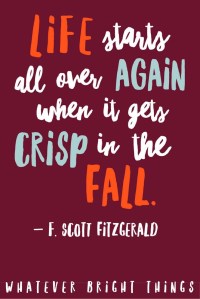
In the Philippines, we only enjoy two seasons – wet and dry. For other countries that enjoy four seasons in a year, October marks the start of Fall. When the hues of the leaves begin to change, revealing true colors as they prepare for their decay in the march to the Winter season.

October is about trees revealing colors they’ve hidden all year.

People have an October as well.

– JM Storm

It has been nine months since I began to write for you. With almost 20,000 views to date, I am humbled with the following.

This month with feature stories on the autumns of our life. A somber take on life and hope.

Autumn is a second spring when every leaf is a flower.

Almost

In the poetry of Nikita Gill, she writes in Tiny Stories part I…

Many things in our lives very nearly happen.  We almost made it in the last licensure exam.  We almost reached a million pesos in sales.  We almost hit the lotto. When we come very close to almost achieving our dream, and don’t make it, we end up being disappointed.

Because what was almost, did not happen.

There was the planning, the audition or preparation, the test, the anxiety and day dreaming, and then when it feels like it is within our grasp…we lose grip. And almost becomes a difficult word to swallow.

It is human to want. And human to feel despair, particularly when what you longed for never happened. Because almost felt palpably close to achievement.

And when everything ends abruptly, almost feels like an empty shell.

‘he sleeps in a storm’

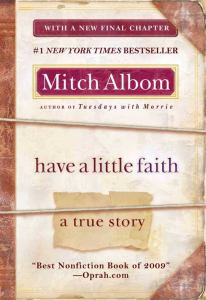
Eight years ago, I wrote a book review for “Have a Little Faith” by Mitch Albom.

Albom is renowned author to “Tuesdays With Morrie”, “Five People You Meet in Heaven”,  “For One More Day”, “The Magic Strings of Frankie Presto”, “The Time Keeper”, “The First Phone Call From Heaven”.  On October 9, his new book entitled “The Next Person You Meet in Heaven” will hit the bookstands.

So far, “Have a Little Faith” was his best.

While the book was published in 2010, its message is as timely as when I wrote it’s review eight years ago.

Perhaps, it has come at no better time when we come to grips with our faith.  The conversation between Albom and the dying rabbi is an awakening  to what inner faith many of us lack or what many of us lost.

Timely and moving are the two words that best describe the 254 pages that drove me to a deeper understanding of my humanity.

The book begins with a task.  The 82 year old rabbi has asked Mitch to deliver an eulogy for him when he passes on. Here, Albom seeks out to find not only the story of the life of the rabbi, but his life and many of those whose lives he crossed path with in his search for the “right words” to say to fittingly describe one of the greatest eulogies.

The story spans eight years between two men – Rabbi Albert Lewis and Pastor Henry Covington. In Alboms’ search for the right words to put together, their stories would cross paths in the search for the meaning to life and happiness.

On page 93 is a short excerpt of how beautifully written the sermon of Rabbi Lewis (Reb) is:

From a sermon by the Reb, 1975:

“A man seeks employment on a farm.  He hands his letter of recommendation to his new employer. It reads simply – ‘he sleeps in a storm’.

The owner is desperate for help, so he hires the man.  

Several weeks pass, and suddenly in the middle of the night, a powerful storm rips through the valley.

Awakened by the swirling rain and howling wind, the owner leaps out of bed. He calls for the new hired hand, but the man is sleeping soundly.

So he dashes off to the barn. He sees to his amazement, that animals are secure with plenty of feed. 

He runs out to the field.  He sees the bales of wheat have been bound and wrapped in tarpaulins.

He races to the silo.  The doors are latched, and the grain is dry.

And then he understands, “HE SLEEPS IN A STORM”.

“My friends, if we tend to the things that are important in our life, if we are right with those we love and behave in line with our faith, our lives will not be cursed with the aching throb of unfulfilled business. Our words will always be sincere, our embraces will be tight.  We will never wallow in the agony of  ‘I could have, I should have’. We can sleep in a storm.”

And when it’s time, our goodbyes will be complete”.

There will always be stories of despair. Or of inspiration. Albom puts reality into perspective by engaging us in a story of finding meaning in our faith.

As the story draws to a close, Album finds that the lives of two men from two different religions profoundly find something bigger than oneself.

images

Have a Little Faith is a book about life’s purpose. About losing belief.  And finding it again. About the divine spark inside each of us.

You will smile.

Shed a tear or cry.

Because this one man’s journey, is everyone’s story.

Like a thief in the night…

The recent deaths of popular personalities – fashion designer Kate Spade and celebrity chef Anthony Bourdain – have triggered a media frenzy on the topic of depression and suicide.

Many of us may not really know what depression is. Take it from me, I’m writing from experience. Let me point out the reality that the consecutive untimely demise of famous personalities should not be the basis for reaching out to people who encounter depression.

Depression is a sensitive topic to discuss. Some people prefer to sweep this under the rug when the issue is raised. Until of course, it hits home.

What does depression feel like?

You don’t want to live but you don’t want to die. You don’t want to talk to anyone but you feel very lonely. You wake up in the morning and simply wait for the night to come.

Everyone comes to a point in their life where depression comes to us like a thief in the night. Whether it is from abuse or loss of a loved one or financial difficulties, drug dependence or at the throngs of death because of a disease impossible to treat, depression is a slow mortifying event of the mind. It robs us of our happiness, sanity, then dignity.

What drives one to depression?

No one exactly knows. But 10-15% of us will be depressed in our lifetime. Several factors lead to depression, namely:

1. Genetic predisposition

2. Brain chemistry (neurotransmitters) imbalance

3. Female sex hormones (probably explaining why more women suffer from depression more than men)

4. Circadian rhythm disturbance (seasonal affective disorder)

5. Poor nutrition

6. Physical health problems

7. Drugs and alcohol

8. Stressful life events

9. Grief and loss

Why certain people are more predisposed than others may be a combination of the above factors. Suffice it to say, those that have multiple factors above are most likely to be depressed than others.

Dealing with depression

Seek help when you need.

It’s usually denial at first signs.

Recognising the little things that distract you or make your daily routine unusually difficult to bear eventually accumulate over time. We wake up one day, not only denying these, only to find out that those physiologic symptoms (heartburn, abdominal pain, headaches, easy fatigability, frequent urination) are not anatomical problems. It’s probably psychosomatic. The mind controls our whole physiologic function.

Changing lifestyle may be a good option.

The best medicine is seeking for help.

Easier said than done

The problem with depression is that it is filled with so much guilt feelings.

You know you’ll be fine but still feel awful.

You know there are people who love and care for you but doesn’t feel like they do.

You know you want to get better, but don’t know how to get there.

Like a thief in the night…

The only way depression ends is to end it all.

And standing in the sidelines when a loved one is battling with depression can be frustrating and a helpless, overwhelming experience.  Depression is an isolating illness.  The major mood is that of a sad, hopeless, discouraged, let down world. Many have persistent anger.  Social withdrawal and lack of interest is common among people with depression.  Joy is not found here anymore.

How can you help? (adapted from Psycom.net)

  1. Learn about depression

People with depression can have very good days, even a few good days in a row, only to experience depressed mood once again.  There is an ebb and flow to depression that always isn’t understood by loved ones. From feelings of sadness and hopelessness to loss of interest or pleasure in normal activities, to anxiety and agitation, to trouble thinking and making decision, or to ending it all.

Because symptoms of depression can vary and change over time, the best way to understand depression in your loved one is to ask open-ended questions and use empathic listening.

2. Be there

Sometimes we feel that putting our loved ones with people who have the same problems or a support group may be the solution to the problem.  More often than not, the solution is just around the corner.  The best thing you can do is to show up when they need you.

You don’t have all the answers.  That’s fine.  Just sit and listen.  Ask the right questions – how can I help? and provide the assurances they expect to hear – I will be here for you and we can get through this together.

3. Encourage treatment

Depression seldom improves without treatment.  Some people may think that it’s just a phase and they can shake themselves free from that state.  Of course, it may be painful to point out what you notice with your loved ones.  But they will want to hear what you have to say.  After all, their symptoms are noticeable to them as well.  And they are subtle signs asking you if you’ve noticed them.  Express your concern.  Your willingness  to help.  What you’ve read about depression.  Treatment options.  And even if you have to accompany them to the doctor so that you get a clearer picture of what is happening.

4. Create a supportive home environment

Why your loved one is depressed is no ones fault. You can’t fix this.  But your just being their for the long haul means a lot through this difficult time. Lifestyle changes can make a big difference during the treatment process.

Healthy eating.  Low stress environment.  Helping with the appointments with the doctor. Making plans together. Positive reinforcement. In short, you may need to change your lifestyle as well in order to adapt to your loved ones. But isn’t that what love is all about?

5. Focus on the small goals

Depression feels overwhelming.  Even the act of getting out of bed can feel like a monumental task. Help your loved one set smaller achievable and realistic goals and tasks.  Patience and understanding when working through a depressive episode is of monumental help.

6. Know the warning signs of suicide

They’ll never let you know that it’s time.

The risk of suicide is highest during the major depressive episode.  There are red flags that we should be aware of: They talk about suicide, dying or death. They find means to attempt at suicide. The extreme mood swings – one day fine, the next day at the lowest ebb. Social withdrawal. Overwhelmed and hopeless. Engaging in risky and destructive behaviour. Saying goodbye.  Giving away belongings. Getting affairs in order. Personality changes.

We may not live in the same mental environment as those that go through depression, but we can help them live better lives.

One day at a time.

The choices

Continuing on the attitude is the choice of what kind of attitude to take?

The word choices rises on the opposite side of environment in the attitude construction issue. Speaking more logically than emotionally, the voice of this word says, “We are free to choose our attitudes”. This logic becomes more convincing with the additional voice of Victor Frankl, survivor of a Nazi concentration camp, who said, “The last of the human freedom is to choose one’s attitude in any given set of circumstances.”

In our early years, our attitudes are determined mainly by our conditions. A baby does not choose her family or her environment, but as her age increases, so do her options.

Hence, our surroundings help construct our attitudes.

The basic principles about attitude formation are:

1. A child’s formative years are the most important for instilling the right attitudes.

2. An attitude’s growth never stops.

3. The more our attitude grows on the same foundation, the more solid it becomes.

4. Many specialists help construct our attitudes at a certain time and place.

5. There is no such thing as a perfect, flawless attitude.

The fifth is my favorite and, in my opinion, stands out as the most important principle (although they are all intertwined).

The air currents of life jolt us out of life and try to keep us from achieving our goals. Unexpected weather can change our direction and strategy. Our attitudes need adjustment with every change that comes into our lives.

Everyone encounters storms in life that threaten to wreck his attitude. The secret to safe arrival is to continually adjust your perspective.

Every day is a new encounter. A new adjustment. A new beginning.

How we take accountability on the choices we make determine the kind of attitude we have chosen to tread the path to. Those nights where we sleep better with the decisions made, that’s what steers our moral compass.

The attitude

Dr Shirard Adiviso and the Development Team of Asian Hospital recently gave me a book entitled “How High Will You Climb?” by John C. Maxwell.

I had a little time to read this 160pp book during my short travel for a speaking engagement. It’s a highly engaging read and one of the highlights of the book is on attitude.

That inward feeling expressed by behavior. It can be seen without even having to utter a word. As Maxwell put it well, “of all the things we wear, our expressions are the most important.”

The next few blogs will center on a few good points about attitude that I’m sharing with you.  One of the important axioms of attitude lies in what Maxwell points out as: Our attitude can turn our problems into blessings.

In Awake, My Heart, my friend J. Sidlow Baxter writes, “What is the difference between an obstacle and an opportunity?  Our attitude toward it.  Every opportunity has a difficulty, and every difficulty has an opportunity.”

When confronted with a difficult situation, a person with an outstanding attitude makes the best of it while he gets the worse of it.  Life can be likened to a grindstone.  Whether it grinds you down or polishes you depends on what you are made of.

Few people knew Abraham Lincoln until the great weight of the Civil War showed his character.  Robinson Crusoe was written in prison.  John Bunyan wrote Pilgrim’s Progress in the Bedford jail.  Sir Walter Raleigh wrote The History of the World during a thirteen-year imprisonment.  Luther translated the Bible while confined in the castle of Wartburg.  Beethoven was almost totally deaf and burdened with sorrow when he produced his greatest works.

When God wants to educate a man, He does not send him to the school of graces but to the school of necessities.  Through the pit and the dungeon, Joseph came to the throne.  Moses tended sheep in the desert before God called him for service.  Peter, humbled and broken by his denial of Christ, heeded the command to “Feed My sheep”.

Great leaders emerge when crises occur.  In the lives of people who achieve, terrible troubles force them to rise above the commonplace.  Not only do they find the answers, but they discover a tremendous power within themselves.  Like a groundswell far out in the ocean, this force within explodes into a mighty wave when circumstances seem to overcome.  Then out steps the athlete, the author, the statesman, the scientist, or the businessman. David Sarnoff said, “There is plenty of security in the cemetery.  I long for opportunity.”

Today, at the crossroads of the economy and politics in the Philippines, we need to make sure that we keep our integrity and principles in serving the people.

The lost. The least. The last.

We need to make sure that our attitude is one where it is not self-serving.  Like the plane that takes off against the wind, where the turbulence is part of the climb, the noise we hear and feel are just part of the political climate.

We cannot (and should not) mix politics with personal gains.  In the end, a nation of hungry people creates masses that are discontented with governance and will pay a price dearly. At what cost is human life worth?

It’s all in the attitude.

I want to live in Sweden

Those were my exact words on my FaceBook page.

First, is that it’s sparsely populated. It has a long coastline, extensive forests and numerous lakes. Because of it’s geographic location, Sweden enjoys a favourable climate.

It’s capital is Stockholm. And the whole of Sweden has a population of 10M people (much less than the total number of people that live in Metro Manila, Philippines alone).

We arrived in Stockholm through a local flight via SAS from Copenhagen.  The short 1 hr flight was on time as we flew on a beautiful day, with such beautiful weather.

Like the Danes, the Swedish people are kind, wonderful and beautiful.

The Arlanda Express from the airport into Stockholm City was a bit steep (280SEK per person per way, but there was a summer promo so we paid 150SEK per person). But the trains had air conditioning and was beautifully furnished and clean. Best of all, it was a short 20 mins ride from Arlanda to the city.

Nobis Hotel was home to us for the next 5 days. Situated right in the middle of the shopping district, it was accessible to public transportation at every corner! Getting a 72 hrs public transportation card for 250SEK was a good price considering that you could you use it for all modes of transportation (including boat and train).

If you’re complaining about paying taxes, the Swedes don’t seem to mind considering that the average income tax is about 44% and can go as high as 60%! Their VAT is similar to Denmark and is pegged at 25%. But like the Danes, the Swedes get a lot of bang for the buck they shell out.

Efficient road and public transport system. Excellent health care. Education.

Stockholm was relatively more compact than Copenhagen. A little more laid back and cleaner, Stockholm was more upbeat, less touristy and more eclectic and vibrant.

It his home to the musicians and the music of ABBA!

Their culture is rich in history and they’re way up there when it comes to design and fashion. Those pencil cut ankle length pants were their designs three years back. When it comes to innovation and design, the Swedes nail it! IKEA and H&M are Swedish companies that have made a global presence for form, functionality, design, practicality, and cost efficiency.

Science is also the cornerstone of discoveries central to the Scandinavian countries. Uppsala is home to one of the world’s best university – Uppsala University and the World Health Organization Monitoring Center (for pharmacovigilance).

Now this is my kind of country. After this trip, I will be back! To explore more of Scandinavia.

To recharge. Rethink. Rewind.

Repeat.

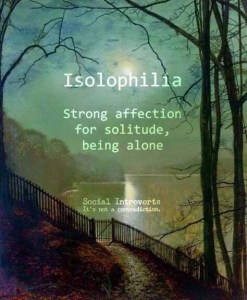
Isolophilia

There are days that just weigh you down.

Figuratively and literally.

And we need to take a respite from all the burden of work, home, relationships and life itself.  Someone once said that being alone is a lonely number.  I told them that once in a while, looking out for number one keeps your sanity in check.

One needs to contemplate on solitude as providing respite to the mind, body and spirit.  After all, we all work to enjoy life.  When all that work becomes a necessary ending to simply living without knowing why we work, we miss out on the opportunities to create memories that serve to inspire us to strive harder for some “me time”.

Remember:

Take every chance you get in life…because some things only happen once.

And so I close July with more than 10,000 visitors, with almost 15,000 views on over 200 posts… thank you for following because I’m writing this for you.

I hope you enjoy my August blogs on my Travel Stories, where I find my isophilia moments. It’s time to recharge.

Positivity

It’s been raining for the last three weeks.  I mean, literally raining.  The city is drenched.  Kids have barely gone to school for the month.  Traffic is at an all time worst.  Gas is literally painful to pay.  Prices of commodities have gone up significantly. The peso has seen a drop in the exchange rate.

There’s really not a lot of positive vibes one can see each week.  Some friends of mine tell me they don’t even listen to the news lately.  During dinner at home, and we’re able to catch the news, my mom looks at the screen and comments “isn’t there any good news anymore?”

And I couldn’t help but agree. The only good news you see are that of the actors and actresses whose lives seem to prosper, in spite of the harder economic situation in the country.

This blog post takes a respite from the negativity and hope that some thoughts here will provide a more positive outlook during desperate times.

On past relationships and the comeback attempts

When the past comes knocking, don’t answer. It has nothing new to tell you.

Remember – been there, done that.  If someone has hurt you enough to let go, then you’re a masochist to want to relive that past.  Moving on means loving yourself first and foremost. Someone once said, “Don’t waste your time looking back, you’re not going that way.”

Actions and reactions

When you can’t control what is happening around you, challenge yourself to control the way in which you respond.

That, is where your true power lies.

I know that it’s difficult to be scrolling down a social media article and find irresponsible, ignominious and incomprehensible comments by either trolls or die hard purveyors of fake news (no political affiliation here).  Sometimes it’s more than frustrating because you know that there’s a jerk lurking out there, who needs to get a life, because he/she is too busy “commenting” on every news article!

But rudeness should not (always) beget rudeness.  I’ve always believed that while it may be difficult to not comment on stupidity, sometimes it’s easier to let go.

Leaving

Respect yourself enough to walk away from anything that no longer serves you, grows you or makes you happy.

Work. Relations. Friendship.  Love.

Respect is the underlying and operative word.  When that’s gone – it’s time to leave.  No one needs to get treated like shit.  Even if there’s shit coming your way.  Every. Fucking. Day.

The good samaritan

Be the reason someone believes in the goodness of people.

If we can only change our paradigm on how to deal with human beings who are the epitome of scum, we probably would live in a better world.  But a utopian world does not exist.  Because we cannot please everyone.  Whatever challenges we face, we need to show respect to people even when they don’t deserve it.  Respect is a reflection of your character, not theirs.