“How Democracies Die” (Part 1)

That’s the title of the book authored by Steven Levitsky and Daniel Ziblatt (copyright 2018, published by Crown Publishing Group, a division of Penguin Random House LLC, New York).  Politics is not my kind of read. When a friend had told me about this book, I was skeptical at first. The long weekend was a perfect time to pour over the 312 pages of discourse on “how democracies die“.

It’s an interesting read, and yes, hard to put down.  The historical data were on point (with appropriate references).  It comes at a time when populism is on the rise, not only in the United States, or the Philippines, but with reference to the world.  How fragile democracy is in the hands of a few.  Who the gatekeepers and players actually are.  And the destruction of not only an institution, but a nation and its people.

In their introduction alone, the argument that many of us think of the “death of democracies in the hands of men with guns” through military power are only one end of the spectrum.  These are cases where democracies “dissolve in spectacular fashion”.

But there is another way to break a democracy.  It is less dramatic but equally destructive.  Democracies may die at the hands not of generals but of elected leaders — presidents or prime ministers who subvert the very process that brought them to power.  Some of these leaders dismantle democracy quickly, as Hitler did in the wake of the 1933 Reichstag fire in Germany.  More often, though, democracies erode slowly, in barely visible steps.

…..

Blatant dictatorship — in the form of fascism, communism, or military rule — has disappeared across much of the world.  Military coups and other violent seizures of power are rare.  Most countries hold regular elections.  Democracies still die, but by different means.  Since the end of the Cold War, most democratic breakdowns have been caused not by generals and soldiers but by elected governments themselves. Like Chávez in Venezuela, elected leaders have subverted democratic institutions in Georgia, Hungary, Nicaragua, Peru, the Philippines, Poland, Russia, Sri Lanka, Turkey, and Ukraine.  Democratic backsliding today begins at the ballot box.

…..

Many government efforts to subvert democracy are “legal”, in the sense that they are approved by the legislature or accepted by the courts.  They may even be portrayed as efforts to improve democracy — making the judiciary more efficient, combatting corruption, or cleaning up the electoral process.  Newspapers still publish but are bought off or bullied into self-censorship.  Citizens continue to criticise the government but often find themselves facing tax or other legal troubles.  This sows public confusion.  People do not immediately realise what is happening.  Many continue to believe that they are living under a democracy…

Because there is no single moment — no coup, declaration of martial law, or suspension of the constitution — in which the regime obviously “crosses the line” into dictatorship, nothing may set off society’s alarm bells.  Those who denounce government abuse may be dismissed as exaggerating or crying wolf.  Democracy’s erosion is, for many, almost imperceptible.

If these few lines sound familiar to you, it should interest you in purchasing the book in order to get a clearer grasp of power and how rulers use existing laws to change the world.

The first litmus test of a democracy is “not whether figures emerge but whether political leaders, especially political parties, work to prevent them from gaining power in the first place — by keeping them off mainstream party tickets, refusing to endorse or align with them, and when necessary, making common cause with rivals in support of democratic candidates.”  Why do you think there are new alliances and dalliances that we have to contend with? “Isolating population extremists requires political courage.  But when fear, opportunism, or miscalculation leads established parties to bring extremists into the mainstream, democracy is imperiled.

The second test is once a would-be authoritarian makes it to power.  “Will the autocratic leader subvert democratic institutions or be constrained by them? Institutions alone are not enough to rein in elected autocrats. Constitutions must be defended — by political parties and organised citizens, but also by democratic norms.  Without robust norms, constitutional checks and balances do not serve as the bulwarks of democracy we imagine them to be.  Institutions become political weapons, wielded forcefully by those who control them against those who do not.

This is how elected autocrats subvert democracy — packing and “weaponising” the courts and other neutral agencies, buying off the media and the private sector (or bullying them into silence), and rewriting the rules of politics to tilt the playing field against opponents.  The tragic paradox of the electoral route to authoritarianism is that democracy’s assassins use the very institutions of democracy — gradually, subtly, and even legally — to kill it.

How does one detect an authoritarian?

Political scientist Juan Linz in a small but seminal book published in 1978 entitled The Breakdown of Democratic Regimes highlights the role of politicians, showing how their behaviour can either reinforce democracy or put it at risk.

There are four (4) behavioural warning signs that can help us know an authoritarian when we see one.  We should worry when a politician:

  1. rejects, in words or action, the democratic rules of the game
  2. denies the legitimacy of opponents
  3. tolerates or encourages violence
  4. indicates a willingness to curtail the civil liberties of opponents

A politician who meets even ONE of these criteria is cause for concern.

It’s an interesting discourse on what kind of political candidates tend to test positive on a litmus test for authoritarianism.

Very often, populist outsiders do.  Populists are antiestablishment politicians — figures who, claiming to respect the voice of “the people”, wage war on what they depict as a corrupt and conspiratorial elite…They tell voters that the existing system is not really a democracy but instead has been hijacked, corrupted, or rigged by the elite.  And they promise to bury that elite and return power to “the people”.

This discourse should be taken seriously.  When populists win elections, they often assault democratic institutions.

Recognizing the issue is the first step at reckoning the problem. The second step is addressing — how to avoid it.

At any point in our history, or even in the future, there will be players who will want to kill democracy. Today, technology plays an important role. Nevertheless, no matter how one looks at the means — people will always be behind the political ploy in the death of democracy.

The insult

Over ten years ago, I was on the same event as Vice Ganda in Cagayan de Oro.  Vice was the entertainment number in that meeting. As a rule, after my talk, I never stay around for the entertainment portion (if there is any).  Not that I don’t like to mingle with the crowd.  I just frown upon having to have entertainers in a scientific meeting. From what I gathered the day after my talk, the doctors liked (actually loved) my talk.  They were, however, not pleased with the humour of Vice.  They said that it was “insulting” because his jokes were at the expense of the other doctors in the audience.

I did not recognise Vice even when we were one seat apart on the plane from CDO back to Manila.  The person seated beside me told me that Vice (who had an aide in tow) was a rising comedian and was the entertainment portion of the conference last night.  I nodded, looked at Vice who was asleep on his seat.  Then looked away.

Who knew that his kind of humour would catapult him into fame and fortune?  And don’t get me wrong.  I have nothing against his becoming rich and famous.  I actually laud his success.  And this is the point where I say – EVEN IF.  Even if his humour is crass and personal. There are those that are entertained with this kind of humour.

I’m not a fan.

He’s had recent tiffs with the press and people over his remarks.  And he wouldn’t care less.  After all, he’s at the top of the world. Right up there together with all the other comedians of his stature.  Or the likes of Tito, Vic, and Joey.  Self-Deprecating humour peddled to entertain at other peoples expense.

His recent catty remarks and political overtones on his shows have been done in bad taste. While there is a thin line between entertainment and sensibility, that line is crossed when humour becomes insulting.  Even if it was meant as a joke.

The recent reactions of  various entertainment people like Aga Muhlach, Lea Salonga, Bea Alonzo to name a few, on political matters garnered mixed reactions online.  For obvious reasons, personalities are influential to a certain degree.  Which makes it important that they choose when, what, and how to say it at an appropriate time. And yes, while we live in a democratic country (last I heard we are still a free nation) and there is freedom to express one’s views, the views of someone popular, will matter.

Entertainers enjoy better opportunities than the ordinary Juan. I am sure that they are aware that what they say can affect opinions – whether right or wrong.  You can see their influence in the various commercials they star in.  As endorsers – they have a following. Particularly with the gullible ones who are unable to discern what is true, from what is a marketing gimmick. Advertising is the best medium for brainwashing peoples minds.

Because entertainers have an advantage at media mileage, they should be able to manage their conflicts appropriately.  They need a higher level of discernment when they speak because the political arena is not a studio or a rehearsal for some segment or series on television.  They need to check facts before making statements or comments with an unfounded basis. They are not exempted from this.

While they (or anyone for that matter) can always say that they have the right to freedom of expression just like anyone, the degree of impact on what is said (whether it is right or wrong) is different. After all, what may be meant as an opinion or a joke can end up as an insult. Mean. Trashy.

It’s better to keep your mouth shut and appear stupid than to open it and remove all doubt.

– Mark Twain

If you feel alluded to, remember, think before you open your mouth. It’s a fair reminder that we need to see with our eyes and hear with our ears. Just because you’re on a pedestal does not make you a god.

Who’s afraid of digital technology?

Data analytics is one of the most interesting tools in information. Whether you’re using it for research purposes or your business, databases have provided a wealth of knowledge to verify facts from fiction.

At one of the meetings we had, I was explaining to the group that digital technology needs to get embraced by everyone. Or get left behind.

Let’s put a few facts in order.

The Philippines is a relatively young population. Of the approximately 107M Filipinos in the world, more than half are below the age of 24. Which makes about 50M 25 years old and above. Because the aging population live longer lives today, almost 10% are 60 years old and above with males outliving females. This rounds off approximately 40%, or around 40M of Filipinos between 25-59 years old.

Let’s use the general rule that 25 is the age for working adults and that 60 is retirement. If only 40% or 16M Filipinos in this segment are gainfully employed, that means that a large majority or about 97M are dependent on the 16M working people.

(I purposely did not include those less than 25 or above 60 as contributors to the economic gains of a family. It is important to remember that these two groups shouldn’t be working yet, or anymore, respectively. Hence, factoring them in for purposes of contribution to gainful employment is mathematically wrong and deceiving.)

A younger population – Generation Z

Referenced from indexmundi.com for the Philippines demographic profile, 2018, one-third or 33.39% or 34M Filipinos are between 0-14 years old.  19.2% or about 20M Filipinos are between 15-24 years old.  This very large pediatric population is not a driver of economic growth.  They are dependent on the working class.  The total dependency ratio of the Philippines is 58.2 – with the youth dependency ratio at 51 and the elderly dependency ratio at 7.2.

Dependency ratios are used to compare the percentage of the total population (classified as working age), that will support the rest of the nonworking age population.  As the percentage of nonworking people increase, those who are working are likely subject to increased taxes to compensate for the larger dependent population.  A high dependency ratio, like the Philippines, means that those of working age, and the overall economy face a greater burden in supporting a segment of the population.  In this case, supporting the young versus the old is much higher (and costlier) in the Philippines.

The take home message is obvious.

We have a large class that is not gainfully employed and yet are dependent on technology for communication, learning, and information dissemination.  At an era where technological advances have made strides in leaps and bounds, the very large young dependents rely on their parents or working relatives for gadgets and other paraphernalia to connect with the digital world. They are additional unnecessary  expenditures for an average family in order to stay “connected” or “wired”.

But staying connected we are.  One should not be surprised at global data showing the Philippines as the texting capital of the world or where there is a higher number of gadget/cellphone ratio to people in the country.

The young population is driven by technology, or should I say, tech savvy.  You can see how your 5 year old manoeuvres an iPad.  You can’t say the same with your 65 year old grandmother.  After all, we live in a digital age.

The digital dinosaurs

I remember less than a decade ago, many of my “senior” consultants would tell me that they were “too old” to embrace any gadget.  They said that when it came to digital technology, they were dinosaurs.  I recall telling one of them that she either sank or swam with the tide.  They were afraid to embrace technology.  To them, it used to be easier when pen, paper, and other transactions were face-to-face.

Yet 95% of the digital dinosaurs, including my 81 year old mother embraced technology.  I think many of them didn’t think that they’d make it over another decade.  I told my mom, she’d have to catch up with technology if they were to survive another decade.  And swim she did.  She now has a Facebook, Instagram, and email account.

The remaining 5% died along the way.  They were right.  They didn’t need to catch up with technology.  Life had its way of preserving those that needed to move on with the times.

Into the future

Today, everything is simply in the “air”.  Let’s put it this way.  All that information is in “cloud”.  Bank transactions are made in a few seconds.  Payment is just a click away.  You can schedule your meetings and your watch will remind you of the event a day before.  Music is on Spotify or iTunes. Virgin records has ceased operations. If you get lost, there’s always Google Maps. Checking into your flight is a breeze as you can pick the best seats hours before you check in at the airport. Lifestyles are about Tablet.com or Agoda or Expedia.  Messages are exchanged with Telegram or Viber.  Texting isn’t a norm anymore.  People chat instead. My mom who can hardly travel with me anymore, can still enjoy viewing the Aurora Borealis when I Skype with her while I am in Norway.  I don’t need to bring my wallet.  After all, they’re on my phone.  When the weather sucks, I don’t need to go to the supermarket when my fridge is empty.  There’s Honest Bee.  Sending a few things to my friend will not entail my having to go from South to North of the city.  There’s LalaMove. To make reservations with restaurants, I can do Booky and still get P500 off my bill.  And my reference books are on my tablet or my phone.  My watch tells me not only the time, but that it’s time to stand or stretch or breath. Conferences and education don’t need to have my body physically THERE! I can earn my degree or additional continuing professional education through Webinars.

The business models have been modified to technological advances.  After all, the wealth of information of data analytics has come at no better time and better use than today.  Businesses that did not grasp this were left behind.  Nokia and Sony have been overtaken by HuaWei and Oppo.  Amazon has become larger than Walmart and Target.  Sears has declared bankruptcy.

Unlike drugs, the addiction to digital technology has no cure.

Once you’re dependent on it for every little thing you do – breath, stand, eat, sleep, take 10,000 steps, write, research, find, play, present, vote – there’s nothing else that can take you back to doing what you used to do.  Only your fingertips would literally do the walking.

And the way the world will be in the next decade is one that will evolve according to technology.  No matter our age, we need to adapt to the times.  It is one exciting future for all.  And a scary one as well.

Remember the statistics on demography I started with? That’s going to be your next generation working class and customers.  They’re all wired to connect with one another.  Or wired to destroy each other.

…after all,  digital tech can build an empire or destroy a nation.

Selective mutism

I learned two new words today.

Selective mutism. The American Speech-Language-Hearing Association (ASHA) puts this into perspective:

Some children are shy and do not like to talk to people that they don’t know. They usually start talking when they feel more comfortable.  However, some children will not talk at certain times, no matter what.  This is selective mutism.  It is often frustrating for the child and others.

The DSM V (Diagnostic and Statistical Manual of Mental Disorders 5th Edition) classify and diagnose social and mental disorder for selective mutism when you notice the following:

  • have an anxiety disorder
  • be very shy
  • be afraid to embarrass themselves in public
  • want to be alone and not talk with friends or others

I am seeing this more frequently in children who are bullied. But bullying into being cowered to the point of being silenced out of fear is not privy to kids alone.

Adults are not included in the DSM V classification for this as a social and mental problem.  And while its disorder is primarily for pediatric patients, hypothetically, the two words encompass what is seen in every walk of society and social class today.  When people refuse to voice out their opinion because are afraid of being bashed or sounded off when they provide personal thoughts on various social issues, “selective mutism” are two words that find relevance during these times.

It’s really difficult when you have to deal with intellectually disabled people who have a lack of GABA (gamma amino butyric acid) in their brains because they think they wear a crown.

We need to speak out, when we should. After all, that quiet voice is still a voice that needs to be heard. When all that silence is broken, it will be louder than you think.

Background noise

Often times in our lives we’re too busy doing multiple things. Juggling from one chore to another becomes a handful. I guess the words “spread too thin” is an understatement for being too busy to even appreciate life.

The thing with being busy enough is that it makes us forget about depression and anxiety. Being too busy to even mind the daily worries. Oftentimes, we’re envious with people who don’t even care about anxiety.

In reality, all these “busy” events are but what I call background noises. We all understand the vicious cycle of working for the money. The career. The fame. But we all forget that the purpose for all these is to live a fulfilled life.

It’s ironic that there are many that see material things as the measure of success. Or popularity and going albeit, viral, as the measure of success. They’re background noise to true contentment.

Think about it. How much background noise is there in your life?

We start them young

Are cartoons good entertainment for children?

While seemingly unharmful, cartoons may apparently have its downside, especially when the adults don’t actually screen carefully the contents of what their children watch. The so-called presumption that a “cartoon” is just a figure of imagination may actually be portrayed differently by the young mind.

Not all cartoons are appropriate for age. There are those whose languages and behavior are left for adult viewing. (As a matter of fact, even pegged to be farcical sarcasm takes on politics or life in general, the adult-themed cartoons carry heavy parental guidance or for adults only restrictions.)

Bob’s Burger, Family Guy, The Simpson’s (and a lot more lately on Netflix) are examples of cartoons that are not suitable for young children.

As parents or caregivers, we need to screen what the kids are watching. Just because it’s a “kids” show and that it sells a lot of “kids toys” does not mean that the show is appropriate for a young audience. (I have a lot of “adult” friends who collect various paraphernalia from Funko Pop to Marvel heroes to Anime, as a collectors item). Even the harmless LEGO has become a “toy” for collection and interior design.

And not just because it’s rated aired in a family channel, the contents are appropriate for ALL children regardless of age group.

There’s a reason why the American Academy of Pediatrics has updated in the Fall of 2016 their recommendation of the use of digital media in children. It includes not only how much time, but why, how, when and where it is appreciate to use.

For children 2-5 years old, media should be limited to 1 hour a day and involve high quality programming or something the parents and child can view together.

Except for video chatting, those less than 1 1/2 years old, should avoid any form of digital media.

I get the fact that we all want a little “me time”. After all, it is a handful having to handle one (or a bunch of) rambunctious toddler who’s beginning to explore the world.

In this world where we need to juggle career and family, I applaud parents who take raising a family built on personal supervision as a priority. When you place some of your priorities in the backseat, and care for the overall welfare of your kids more, we start teaching them to discern right from wrong while they’re young.

The British cartoon Peppa Pig is a classic example of an ambiguous cartoon disguised as harmless. Let’s look at it from the angle of what message it sends to a young child.

There’s fat shaming. Yes Peppa repeatedly fat shames her daddy. And the father isn’t much of a role model because he allows Peppa to call him names. Really! Allowing your child to get away cursively at fat shaming you takes the cake at saying, “it’s alright”! And Peppa talks back a mouthful too. Just like the child actress Raissa in the local noontime show on Eat Bulaga, kids think that it’s okay to be “astig” and answer back “wittingly” with adults.

We need to remember that children absorb a show different from adults. While we may find it funny, our entertainment is their learning process. Their brains are like sponges. At that age, they absorb anything and everything. That’s why they try to get their way while they’re growing up. Who they are today, is because we let them.

Solid research demonstrates that in children more than 3 years old, high quality programs like Sesame Street, that teach new ideas are advisable.

Early childhood is a time of rapid brain development, and kids need to balance sleep, learning and playing, and emotional and relationship building. Too much time spent on digital media curtails these other learning processes.

The next time you think that it’s okay to just switch on a seemingly harmless show, I suggest you sit down and watch them with your child.

Discernment, after all, is a virtue.

After all, we shape and mold these young minds from the get go. What they become tomorrow, is how we raise them today.

Well F you too…

di ba parang tanga lang kung minsan?

nakakinis na eh.

You’re reading a news report and when you scroll down there are idiotic comments from irritatingly irrelevant trolls. They’re everywhere. Like maggots or pests that just sprout out of nowhere. They’re the bane of life.

kung minsan ayaw mong patulan yan mga engot na pag nagcomment ka ng matino sa isang issue, walang sinabi kundi, DDS tayo!!! Die Hard!!! Huwag kalimutan ang SAF44, at ang mga biktima ng Dengvaxia, etc., etc.

susmaryosep!

di naman yon ang pinaguusapan. pero talagang pag tanga, wagas! mga gago! Sobra naman ang pagiging die hard lang talaga. Kahit na sobrang epal at tanga. Grabe.

Most of them are just that – trolls. They have fake identities. You can tell. They repetitively post and repost comments (cut and paste) that have no relevance at all to the issue at hand.

Oh and this isn’t about PNoy. The previous presidents had their shining and shaming moments as well.

But what the F! It used to be that when one needed to say something about an issue, we did. Let’s just say that there was room for intelligent discourse rather than unnecessary comments with no reason or rhyme.

Commenting against a faux pas regardless of who is the sitting president does not mean being against the administration. It means calling a spade a spade at atrocities from the get go. It keeps the democracy of a country vibrant and healthy.

The most difficult issue with these maggots is that they have no accountability. Well yes and having no brains at all for that matter is a different story altogether.

They punch the keyboards with senseless comments and don’t bring anything to the table. Obviously they can’t because they’re pseudonyms. They’re not real people. I’m willing to even bet that more than half of them are not registered voters or have no right to vote or aren’t even taxpayers.

You sometimes want to look the other way but can’t help it. Either shake your head at so much stupidity going around and wonder if it’s a mental illness or new found disease or have these people just simply lost it?

Basic logic and common sense has been thrown out of the window.

This is an example of a post online.

It’s just news. But no!!! You get reactions that range from idiotic to threatening and you know that dumb shit is just everywhere.

I’d understand if you’re getting paid to peddle misinformation and display a pompous attitude towards freedom of expression. After all, the bias of these trolls is quite obvious. It’s for the money. Sadly, I can’t say the same for those who don’t receive a centavo and yet are at the giving end of lies and evil.

Really, whoever is doing this, is giving a bad name to the president. If I were Duterte, I would have all these bastards flushed down the drain and incarcerated for destroying his reputation. (Unless of course his camp is propagating all these.)

When you cannot determine the thin line between being stupid or just a turd, you can just use or sense of smell. And you can tell the turd isn’t far behind you.

Mentors and tormentors

You’ve got to give it to the Filipino people. Not only are we a nation with the most beautiful smiles in the world. We’re probably the most patient as well.

My barometer for patience is how we react to inefficiency and injustice.

Of course, I say that with sarcasm.

I’m guessing that the root of why we are and who we are as a people is because of our colonial history. Yep! That’s right. Everyone’s destiny is shaped by our invaders. You know the drift – divide and conquer.

If we look at our Asian and ASEAN neighbours alone, we all share a history of being colonized or invaded by a foreign country.  I think enslaved would have been a better term.  From out of the rubbles, all these countries stood tall.  Even Vietnam, a country that saw a war with the United States tear that country apart, has resurrected from the ashes to become one of the most rapid economic regions in ASEAN.

The Philippines has gone through several foreign colonizers and oppressors. Let’s face it. As a people, I think we’ve grown accustomed to the fact that we were bullied from the get go in the writing of our history.

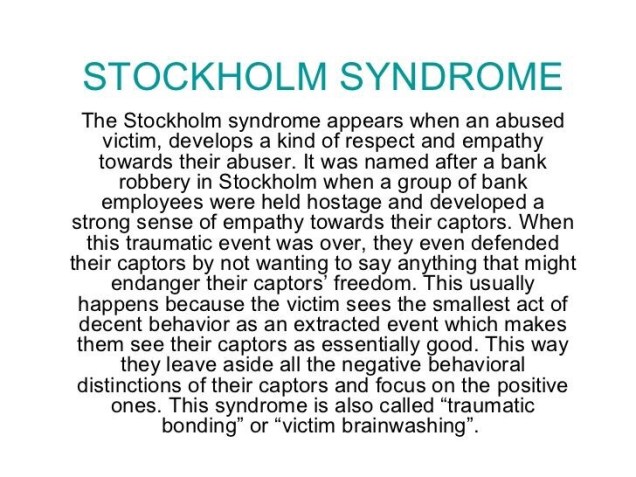
They have a term for that in psychology/psychiatry – it’s called Stockholm Syndrome.

Our level of bullying was so ingrained that the Filipinos could not tell if they preferred getting abused by a foreign invader or later on, by fellow Filipinos who would eventually believe that their actions are to deliver the Filipinos from hell. Aguinaldo would become a household name to Philippine history. He was the President of the First Philippine Republic.

Our history was riddled with presidents and invasions from foreigners in between the terms of these presidents.

Philippine History tells about how foreigners saw the strategic position of the Philippines in Asia and the ASEAN region. I am sure they knew that were a nation worth the conquer. The rich resources. The beautiful people. There was more to gain than lose.

We’re definitely up there when it comes to patience.  We’re patient with gaining our own independence and our self worth.  Sometimes we come close to achieving it and when it is within our grasp, we let other people take away our national pride.

We’ve not allowed history to be our lesson.  We’ve let history repeat itself.  This time allowing Filipinos who torment and lead by tyranny and injustice become their voices.

Think about the disambiguation.

Those who still believe that there will be deliverance in the midst of impunity most likely suffer from Stockholm syndrome. And we only have history and our colonizers to blame for being unpatriotic.

Or when we sleep with our tormentors.

Lies & the liars

People don’t want to hear the truth because they don’t want their illusions destroyed.

And that’s the problem today. There’s so much lies being peddled around.

They say that senile dementia has set in with the 95 year old politician who lied about the peachy years during the Marcos Martial Law. I beg to disagree. While mental deterioration in the elderly is a normal phenomenon, there is a clear difference between lying and dementia. His pronouncement is not only disgusting but outrageous as well.

The only people who are mad at you for speaking the truth are those who are living a lie.

He benefitted from the ouster of a dictator. He slept with the political foes and friends. He and his family has amassed wealth out of his existence in politics. It is a shame that there are fools who even believe his pronouncements that no one was ever killed during the Martial Law years.

Denying the truth does not change the facts. And history can never be rewritten to benefit a few.

As a people, the actions of politicians who twist the truth is tantamount to betraying a nation.

We will never change what we tolerate.

There is a need to recalibrate our moral compass if we are to survive as a nation.

And this old man is not the only liar in our midst.

The gospel according to Thomas Sowell

My post on “Credit Where Credit is Due”, drew inspiration from Thomas Sowell.  I know most (if not all) of my readers are unfamiliar with him.  I stumbled upon him at Pinterest and began reading up on many of his publications.  His biography entitled “A Personal Odyssey” published in 2002 is a recommended read.

Who is Thomas Sowell?

It is hard to imagine a more stupid or more dangerous way of making decisions than by putting those decisions in the hands of people who pay no price for being wrong.

Influential American economist and social theorist Thomas Sowell was born in 1930 in Gastonia, North Carolina but grew up in Harlem, New York.  Although Thomas showed signs of academic promise, his father who was a construction worker did not encourage him to pursue higher education. Thomas dropped out of high school, worked odd jobs, but his penchant for pursuing academic achievement saw him obtain a high school degree in an evening program.  After serving the marines, he entered Howard University and later moved to Harvard graduating Magna Cum Laude. He later earned his master’s from Columbia University and PhD from the University of Chicago. His mentor at the University of Chicago was the Nobel Prize winning conservative economist Milton Friedman.

His teaching career would take him to Rutgers, Howard, Cornell, Brandeis, and UCLA. Today, at 88 years old, he is currently a Rose and Milton Friedman Senior Fellow at the Hoover Institution at Stanford University in California.

A prolific scholar (he has written over 25 books), his earliest work Economics: Issues and Analysis was published in 1971. His latest work was published in 2007, entitled A Conflict of Visions. 

His position with government and the private sector included the US Department of Labor, the Urban Institute, and the Hoover Institution.  In 1990, Sowell won the Francis Boyer Award from the American Enterprise Institute.  In 2002, he was awarded the National Humanities Medal for innovative scholarship and incorporated history, economics and political science.

Sowell tells things the way it is and the way it should be told.  Often times too real and painful for the onion-skinned, his opinions speak volumes of experience.

His political rants are spot on:

No one will really understand politics until they understand that politicians are not trying to solve our problems.  They are trying to solve their own – of which getting elected and re-elected are number one and number two.  Whatever is number three is far behind.

He has this to say when politics takes on a personal agenda:

Politics is the art of making your selfish desires seem like the national interest.

His thoughts on entitlement are point blank:

  • When people get used to preferential treatment, equal treatment seems like discrimination.
  • It is usually futile to try to talk facts and analysis to people who are enjoying a sense of moral superiority in their ignorance.

His views on education:

The problem is not people being uneducated.  The problem is that they are educated just enough to believe what they’ve been taught.  And not educated enough to question what they’ve been taught.

His thoughts on the current social situation:

  • One of the sad signs of our times is that we have demonised those who produce, subsidised those who refuse to produce, and canonised those who complain.
  • The real danger to us all is when government not only exercises the powers that we have voted to give it, but exercises additional powers that we have never voted to give it.  That is when “public servants” become public masters.  That is when government itself has stepped over the line.
  • What is ominous is the case with which some people go from saying that they don’t like something, to saying that the government should forbid it.  When you go down that road, don’t expect freedom to survive very long.

On the relation of economy, taxes and the government:

I have never understood why it is “greed” to want to keep the money you’ve earned, but not greed to want to take somebody else’s money.

Or simply placing real life scenarios in perspective:

People who enjoy meetings should not be in charge of anything.

And harping at media bias:

If people in the media cannot decide whether they are in the business of reporting news or manufacturing propaganda, it is all the more important that the public understand that difference, and choose their news sources accordingly.