From Vienna with love

One of the loveliest countries in Europe is Austria.

On August 14, 2018, Vienna was voted as the World’s Most Liveable City in the Global Liveability Index. Dislodging Melbourne (after a record 7 years winning streak), with Osaka, Japan coming in third. It’s also the first time a European City is making it to the top of the list!

Rounding up the top ten are: Calgary, Canada; Sydney, Australia; Vancouver, Canada; Toronto, Canada; Tokyo, Japan; Copenhagen, Denmark; and Adelaide, Australia.

The survey rates cities worldwide based on 30 qualitative and quantitative criteria falling into 5 general categories: stability (crime, conflict and terrorism), health care, culture and environment, education and infrastructure.

Vienna and Melbourne scored maximum points of 100 in the healthcare, education and infrastructure categories, but Vienna edged Melbourne in the stability category by scoring 100 points, while Melbourne scored 95.  In the category of culture and environment, Vienna scored 96.3.  Overall, Vienna got 99.1 (Melbourne 98.4).

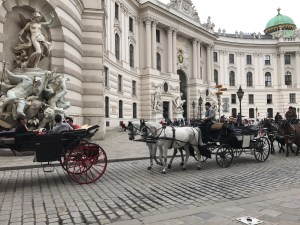
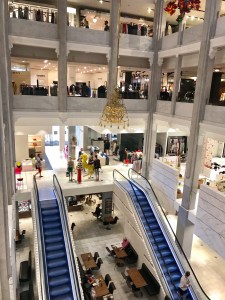
Vienna has a small population (less than 2 Million) and is known for its Baroque architecture and imperial palaces (especially the Hofburg Imperial Palace and the Schonbrunn Palace) dating back to the 13th and 17th centuries, respectively.

Vienna has a lot of green spaces and vineyards with sweeping views of the capital.  Public transportation is cheap and efficient and has a very low crime index and is one of the safest cities in Europe. Most of the city is accessible within 30 minutes and is well connected to other areas around Central Europe.

Did you know that at least 1 in 3 Vienna residents are non-Austrian, making the city a real melting pot of cultures. During our last trip to Vienna (last year), the doorman of our hotel was a Pinoy OFW!

These photos will probably not do justice the how lovely Vienna as a city is.  But it is without any doubt that one must visit Vienna so you will really know why it is the most liveable city in the world!

Winter wonderland

What if waking up and looking out your chalet, you just see snow falling, covering the whole expanse beyond what your eyes can see?

Pure powdery snow.

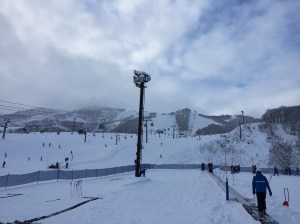
Welcome to Niseko. A ski resort on the northern top of Hokkaido, Japan.

To get there from the Philippines, you can take a 4 hrs flight to Haneda, Japan via PAL and change to a 2 hrs domestic flight via ANA into Sapporo airport in Hokkaido. (There is another route on Cathay Pacific via HongKong then into Sapporo).

Getting into Sapporo, one can take the 2-3 hrs bus ride (or if you’re splurging a bit, then spend for the private transfers) to the world’s most beautiful ski resort of Niseko.

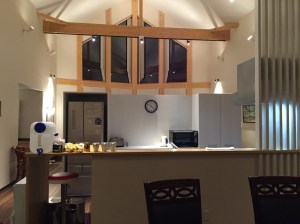
While there are a couple of resorts one can stay in, for a family of 6, renting out a chalet can set you bank account a bit more, but the privacy and intimacy is beyond compare. And I would highly recommend KiNiseko at the Orchards.

This private getaway offers shuttle services to and from the resort residence to any of the ski resorts as well as to town at anytime of the day.

These photos do not do justice to the unforgettable relaxation and experience of enjoying the winter holidays (we went there the day after Christmas to spend the New Year there) in the most world’s most powdery snow land.

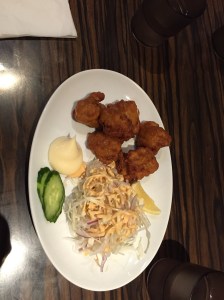
And if you think it’s just all about the resort or skiing, the food alone was worth the trip.

If you plan to get away from it all, and have to have that once in a lifetime winter wonderland vacation, I’d highly recommend Niseko.

Truly, one of the most beautiful sceneries you’d wake up to each day.

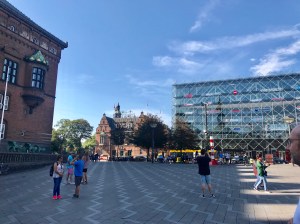
Loving Denmark

This year, my private vacation takes me to two Scandinavian countries.  At the top of the list were Copenhagen in Denmark, and Stockholm in Sweden.

On arrival at the airport, we picked up our Copenhagen Cards.  You can order these online (www.copenhagencard.com) and while they may be quite a bit steep, the 72 hours card was enough for our 5 days 4 nights stay because it included access to trains, buses, boat tours and yes, entrances to all the sights and sounds in the Copenhagen area.

The weather was slightly on the warm side when we got to Copenhagen.  Temperatures ranged from 29C – 19C.  Sunrise was 5AM and sunset 930PM.  Overall, the weather was pleasant.  Warm (but not humid) during the day, cool (but not cold) at night.

According to surveys, the Danes are the happiest people in the world. Year after year, for the 7th consecutive year, Denmark has been the happiest or one of the top 3 happiest countries in the world. And that’s attributable to the fact that:

  1. It has a stable government
  2. Low levels of public corruption
  3. Access to high quality of education and health

Mind you, this country has the highest taxes in the world. But the Danes happily pay for it – because they believe that higher taxes create a better society. (This will never work in countries where corruption is a way of life.)

Most importantly, however, is their structural construct called “hygge”. It means high-quality social interactions. It is sometimes translated as “cozy”, but a better definition is intentional intimacy, which can happen only when you have safe, balanced, and harmonious shared experiences.

In Denmark, hygge is integral to people’s sense of well being. Acts as a buffer against stress. And creates a space to build camaraderie. And in highly individualised countries like Denmark (and Norway, Sweden, Germany), can promote egalitarianism and strengthen trust.

This review, however, comes with a BUT…

Only a handful of hotels in Copenhagen have air conditioners.  Even the malls and market areas were warm during this summer trip. Of course, the Danes can always say that they didn’t anticipate climate change.  But climate change it did, and not even the Scandinavian countries were spared.

Hotel Alexandra was home to us for 5 days and 4 nights.  Of those days, we suffered from the warm weather.  One electric fan in the room.  All windows had to be opened.  The noise on the street (from the 3rd floor of our room) was irritating.  We had to open the curtains and the sun was up a couple of minutes before 5AM.  There is a separate review I madefor this hotel at TabletHotels.com.  The fine lines that were not revealed was the fact that the bill of the hotel included credit card charges of 3.5%.  A rip-off, because has TabletHotels provided these two main reviews from the get go, this wouldn’t have been a hotel I would choose.  For my readers, I wouldn’t recommend this hotel at all.  And TabletHotels should delist them.

Of all the touristy spots on the list, I would highly recommend (in no order of preference) only the following.  The rest (while we undertook because we wanted to get the most out of the Copenhagen Card) are truly for tourists only.

  1. Canal Tours Copenhagen
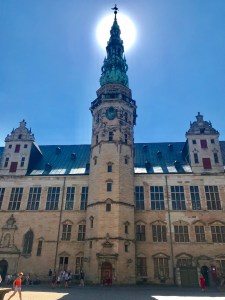
  2. Frederiksborg Castle
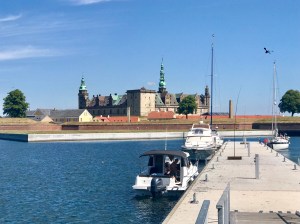
  3. Kronborg Castle
  4. Amalienborg
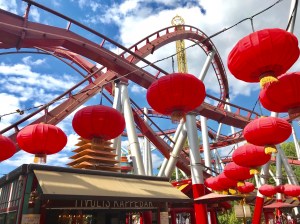
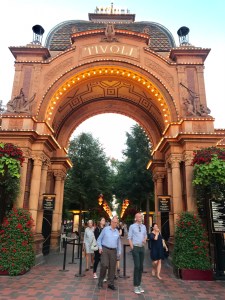
  5. Tivoli Gardens
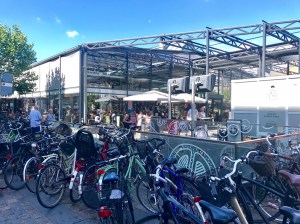
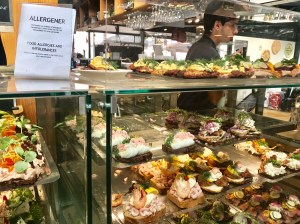
  6. Trovehallerne (food market)
  7. Stroget (a whole couple of blocks of shopping therapy)
  • Most of the museums are open up to 6PM and most of the stores are open up to 9PM.  The bigger department stores open up to 10PM.  Most of the toy stores around are Lego and BR. And there’s not a lot of these gadget shops that abound.  As a matter of fact, there was only ONE Apple Reseller I saw during my entire stay!

    Espresso Coffee and Joe and the Juice are Scandinavian brands that serve great coffee (although if you still like Starbucks, I think Starbucks is over rated). With that said, I strongly recommend a trip down to Trovehallerne for good food worth the buck.  The other restaurants are typical eclectic European cuisine.  But nothing comes close to home as the hotdog vans or pølsevogne! And at 32 DKK, you can have your best hotdog meal for lunch, dinner or anytime of the day.  You’ll find them on Central Station and around the square in City Hall.

    Like most European countries, drinking alcohol after six seems to be a way of life.

    Since we were here towards the end of summer, most of the days were beautiful.  And the temperature wasn’t too bad as well (considering that I was coming from a much warmer and rainier country).

    Copenhagen is one of the more touristy countries in the Scandinavian area.  This, despite the fact that their Value Added Tax is a whopping 25%! Imagine, the taxes of my 5 days 4 nights stay at the hotel was equivalent to another night stay!

    The Castles were not much of a tour compared to other European countries.  Because Castles are smaller than Palaces, one should not expect anything too grand except for the display of the crown jewels (which I don’t think were actually the real ones on display, but I may be wrong).  If there is only ONE tour you needed to take, I would highly recommend the Canal Tour.  The story and the one hour trip itself would give you an awesome picture of what Copenhagen is all about.

    Shopping hours are quite long and the whole Strøget area alone will leave you breathless for a whole day – from local fashion to boutique ware.  As I mentioned, there is a 25% VAT.  But you don’t get the whole 25% as a tourist refund.  Depending on how much you purchase, and minus administration fee (I don’t know where that goes to), you’d probably get around 10-15% refund on the total price of the goods you purchase.  And you’d need to make a total purchase of 300DKK (P2,500) in one store in one purchase, before you can even get a refund voucher.  That voucher must be filled up and presented at the airport of exit together with the goods purchased. So if you’re still traveling to, say, 3 more European countries, you can claim the refund in the last European country of departure back to your home country.

    As a tip: you’d need to pack all the items with a VAT refund separately (perhaps in a hand carry), and show them to the customs official on your way out.  You will find them in every Schengen airport.  And, if you’ve gone shopping galore, make sure you make an extra hour prior to your departure so that you can claim your refund (either in cash or as rebate to your credit card).  Remember, there is only ONE queue for this refund at every airport.  Be patient.

    As a final reminder, you will love Denmark the way I did.  The people are nice.  The place is safe.  The Danes are happy.  And what is there not to love when you come to a country that welcomes you with open arms, a million more smiles than the Filipinos, and yes, a people so cultured that you’d feel ashamed being rude.

    The tourist

    Decisions.  Decisions.  Decisions.

    For tourists traveling  for the first time to a new vacation spot, excitement fills the air.  An excitement  either from  the freedom of getting away from it all and/or getting to fulfil a dream come true.

    The ordinary tourist has a few days traveling on a budget and hoping to see all the places they need to visit in that particular trip.

    Every traveler, thus, makes an itinerary.

    Arrival. How to transfer to hotel. Drop bags.  Go out and start Day 1.  What to see. Where to eat. What to do. What to eat.  Where to go. What to eat. When to get back. Get some rest.

    Repeat.

    The Itinerary

    In a nutshell, it is mandatory that a city tour is part of one’s itinerary (or if you have a friend living in the country of destination, ask for the city tour). The local tour affords us  a brief overview of what the city or country is like – with a guide (cum interpreter or story teller) who provides an overview of what the city is like. They take us to major “tourist” spots, and if you’re lucky, point out en route the places where the locals congregate to shop and grab bargains.

    The most common form of city tour (that I’d even take or recommend because I am an ordinary tourist) is the Hop on Hop Off Bus Tour.  It will serve as your transportation for the day as you can get on any of these buses, get off at the places you want to stop over and just grab any of its buses that hover the same route the whole day long.  Don’t forget to make sure that you budget for this. This should be the FIRST on any itinerary.  Get to know the city before exploring on your own.

    As you begin your tour, remember, each destination will offer a city pass for tourists (well, except for the Philippines because our public transportation system is crummy). There are day passes, but I suggest that you buy one for a specific duration. For example, if you plan to stay there for say 7 days, then get a commuter pass for 5 days so that you do either the first and last day around your hotel area (make sure you read my blog on The Lodging for choosing a great location for your hotel), and use that commuter pass in between.  Passes that include entrances to various tourist sites will save you money if you wish to explore the city more.

    Transportation

    Most of the cities have subways, trains and buses for various routes. Get a map of the routes for reference.  Unless the city is walkable, you will not want to be scrimping on a commuter pass, only to end up with having to take a cab later on because one of your destinations was far from your lodging.  These incidentals will set off your budget and you may just miss the bag or shoe you wanted to buy.

    As in my blog on Roaming, it’s a good idea to have a pocket Wifi because Google maps will help you with the various modes of transportation including walking distance and time.

    Remember, getting a commuter pass saves more money especially if you want to go around the city.  Isn’t it envious how thoroughly efficient most of the countries are when it comes to public transportation?  And how well disciplined their drivers, pedestrians and commuters are!

    Don’t be lazy.  Take the opportunity to walk when you can.  It’s not only healthy but makes you appreciate the city you’re in.

    Water

    Water is the real elixir of life.  On the plane.  In a ship.  At your travels.  Rehydration keeps you going.  One of the MUST HAVES on any trip is water.  Make sure that you drop by a 7/11 or supermarket in your area of destination and stock up on large volume of water.  That’s the first order of the day (and not on the junk food).  It is essential for your medicines, your in-room coffee (or three in one which you may have brought with you), your instant noodle soups, and your overall rehydration source.  You can bring empty small water bottles with you to your trip and refill in aliquots these water bottles as you travel the city.  DO NOT BUY THE SMALL BOTTLES OF WATER.  It is wasteful and heavy and not environmental friendly.  Get the big gallons and drain in aliquots as needed.  Remember, some hotels MAY provide free bottled drinking water (usually a maximum of 1 per person or 2 per room).  That’s about it.  You need more, you pay more.

    Hong Kong for example is one of the worst countries to be sourcing water.  Tap water isn’t potable there and you need to buy your water even at the restaurants.  In some dining areas, tea is free.  In Europe, wine is cheaper than water.  So let’s drink to that!

    Remember the cardinal rule: the hotel industry is a business.  A business needs to profit. Nothing is free.  Even if they say it is “free”, you’ve paid for that. It’s already in the finer details.

    Car Rental

    If you know how to drive then considering a car rental may be a great alternative to going around the city and the countryside.

    The average car rental rate depends on many factors: size of the car, number of days of rental, among a few.

    In certain cities, moving from one place to another is impossible by public transportation alone.  For example, when traveling to Orlando, Florida, or San Diego, California I always rent a car for the duration of my trip.  Pick it up at the airport and return it at the airport. Make sure that you get ALL the insurances paid for, just in case.

    Again, in most countries, all you will need is a local driver’s license and a credit card.  You’re good to go! Take into consideration parking fees where you’re going.  If you’re driving in New York, the parking will end up more expensive than the car rental per day.  Other cities offer cheaper parking. Most hotels offer reasonable parking fee per night of stay.

    The upside of having a car at your disposal is that you get to go where you want, when you want. The freedom of not being a prisoner of public transportation has its perks, especially if money isn’t a problem!

    The Embassy

    It’s important that you know where the embassy of your country is in your place of destination.  You can never tell when you will need it most.  In some countries, your country may not have an embassy, but rather a consulate. If your country has an embassy in your destination, then there is a permanent diplomatic mission and is headed by an ambassador. A consulate is led by a consul and is otherwise known as a junior embassy.  The main task of embassies is to represent their government in another country. Embassies deal with political and diplomatic relations between nations.

    The major role of consulates is to promote trade (i.e., helping companies in the host nation invest in its country and vice versa).

    Embassies and consulates are important particularly when you’re traveling.  It will be your source of help from your government when you’re far from home.

    Churches

    Catholic is as catholics get.  Don’t forget to Google the nearby church in your area especially is you’re traveling over the weekend where you’re most likely want to have Sunday service no matter what language is used during the mass.  Not all catholic churches have anticipated masses.  Most of the masses are Sunday mass and usually filled with Filipinos (including OFWs).  The midmorning masses are usually in English.

    If you’re not sure with the church that’s nearest your hotel, you can always ask the concierge or front desk for the nearest Catholic Church and the schedule for mass.  Then again, a clue that the church you’ve gone into isn’t Catholic is when the church is devoid of the Blessed Virgin Mary.

    When in Rome, do as the Romans do. Which means, enjoy the city the way the locals would spend their daily routine. The food.  The shopping.  The entertainment.  Keep in mind that exploring on your own by doing thorough research before going to your destination is the key to enjoying the life of the wandering tourist.

    And yes, it’s alright to get lost in translation.  Half the fun is exploring yourself and the city.

    Roaming

    Technology has truly changed the landscape of everything. Travel included.

    There are many who still scrimp on data roaming and strangely stand next to a free WiFi connection when they’re abroad. If you like taking your audience with you on your next vacation, make sure the followers are with you on real time. Data roaming has never been cheaper and easier than today.

    Flytrack

    When we would travel, we’d go online and try to rent a WiFi device at the country of destination. Having a WiFi device allows more flexibility on the number of users for the gadget (usually up to 5-6 people). When you break the total cost down to the number of users per device, renting a portable WiFi is most cost efficient.

    Until my partner introduced me to a local vendor called Flytrack.

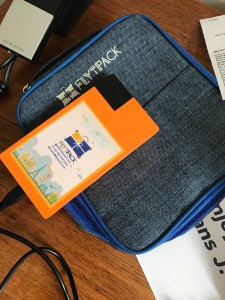
    For our trip to the Scandinavian countries, we rented our pocket WiFi from the Philippines. You can go to http://www.flytrack.com online and order your pocket WiFi. The total cost of P8150 includes 10 days of WiFi shared between my partner and I. Also included is an insurance fee (in case I lose the device). This is non refundable but is a small price to pay just in case I fuck up. It also includes delivery cost (courier to your address and return by courier as well). If you want to scrimp on this, you can pick up (and return) the unit in designated areas. Finally, when the unit is returned in good condition, there is a refund of P1800 to your nominated bank account.

    With two people using, this amount to around P270 per person per day. Not bad!

    The major advantage of having a pocket roaming WiFi is that you not only stay in touch with social media (or being socially relevant) but most importantly, staying connected with family, friends, and yes, work (even if you shouldn’t).

    Carrier Data

    Until lately, I’ve always attempted to use my carrier’s data plan. That means, P599.00 per 24 hours.

    What they don’t tell you is that if you turn it on at say, 9PM when you get to your destination, they automatically charge you the P599 up to 6AM the following day. Their excuse? It’s the way it is.

    What they DO tell you is that you need to stick with their carrier partners in the country where you’re roaming. And because the automatic carrier ability of our phone, you may not be aware that you’re “connected” with a carrier your carrier isn’t affiliated with. And that P599 a day may just end up P5999 a day!

    Smart Roaming

    You don’t want to receive jaw dropping charges. Remember, they wrote that in the fine lines when you signed the contract. It’s not their fault that you either didn’t read it or are plain stupid. On occasions though, some of these companies are a real ass. But it’s usually our fault.

    1. Turn off your cellular data

    2. Before you leave, at the airport, don’t forget to Settings > Phone > Call Forwarding (under calls) > turn on and have your calls diverted to a local phone. You won’t receive any call. They can’t charge you for calls you don’t receive.

    Remember, you cannot turn on this setting when you’re already in another country. When it’s too late, just make sure you turn your phone off and turn it on when you need to use it.

    3. If you want to receive calls, be prepared to pay for the call you receive. Yes my dear. When the other party in the Philippines is trying to reach you, you will need to answer the phone! It’s cheaper than not minding the ring.

    What most people don’t know is that once the call has been made, and is routed to an international roaming partner, and the recipient (that means you) has been reached (your phone has rung) via that route, you’re dead meat if you just let the phone ring forever. You’re paying for that call, even if you didn’t answer it. That’s because it’s not the fault of the caller who didn’t know you’re gallivanting somewhere in the world.

    Social media has changed the landscape of travel.  I’d like to believe that we post our travels because we share to the community our celebrations of life.  Our experiences and opinions have not mattered as much today than the pre-technology era.

    And here’s to sharing, commenting, liking, laughing, crying, hating and celebrating the joy of travel!

    Chapter 1 – Tokyo Stories

    When my mom turned 80 this year, she insisted that our family trip should be to Tokyo, Japan.

    My mom is a strong woman who took care of my father who suffered from a stroke due to complications of diabetes. When my father got sick, my mom had to find means to make ends meet. Medicines and therapy for my father did not come cheap. When my father passed away 23 years ago, she was devastated.

    Our family is not perfect.  We have dysfunctional moments.  The last five years has been most difficult.  My mother began to deteriorate in her ambulation.  I guess we need to be thankful that her mind is functioning well, but you can tell that age has taken a toll on her.  Her agility is now challenged with a quad and a wheelchair.  There were moments she’d look into your eyes through her cataract glazed eyes with questions and hints of sadness over her condition.

    She’s irritatingly repetitive and yet beautiful in her own quirky ways. She’s needy to the point of clingy but thoughtful in her own quiet ways. I get to lose my patience only because work supersedes the attention she desires.  There were (and still are) tug-of-war moments between work and her needs. The work-balance relationship (especially with my work in government) is a work in progress.

    This trip to Tokyo wasn’t an easy one to arrange.  It’s cold, crowded, and transportation is expensive (no kidding).  I’m sorry (not!) if I blew my top at Philippine Airlines (on Facebook) when they decided to change the aircraft configuration two weeks before our travel! While airlines do what they do for the sake of profit, I’m pretty sure that if it was owned by the government, the airline would have gotten pummelled with all the insults on social media.

    Arriving in Tokyo through Haneda Airport was the better choice.  The airport isn’t as crowded as Narita and it’s nearer to Tokyo than arriving through Narita. I arranged for a limousine from the hotel to pick us up. It would be impossible to travel on the train with her and our luggages filled with her pampers, her quads, and her wheelchair in tow in the cold winter!

    This trip was all about Inang. As requested.

    She had her photo-op with Hachiko.  Her crossing (on a wheelchair) at Shibuya at 9pm.  Her enjoying ramen in a quaint dining area where ramen was ordered through a vendo machine.  She loved the Muji shop in Ginza. Ate with gusto at Shake Shack in Maranouchi. Had snacks at Dominique Ansel in Omotesando.  Bought trinkets and souvenirs in Harajuku.  Enjoyed the cake and tea at Laduree in Shinjuku. Shopped relentlessly at Takashimaya. Watched the flurries from out hotel window on a cloudy Saturday.  And yes, see Mt. Fuji each break of day from her bedroom!

    What did this trip teach me?

    My mom is now old and frail. Whatever moments we can spend with her while her senses are still intact, will always be the goal.  We watch her move much slower now, as she needs more assistance when moving.  Doze off more often.  Eat much less.  It’s the sad reality of life.

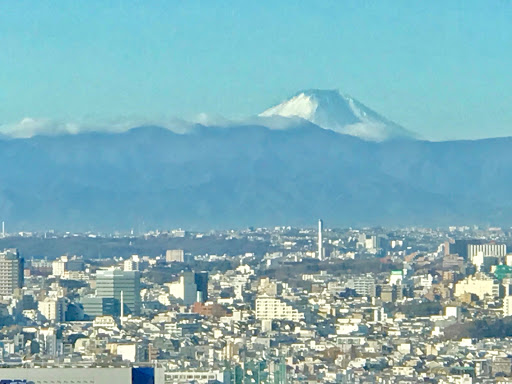
    As I write this first blog of the year watching the sunrise and Mt. Fuji from our room in Tokyo, with my mom snoring in the warm bed at 7am, I cannot help but smile and say, thank God for another year.  We made it mom!

    This, is my Relative Joy.

    E2Y03tFrSmOfXU6DS705%w

    P.S. You may want to read about Inang in this link on my other blog.

    12 Chapters, 365 Chances

    43ed1-fullsizeoutput_c43

    My followers on heavenpurgatoryandhell.blogspot.com asked why I stopped writing.

    I never did.

    I just moved to a new job that didn’t give me both the luxury of time and freedom to continue to write whatever I wanted to.  But that’s another story altogether.  An interesting one considering the fact that I can write and my stories have the ability to create a paradigm shift in opinion.

    But let me focus with one story at a time.

    This is not a migration to a new blog.  I’ve decided to keep the theme of this new blog simple by creating daily reminders on the dark humorous side to life, and balance it with a healthy outlook on inspiration and meditation.

    I intend to intersperse my life story, and my daily thoughts on what I call Relative Joy.  After all, not all happiness we feel or think about, is truly joyous to all.  As the saying goes, “one man’s medicine is another man’s poison”.

    The last entry I shared to the public in my other blog site was in May of 2016.

    I did a couple of daily entries on my Facebook wall, thereafter.  I tried social media – Twitter, Instagram, to name a few, – but the limited space did not excite me as much as writing a blog did.

    I realised that when I blog, I write from my heart and soul at an issue and share my opinions (good or bad) with the public. I call a spade a spade.  And stand by the principles and facts that I write. No drama. It’s why I miss writing, so badly. It’s so different from just tweeting or updating my status or telling people what’s up.

    Last October 2017, it felt good to write a few paragraphs, post-hiatus.

    As 2018 unfolds, I’ve thought about what my friends, followers, and yes, readers, say.  To write and publish.

    ….I have 12 chapters, and 365 chances!

    And yes, I’m writing this also for you.

    (p.s. I’m blogging on my bed watching the magnificence of Mt Fuji from my bedroom at the Cerulean Tower Tokyu Hotel.  It’s a wonderful feeling to wake up to this view each morning.  It’s awesome at how nature let’s us know the beauty of life.)