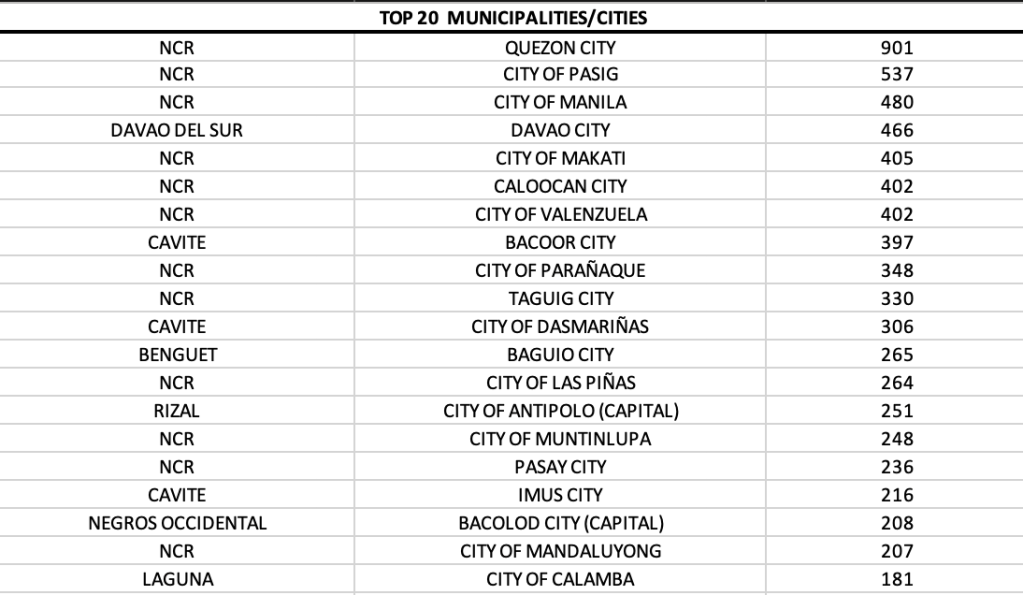
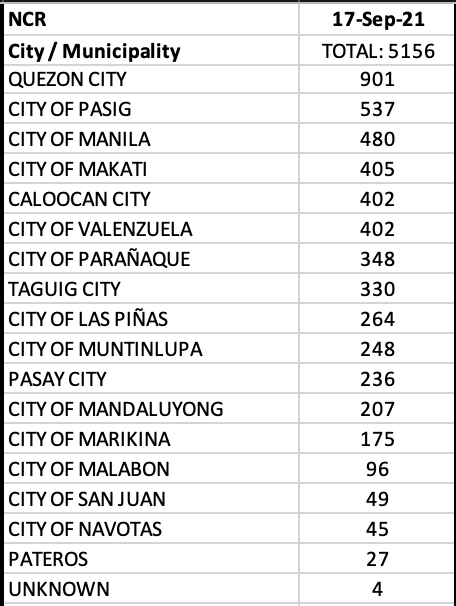
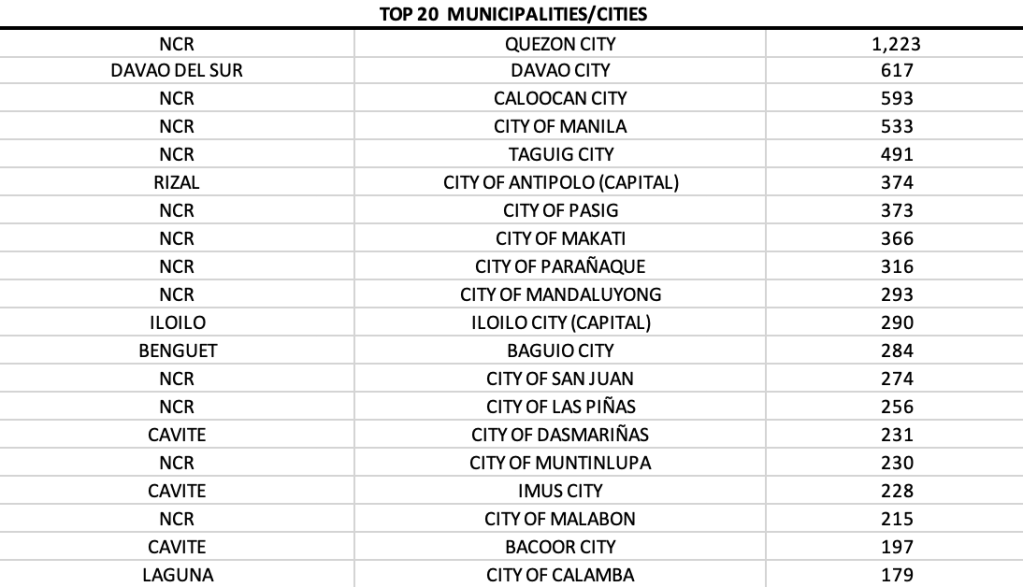
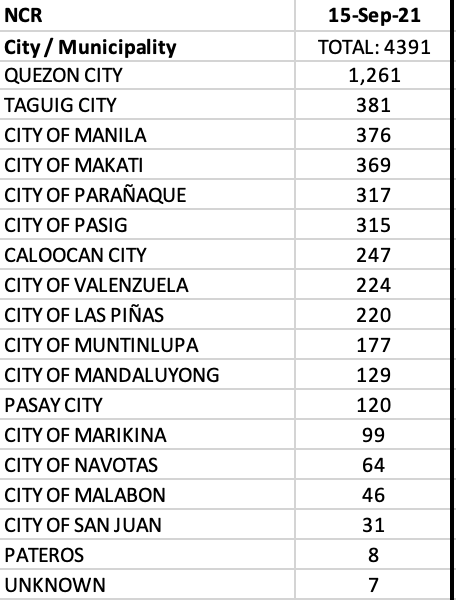
As the R touches 1.0 and the data for 09.23.2021

Today was not a bad day with 17,411 cases reported by the Health Agency.

There were more than 71,000 tests done last September 21 and the positivity rate continues to slightly decline and was at 24.6% for that day.

ICU utilization, however in the NCR is up at a critical 80%.

Deaths reported was 177, placing the case fatality ratio for outcomes to 1.67%.

The NCR accounted for a little more than 25% of the total cases in the country today, with 4,505 cases. The other regions that had quadruple numbers were: CALABARZON, Central Luzon, Cagayan Valley, and Western Visayas. The rest of the regions saw triple digits except for BARMM that reported 77 cases.

It was good news that none of the provinces reported quadruple digits. Cavite and Rizal continued to lead among provinces with most cases, with Isabela coming in third.

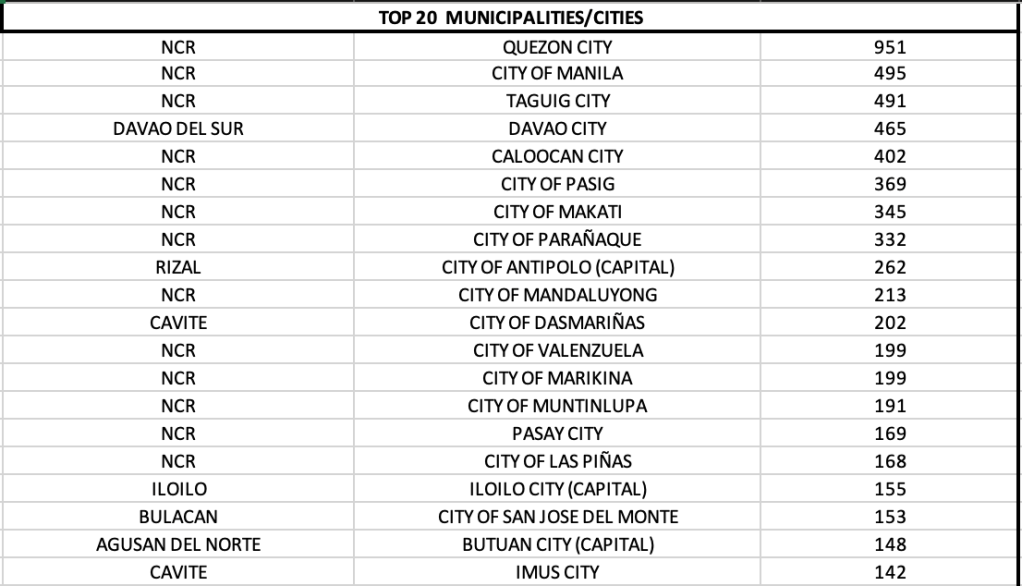
Eleven of 17 LGUs in NCR were in the top twenty, with 7 of them coming in from 1st to 7th rank. Davao City, Baguio, Bacolod and Iloilo are among the other cities in the top 20 list. Quezon City had more cases than the total cases of Manila, Pasig and Caloocan combined.

OCTA MONITORING REPORT

The good news is that the reproduction numbers in key provinces/regions have touched 1.0 and below. The bad news is that this does not mean that the cases will flip significantly overnight. It will take time for the five digit numbers to turn to four digits. Notice that the country tipped more than 20,000 cases in the past weeks. Which means that as the reproduction number dips below one, there is a slowing down in growth of cases. Two things need to happen: it needs to stay lower than 0.7 consistently and the positivity rates need to go down quickly (testing more). Any incursions above 1.0 at anytime will set back all the gains made in the difficult lockdowns over the past months.

Good news, bad news on trends and the data of 09.22.2021

It’s a Wednesday. And the data showed a few hundred cases lower on Wednesdays than Tuesdays for the past weeks. But that may also be due to slightly more tests done on a Monday.

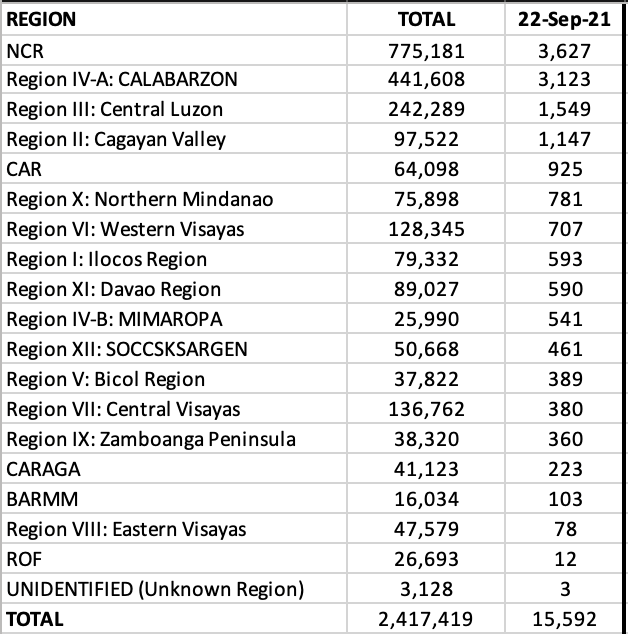
With that, the Health Agency announces 15,592 new cases today. With more than 24,000 recoveries the active cases are still high at more than 162,000.

Total tests done last September 20 for the data today were 53,349. The positivity rate was at 24.9% (a tad lower than the average daily positive rate for the country).

There are 154 new deaths bringing the case fatality ratio for outcomes to 1.65%.

The NCR remained on the lower range for total cases with around 23% of the share for the day. Four regions continued to have quadruple digits, while all the rest except Eastern Visayas had triple digits for the day. Central Visayas continued its downward trend and is seeing much fewer cases.

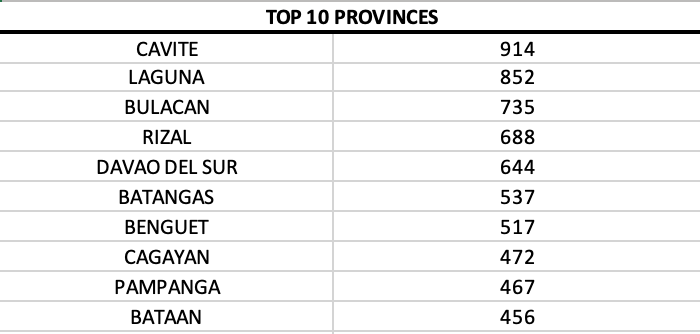
Among provinces, Cavite is back in the lead with many of the provinces in Northern Luzon among the top ten with highest cases.

Twelve of 17 LGUs in NCR are among the top twenty cities/municipalities with most cases, while 5 LGUs from CALABARZON are in the list. Davao City and Baguio City are among the top 10.

OCTA MONITORING REPORT

Let’s start with the bad news.

It’s been awhile since OCTA came out with its monitoring report. And the update at the height of the latest surge is a colorful one in the shade of red. Except for the province of Cebu, all the other regions and provinces in the list below are either critical or high risk in terms of the indicators for ADAR (incidence rate), and positivity rate. The 7-day average growth rate in these areas are generally in a negative trend including the epicenter NCR. Major areas of concern are the provinces of Isabela, Cagayan, Benguet, Laguna and Bataan.

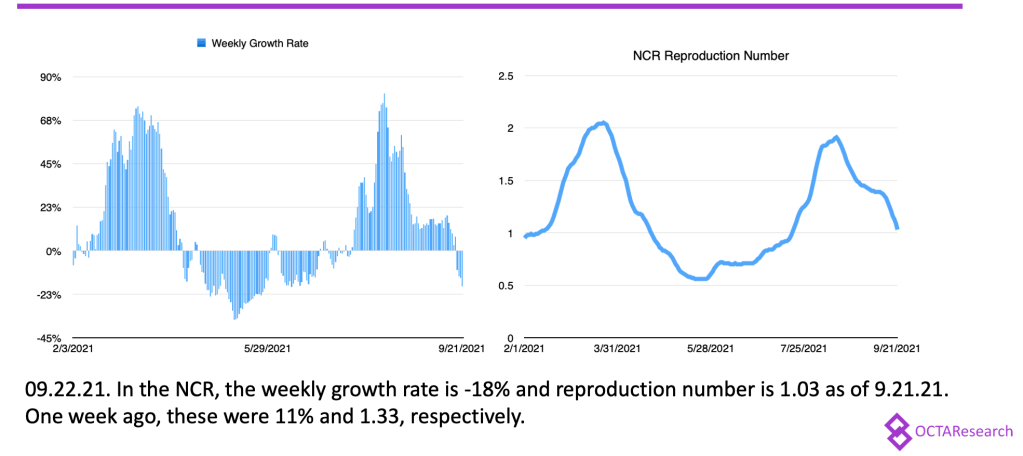
The good news is that the National Capital Region continues to see lower cases over the past two weeks and this is seen in the infographic prepared by Prof. Guido David below.

For the readers perspective, the graph shows the surge in March/April 2021 and that of August/September 2021. The weekly growth rate saw a correlation in the reproduction number. As the reproduction number decreased the cases declined as well. Unfortunately, we were not able to sustain the decline in reproduction number. Keeping R very low is vital in containing the virus. That is why if you look at the left side of the graph (weekly growth rate), the increase is much higher than the decrease. As the R began to climb, so did the number of cases.

It is the R that dictates how we are doing and when we should be worried. When the R saw an incline in the middle of July, this was an ominous sign. When the growth rate begins to increase, it will be difficult to bring it down especially with a positivity rate that is critically high.

The good news is the downtrend and the obviously declining R for the NCR. Cases will still be high, but are slowing down. We need to just bring it below 1.0 and if can maintain it at 0.5 in the next 60 days, this will be a good holiday season.

Because it’s a Tuesday, passing the 2.4M and the data for 09.21.2021

It is after all a Tuesday. We expect lower cases.

The Health Agency reports 16,361 new cases. This was enough to push the total cases in the country past the 2.4M mark.

With 48,262 tests done September 19, the positivity rate was at 27%.

A total of 140 new deaths were announced today. The case fatality ratio for outcomes is lower at 1.68%.

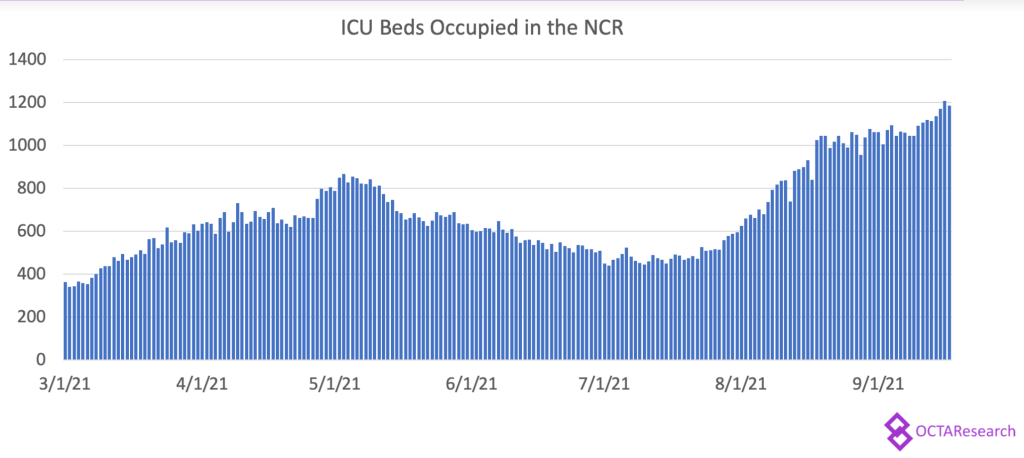
Based on the data of the Department of Health (which was placed into better perspective by Prof. Guido David for the OCTA Research Group), the hospital beds in the NCR have already reached its maximum allowable utilization based on the healthcare worker capacity of the facilities. Hospital bed occupancy has slightly increased when comparing the April vs the August/September 2021 surge.

What stood out, however, was the ICU bed occupancy in Mega Manila. Notice that in the April surge, the highest ICU bed occupancy rate was in May. The August/September surge is a different story altogether by almost 50% more compared to the peak occupancy rate last May 2021.

NCR averaged less than expected accounting for around 20% of the total cases today. The region that saw a dramatic rise for the day were Ilocos Region and Cagayan Valley. Both regions took third and fourth places respectively. Together with CAR, these three regions accounted for 26% of today’s cases. The 12 remaining regions in the country all reported triple digits.

In an unusual day, it was the province of Rizal that led on a provincial level followed by many provinces in the north: Pangasinan, Isabela, and Benguet.

With the rise in cases in the provinces, only 8 of the 17 LGUs in NCR were among the top 20 cities/LGUs with most cases. Four LGUs were from CALABARZON. Davao City, Baguio City, San Fernando City (La Union) and the city of Cauayan (Cagayan) were in the top list.

The very slow decline and the data of 09.20.2021

We will take the slow decline any day of the week.

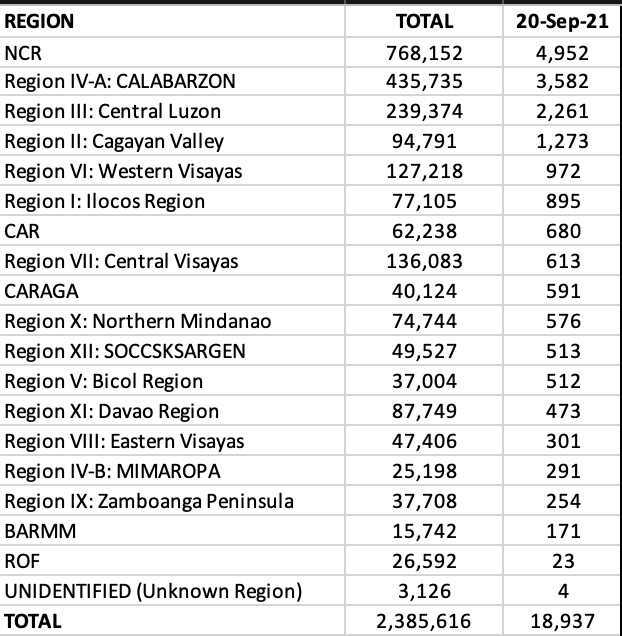
The Health Agency reports 18,937 new cases today and with more than 20,000 recoveries, the total active cases have gone down a tad.

Of the 72,770 tests done September 18, the positivity rate is still an astounding 26.3%. Which means that the decreasing cases may still go south. We are not testing enough. And we all know that contact tracing will never happen if we do not test.

A total of 146 new deaths were reported. The case fatality ratio for outcomes is at 1.68%.

Hospital utilization is still more than 70%, while ICU utilization rate is up at 77% (79% in the NCR).

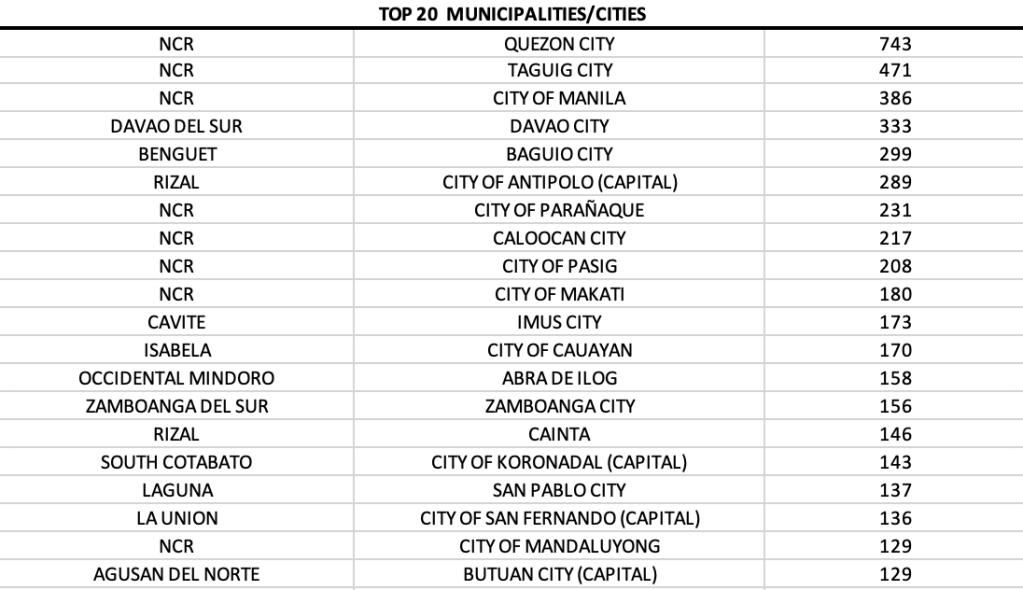
It was decent numbers in the NCR as it recorded 4,952 or 26.1% of the total cases in the country today. Three other regions reported four digits. They were: CALABARZON, Central Luzon, and Cagayan Valley. As in the previous days, all other regions reported triple digits.

The provinces of Cavite, Rizal, Laguna, and Batangas – all from Region IVA – are among the top five provinces with most cases in the nation today.

In spite of the lower cases for NCR, 14 of 17 LGUs make it to the top 20 cities/municipalities with most cases for the day. Three LGUs in CALABARZON were in the list as well.

-5% growth rate and a lower R and the data for 09.19.2021

It wasn’t really good news, but we will take the less than 20,000 new cases as we see the cases decline slowly and the reproduction number hold steady a little above 1.0.

The Health Agency announces 19,271 new cases today and with more than 25,000 recoveries, the active cases are a little less than 180,000.

More than 70,000 tests on September 17 show the positivity rate at 25.1% a slight improvement from the previous days.

There are 205 new deaths announced. Case fatality ratio for outcomes is steady at 1.7%.

In the NCR alone, the data from Prof. Guido David shows the negative growth rates in the NCR in the past days. As in yesterday’s blog, there is a pattern that shows that Mega Manila may have attained peaks in daily cases, but the effort at holding on to this momentum should be sustainable. Rushing to open too much of the economy can result in a dramatic overturning of the painful gains made so far.

NCR continued its second day streak for lower than usual expected range of cases (25-30%). The 4,748 reported cases accounted for 24.6% of the total of NCR. Three other regions had quadruple digits: CALABARZON, Central Luzon, and Davao Region. All other regions reported triple numbers.

On a provincial level, Cavite was back in the lead with quadruple digits.

Thirteen of the 17 LGUs in NCR were among the top twenty cities/municipalities with most cases today. Three LGUs from CALABARZON were in the top twenty list as well.

THE WEEK IN REVIEW

The 7-day average of cases is at a high of almost 21,000 daily cases and 7-day average of deaths is greater than 200 daily. While the R has slowed down (see graph below) on a national scale, the R is still >1.0. Which means that we are most likely plateauing (and this should be interpreted with caution) and are likely peaking as well.

Tests are lower this week compared to the last week, which throws the positivity rate to an all time high. The high positive rate adds to the large uncertainty on the direction of the surge because there are too many red flags that with increased mobility, the high positive rate is an indicator that the poor testing may be a driver for higher numbers in a few weeks.

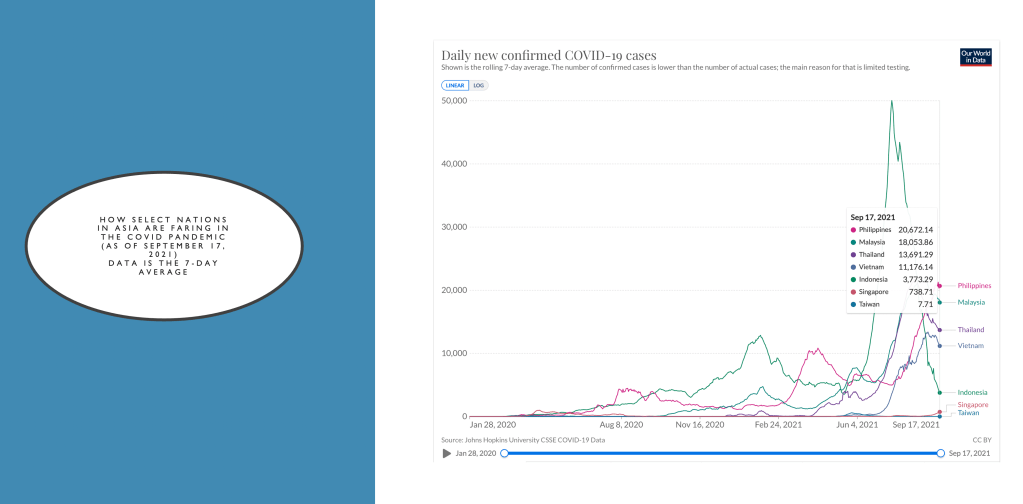
With continued increasing cases, the Philippines has now managed to shove its way to the front of the pack as the epicenter in the ASEAN region. Notice that it now leads the pack as all countries, except for the Philippines and Singapore are seeing higher 7-day averages.

The outbreak in Singapore has placed it in a precarious position in the region with R that is up at close to 2.0. While they may have much fewer cases numerically, based on the size of the population, the increase in cases tips the balance of the reproduction number. Singapore leads in highest reproduction rate and will not see a decline until a few weeks later as for the first time since their first surge, the breach the 1,000 new cases in a single day.

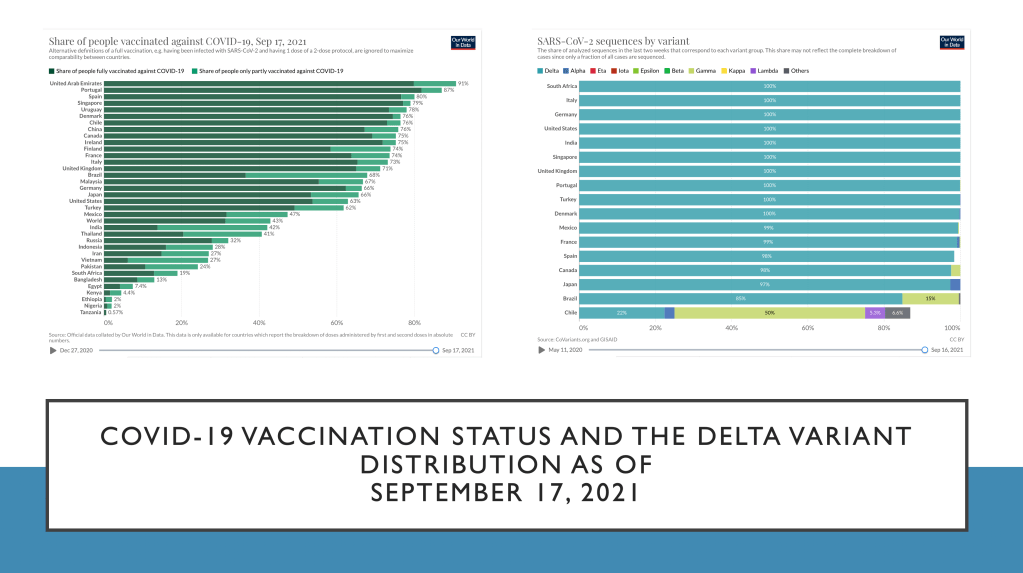
Many countries have now managed to vaccinate more than 60% of the population. The countries that have been able to achieve this are mostly higher income nations. Note the difference between those countries and those in the lower middle income and lower income classes. The delta variant is a force to reckon with as many nations now have to deal with vaccination and the dominant variant concern spreading globally.

The Saturday habit of record new cases and the data of 09.18.2021

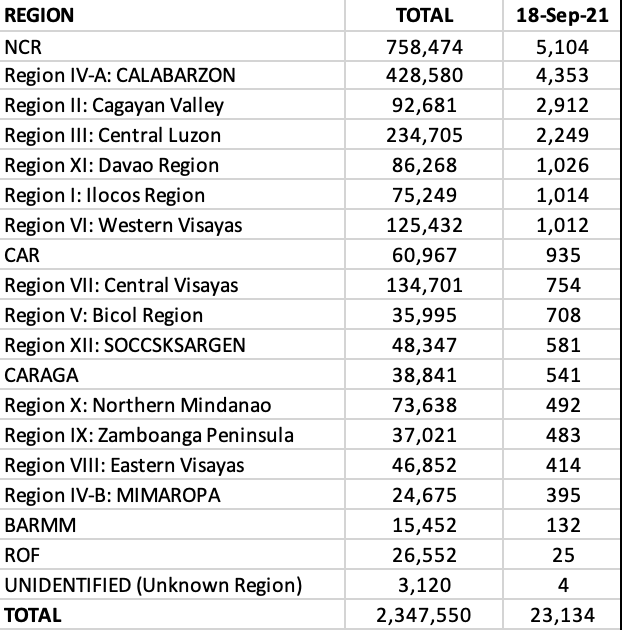
The Health Agency reports the second highest cases the Philippines records since the more than 26,000 cases reported last September 11 (exactly one week ago).

With 23,134 new cases today, the Philippines surpasses the Ukraine and sits now in 18th rank for most number of COVID19 cases in the world. There are still more than 180,000 active cases.

On September 16, 73,635 tests were done with a slightly lower positivity rate at 26%.

There are 255 new deaths reported. The case fatality ratio for outcomes is at 1.70%

The NCR, that remains the epicenter of the surge, is still seeing increasing cases. Note that while the R has dropped from 1.39 to 1.22, and the growth rate is down to +8% from 11%, the 7 day average of cases is almost 6,000 per day. And while there is a slight decrease in hospital bed occupancy, the ICU bed occupancy is up by almost 20%.
With the NCR moving into a quarantine status that allows more mobility due to economic repercussions of lockdowns, we will see how the data plays out in the next two weeks.

In spite of the spike in cases today, the NCR had considerably lower cases than its usually range of 25-30%. The NCR owned 22% of the total cases. The news of the day was Cagayan Valley, which came in third with 2,912 cases – their all time high!

NCR PLUS also trended lower from its usual range of 60-65%, down to 50.6% today, as 6 other regions outside of NCR saw quadruple digits. They were: CALABARZON, Cagayan Valley, Central Luzon, Davao Region, Ilocos Region and Western Visayas. All other regions in the country report triple digits for the day.

Even on a provincial scale, Isabela reported 1,512 cases today to displace Cavite from the over-all lead. Nevertheless, the four provinces of Cavite, Laguna, Rizal and Batangas in the CALABARZON ranked 2nd to 5th for the day.

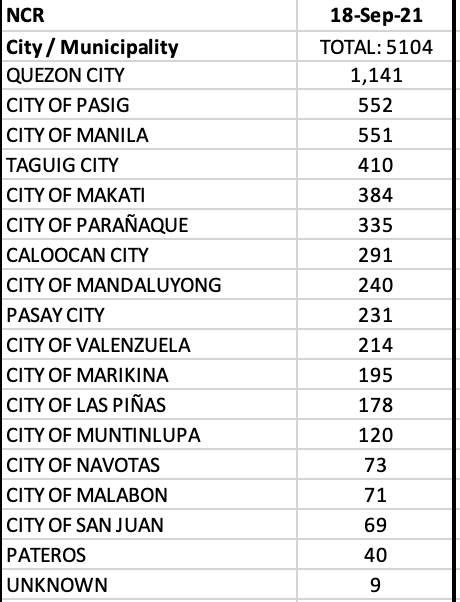
Eleven of 17 LGUs in NCR were among the top twelve cities/municipalities with most cases. Davao City remained in the top five, while Santiago (in Isabela Province) ranked 9th today.

Plateauing or peaking and the data of 09.17.2021

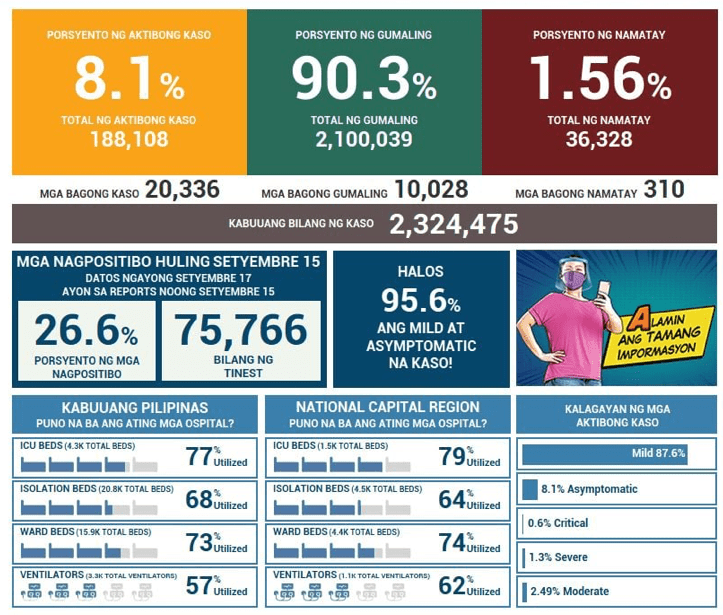
With reproduction number ranging from 1.1-1.2 (+/- 0.5), we continue to average more than 20,000 new daily cases. The common question asked is are we plateauing or have we peaked?

Based on the surge data and the reproduction rate, we seem to plateau at 20,000. If we maintain the reproduction number and keep it lower, then we most likely would have occasional bursts of higher numbers, but should be peaking this weekend.

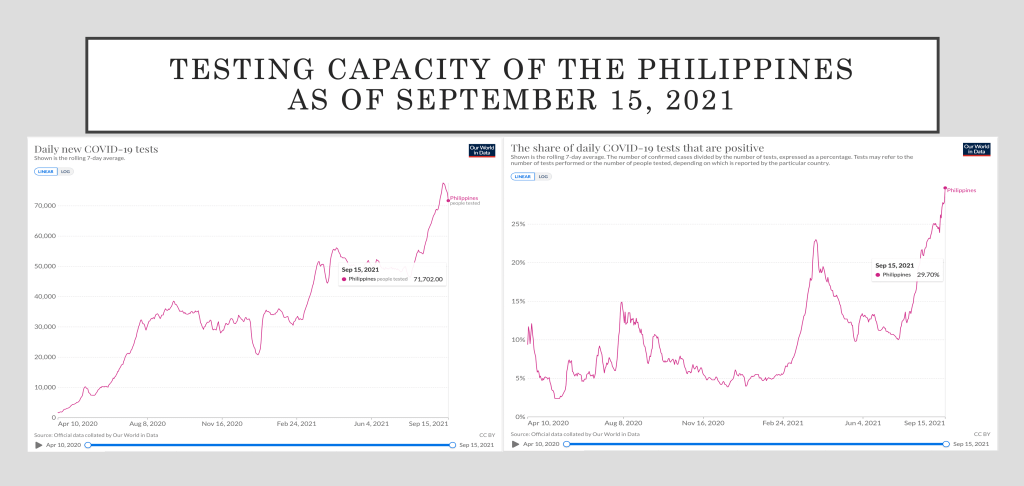
The problem in this scenario is the high positive rate that continues to exceed 25% in spite of more than 75,000 tests done last September 15, 2021.

During the last surge in April, the highest positivity we recorded was 22.8% on April 7. The positivity rate dropped significantly to 9.8% on May 26. But the next smaller surge in June showed a peak positivity rate of 13%. The July surge was accompanied with positivity rates exceeding 25%. And plateauing at more than 25% positivity rate at a time when the government decides to loosen mobility restrictions can go either ways. We will sit this one out. In the meantime, please, if you don’t need to go out unnecessarily, don’t.

The Health Agency reports 20,336 new cases today, and with less than half that number as recoveries, the active cases are now close to 190,000.

With 310 new deaths, the total deaths now exceed 36,000.

Even NCR had a decent share of the total cases for the day with 25% of daily total. Other regions with quadruple digits were: CALABARZON, Central Luzon, Cagayan Valley and Western Visayas.

On a provincial level the top 4 provinces were all from CALABARZON – Cavite, Laguna, Batangas and Rizal.

Twelve of 17 LGUs from NCR were in the top twenty cities/municipalities with most cases. Four LGUs were from CALABARZON, while Davao City remains in the top five.

Passing 2.3M total COVID-19 cases and the data of 09.16.2021

The data today was expected. Remember, the reproduction number? It is still above 1.0.

The Health Agency reports 21,261 new cases today, pushing the active cases back to more than 177,000. The total cases today was enough to breach the 2.3M mark as the Philippines now has 2,304,192 COVID-19 cases.

Of the 74,149 tests done on September 14, the positivity rate jumps to 27%.

New deaths announced today are 277. The case fatality ratio for outcomes is at 1.69%.

While the R is a bit lower both in the NCR and nationally, the number of cases continue to rise.

The readers need to understand that a R of 1.0 indicates flat reproduction. If you had 1 case yesterday, with R at 1.0, you would have mostly likely 1 additional case tomorrow. With effective reproduction still above 1.0, the number of new daily cases continue to increase BUT have slowed down. In the NCR, the growth rate is down from 14% to 9%.

The bad news is that the positivity rate remains very high at 25% (albeit, lower than the national positivity rate of 27%).

The NCR accounted for a high median of 27.5% with 5,846 cases. NCR plus maintained more that 57% of the total cases in the country. Seven regions report 4 digit cases per region including Western Visayas, Ilocos Region, and Davao Region. All other regions report triple digits.

Cavite led among provinces with most cases, with Rizal, Laguna and Batangas in the top 10 provinces.

Twelve of 17 LGUs in NCR are in the top twenty cities/municipalities with most cases. Five LGUs in Region IVA were in the top twenty.

The low Wednesday and the data of 09.15.2021

In an unusual turn of events, the past Wednesdays have had lower cases than the low Tuesdays.

The Health Agency reports, close to 17,000 cases today. And with more than 24,000 new recoveries, brings down the active cases to a little above 170,000.

More than 57,000 tests done on September 13, showed a positivity of 25.9%.

There were 214 new deaths announced today, bringing the case fatality ratio for outcomes to 1.7%.

Rising ICU bed utilization in the NCR at close to 80% places the region in a critical state. As the region experimentally transitions to a new level of quarantine classification tomorrow, the balance between economy and health at a time of high cases will be tested.

The percentage range of cases for NCR is usually between 25-30% of the total cases for the day. The NCR is at the low range today with 25.8% of the total cases. Regions IVA and III continue to trail NCR. These three regions contributed to 57% of the total cases in the nation.

Cavite remains the province to beat. The provinces of Laguna, Rizal and Batangas, all within the CALABARZON region, are in the top 10.

Among LGUs, 10 of 17 LGUs in NCR are in the top twenty cities/municipalities with most cases. In NCR, Quezon City alone had more cases than the combined total of the cities of Taguig, City of Manila and Makati today. Three LGUs in Cavite join the top 20 list.

Unusual Tuesday and the data of 09.14.2021

The usual Tuesday is 25-30% lesser than the 7-day average of cases. Since the 7-day average is now at 20,500, the usually ‘low’ Tuesdays would be around 15,000 new cases.

Not this Tuesday.

The Health Agency reports 18,056 new cases, as tests done last Sunday, September 12 pass the 50,000 mark (the highest number of tests on a Sunday). The positivity rate is also up at 29.7%. ICU rate in NCR is up at 79% (which I think is even higher considering that some hospitals may have beds but direly lack manpower at this point).

The total deaths reported today is 222, bringing the case fatality rate for outcomes to 1.70%.

Based on the 7 day average the past week, we add 100,000 new cases every 5 days. If the cases continue in this trajectory, we will be seeing a new record high this week.

The NCR had a more than higher median average cases today (27.5%). Four other regions reported four digits – CALABARZON, Central Luzon, Ilocos Region, and Cagayan Valley. NCR plus accounted for 55% of the total shares of cases today.

Cavite, Rizal and Laguna topped provinces with most cases today.

Thirteen of 17 LGUs in NCR were among the top 20 cities/municipalities with most cases for the day. Five LGUs in CALABARZON were in the top 20 list as well. There we six unknowns in the NCR reported today.