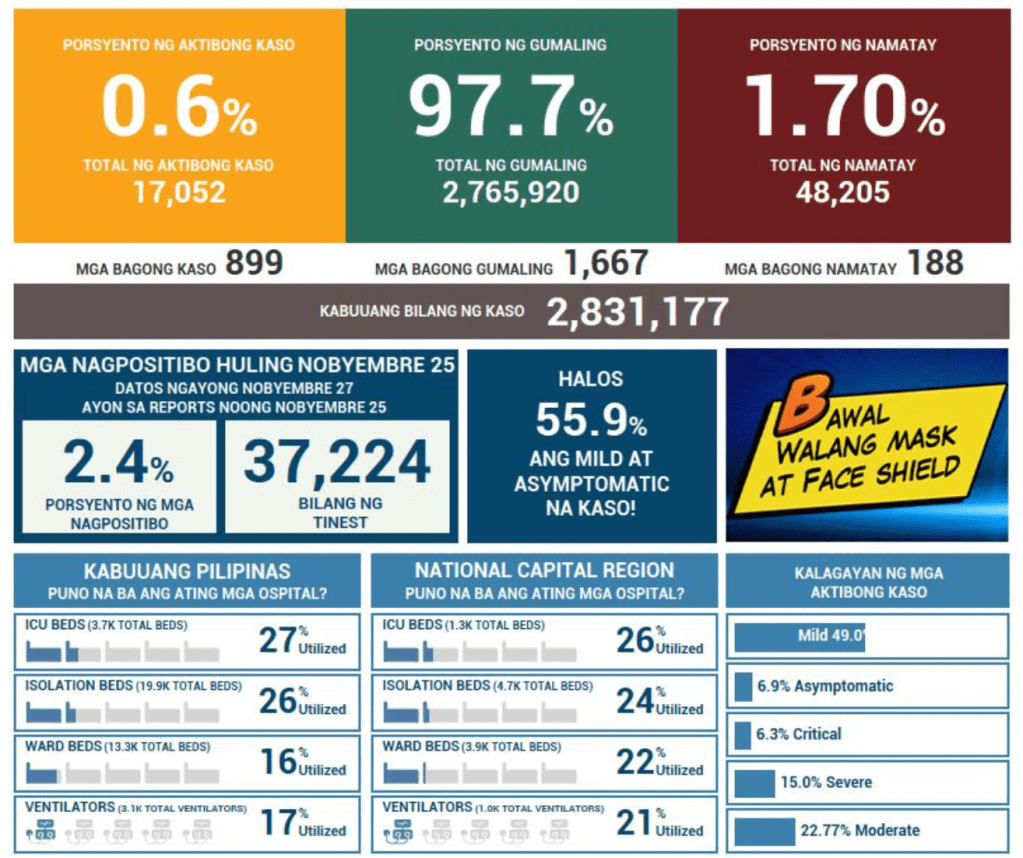
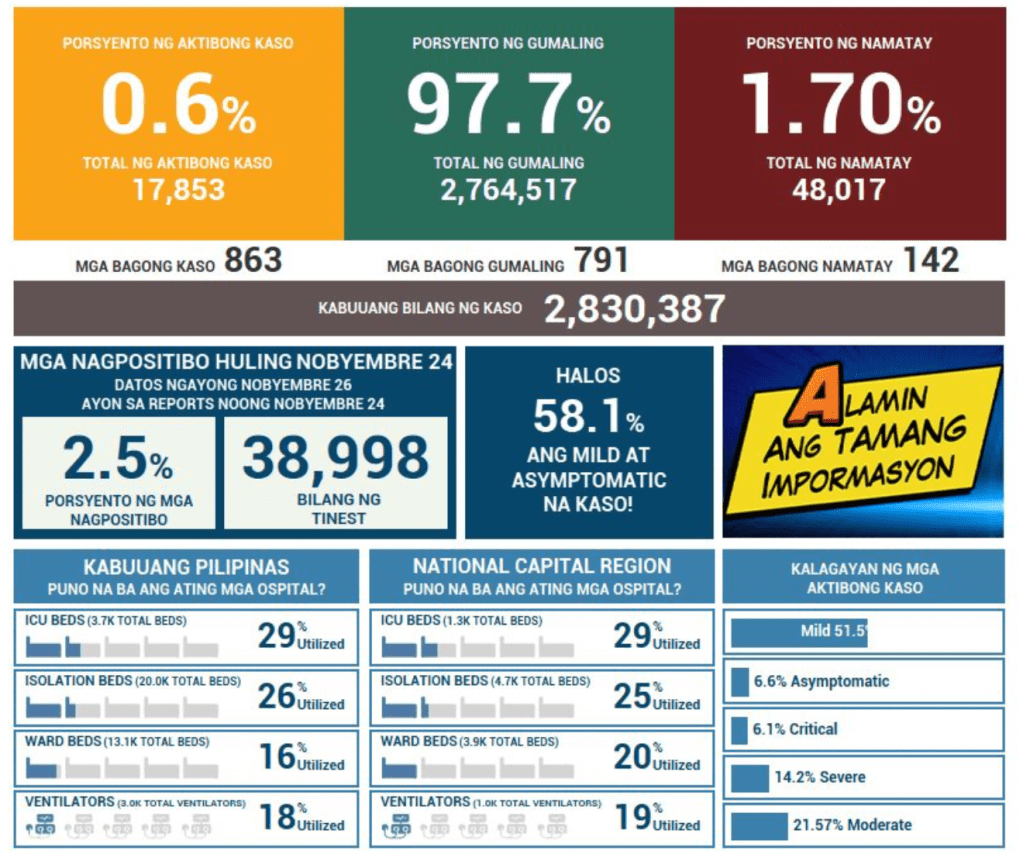
Continuing triple digits on cases (and deaths) and the data of 11.26.2021

As the world watches B.1.1.529 (most likely to be called Nu Variant) in harried anticipation, the Health Agency reports 863 new cases based on close to 39,000 tests done last November 24 with a positivity of 2.5%. Active cases remain stagnant as more cases than recoveries are reported today.

An additional 142 deaths were announced, bringing the cases past the 48,000 mark.

B.1.1.529 emanated from Botswana and was identified on November 9. It has spread to its neighboring country South Africa, which is now seeing a 10-20 fold rise in cases from its low triple digit numbers. Aside from South Africa, it has also been reported in Hong Kong (from a traveler from South Africa) and lately in Israel and Belgium. Because of this new variant (which has not been classified as concern or interest) there is a need to speed up the vaccination process and protect the borders of the country as South Africa and Hong Kong are currently classified by the IATF as “green country”, allowing travelers from these nations to arrive locally with no quarantine being required. There needs to be an immediate shift in policies with this information being driven by concern from various nations.

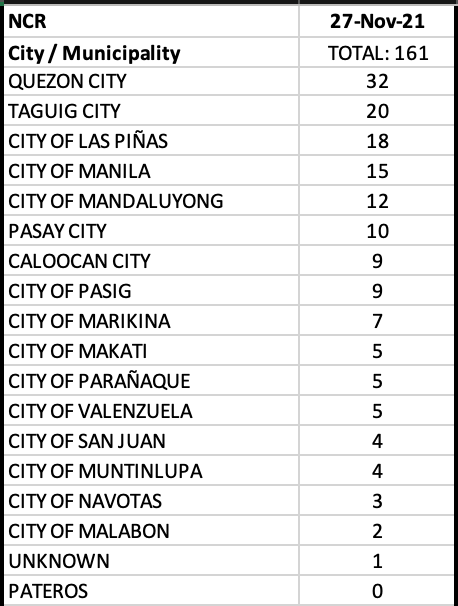
Only NCR recorded triple digits today with 183 cases or 21% of the total share of the national cases today. The rest of the regions in the country report double digits.

Isabela, however, had the most cases among provinces. Nevertheless, all provinces report double numbers today.

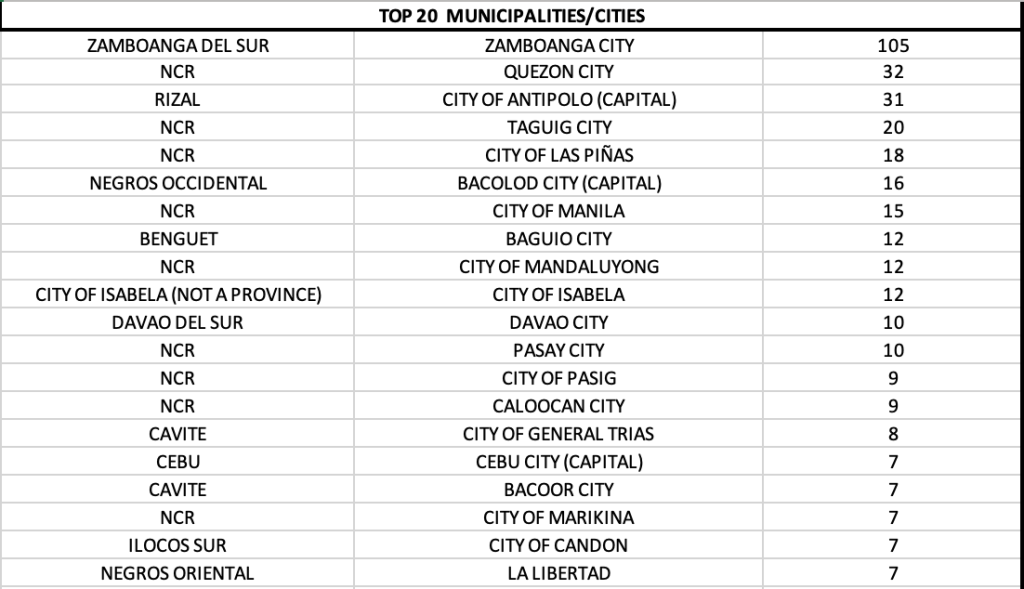
On an LGU level, 11 of 17 LGUs in NCR are in the top 20 as the number of cases in the country ease down. Not one LGU in the top 20 list had more than 50 cases, including Quezon City. The least cases in the list was down to 7 – meaning if your LGU reported 7 cases, it would be included in the top 20.

B.1.1.529 – what do we know so far?

  1. It contains 32 spike protein mutations implying that the current vaccines available may not be as protective as with other variants of concern in the past. Mutations on the spike are potentially more problematic in that it can evade immunity and increased transmissibility. As to whether it can cause more severe disease is unknown.
  2. Because of the high number of mutations, the nature of this variant may have come from a chronically ill individual where the coronavirus had survived and allowed to mutate to this extent. Because HIV is predominantly seen in Africa, it is possible that this mutation had emanated from someone with this illness.
  3. So far, the global cases are low. With 3 being reported in Botswana (all fully vaccinated), 53 in South Africa and two in Hong Kong (from travelers from South Africa). (update: Israel and Belgium have reported cases as well)
  4. The World Health Organization has classified this variant as a variant under monitoring last Wednesday and are meeting to weigh in on the impact of this new variant. (update: the WHO has classified this as a Variant of Concern and is now designated as Omicron)

975 cases and 193 deaths and the data of 11.25.2021

With close to 39,000 tests done last November 23 and a positivity rate of 2.8%, 975 new cases were announced today by the Health Agency. The active cases remain above 17,000 with more than 40% being moderate to critically ill.

Of the 17,796 active cases, more than 20% are severe or critically ill. As to how many of them are backlog data (those who do not have outcomes yet) is most likely the reason for the high deaths being reported daily.

There are 193 new deaths announced today.

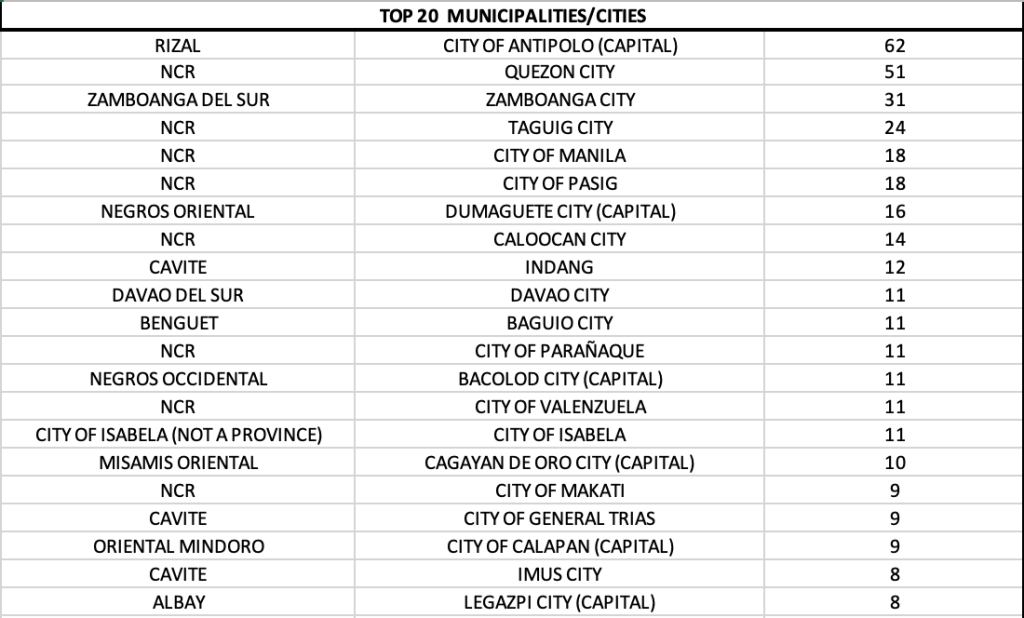
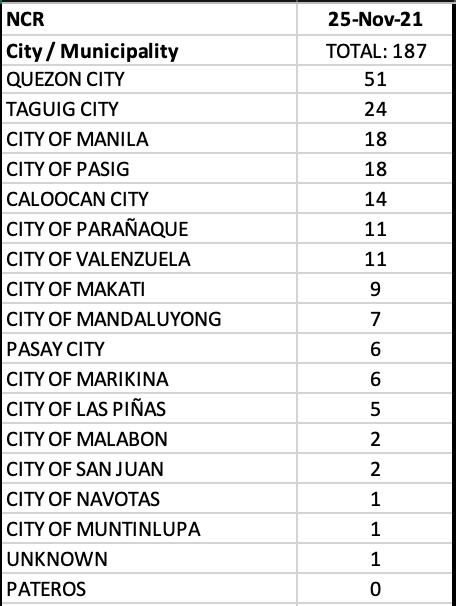
NCR had a decent 187 new cases today (accounting for around 19% of the national total), with CALABARZON in second spot, driven by the province of Rizal in general and the City of Antipolo in particular. Only Mega Manila and CALABARZON reported triple digits today.

Eight of 17 LGUs in NCR were among the top twenty cities with most cases today as the fewest number of cases in the top 20 list is at 8. This means that if your LGU had 8 cases, it would be part of the list. And it is good seeing single digits in the top 20 list.

890 cases and 200 deaths and the data for 11.24.2021

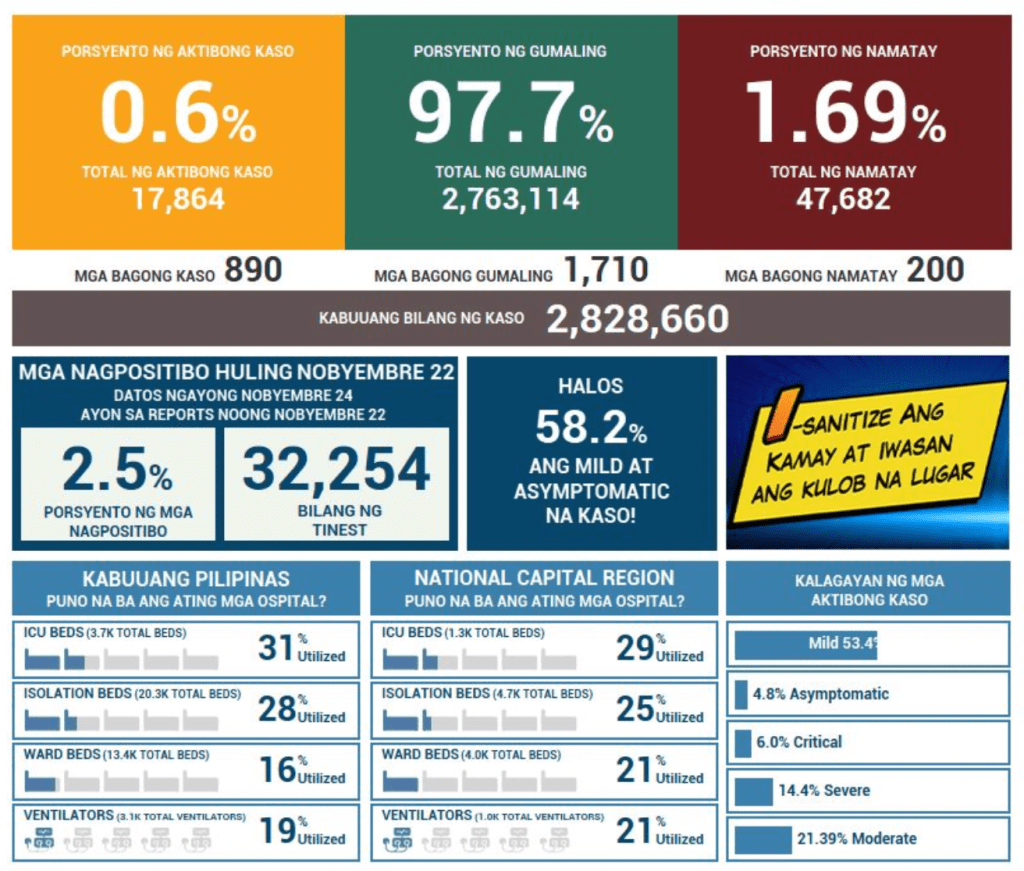
With more than 32,000 tests done on November 22, Monday, a positivity of 2.5% was recorded.

The Health Agency reports 890 new cases today, with active cases down to less than 18000. Of the active cases, more than 40% are now moderate to critical.

There are 200 additional deaths announced today.

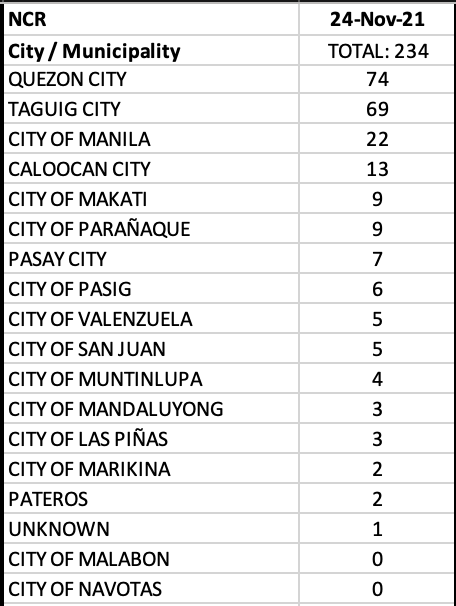
As the cases in the country continue to decline, CALABARZON owned the larger share of the total cases today with 248 cases while NCR shifted to second rank. Only these two regions reported triple digits with all the rest of the remaining regions reporting either double or single digit cases.

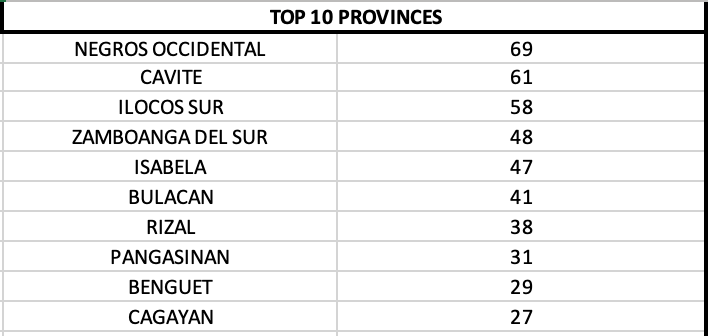
CALABARZON’s rank was led by the provinces of Rizal and Cavite dominating the provincial level.

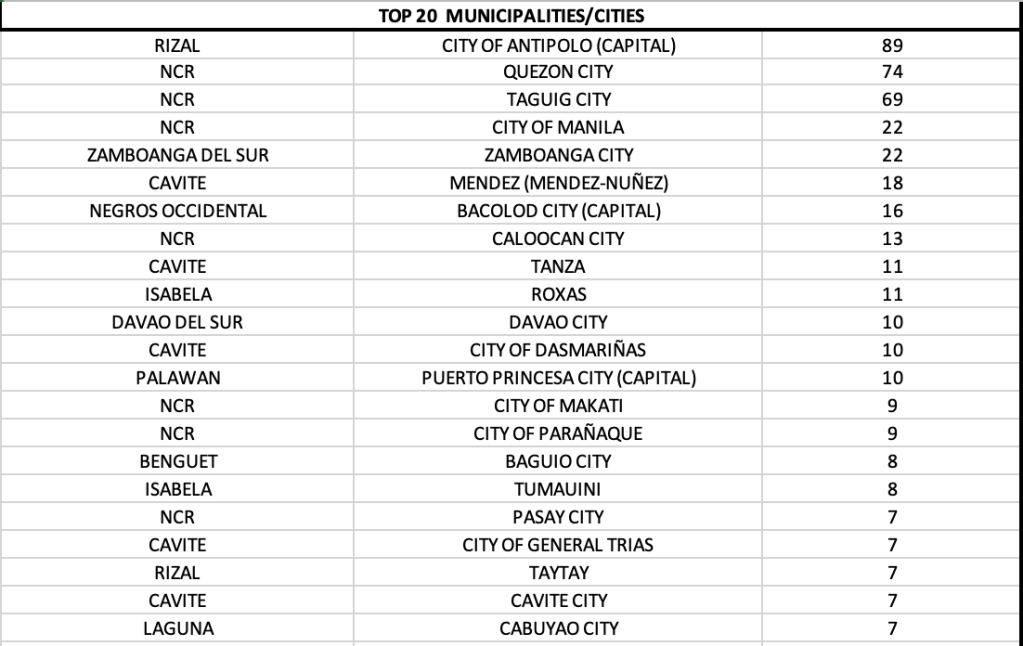
Among LGUs, it was the city of Antipolo that had the most cases among cities and municipalities in the Philippines today as it recorded 89 new cases. Seven of the 17 LGUs in NCR are in the top 20 list. The fewest number of cases in the top 20 today was 7. Meaning if your LGU had 7 or more cases, you’d automatically be in the top 20.
The 4-digit dump on Tuesday and the data for 11.23.2021

You’d think that with only 25,562 tests done on November 21 and a positivity rate of 2.3% we’d actually have only a little less than 600 cases today. With backlogs still unaccounted for, what better day to report them than the usual low Tuesdays.

The Health Agency reports 1,153 new cases (including backlogs) today.

It’s another day that didn’t add up, but of course, that’s information privy to the Health Agency. Notice that yesterday, the DoH announced 2,826,853 total cases. With their total of 2,827,820 cases as of today, that’s a difference of 967. So where did the additional 186 come from? Such discombobulated arithmetic is confusing.

An additional 195 deaths were added today.

The NCR had 314 new cases today, or 27.2% of the total cases in the country today. With backlogs in cases hounding the agency, the already late data is not reliable as it is. Other regions with triple digits include CALABARZON, Ilocos Region and Central Luzon.

Only three provinces had more than 50 cases – Negros Occidental, Cavite and Ilocos Sur.

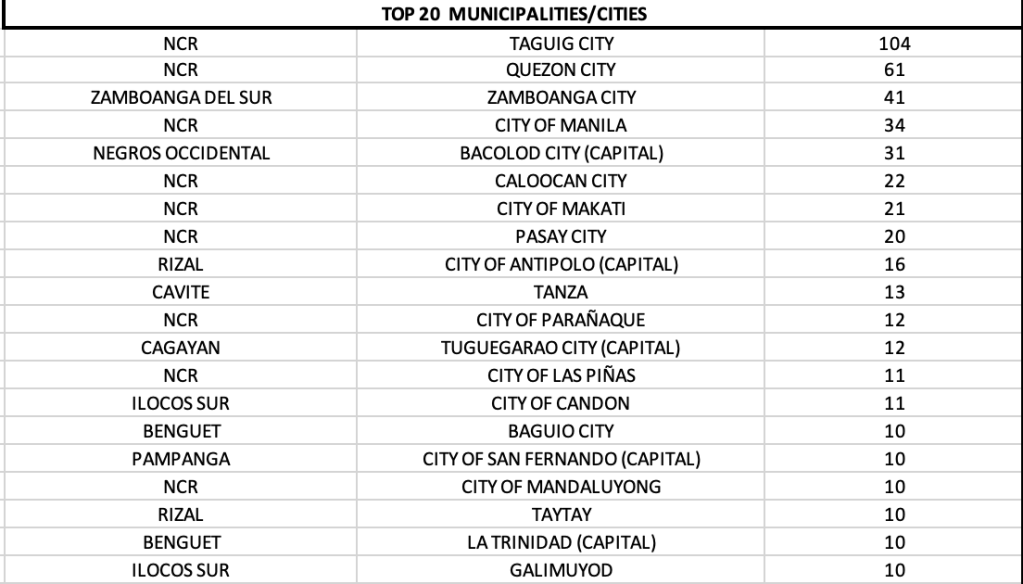
Taguig City broke all records among LGUs with 104 cases today. In short, 1 in 3 cases reported today in NCR were from Taguig. Nine of 17 LGUs in the NCR were in the top 20 list. The fewest cases in the top 20 was 10. Meaning if your LGU recorded 10 cases, it would be included in today’s list.
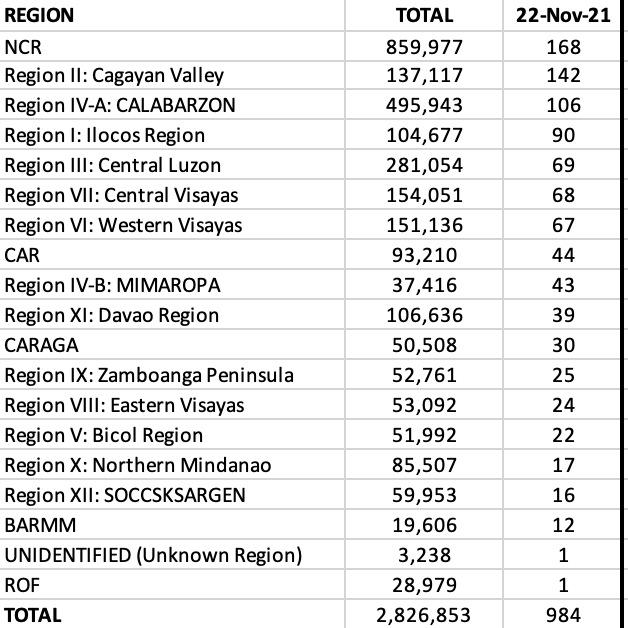
984 new cases to start the week and the data for 11.22.2021

This week will be a test as to whether the Philippines will begin reporting more days with triple digits than the low quadruple digits in the past week. The 7-day average as of yesterday’s data was 1,349 new cases/day. Will we achieve a 7-day average of triple digits at the end of this week or not?

The Health Agency reports 984 new cases based on 35,901 tests done last November 20 and a positivity rate of 2.8%. This brings the active cases down to less than 20,000. Of those that are still recorded as active cases, close to 40% are moderate to critical.

Additional 218 new deaths were announced today.

The NCR accounted for a lower end 17% of the total cases reported in the country today. Cagayan Valley and CALABARZON reported triple digits as well.

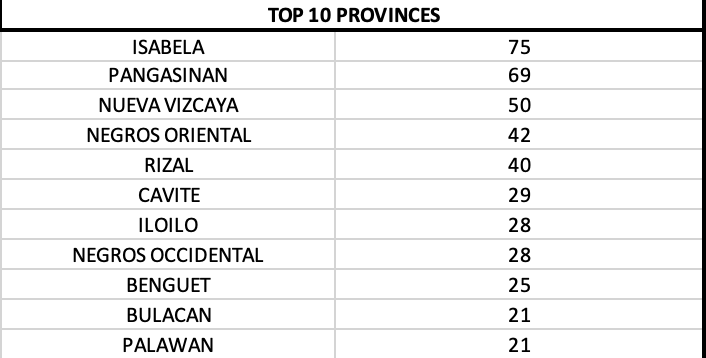
The provinces of Isabela and Pangasinan were the top provinces that reported the most cases on a provincial level today, having more than 50 cases apiece.

On an LGU level, it was Quezon City that continued to lead the pack with 44 cases or 26.2% of the total cases in the NCR. Only 6 of the 17 LGUs in NCR were in the top 20 list as 11 LGUs in Mega Manila report single digits.

2,227 with backlogs to end the week and the data for 11.21.2021

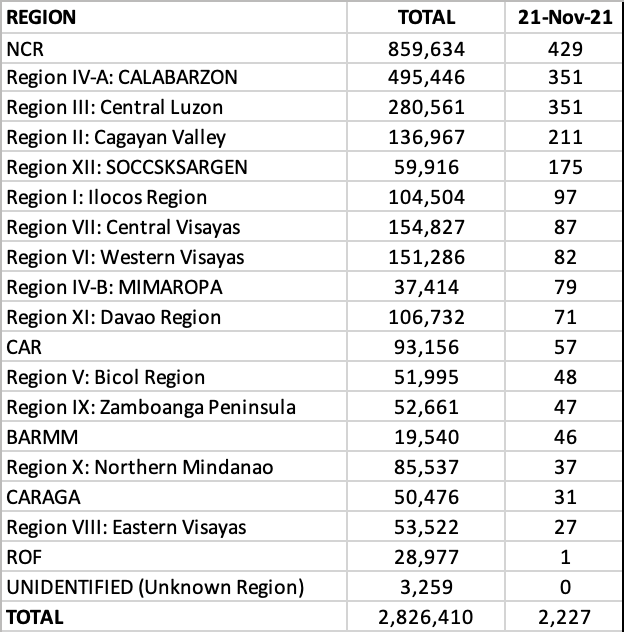
With backlogs coming in, the Health Agency reports 2,227 new cases today, the highest since November 10. The data, however, is not in congruence with the number of tests done from November 19 where close to 40,000 tests yielded a positivity rate of 2.8%. The total number of new cases today would actually have been less than 1,000. But with data backlogs, the Department of Health will need to reconcile these and will need to report it. When corrected, we should start seeing lower cases the week after.

The number of active cases are a little over 21,000 while the number of deaths added are 175, bringing the total deaths to more than 47,000 and the highest in the region for the past 7 days.

With backlogs added today, the total in the NCR is up at 429 new cases. CALABARZON AND Central Luzon have 351 additional cases apiece, while Cagayan Valley reported 211 new cases. The surprise of the day was SOCCSKSARGEN that jumped to 5th rank with 175 cases.

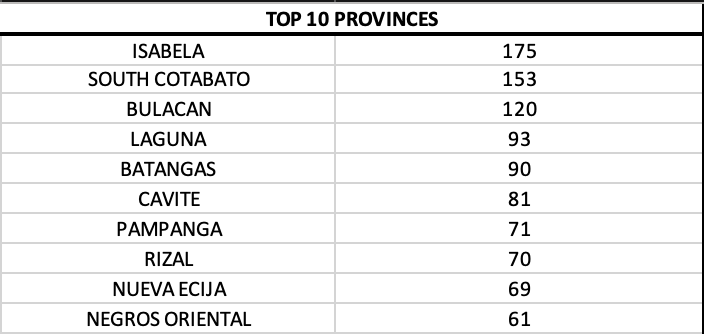
Isabela, South Cotabato and Bulacan led the provinces with triple digits today.

On an LGU level, Quezon City takes back the lead with more than 21% of the total cases in NCR. Three LGUs in Cotabato province and 2 in Isabela are among the top 20 list, together with 7 of 17 LGUs in the NCR.

THE WEEK IN REVIEW

It was another good week as cases continued to decrease to < 1,500 for the 7 day average. Unfortunately, it wasn’t the same story with the deaths, as the 7-day average death rate continued to climb.

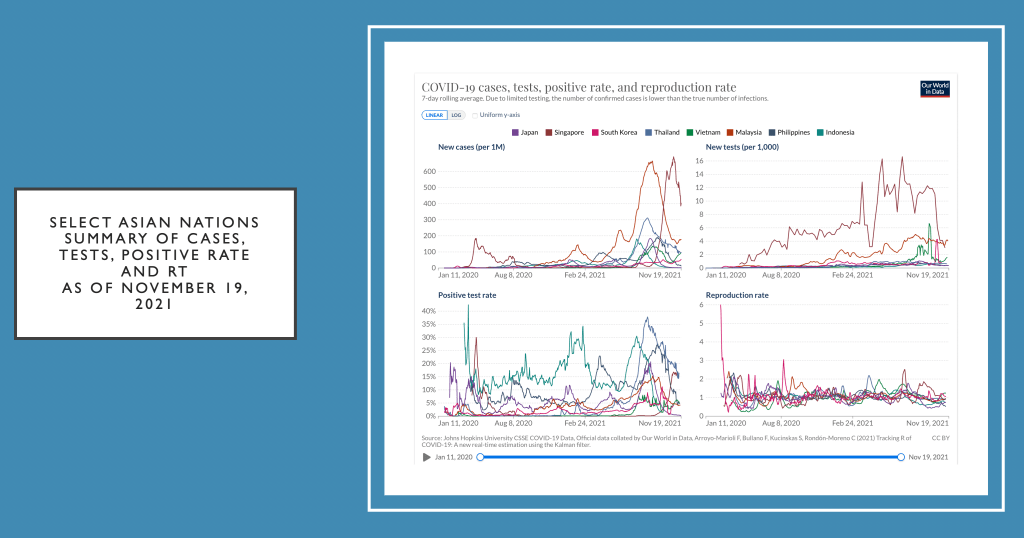
While the Philippines is doing considerably well in terms of new cases with 12.99 cases/M population (per capita) among select Asian nations, it is doing worst in terms of deaths – with 2.14 deaths/M population due to COVID-19. The highest among the same select Asian nations.

A snapshot on summary of cases, tests, positivity rate and reproduction number shows the Philippines on a declining trajectory.

Compared to the other select Asian countries, we’re doing quite well and staying steady between 1000-1500 cases this week, with lower positivity rates in tests, and a reproduction number that touches 0.5.

How will the upcoming week fare?

7-day average <1500/day and the data for 11.20.2021

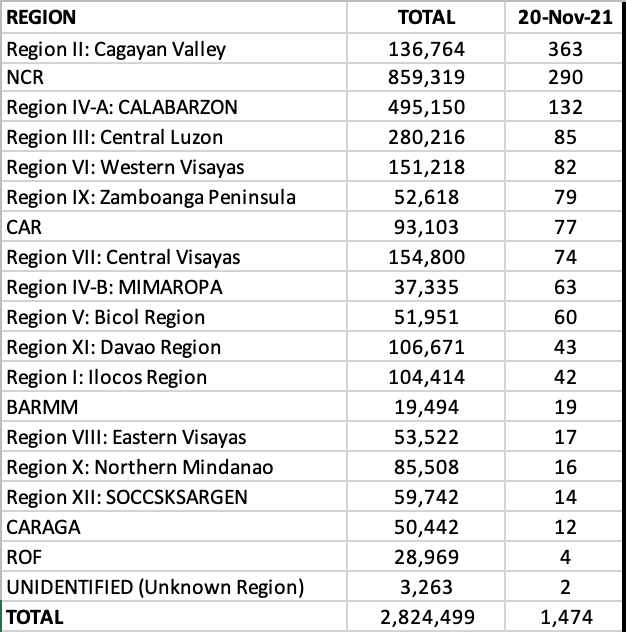
The Philippines is on track for the 1000-1500/day range of cases for the week as the Health Agency reports 1,474 new cases today. And with more recoveries, the active cases drops to 22,000. The data is based on more than 38,000 tests done last November 18 with a 3.2% positivity rate. The 7-day average is ~1,470 cases/day.

The share of moderate to critical cases is close to 40% of the active cases, which means that more than 8,000 of the active cases fall in this category.

Another 205 deaths were added today.

With late posts coming in, it was not surprising that Cagayan Valley overtook the NCR in new cases reported for the day with 25% of the total cases today. This means that one in four cases reported today was from Cagayan Valley.

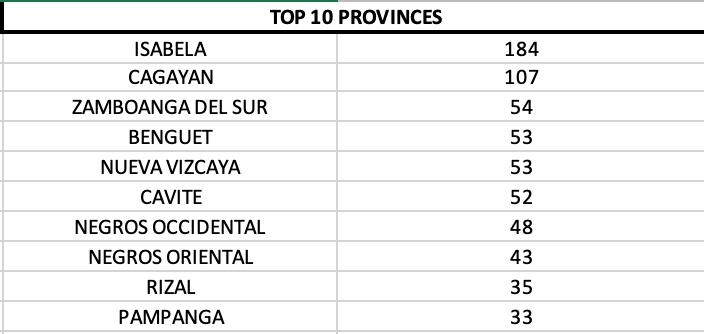
This is reflected in the provincial listing where Isabela and Cagayan reported triple digits – 184 and 107, respectively.

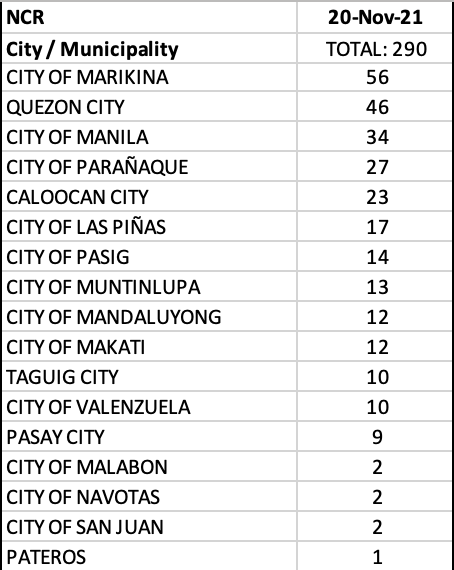
On an LGU level (cities and municipalities), Marikina took the top stop in the country (and in Mega Manila) with 56 new cases (~20%). Seven of 17 LGUs in NCR were in the top 20 list as five LGUs in Isabela province joined the top 20 list. The city of Baguio is third in the list today.
There is no winter season in the Philippines, but as December draws near, the areas in the north have much colder temperature and is the hideaway for many Filipinos who want to experience the ‘winter’ feeling. The COVID-19 seasonal trend globally may be problematic for these areas in the Philippines in the coming holiday season.

NCR COVID19 update and the data for 11.19.2021

While the cases are slightly up today, it is to be expected as we plateau between 1,000-1,500 new daily cases.

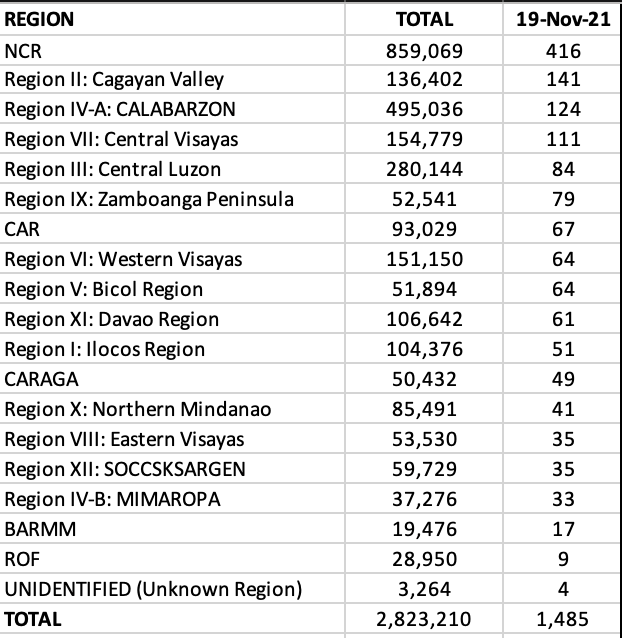
The Health Agency announces 1,485 new cases and with less recoveries, the active cases remain in the 23,000 mark. This is based on over 43,000 tests done last November 17 with a 3.5% positivity rate.

Additional 277 deaths were reported today.

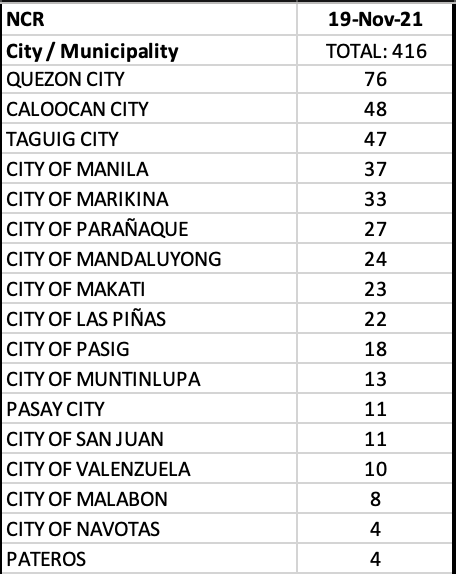
NCR accounted for close to 30% of the total share of COVID-19 cases in the country today with 416 new cases. It had more cases than combined total cases of Cagayan Valley, CALABARZON and Central Visayas.

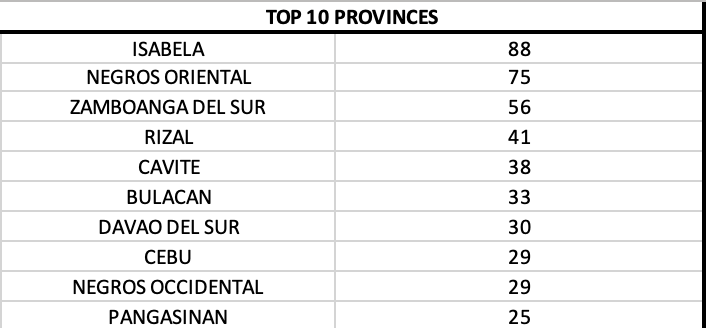
All the provinces among the top 10 had less than 100 cases.

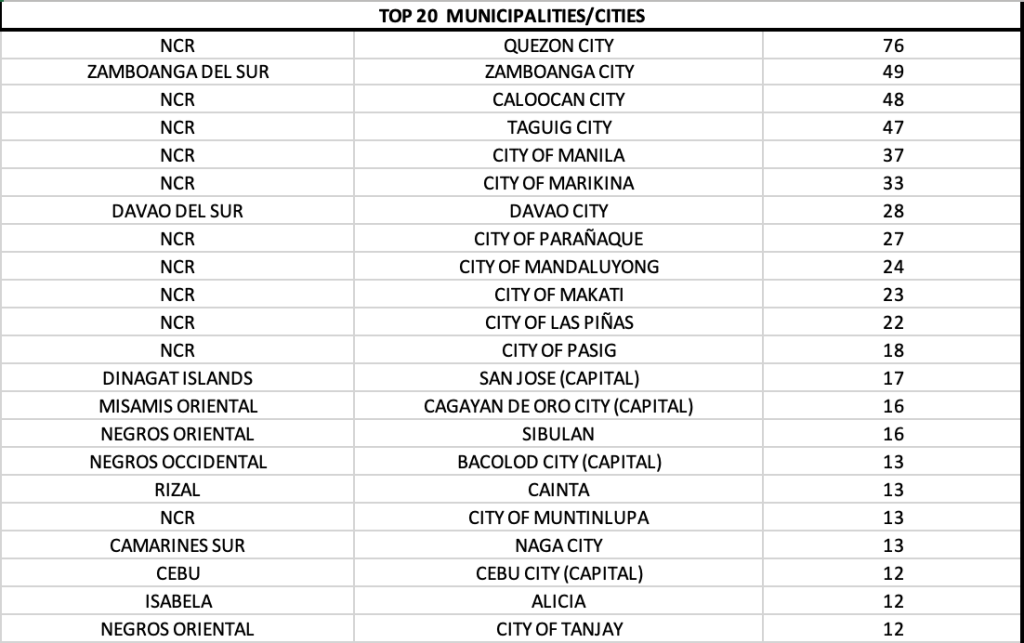
Among cities and municipalities, it was Quezon City once more that dominated the numbers with 76 new cases, or 18.3% of the total in Mega Manila. Many LGUs in NCR saw higher numbers as well, with almost all LGUs in Mega Manila reporting double digits except for Malabon, Navotas and Pateros. Eleven of 17 LGUs in NCR were among the top 20 for the day.

OCTA RESEARCH MONITORING REPORT

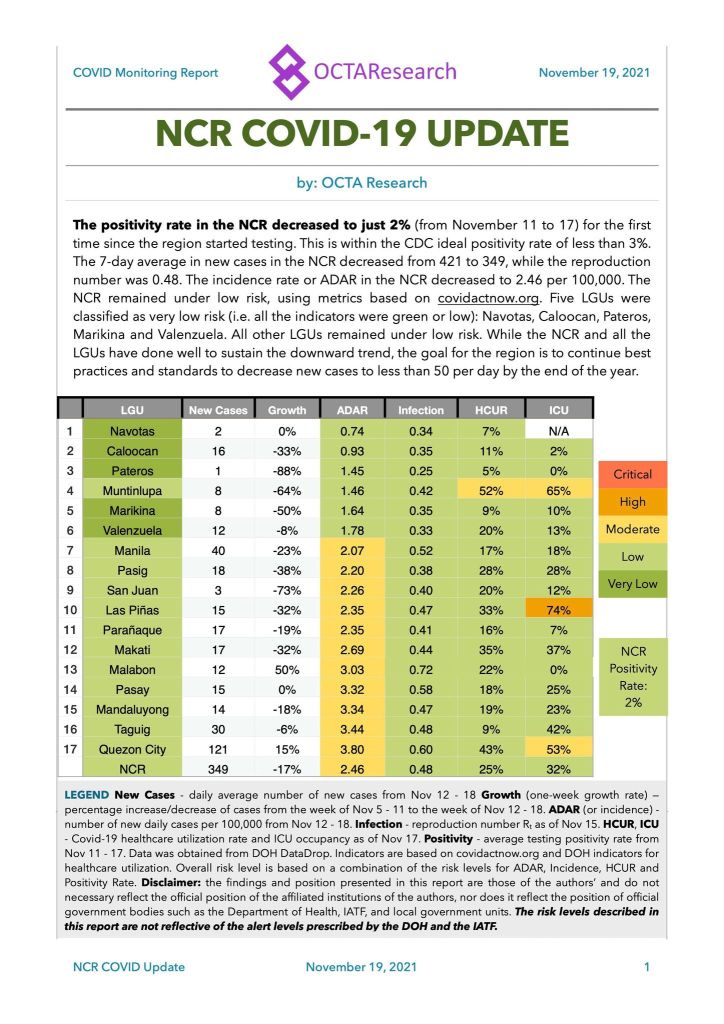
The positivity rate in the National Capital Region has dropped to ~ 2% for the week November 11-17. This falls now within the acceptable positivity rate of the Center for Disease Control (<3%). Reproduction number is < 0.5 and in the ADAR is at an average of 2.46/100,000 population. Navotas and Caloocan are < 1.0/100,000.

With the current numbers, five of the 17 LGUs are at very low risk category, while the rest are at low risk. Eleven of the 17 LGUs have ADAR at moderate risk. Only Muntinlupa City and Quezon City have high ICU utilization rate.

Among the 17 LGUs in NCR, only Quezon City and Malabon had a positive increase this week compared to the past week. Five of the 17 LGUs reported single digit daily new cases. Only Quezon City continued to report triple digits.

The OCTA COVID-19 update and the data for 11.18.2021

The Health Agency reported 1,297 new cases today, from the over 42,000 tests done last November 16 with a 3.4% positivity. Active cases are down to 23,158.

The number of moderate to critical cases are almost 40% of the active cases.

An additional 305 deaths were announced today.

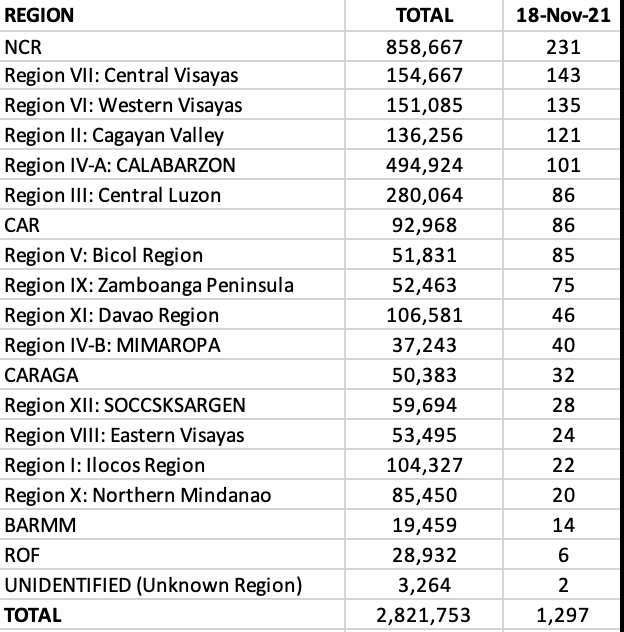
The NCR contributed to lesser share for today’s cases – 17.8% – compared to the previous days where 22-25% of the daily numbers belonged to Mega Manila. Central Visayas and Western Visayas were second and third, respectively.

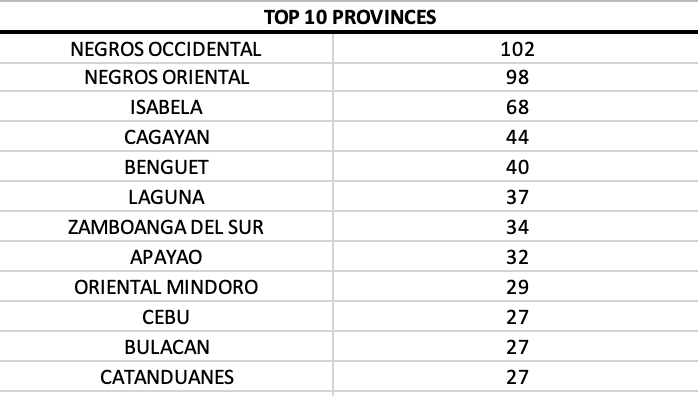
The ranking in the Visayas was primarily led by the provinces of Negros Oriental and Occidental, with Negros Occidental reporting triple digit cases.

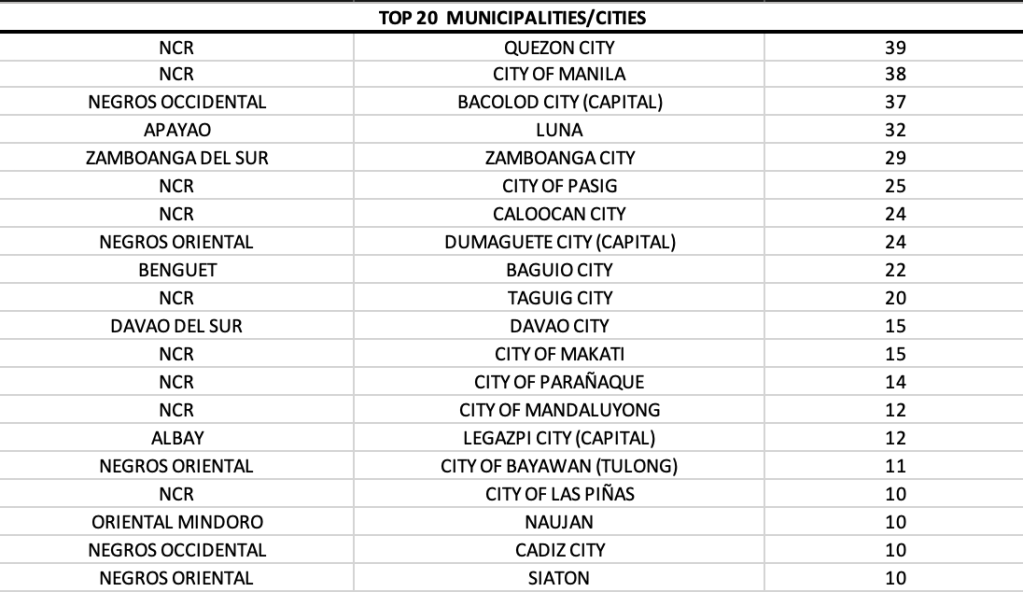
On an LGU level, while Quezon City continued to lead, it reported only 39 cases today (or 17%) of the share for NCR followed by the City of Manila with 38. All LGUs nationwide had less than 40 new cases today. Nine of 17 LGUs in NCR were in the top 20, as the least number of cases in the list drops down to 10. The remaining 8 LGUs in NCR report single digit numbers today.

OCTA RESEARCH MONITORING REPORT

As more areas move into lower alert levels, here’s the rundown on the top 20 provinces with most cases in the country for the week of November 11-17, 2021.

NCR continued to lead other provinces (considering of course that it is the densest, most populous and tiniest land area in the country). All, and that means ALL, the top 20 provinces (including NCR) saw a negative one-week growth rate, with ADARs falling significantly as 6 provinces now are categorized as very low risk. Most of these provinces are in the CALABARZON region, with Rizal, Cavite and Laguna joining the very low risk category. The other provinces classified as very low risk include Bulacan, Davao del Sur, and Cebu.

Eight provinces are at low risk including NCR, while the remaining are at moderate risk.

Positivity testing is lowest in Cavite and Cebu at 1%. And remains critical in Negros Oriental, Isabela, Cagayan and Palawan. While the latter areas may have lower ADAR, the low testing output is concerning because not enough testing is being done in these provinces. The true picture of the condition in these areas cannot be extrapolated from the ADAR or healthcare system use alone.

1,190 new cases and 309 deaths and the data for 11.17.2021

The Health Agency reports 1,190 new cases today with a little more than 33,000 tests done last November 15, with 3.5% positivity rate. Active cases are at less than 24,000, with more than 36% being tagged as anywhere from moderate to critical. And this is an area that will need to get dissected well because there seems to be a large backlog in identifying whether this group of patients tagged as moderate, severe, or critical have had outcomes or not. And this lag in resolution of outcomes in this group may explain the discrepancy in ICU utilization which is not congruent with the 17% severe and critical cases.
There are 309 new deaths announced today, resulting in over 46,000 deaths already or an overall case fatality ratio for outcomes at 1.65%.

Based on the data drop of the DoH, it was interesting to dissect why the number of moderate to critical cases were so high at close to 37%. Was this because there are still a lot of moderate to critically ill cases? But the ICU and ward beds and ventilators in use were unusually low. In short, the data did not match.

Among the current 23,846 active cases, there were 7,794 cases that remained open in outcomes (no mention if they have recovered or died). Of the 7,794 cases that remained unresolved, 6,146 were moderate to critical.

Breakdown based on month of diagnosis is as follows:

To elucidate the above the table, there were 15 patients categorized as critical last January 2021 with NO outcomes yet. And the DoH is still counting these outstanding cases. Most of the cases from August to September have had no resolution as of now – that’s 2-3 months after their being diagnosed. Which most likely should not be the case especially for moderate patients who may have resolved already and the more severe and critical ones, that may have passed on.


The NCR accounted for a higher share for todays cases with 315 or 26.5% new cases. Notice the rapid decline in other regions lately, with NCR plateauing at the 300-500 daily mark, an increase of 8% from the previous weeks.

It is good news that we are seeing provinces report less cases as well with Cavite leading but with less than 50 cases. None of the provinces in the top 10 list had more than 50 cases.

Among cities and municipalities, Quezon City continues to take the lead with 90 of the 315 cases in NCR – that’s almost 30% of the total share of Mega Manila. The City of Manila came in second with 62 cases while the rest of NCR reported less than 20 cases per LGU. Seven of the 17 LGUs reported single digits.