Saturday’s surprise data on 04.24.2021

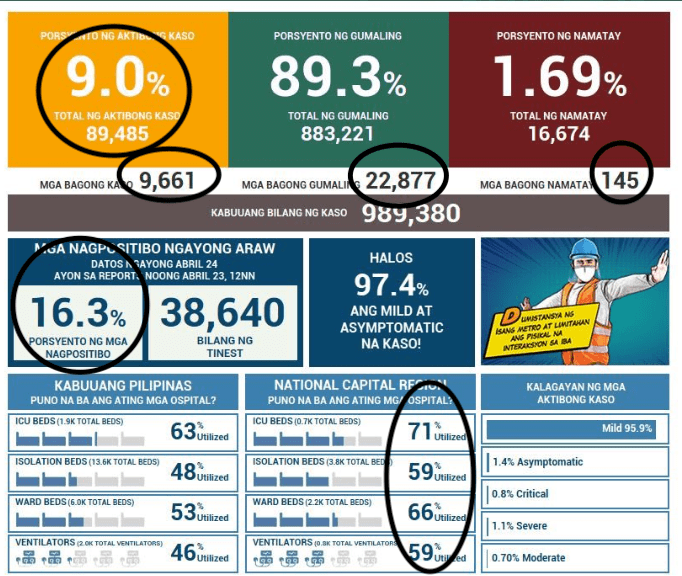
While there is a slight increase in number of new cases at 9,661 announced by the Health Agency at 4PM today, this is due to the higher number of tests performed last April 23. As there are close to 23,0000 new recoveries being reported overnight, the number of active cases drops to less than 90,000 (9 percent).

New deaths reported was at 145, bringing the case fatality ratio of those with outcomes (recoveries or deaths) to 1.85 percent.

There is a significant decline in the utilization of intensive care unit beds from a previous high of over 80 percent to just 71 percent today and isolation, wards, and ventilators to less than 70 percent (or below the critical threshold) of the health agency.

With a 16.3 percent positivity rate reported April 23, the Philippines continues to inch closer to the 1,000,000 mark as we are still on track to inevitably surpass this by next week.
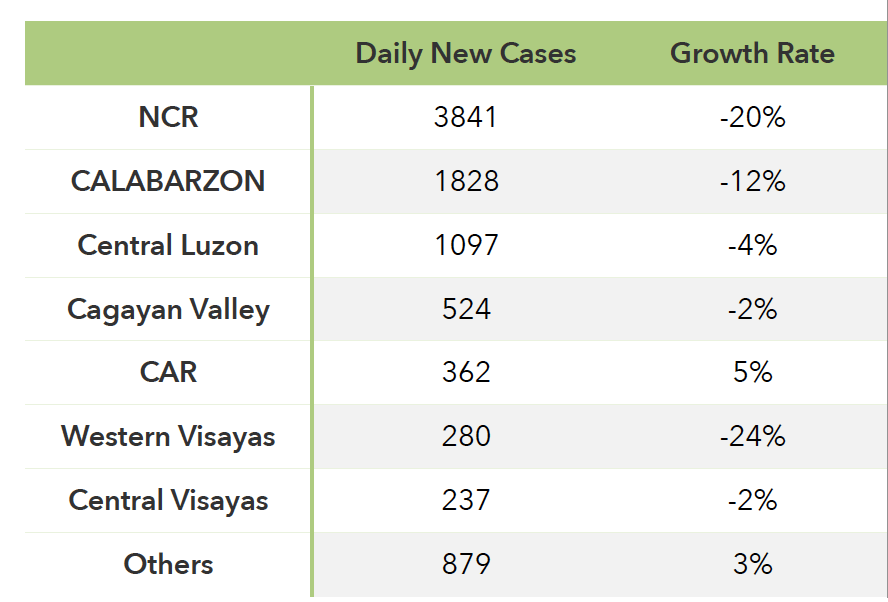
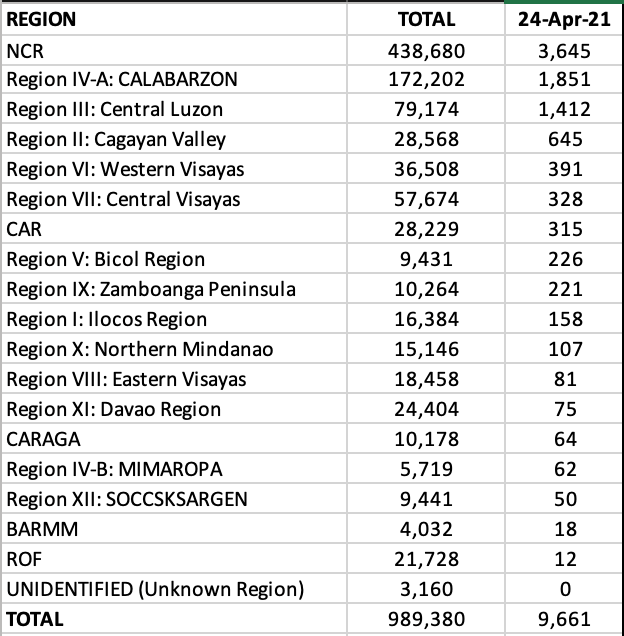
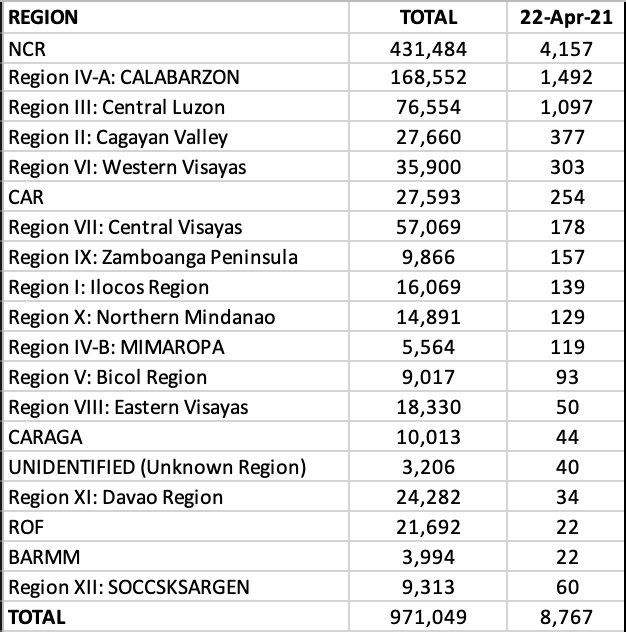
On a regional level, the NCR, CALABARZON, and Central Luzon continue to dominate the new cases. NCR, however, owned only 37.7% of the total share for today, with CALABARZON owning 19.2% and Central Luzon 15%. Eight other regions reported triple digits.

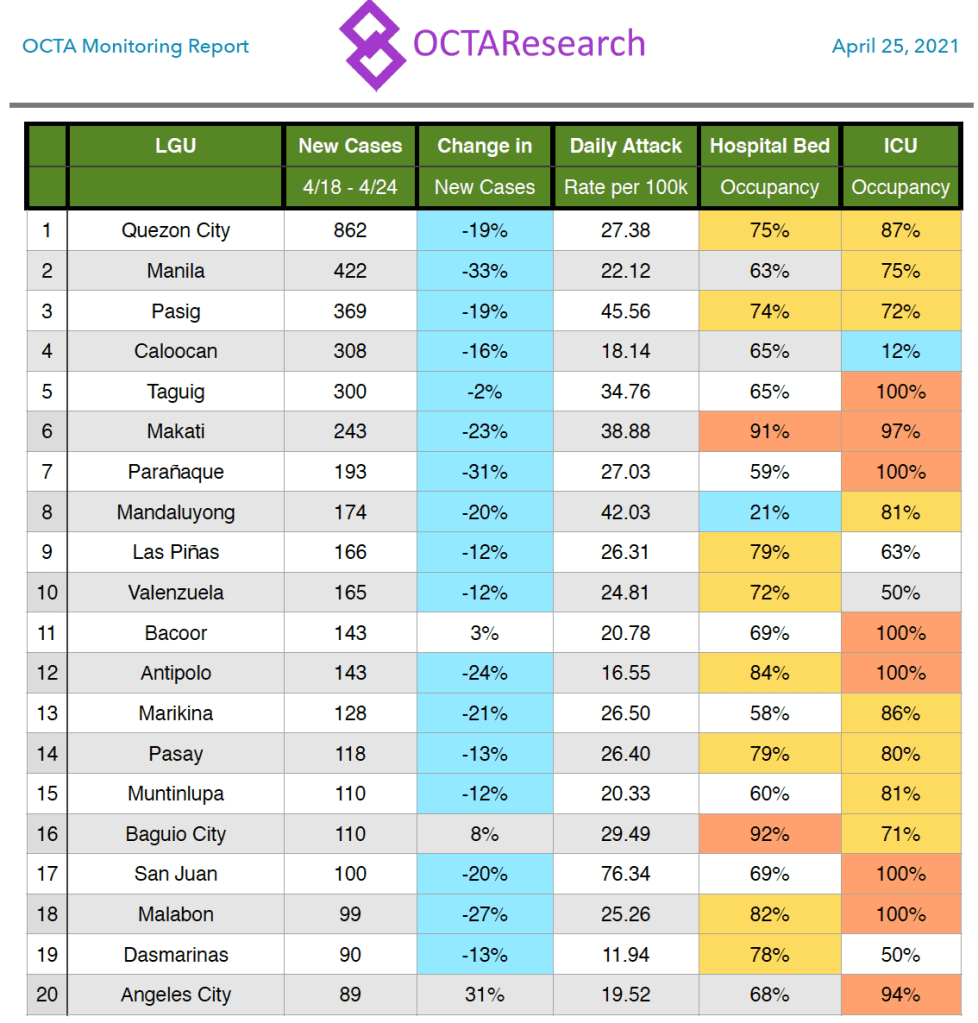
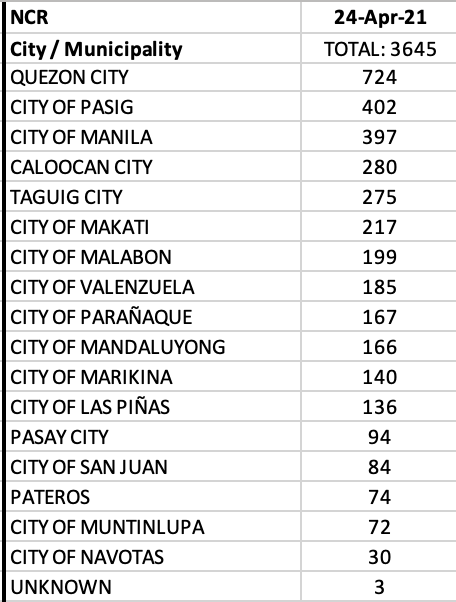
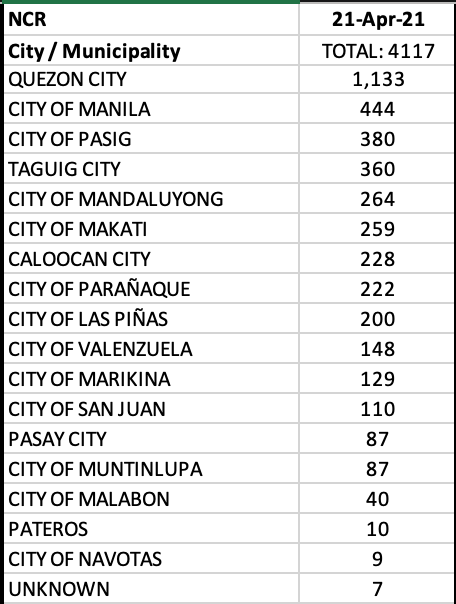
Among the LGUs in NCR, it was still Quezon City that continued to lead with 724 (20%) of the cases in Mega Manila. Pasig and Manila came in second and third, respectively. Nine of there LGUs had more than 100 but less than 300 cases. They were: Caloocan, Taguig, Makati, Malabon, Valenzuela, Parañaque, Mandaluyong, Marikina and Las Piñas. Thirteen of 17 LGUs in NCR were in the top twenty cities with most cases.

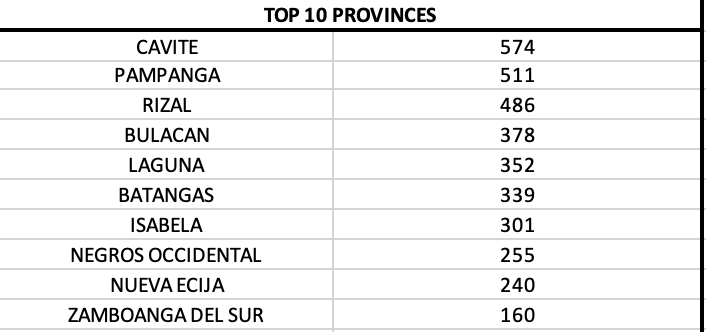
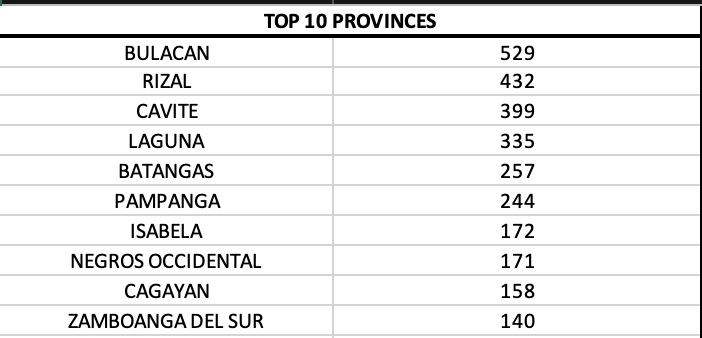
On a provincial level, Cavite continued to lead the pack with 574 new cases. The sudden rise of Pampanga to second spot among the top ten provinces is quite alarming as this province is seeing an uptick in cases, overtaking erstwhile leader Bulacan for the region of Central Luzon.

The effect of ECQ on COVID-19 cases on 04.23.2021

Lockdowns definitely work at bringing down the cases of COVID-19. The impact of the two week ECQ from March 22-April 4, 2021 is being seen one month later.

Yesterday saw a 20 percent drop from the expected number of daily new cases for COVID-19. The 8,742 new cases yesterday was based on tests done on April 20, 2021 where of 43,664 samples tested in 40,227 individuals. Hence the lower number of new cases reported on April 22, 2021. This actually would have been lower if the Health Agency reported real time data. However, because of correction and continuous clean up of data does not allow us to see from where additional cases are coming from. Of the 40,227 individuals tested on April 20, 7,055 tested positive. The almost 1,700 cases discrepancy in the test results and announcement of new cases may most likely due to previous positive patients who have not yet been announced because of delays in submission of reports.

The Health Agency today reports 8,719 new cases based on report that 17.1 percent tested positive last April 21, from close to 51,000 individuals tested. If we are to follow the trend of reporting of the Health Agency, this would mean that we will most likely have more cases tomorrow.

But we revel in the better news today as there are 13,812 new recoveries, bringing the total active cases down to 10.5 percent. New deaths were at 159 today with the case fatality ratio lower now to 1.88 percent (based on those with outcomes – recovered or died).

The current health care capacity in the NCR remains to be inundated as the ICU beds are still above the critical level at 82 %.

Whether the shift to MECQ will see a sustained momentum in bringing down the cases the coming weeks is the challenge as the last week of April approaches and the country inches closer to the 1,000,000 mark, let us not keep our guards down as COVID-19 is hitting too close to our own homes and places of work.

Thursdays surprise on 04.22.2021

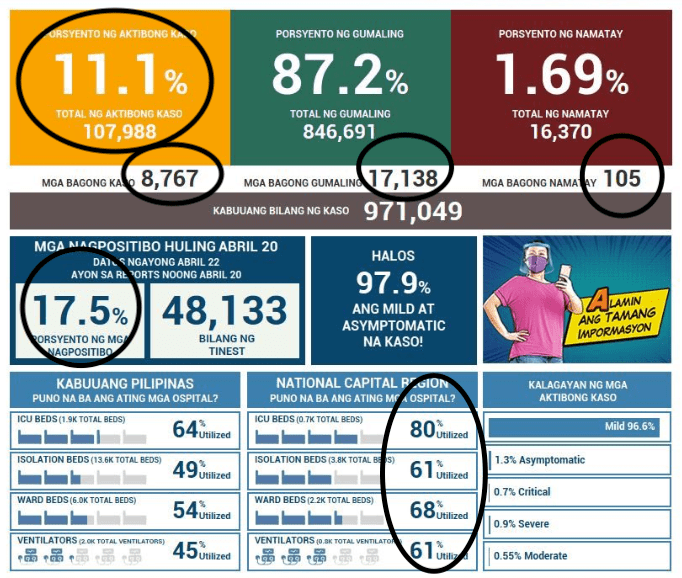
It was a striking deviation from the usual pattern of reporting where the Thursday reports are usually higher than the patterns see on Tuesday and Wednesday. So todays report from the Health Agency of 8,767 new cases was both a welcome news (at a same time quite an unsettling one). Nevertheless, we take the report on a positive note together with the additional 17,138 new recoveries, bringing down the total active cases to 11.1 percent (107,988). The positivity rate is still high at 17.5 percent for April 20. Note that the data on testing as explained in the infographic is data released on April 22 according to reports for April 20, 2021.

There were 105 new deaths reported bringing the case fatality rate for resolved cases (recoveries and deaths) is lower at 1.9% compared to the global CFR which stands at 2.44%.

Globally, Iraq is the 25th country to pass the 1,000,000 mark for number of COVID-19 cases. We are in 26th rank with 971,049 total cases.

The granular data based on region, the cities in the NCR, top ten provinces and top twenty cities are provided below:

Time-based recovery tagging by DOH brings active cases to 12% on 04.21.2021

After the weekend recovery haul, the Health Agency has continuously reported time-based recovery with 19,699 new recoveries today and 9,227 new cases reported. With a positivity rate of 19.5 percent, we will most likely see more than 10,000 cases again tomorrow.

On April 5, 2021, the Department of Health released circular number 2021-0122 on “Reiteration of Prevention, Detection, Isolation, Treatment and Reintegration (PIDTR) Strategies for COVID-19 in Light of the Implementation of Enhance Community Quarantine in NCR Plus Bubble” https://doh.gov.ph/sites/default/files/health-update/dc2021-0122.pdf

Two highlights in this circular included the use of rapid antigen tests by LGUs in accordance with Department Memorandum 2021-0169 (Interim Guidelines on Rapid Antigen Test Reporting for the NCR Plus Bubble https://doh.gov.ph/sites/default/files/health-update/dm2021-0169.pdf) and the reiteration of disposition of patients with suspect, probably and confirmed COVID-19 cases.

Based on this circular, repeat testing shall NOT be required for the discharge criteria of suspect, probable and confirmed COVID-19 cases, provided that a medical doctor certifies or clears the patient. The criteria for clearance are:

  • Patients with mild symptoms who have completed at least 10 days of isolation from the onset of illness AND have been asymptomatic or clinically recovered for 3 consecutive days may already be discharged.
  • Patients with moderate, severe or critical symptoms who have completed at least 21 days of isolation in a hospital from the onset of illness and have been asymptomatic or clinically recovered for 3 consecutive days may already be discharged
  • Asymptomatic confirmed cases who remained asymptomatic for at least 10 days from date of specimen collection may already be discharged.
  • Close contacts who remain asymptomatic for at least 14 days from date of exposure may already discontinue their quarantine.

There are 124 new deaths reported today and the case fatality rate based on patient outcomes (recoveries and deaths) now stands at 1.92%. Close to 120,000 cases are still active (12.1%).

It was unusual that the number of ICU beds suddenly freed up (of course unless many died, or many survived and were stepped down to less critical care). However, highlighted is the total number of critical, severe, and moderate active cases, which is around 2% of the total active cases. One should also remember that when looking at this data, the classification of patient status is NOT cast in stone. Patients who are asymptomatic may become severe within the disease period. Those who may have been severe initially may have eventually responded to treatment. As this information is not provided by the DoH, it would be interesting to find out what the initial clinical status of patients were at the time of reporting and how they progressed or recovered during the whole duration of illness. For example, did the asymptomatic patients stay asymptomatic all throughout the isolation period? If they did not, what the progression of the disease during the disease interval? This would provide us a better picture of how the healthcare system is coping so that we can understand better on how to improve allocation of resources.

The granular data per region, NCR, top ten provinces and top ten cities are provided below

More recoveries bring down active cases…but the PH moves up to rank 26 in total COVID-19 cases

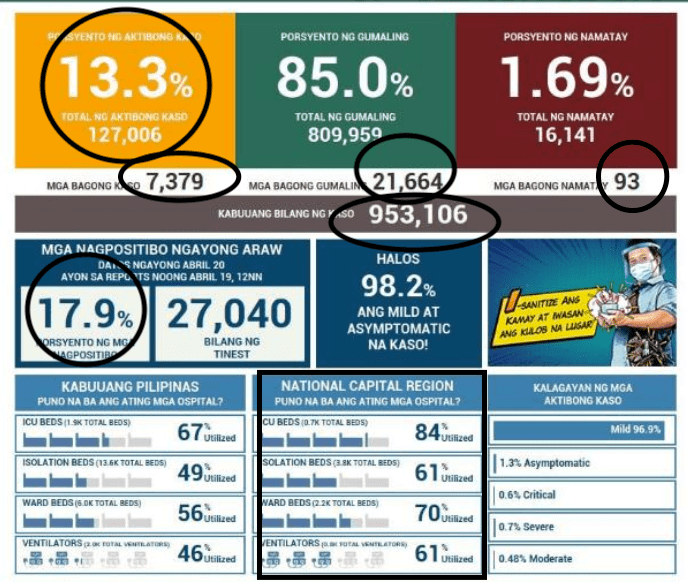
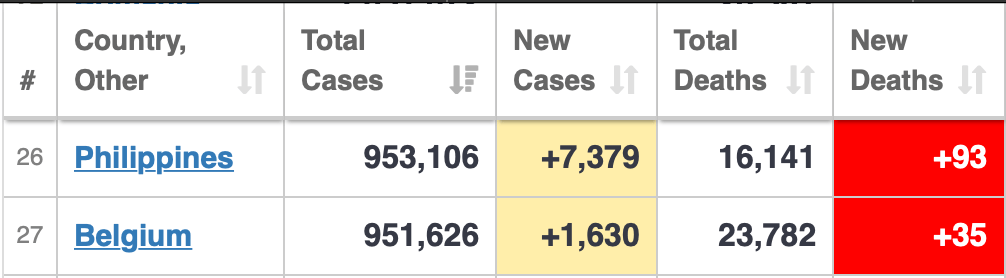
It’s a Tuesday, and as expected, the new cases reported are lower at 7,379, pushing our total cases past 950,000 and the Philippines displacing Belgium for the 26th rank in the world. We remain on track to the 1 Million mark before the end of April and there is no stopping the country from reaching this milestone.

The good news for the day are the 21,664 new recoveries (they don’t wait for the weekend haul anymore), which brings down the active cases to 13.3 percent. Nevertheless, the 127,006 active cases is still quite a surmountable number considering that the cases reported are those where only PCR tests have been done. Patients who have symptoms and not tested using PCR are not reported. Patients who have symptoms and do not undergo any test at all are also not included in the daily count.

The positivity rate is slightly higher today than yesterday at 17.9 percent.

Total new deaths today was 93, bringing the estimated case fatality ratio to 1.95 percent (lower than 1.99 percent recorded yesterday) as there are more recoveries reported daily.

The sad news is that the health system continues to be overwhelmed as the intensive care units in the NCR and ward beds are past the critical level of 70 percent. Majority of the hospitals do not have space for patients requiring critical care already.

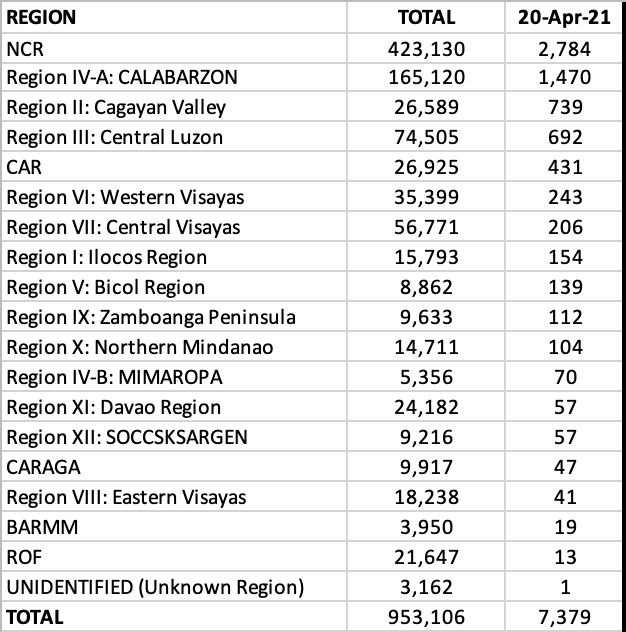
The NCR continued to lead the tally but the Rt is now down to 1.01 in Mega Manila (based on todays data) where it reported 2,784 new cases or 37% of the total in the country. While CALABARZON remains in second with 20% of the share of total cases, it is Cagayan Valley that shifted position with Central Luzon with 739 vs 692 new cases respectively.

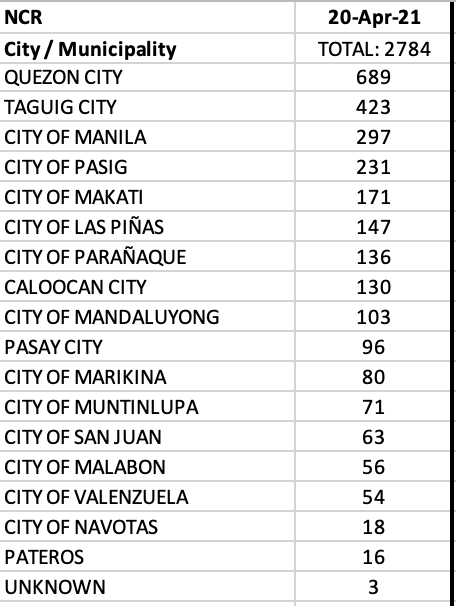
In Mega Manila, Quezon City continued to lead but Taguig overtook the City of Manila for most cases. Eight cities reported only double digits. Twelve of the 17 LGUs in NCR were among the top 20 cities with most cases.

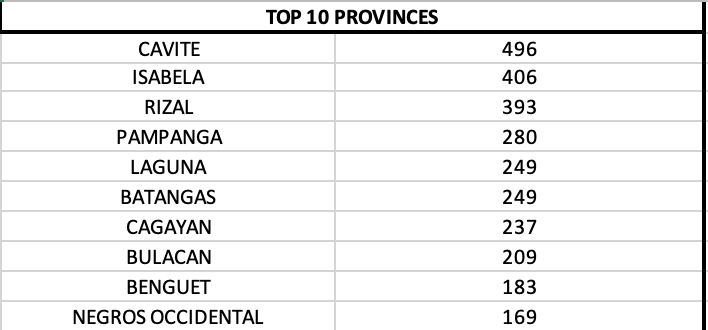
Among the provinces, while Cavite continued to lead, Isabela was in second spot with 406 new cases.

A reprieve today: Additional recoveries on 04.19.2021 keep active cases <15%

The Health Agency reported 9,628 new cases today, highly off-tangent from the usual Monday report. The good news is that it concomitantly reports 9,266 additional recoveries keeping the number of active cases stable at < 15 percent. The total number of cases for the Philippines is now close to 950,000, which we will inevitably cross tomorrow.

Daily positivity rate is significantly lower at 15.4 percent, but tomorrow is a Tuesday and there are likely less tests done on a weekend. We will most likely see less cases again tomorrow and hopefully Wednesday. If we are able to sustain reporting less than 10,000 new cases daily over the week, then we most likely will have lower new cases in the subsequent week. Note, however, that these daily reported cases are based on RT-PCR test results and not rapid antigen tests.
There are 88 new deaths reported today, bringing the estimated national CFR (based on outcome of those who had COVID-19) to 1.99 percent.

Hospital occupancy for intensive care is still at the critical level including the ward beds.

Even the NCR reported significantly less cases today at 3,848 (40 percent) of the total cases. CALABARZON came in second with 2,088 and Central Luzon with 1,334 new cases. Triple digits continued to be reported by Cagayan Valley, CAR, Western Visayas, Central Visayas, Bicol Region and Zamboanga Peninsula. There were 38 cases with NO known location on a regional level.

In the National Capital Region, the numbers are also seeing lower cases today. Even Quezon City had half the cases only compared to yesterday. Remarkable data came from Pasay City which saw only 87 new cases reported. Thirteen of the 17 LGUs were among the top 20 cities with most cases.

Among the provinces, Cavite continued to lead with 730 new cases, followed by Bulacan, Rizal and Laguna. All provinces in the top ten reported triple digits.

The weekend recovery haul for 04.18.2021 and the weekend summary

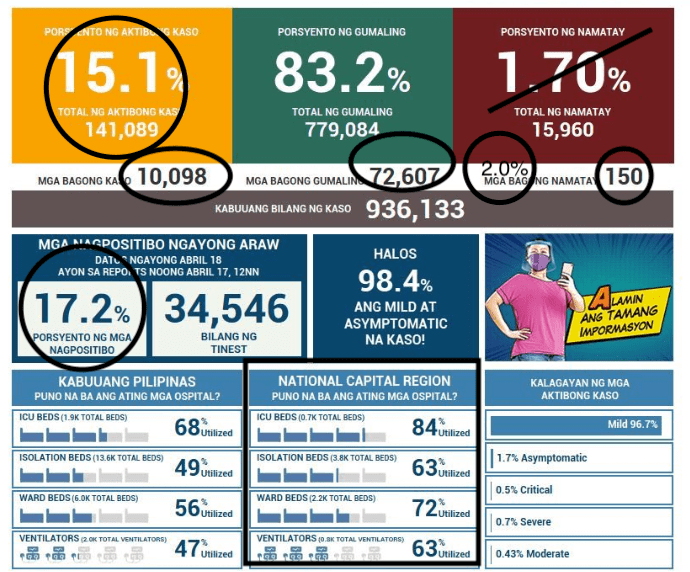
The Health Agency reports 10,098 new cases and in the weekly recovery haul, 72,607 recovered this week (based most likely on a time-based recovery status). This leaves 15.1 percent active cases or 141,089 who have still neither recovered or resulted in demise. This brings the case fatality ratio based on outcomes to 2.0 percent, with the DOH reporting 150 new deaths.

The positivity rate is slightly lower now at 17.2 percent but may not be an actual reflection of everyone getting tested by RT-PCR. Evidently, because of the increase in number of daily cases, there are those that may have shifted to using rapid antigen swabs when they are symptomatic. These reports are not generated or reported to the Health Agency.

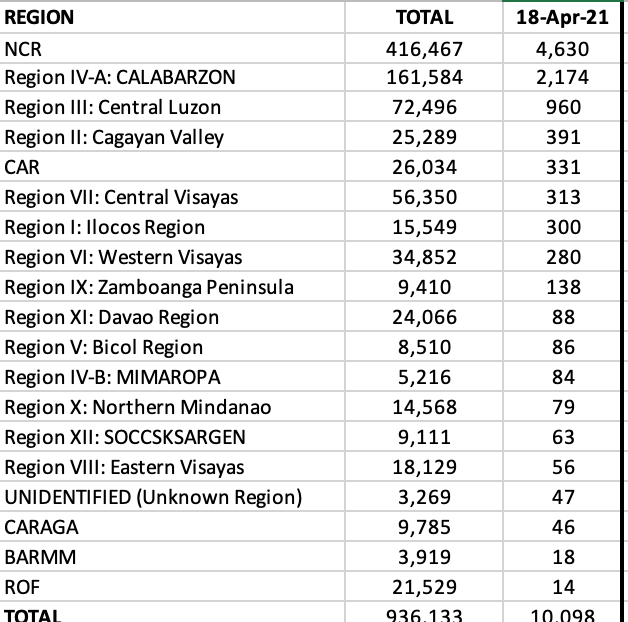
The NCR continued to lead on a regional level with 46 percent of the total. CALABARZON was in second with 2,174 cases (22%) followed by Central Luzon with 960 (9.6%). Triple digits were seen in the following regions: Cagayan Valley, CAR, Central Visayas, Ilocos Region, Western Visayas, and Zamboanga Peninsula. There were 47 individuals with no location on a regional level.

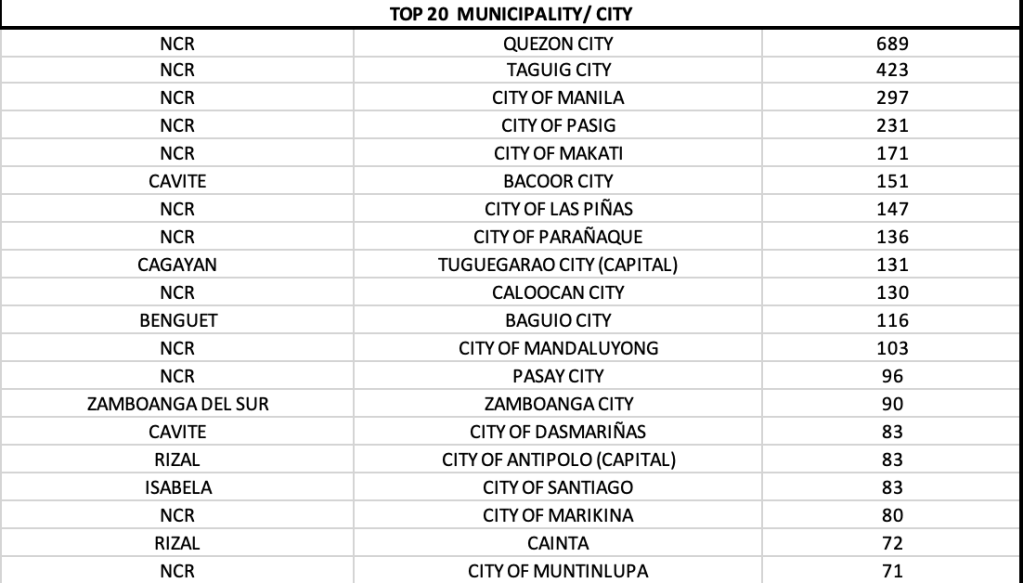
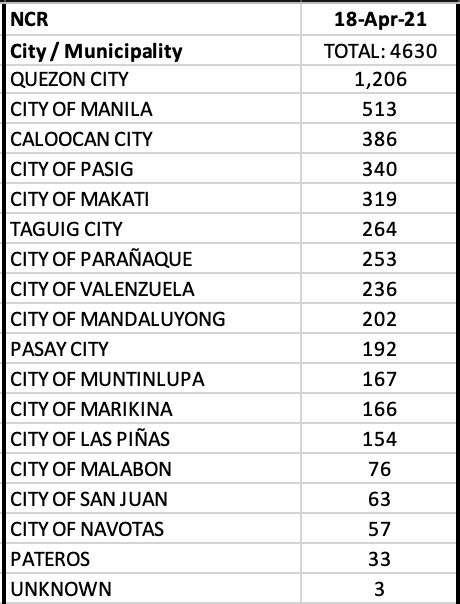
In Mega Manila, Quezon City led the haul with 26 percent of the total cases. Manila had 513 new cases. Eleven other cities had more than 100 cases. Thirteen of the 17 LGUs in NCR were among the top twenty cities with most cases for the day.

On a provincial level, the provinces of Cavite, Rizal, Batangas, Bulacan and Laguna were the top five. Of these provinces, 4 of the provinces were from Region IVA (CALABARZON).

With a 7-day moving average of 10,406 new daily cases for the country, the Philippines had 72,842 total cases for the week April 11-17, 2021, and 1,071 new deaths for the same week (7-day average of 153 deaths/day).

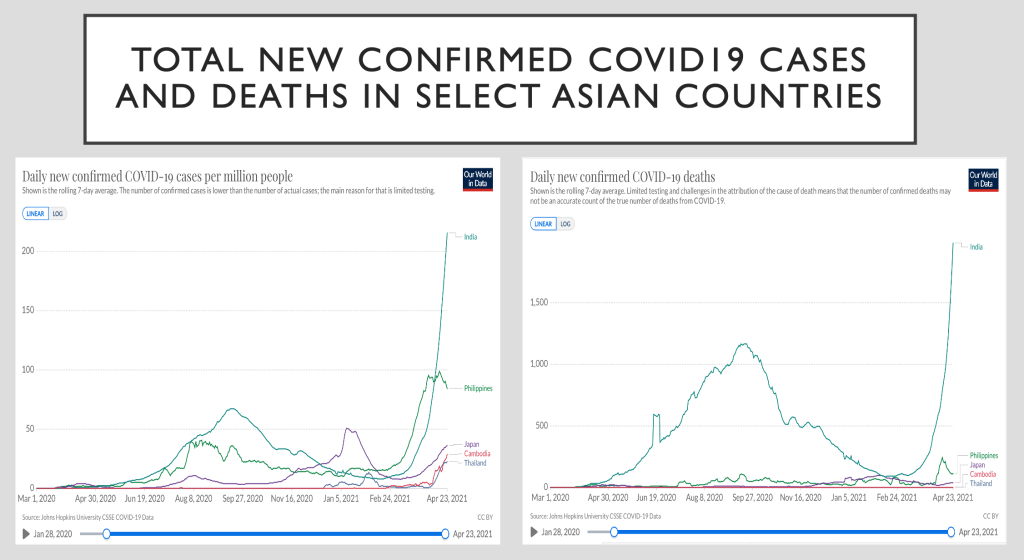
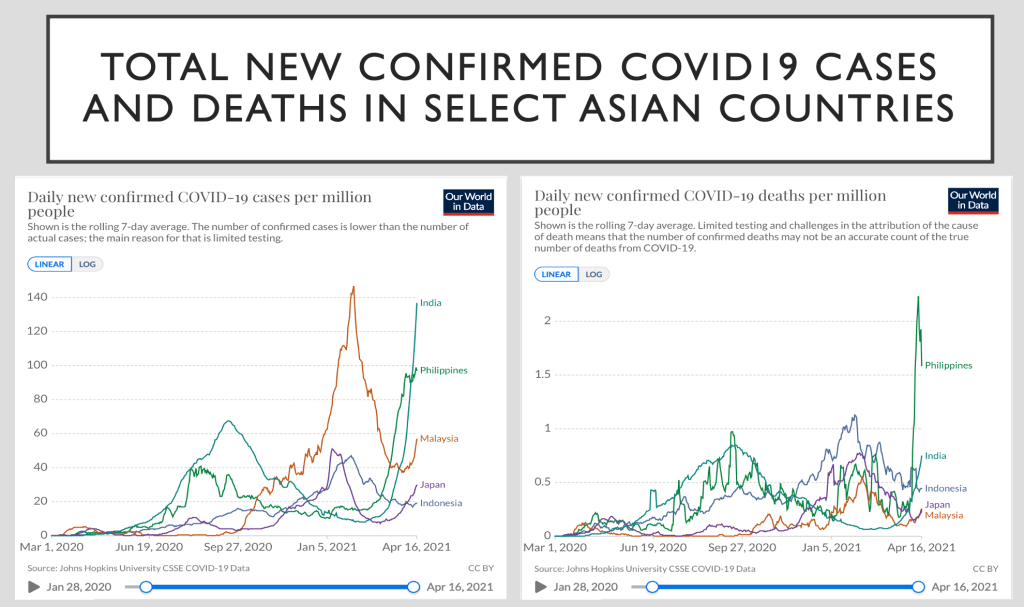
While it is a fact that the world is seeing a rise in new cases, the infographic below provides an overview of the current situation in select Asian countries, with Indonesia seeing declining trends compared to the rest. The daily new confirmed COVID-19 deaths per million population has also astoundingly increased for the Philippines making the case for using deaths/cases an implausible estimation for case fatality ration.

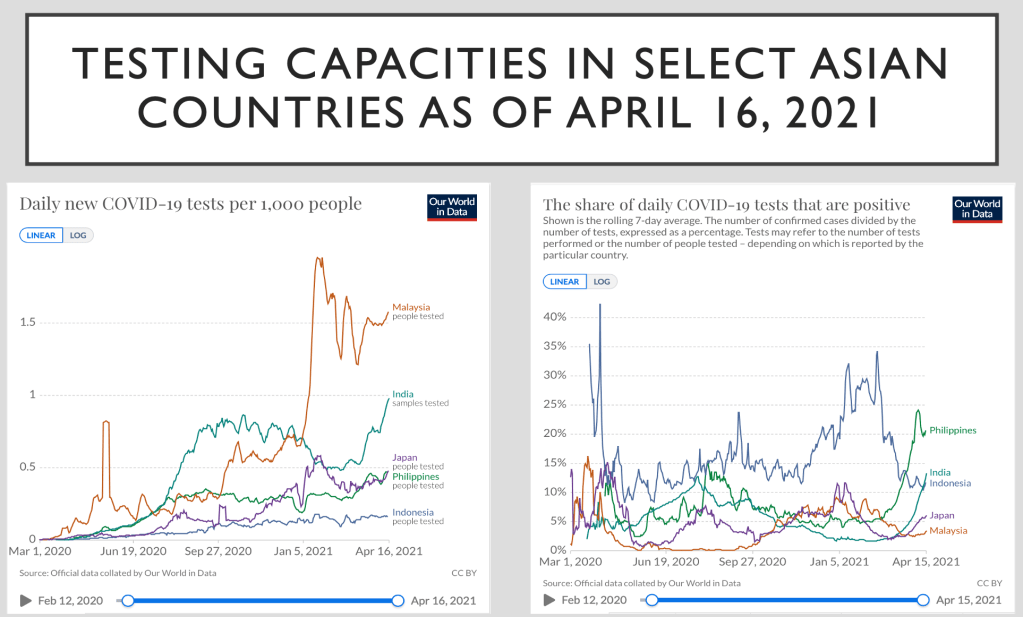
Testing capacity among the same select Asian countries above show that while the Philippines is testing more people per 1,000 population, the share of the daily COVID-19 tests that are positive are highest for the country with a current positivity rate averaging 20 percent (1 in every 5 tested will likely test positive).

The Philippine Genome Center has released its latest biosurveillance report with 752 samples sequenced nationally. Notice the significant increase in B.1.351 (South African variant) compared to the UK (B.1.1.1.7) and the P.1 (Brazil). Based on the report, where 6,423 cumulative samples were sequenced nationwide, 21 percent were attributed to variants of concern, with more than half from the B.1.351 variant.

11,101 new cases and 72 deaths for 04.17.2021

Today was a typical day. The Health Agency reported 11,101 new cases and 72 new deaths bringing the adjusted case fatality ratio now to 2.19 percent in the Philippines. Note that the computation of this case fatality rate is based on deaths/(deaths + recoveries). This was used in this blog (as based on the World Health Organization) because of the very high number of active cases. The current active cases is at 22 percent or 203,710. Removing the active cases provides a more or less realistic indicator of how the Philippines is doing in terms of mortality due to COVID19, instead of using total cases (which is at 926,052) as the denominator. The method of deaths/total cases assumes that all active cases will result in good outcome and no additional deaths would occur among these active cases. When the DOH reports its weekend recovery haul tomorrow, the CFR will slide lower than the past days.

The National Capital Region healthcare capacity remains critical as ICU beds are at more than 85 percent utilized, and ward beds at 72 percent utilization.

The pandemic is not only taking a toll in the Philippines. There is a significant jump in total number of new cases in the world, with India reporting more than 200,000 new cases daily (7-day average of 189,000 cases/day). The case fatality ratio for India is at 1.37 percent, with 88.4 percent of the over 14 million total cases now resolved (resulting in either deaths or recoveries).

Brazil, on the other hand, is seeing more deaths relative to new cases. The estimated CFR for Brazil is at 2.91 percent, with only 9.2 percent active cases.

The global case fatality ratio stands at approximately 2.48 percent, as there are still more than 18 million active cases as of this report.

Rt for NCR at 1.16 is not yet enough to bring the daily cases down for 04.16.2021

The Health Agency reports 10,726 new cases today. While the cases are still above the 10,000 mark, there has been a slowing down in the increase of cases. The reproduction rate needs to go down lower and faster so that the we target a Rt of <1.0 in order to achieve an actual decline. More testing has been performed in the past days with a 19.7 percent positivity rate.

There were 145 new deaths reported and again, I will reemphasize that the case fatality ratio is more accurately computed with deaths/(deaths + recoveries) because this is a more realistic CFR than using death/total cases. Why? Because the active cases are large – more than 21 percent (193,476)! Active cases will have two outcomes – recoveries or deaths. We cannot presume that the active cases will all end up as recoveries. With the 145 deaths, our actual CFR is at 2.18 percent and not 1.72 percent (which is a highly biased percentage with too many positive assumptions).

The latest OCTA Monitoring Report on the Philippine COVID-19 update shows that the Reproductive number in the NCR has improved to 1.16 for the week of April 9-15, but is still above 1.0. The average new cases for the NCR daily was 5,085 in the past week and a one week drop in growth rate to -0.4%.

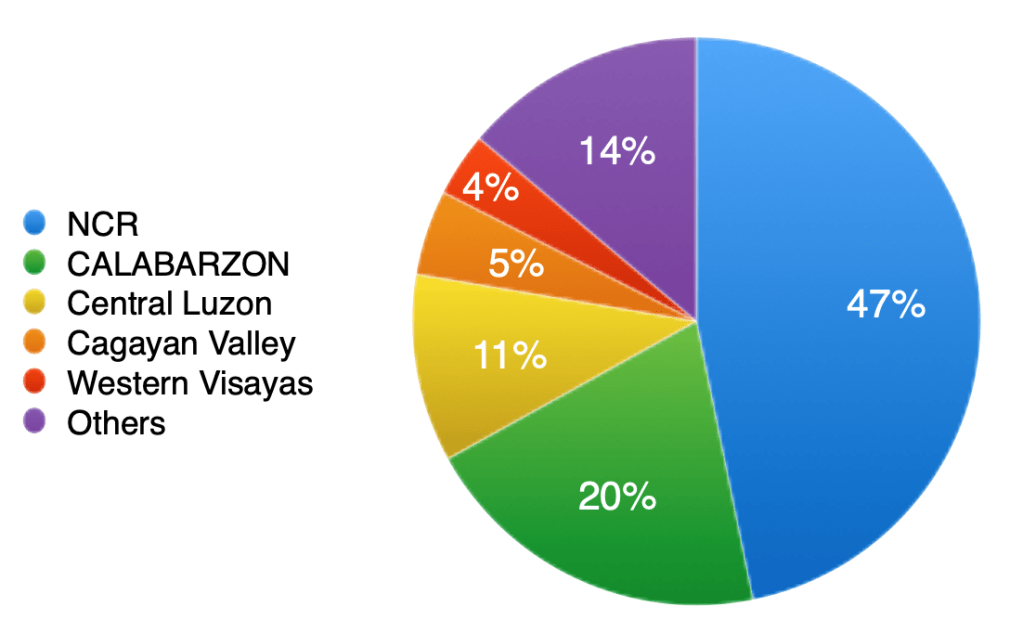
Mega Manila accounted for 47 percent of new reported COVID-19 cases over the past week. The rest were divided as follows: CALABARZON 20 %, Central Luzon 11%, Cagayan Valley 5% and Western Visayas 4%. The one week growth rate of new cases in CALABARZON and Bulacan was 14 percent, while the one week growth rate in Western Visayas was highest at 97%. Cagayan Valley had a decline in the growth rate of -14%.

The table below shows the downward trends in many cities in NCR. “But while the trend has slowed in NCR, the region will continue to have a high number of new COVID-19 cases for the next weeks, which means demand for hospital care in the NCR will not ease very soon. The largest one-week growth rate in the NCR plus was in Kawit, Cavite which had 83 new COVID-19 cases per day over the past week, an increase of 417 % compared to the previous week.” In Mega Manila, it was the city of San Juan that continued to have the highest growth rate of 76%.

Reality check Thursday as the PH breaches 900,000 on 04.15.2021

We were headed to break 900,000 cases today. It was inevitable. With 11,429 new cases reported (yes, we’re back to the real numbers as more samples are tested). This pushes the active cases past 20 percent (183,527). As the reproduction number is still > 1.0 the average daily cases will continue to increase (albeit slightly slower than the steep trajectory seen last month). The positivity rate still hovers close to 20 percent in spite of more tests being done. The healthcare capacity in the National Capital Region continues to rise. Note that more cases will also mean a troubling increase in the number of deaths eventually, as critical care units become inundated with the increase in numbers.

The case fatality ratio is NOT 1.72 percent. While the Health Agency arrives at this number by computing the number of deaths divided by the number of cases. A better way to compute for CFR is to use the formula [deaths/(deaths + recoveries)] x 100 = CFR. This latter formula mitigates the bias due to delays in case resolution during an ongoing outbreak by restricting the analysis to resolved cases. This is particularly important at this time because the number of active cases is now more than 20 percent. Hence the denominator cannot be the total number of cases as it is presumptuous that the active cases will all recover. The denominator that should be used should be the deaths plus the cases that have recovered. These are the resolved cases. While this method does not eliminate all biases related to delayed reporting, it is a better formula for computing deaths due to COVID-19, as we still do not know the outcome of the active cases. [For further information on this, kindly refer to the link https://www.who.int/news-room/commentaries/detail/estimating-mortality-from-covid-19 .]

With the 148 new deaths reported today, the actual national CFR is 2.16 percent.

The National Capital Region accounted for 5,317 or 46.5 percent of the total cases today. CALABARZON and Central Luzon complete the triumvirate, where these three regions account for 76 percent of the cases in the country. CAR, Western Visayas and Cagayan Valley are the other three regions with more than 400 cases today. There are 82 cases with no known location on a regional level.

In Mega Manila, Quezon City accounted for the majority of the haul with almost 1/4 of the total cases. Manila was second with 623 cases. Pasig and Caloocan had more than 400 but less than 500 cases. Only Muntinlupa and Pateros reported double digits for new cases. Fifteen of 17 LGUs in NCR were among the top 20 cities with most cases for the day.

On a provincial level, Rizal overtook Cavite for the top spot. Bulacan was in third with 461 cases. All top ten reported more than 200 cases.

On a lighter note, the DOH has reported that as of April 13, 2021, more than 1.25 million doses of a COVID-19 vaccine has been administered. The 7-day average of vaccinated individuals is close to 50,000. Of the vaccines that have been distributed, 64 percent (1,093,651) have received at least the first dose, while 162,065 individuals are fully vaccinated (have completed the second dose). In the infographic below is the information from the Health Agency.

The table should be interpreted cautiously as people may think that more than three million doses have been given. Of the over 3 million doses of the vaccines the Philippines has, 93 percent have been distribution and less than half of the total doses at hand have been administered.

In the table one will see the number of doses received. This indicated the number of doses appropriated for that particular region. Beside the region are the number of first and second doses administered from that appropriated number. While the National Capital Region received the chunk of the vaccines (1,158,470), less than 500,00 have been given a first dose, while around 56,000 have been used for second doses.

a